8 Best Residential Proxy Providers for E-commerce in 2026

E-commerce teams rely on accurate product, pricing, inventory, and marketplace data to understand what customers see across different regions. As online competition grows, brands need more reliable ways to monitor retailers, validate local storefronts, and track competitor activity at scale. Shopify reports that global e-commerce sales are projected to grow from $6.42 trillion in 2025 to $7.89 trillion by 2028, making pricing accuracy, product visibility, and competitor monitoring increasingly important for brands selling across marketplaces, retailer websites, and direct-to-consumer channels.
Residential proxies help e-commerce teams collect localized product, pricing, inventory, and marketplace data through real residential IP addresses. Instead of relying on one visible IP, teams can access public e-commerce data from different locations, reduce block risks, and validate what customers actually see across markets.
Why Is E-commerce Data Becoming More Difficult to Access?
E-commerce data is harder to collect because retailers and marketplaces increasingly personalize content, adjust pricing dynamically, and restrict unusual traffic patterns. For teams that depend on recurring monitoring, this makes residential proxy quality more important than simple IP volume.
Dynamic Pricing Algorithms
Many e-commerce websites adjust prices based on demand, location, inventory, competitor activity, and user behavior. This means teams often need localized access to understand how prices change across different markets.
Geo-Restricted Storefronts
Retailers may show different catalogs, promotions, or product availability depending on the user’s region. Residential proxies help e-commerce teams check storefronts from specific countries, cities, or regions.
Personalized Search Results
Marketplace rankings and search results can change based on browsing signals, location, and previous activity. This makes neutral search visibility tracking harder without controlled proxy sessions.
Marketplace Anti-Bot Systems
Large ecommerce platforms monitor IP reputation, request patterns, and session behavior. Residential proxies help distribute requests through real household IPs that look more natural than datacenter traffic. For teams using automation tools or an antidetect browser alongside proxy infrastructure, maintaining stable and localized sessions can support more consistent e-commerce research workflows.
Frequent Catalog Changes
Prices, stock levels, promotions, and product pages can change throughout the day. E-commerce teams need reliable recurring access to keep pricing, inventory, and catalog data current.
What E-commerce Teams Use Residential Proxies For?
E-commerce teams use residential proxies to monitor prices, track competitors, research marketplaces, and check inventory availability across different locations. They also help verify regional ads and track product search visibility in local marketplace results.
- Price Monitoring: Teams track product prices across retailers, marketplaces, and regional storefronts to understand competitor pricing and market movement.
- Competitor Tracking: Brands monitor competitor catalogs, product launches, promotions, discounts, and availability changes.
- Marketplace Research: E-commerce teams collect data from marketplaces such as Amazon, Walmart, eBay, and niche retail platforms.
- Inventory Tracking: Businesses check stock levels, product availability, restocks, and out-of-stock patterns across different locations.
- Ad Verification: Marketers validate whether ads, promotions, and sponsored placements appear correctly in specific regions.
- Search Visibility Tracking: Teams monitor product rankings, category visibility, and localized marketplace search results.
Why Does Residential Proxy Quality Matter for E-commerce?
Residential proxy quality affects data accuracy, session stability, location precision, and reliable access to public e-commerce data. A high-quality residential proxy network helps teams monitor retailers and marketplaces more consistently with fewer interruptions.
More Accurate Local Data
Residential proxies help teams view pricing, promotions, product pages, and inventory as local users see them across different countries, regions, or cities. This improves the accuracy of localized market research and competitor monitoring.
Better Session Stability
Sticky sessions help maintain continuity when teams repeatedly check the same product pages, marketplace listings, or search results over longer monitoring sessions. This is particularly useful for recurring tracking workflows.
Lower Access Restriction Risk
Residential IPs generally look more natural than datacenter traffic, helping reduce interruptions during recurring e-commerce research and public data collection. This supports more consistent monitoring across retailers and marketplaces.
Stronger E-commerce Intelligence
Reliable proxy infrastructure supports more accurate pricing, inventory, competitor, and marketplace analysis. Better data quality helps teams make more informed decisions and respond faster to market changes.
How Do the Best E-commerce Residential Proxy Providers Compare?
Different residential proxy providers fit different e-commerce workflows. Some are stronger for enterprise-scale data collection, while others focus on location accuracy, flexible sessions, or smaller monitoring projects.
Provider | Proxy Network Type | Location Flexibility | Session Stability | Best Fit |
| 1. Live Proxies | Rotating residential, rotating mobile | Country, city, ASN | Sticky up to 24h + rotating | Growing and enterprise teams |
| 2. Oxylabs | Residential, mobile, datacenter, ISP | Country, state, city, ZIP, ASN, continent | Rotating + sticky sessions | Large organizations |
| 3. Decodo | Residential, mobile, static residential, datacenter | Country, city, ZIP, ASN | Rotating + sticky sessions | Growing businesses |
| 4. SOAX | Residential, mobile, US datacenter | Country, region, city, ISP | Sticky + rotating sessions | International e-commerce |
| 5. IPRoyal | Residential, ISP, datacenter, mobile | Country, city, state | Sticky up to 7 days | Small and mid-sized teams |
| 6. Rayobyte | Residential, mobile, static ISP, rotating ISP, static datacenter, rotating datacenter | Country and state targeting | Product-dependent sessions | Larger monitoring projects |
| 7. Webshare | Rotating residential, static residential, private static residential, dedicated static residential, datacenter | Country-level targeting | Simple static / rotating setup | Smaller teams |
| 8. ProxyEmpire | Rotating residential, unlimited residential, static residential, rotating mobile, dedicated mobile, rotating datacenter | Country, region, city, ISP | Sticky and rotating sessions | Mixed e-commerce workflows |
What Are the 8 Best Residential Proxy Providers for E-commerce in 2026?
The best residential proxy providers for e-commerce combine real residential IPs, stable sessions, location targeting, and enough infrastructure to support recurring monitoring. The right choice depends on whether the team needs price intelligence, marketplace scraping, inventory checks, or international ecommerce research.
1. Live Proxies
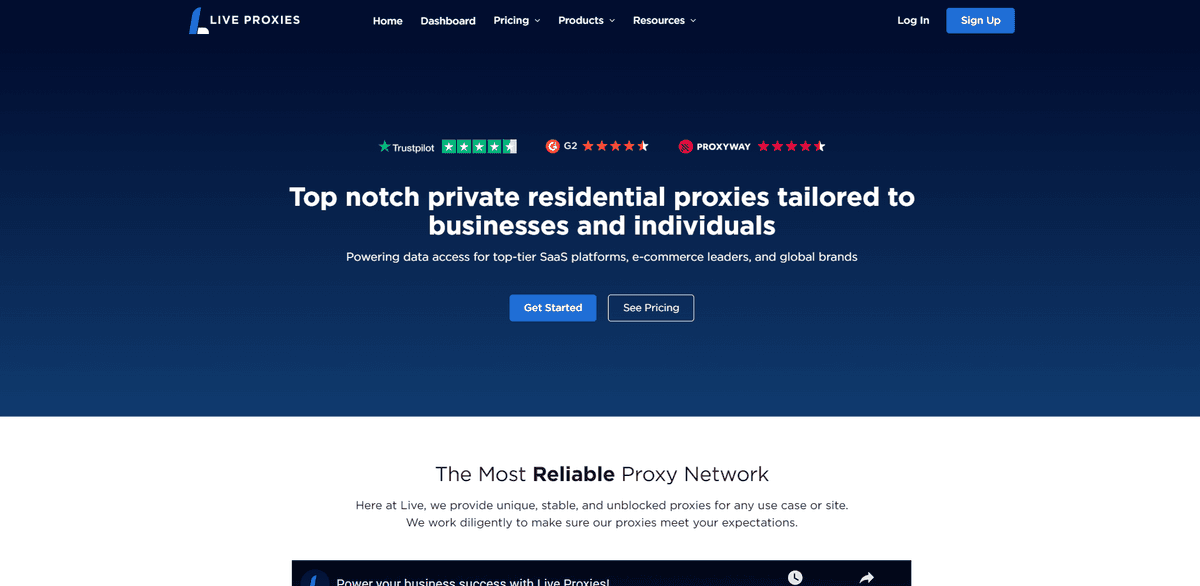
Live Proxies is a strong residential proxy provider for e-commerce teams that need controlled, stable, and scalable access to public retail data. Its strongest e-commerce advantage is private IP allocation, which helps reduce overlap on the same targets when teams monitor marketplaces or retailers repeatedly. Its core features include private IP allocation, sticky sessions up to 24 hours, unlimited threads, HTTP and SOCKS5 support, and millions of IPs across 55 countries. The platform also supports residential rotating proxies, rotating mobile proxies, and country, city, and ASN targeting.
Features
- Sticky Sessions: Live Proxies keep the same IP for up to 24 hours, which helps maintain continuity during longer monitoring, scraping, and automation tasks.
- Private IP Allocation: The provider allocates IPs privately to reduce overlap on the same e-commerce targets and improve consistency during recurring data collection.
- Residential Rotating Proxies: Live Proxies uses real home IPs for workflows such as price monitoring, catalog tracking, and marketplace research.
- Geo-Targeting: The platform supports country, city, and ASN targeting, with strong availability in the US, UK, and Canada.
- Rotation Control: Users can work with rotating or sticky sessions depending on whether the task needs IP diversity or session continuity.
Best E-commerce Use Cases
- Price Monitoring: Track product prices across retailers, marketplaces, and regional storefronts.
- Inventory Tracking: Monitor stock availability, restocks, and out-of-stock changes.
- Marketplace Scraping: Collect product listings, seller data, availability signals, and marketplace intelligence.
- Product Availability Monitoring: Track limited releases, new product pages, and high-demand items.
- Competitor Catalog Analysis: Monitor competitor products, promotions, categories, and listing updates.
2. Oxylabs
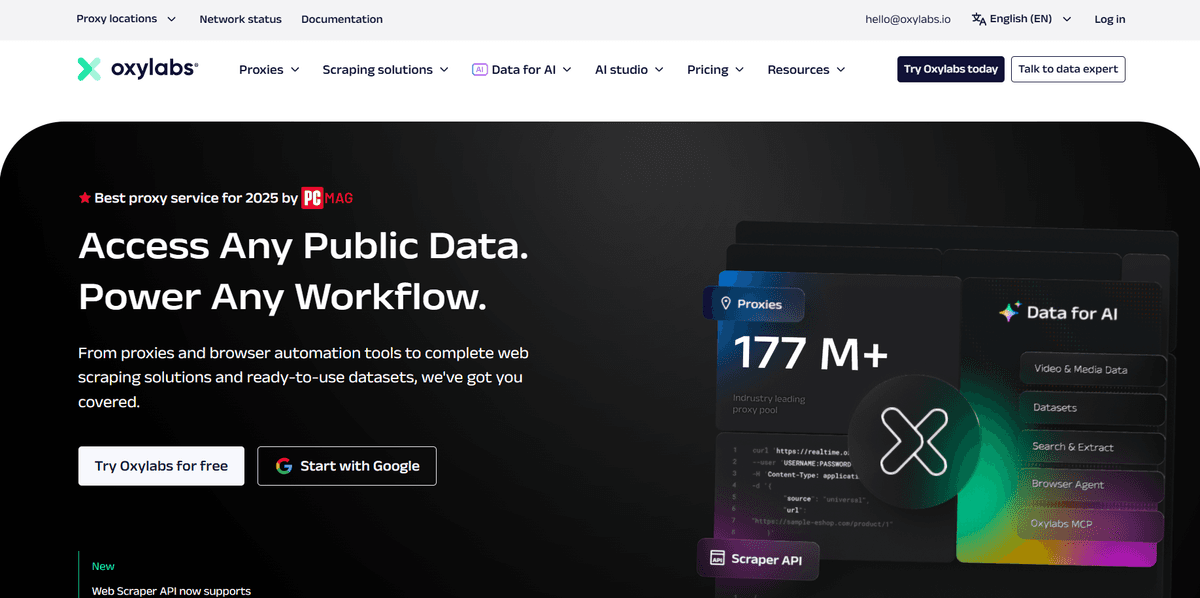
Oxylabs is built for enterprise-scale public data collection and advanced proxy infrastructure. Its residential proxy tools support sticky sessions, city-level targeting, and large-scale access to public web data across different locations. This makes it a strong fit for larger e-commerce intelligence teams that need reliable, structured collection across many products, retailers, categories, and markets.
Features
- Residential Proxy Network: Access residential IPs for collecting public data across many websites, retailers, and marketplace locations.
- Sticky Sessions: Keep the same IP when repeated checks, account-based workflows, or longer validation tasks require continuity.
- Geo-Targeting: Use city-level and broader targeting for localized pricing, product, inventory, and marketplace research.
- Scraping Infrastructure: Combine proxies with scraping APIs and automation tools for larger e-commerce data workflows.
- Enterprise Fit: Support recurring data pipelines, complex monitoring projects, and large-scale retail intelligence operations.
Best E-commerce Use Cases
- Enterprise Price Intelligence: Monitor pricing across many retailers, product categories, regions, and marketplace storefronts.
- Catalog Monitoring: Track large product catalogs, listing updates, availability changes, and assortment movements.
- Marketplace Research: Collect marketplace data for competitive analysis, seller tracking, and retail intelligence.
- Ad Verification: Validate regional ad placements, sponsored listings, promotions, and campaign visibility.
- International E-commerce Research: Compare storefronts, product visibility, and pricing across multiple markets.
3. Decodo
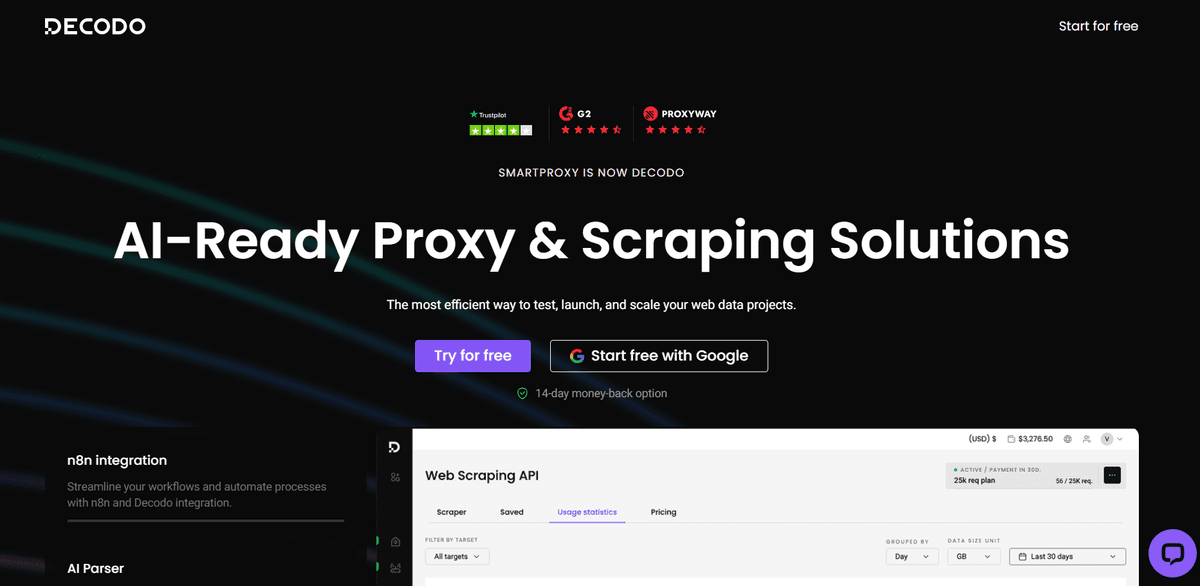
Decodo is a strong option for e-commerce teams that need flexible residential proxies, precise location targeting, and session control. Its proxy infrastructure supports country, state, city, ZIP code, ASN, and continent-level targeting for more granular local data collection. Teams can also use rotating and sticky sessions with custom duration options, which makes Decodo useful for recurring monitoring, marketplace tracking, and automation workflows.
Features
- Location Targeting: Target by country, state, city, ZIP code, ASN, and continent for localized e-commerce collection.
- Sticky Sessions: Keep the same IP for defined periods when price checks or marketplace workflows need session continuity.
- Rotating Sessions: Rotate IPs on connection requests when scraping tasks need broader IP diversity and fewer repeated signals.
- Multiple Proxy Types: Use residential, mobile, static residential, and datacenter proxies for different workflow needs.
- API Support: Connect proxies with scraping tools, crawlers, automation systems, and internal data workflows.
Best E-commerce Use Cases
- Marketplace Monitoring: Track listings, pricing, seller activity, ranking movement, and availability across marketplaces.
- Localized Price Checks: Validate pricing by country, city, ZIP code, ASN, or other location parameters.
- Product Research: Collect product details, categories, reviews, inventory signals, and availability data.
- Competitor Analysis: Monitor competitor product pages, promotions, assortment changes, launches, and category movements.
- Automation Workflows: Connect proxies into recurring scraping, monitoring, and e-commerce intelligence pipelines.
4. SOAX
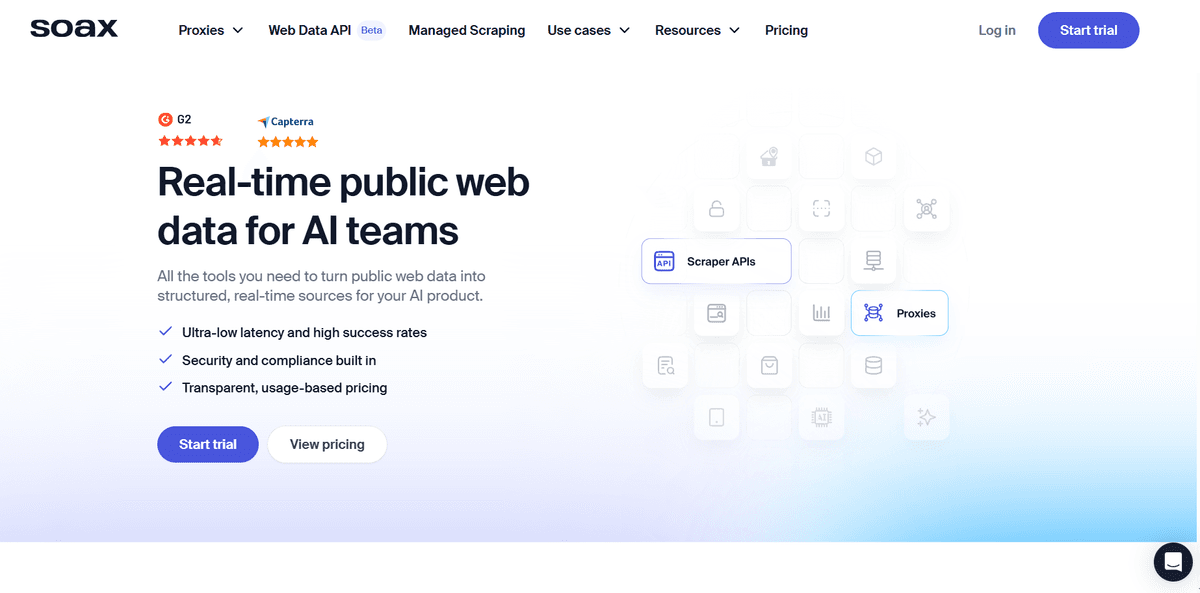
SOAX is focused on geo-sensitive data collection and location-based routing for teams that need regional accuracy. Its residential proxy tools support country, region, city, and ISP targeting, which helps e-commerce teams validate localized storefronts, prices, and promotions. The platform also provides sticky and rotating sessions, customizable IP refresh behavior, and connection flexibility for larger monitoring workflows across multiple markets.
Features
- Geo-Targeting: Target by country, region, city, and ISP for accurate market-specific data collection.
- Sticky and Rotating Sessions: Choose session continuity or frequent IP changes depending on the monitoring task.
- Custom IP Refresh: Adjust refresh behavior to match different scraping, tracking, and validation workflows.
- Protocol Support: Use HTTP(S), SOCKS5, UDP, and QUIC for different proxy integrations and technical setups.
- Unlimited Connections: Support larger recurring workflows with flexible connection handling and scalable monitoring capacity.
Best E-commerce Use Cases
- Regional Price Monitoring: Compare product prices across different local markets, cities, regions, and storefronts.
- Localized Storefront Analysis: Validate what customers see in specific cities, regions, countries, or ISP environments.
- International Market Research: Study e-commerce visibility, pricing, and product availability across multiple countries.
- Marketplace Validation: Check marketplace rankings, product visibility, listing access, and availability by location.
- Ad and Promotion Checks: Confirm whether campaigns, discounts, and sponsored placements appear correctly in target regions.
5. IPRoyal
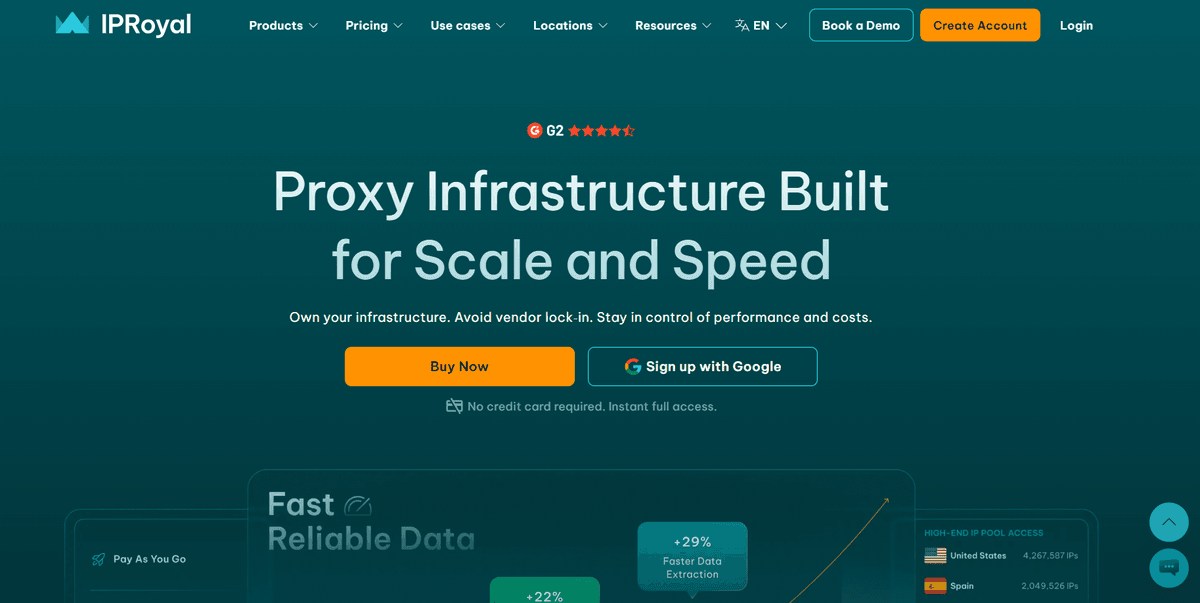
IPRoyal is a practical residential proxy option for e-commerce teams that need simple deployment, real residential IPs, and flexible session options. Its residential proxy tools support rotating and sticky sessions, HTTP(S) and SOCKS5, and country, state, and city targeting for localized collection. This makes it useful for smaller and mid-sized teams running recurring price checks, product research, competitor tracking, and marketplace monitoring without complex enterprise infrastructure.
Features
- Residential IP Access: Use genuine residential IPs for scraping, monitoring, regional checks, and public data collection.
- Rotating and Sticky Sessions: Rotate IPs or maintain continuity depending on the size and structure of the workflow.
- Geo-Targeting: Target by country, state, and city to collect more localized e-commerce data.
- Protocol Support: Use HTTP(S) and SOCKS5 with scraping tools, automation systems, and internal workflows.
- Simple Setup: Deploy residential proxies without complex enterprise infrastructure or heavy technical onboarding.
Best E-commerce Use Cases
- Small-Team Monitoring: Track prices, products, competitors, and marketplace changes without heavy infrastructure.
- Product Research: Collect product details, availability, regional listings, reviews, and marketplace signals.
- Competitor Analysis: Monitor competitor catalogs, prices, promotions, launches, and product changes.
- Search Visibility Tracking: Check rankings, product search results, and marketplace visibility from different regions.
- Basic Marketplace Research: Support recurring but lighter marketplace, retailer, and product data collection.
6. Rayobyte
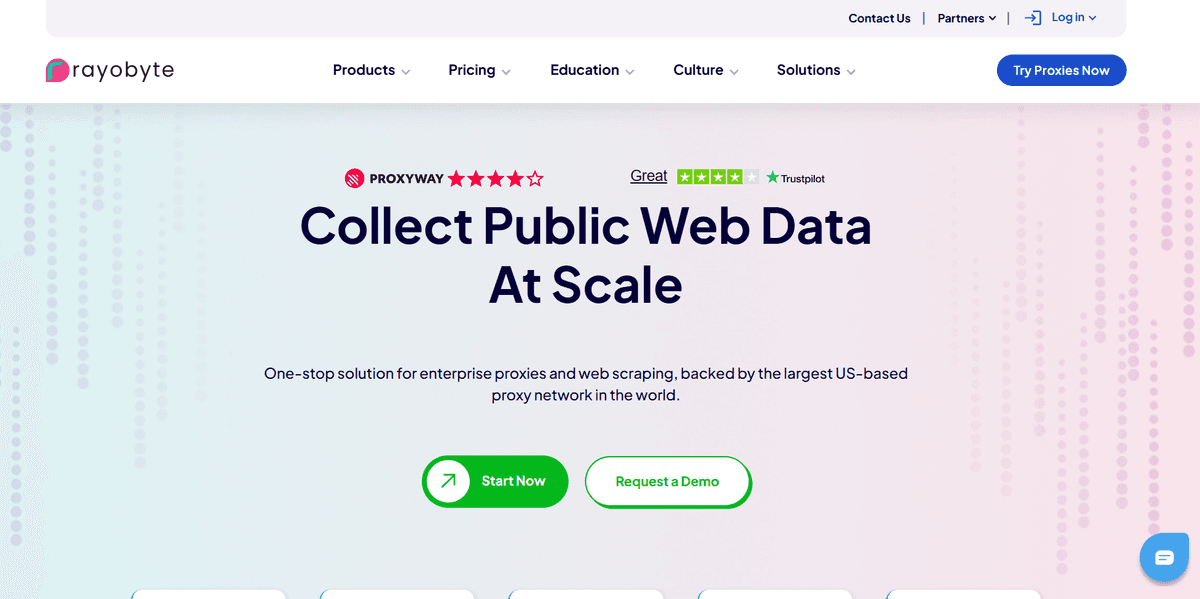
Rayobyte is a residential proxy provider focused on scalable data collection and recurring monitoring. Its residential proxy tools support country, region, state, and city targeting, along with sticky sessions for workflows that need continuity. The platform is a practical fit for teams that need repeatable e-commerce collection, business support, and stable access for larger retail monitoring, catalog tracking, and competitor analysis projects.
Features
- Residential Proxy Network: Access residential IPs for scraping, monitoring, market research, and repeated public data collection across e-commerce websites.
- Geo-Targeting: Target by country, region, state, or city to collect more accurate local pricing, inventory, and product visibility data.
- Sticky Sessions: Keep the same IP during longer workflows when repeated page checks or session continuity matter.
- HTTP(S) Support: Connect proxies with scraping tools, crawlers, automation systems, and internal e-commerce data pipelines.
- Business Support: Use support and account management options for recurring proxy workflows and larger monitoring projects.
Best E-commerce Use Cases
- Retail Monitoring: Track product pages, prices, promotions, and availability across retailers and regional storefronts.
- Catalog Tracking: Monitor large product sets, listing updates, category changes, and recurring catalog movements.
- Marketplace Research: Collect marketplace data for competitive analysis, seller tracking, and retail intelligence.
- Recurring Competitor Analysis: Run repeated checks on competitor pricing, promotions, launches, and assortment changes.
- High-Volume Projects: Support larger monitoring tasks that need location control, session stability, and consistent access.
7. Webshare
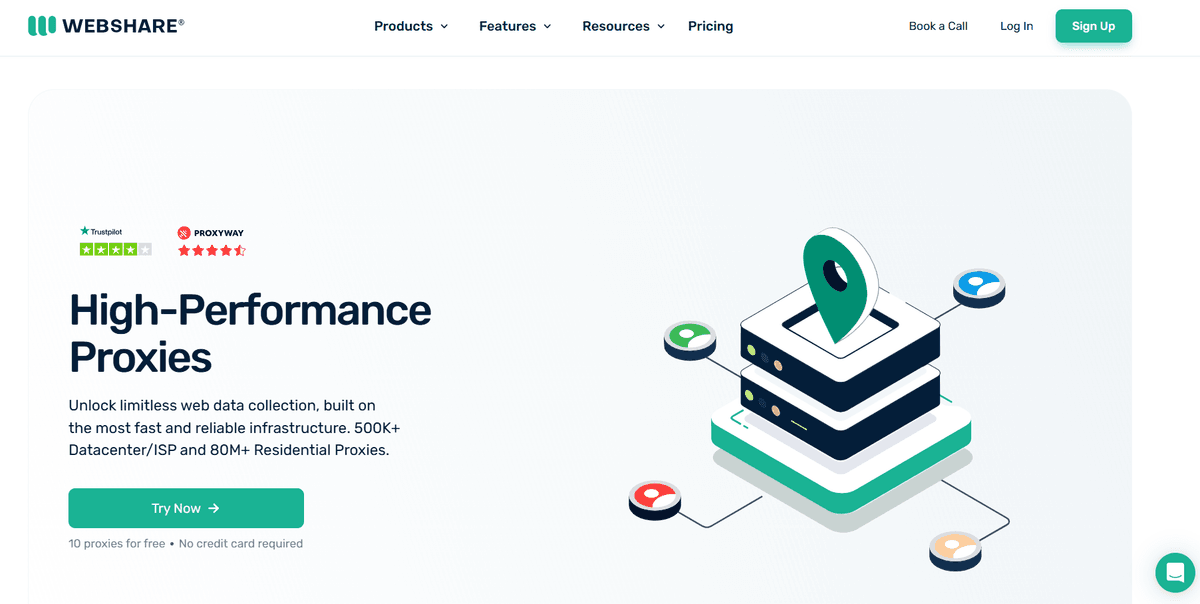
Webshare is a simple and accessible residential proxy provider for smaller teams, testing workflows, and straightforward e-commerce monitoring. Its rotating residential proxy tools support country and city targeting, endpoint generation, and API-based setup for quick integration into scripts and crawlers. This makes it a good fit for teams that need fast deployment, lightweight product tracking, and basic marketplace research without complex onboarding.
Features
- Rotating Residential Proxies: Use rotating residential access for scraping, monitoring, product checks, and marketplace research.
- Country and City Targeting: Target residential proxies by country or city for localized pricing and storefront validation.
- Endpoint Generator: Create location-specific proxy endpoints with easier setup tools for repeated collection tasks.
- API Documentation: Connect proxies to scripts, crawlers, developer workflows, and internal monitoring systems.
- Self-Service Setup: Deploy proxies quickly without complex sales processes, onboarding, or enterprise configuration.
Best E-commerce Use Cases
- Entry-Level Price Monitoring: Track selected products, competitors, and regional storefronts without heavy infrastructure.
- Product Tracking: Monitor product pages, availability, listing changes, pricing updates, and inventory signals.
- Testing Workflows: Validate proxy behavior before scaling e-commerce data collection or marketplace monitoring.
- Small-Team Research: Support lightweight competitor, product, pricing, and marketplace research workflows.
- Development Environments: Connect proxies to internal scripts, crawlers, prototypes, and early-stage monitoring tools.
8. ProxyEmpire
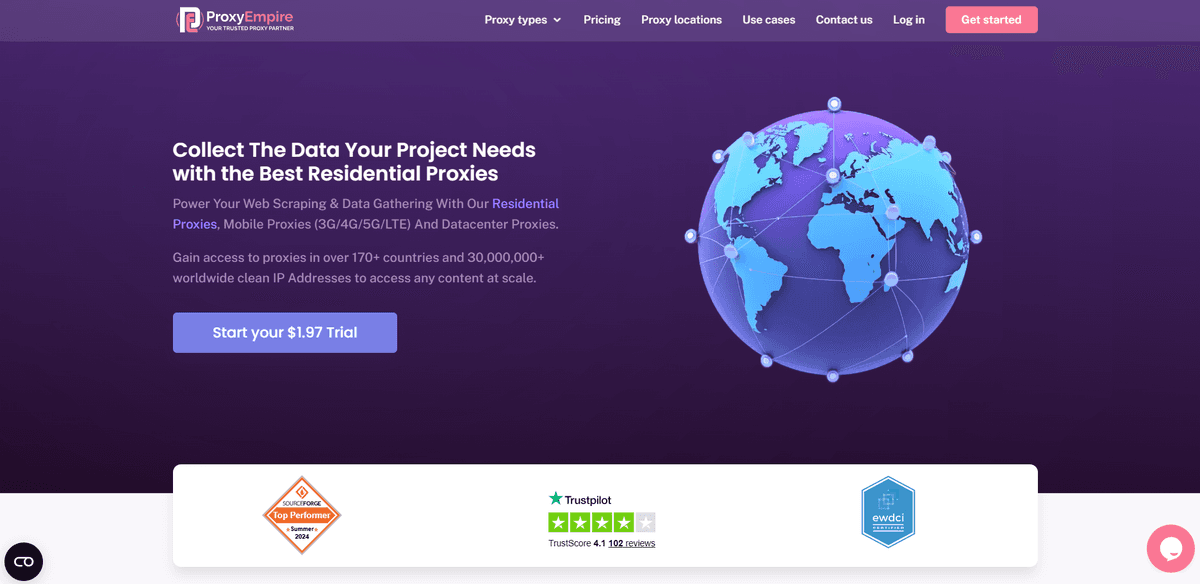
ProxyEmpire provides residential, mobile, and datacenter proxies for scalable data collection across different markets. Its proxy platform supports precise targeting, sticky and rotating sessions, rollover bandwidth, and human support for ongoing proxy workflows. This makes it useful for e-commerce teams that need flexible proxy options for price monitoring, marketplace scraping, ad verification, competitor intelligence, and multi-market research.
Features
- Residential Proxy Network: Use residential IPs for scraping, monitoring, marketplace research, and recurring data collection.
- Precise Targeting: Target by country, region, city, and ISP for accurate location-specific e-commerce collection.
- Sticky and Rotating Sessions: Choose stable sessions or IP rotation depending on workflow needs and data volume.
- Multiple Proxy Types: Use residential, mobile, and datacenter proxies for different e-commerce data tasks.
- Human Support: Access human support for ongoing proxy workflow management, troubleshooting, and larger projects.
Best E-commerce Use Cases
- Price Monitoring: Track product prices across retailers, marketplaces, regions, and local storefronts.
- Multi-Market Research: Compare e-commerce data across countries, cities, regions, and marketplace environments.
- Marketplace Scraping: Collect product listings, seller information, availability signals, and market data.
- Ad Verification: Validate regional ad placements, sponsored results, promotions, and campaign visibility.
- Competitor Intelligence: Monitor competitor pricing, catalog changes, promotions, product launches, and assortment updates.
Which Proxy Setup Fits Different E-commerce Workflows?
After choosing a provider, e-commerce teams still need to match proxy settings to the actual task. Price monitoring, marketplace research, inventory checks, and ad verification do not always need the same session behavior, location targeting, or rotation frequency.
Use Sticky Sessions for Continuity
Sticky sessions are useful when a workflow needs a stable browsing context. They work well for product availability checks, multi-step marketplace research, cart validation, account-based monitoring, and repeated checks on the same retailer.
Use Rotation for Broader Coverage
Rotating sessions work better when teams need to collect data across many pages, products, categories, or marketplaces. Rotation helps distribute requests more naturally and reduces repeated access patterns from the same IP.
Match Location to the Market
E-commerce data is often location-sensitive because prices, promotions, availability, and rankings can change by country, region, or city. Teams should match proxy locations to the target market when checking local prices, regional storefronts, marketplace visibility, and product availability.
Separate Targets by Workflow
Different retailers and marketplaces may respond differently to repeated monitoring. Separating proxy pools, sessions, or workflows by target can make recurring data collection more consistent, easier to manage, and simpler to troubleshoot.
When Do E-commerce Teams Need Residential Proxies Instead of Scraper APIs?
Residential proxies are often enough when teams already have scraping tools, internal crawlers, or monitoring systems. Scraper APIs become more useful when the workflow requires rendering, parsing, retries, or handling complex website behavior beyond IP routing.
The clearest cases include:
- JavaScript-heavy product pages: Scraper APIs can help when prices, reviews, stock data, or shipping details load only after browser rendering.
- Complex marketplace layouts: APIs are useful when marketplaces require structured extraction across listings, seller pages, filters, and search results.
- CAPTCHA-prone workflows: Scraper APIs may help when repeated requests trigger verification challenges that proxies alone cannot solve.
- Large-scale data pipelines: APIs can simplify orchestration, retries, parsing, and output formatting for teams collecting ecommerce data continuously.
- Teams without internal scraping resources: Scraper APIs are useful when businesses need collected data but do not want to build and maintain scraping infrastructure themselves.
Conclusion
The best residential proxy providers for e-commerce help teams collect accurate public data across retailers, marketplaces, and regions. Strong providers combine residential IP quality, location targeting, session stability, rotation control, and reliable infrastructure for recurring monitoring.
For e-commerce teams, the right choice depends on the workflow. Price monitoring requires location accuracy and consistency. Marketplace research needs scalable data collection. Inventory tracking depends on reliable, recurring access. International e-commerce analysis requires flexible geo-targeting. The strongest provider is the one that matches the real ecommerce task, not just the biggest IP pool or the broadest feature list.

Author
Sarthak Goriya
Team Lead & Client Success Partner at Jeenam, Sarthak Goriya specializes in B2B SaaS link building, strategic partnerships, and SEO-driven growth. With extensive experience in managing SaaS clients and building high-quality link acquisition campaigns, he helps businesses strengthen their online presence and achieve sustainable organic growth through effective outreach and relationship-building strategies.