8 Best Retail AI Tools to Grow Sales and Serve Customers in 2026

Retail runs on two things that pull against each other: efficiency at scale and a personal touch that makes shoppers come back. AI has finally started to close that gap, but the label "retail AI" now covers wildly different tools, from demand forecasting to chatbots to clienteling.
This guide compares eight retail AI tools that earn their place in a modern stack. Some optimize operations behind the scenes, others help store teams build real relationships with customers. None of them will fix a weak product or a broken customer experience on their own, so treat this as a shortlist to match against your goals rather than a ranking to follow blindly.
Key Takeaways
- Endear is the standout for AI clienteling, turning customer data into a ranked daily outreach queue with AI-drafted messages that associates approve before sending.
- Demand and inventory tools like Lily AI and Inventory Planner suit ops teams that need better forecasting and stock decisions.
- Personalization engines such as Nosto and Dynamic Yield focus on the on-site experience for ecommerce traffic.
- Conversational tools like Tidio and Gorgias AI handle support and pre-sale questions at volume.
- Match the tool to the job: store-team outreach, ecommerce personalization, operations, or support are four different problems.
Quick Comparison Table
| Tool | Best For | Category | Starting Price |
|---|---|---|---|
| Endear | AI clienteling and 1:1 outreach for multi-store brands | Clienteling / CRM | From $350/mo per location |
| Lily AI | Product attribution and demand signals | Merchandising / forecasting | Custom |
| Inventory Planner | Forecasting and purchasing decisions | Inventory ops | From $119.99/mo |
| Nosto | On-site personalization for ecommerce | Personalization | Custom |
| Dynamic Yield | Experimentation and personalization at scale | Personalization / testing | Custom |
| Tidio | AI support and pre-sale chat | Conversational | Free / from $29/mo |
| Gorgias | AI-assisted customer support | Helpdesk / support | From $10/mo |
| Bloomreach | Search, merchandising and marketing | Personalization / marketing | Custom |
How I evaluated these retail AI tools
I looked at each tool against a simple question: does it help a retail brand sell more or serve customers better without adding busywork? I weighed who the tool is actually for, whether it fits an existing stack, and how much lift it takes to get value.
I also separated tools by job. A forecasting engine and a clienteling platform both get called "retail AI," but they solve different problems for different teams, so comparing them on price alone would be misleading. Pricing shifts often in this space, so confirm current figures with each vendor before you commit.
One theme runs through all of these tools: retention pays. Winning a repeat customer costs far less than acquiring a new one, which is why many brands pair an AI tool with structured customer loyalty programs to keep shoppers coming back. The tools below support that goal from different angles.
1. Endear
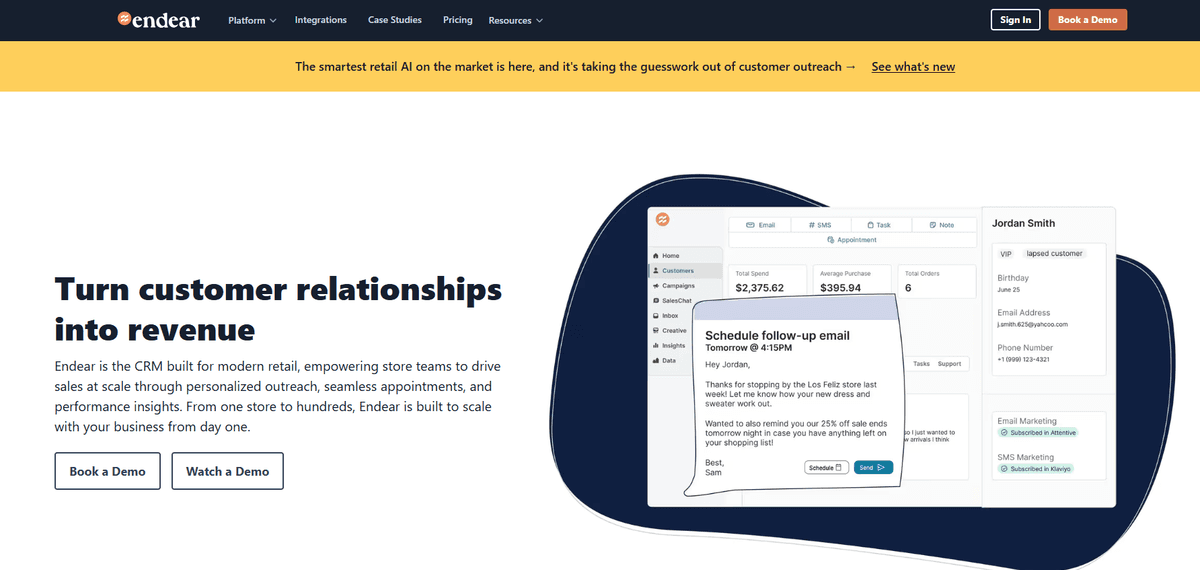
Best for: AI clienteling and customer outreach for multi-store retail brands whose growth depends on store teams building real relationships.
Overview
Personal outreach converts, but it does not scale on its own. Associates end up building lists by hand, using personal phones and juggling spreadsheets, so the personal touch that drives loyalty gets squeezed out by the volume of customers to reach.
This is the gap Endear is built to close. As a Retail AI tool made for the store floor rather than the data team, its AI Opportunity Engine turns raw customer data, orders, browsing, store visits, birthdays and loyalty tiers, into scored signals, then ranks them into a daily queue of the outreach opportunities most likely to convert. For each one, the AI drafts a personalized email or SMS message in the brand's trained voice, so associates start from a ready draft instead of a blank screen.
The guardrail is what sets it apart. The AI ranks and drafts, but a store associate reviews, edits and approves every message, and nothing is auto-sent to a customer. That human-in-the-loop design keeps outreach personal and on-brand rather than turning it into another automated blast. It is AI for the frontline associate, not a dashboard for the data team.
Because Endear connects the POS, ecommerce, marketing and support tools a brand already uses, it monetizes data retailers already hold, with setup measured in minutes rather than months. Brands report strong returns from actioning these opportunities, including 35x ROI, or roughly $35 in attributed revenue for every $1 spent on actioned outreach.
Pros
- Ranked daily opportunity queue tuned to conversion likelihood
- AI drafts email and SMS in the brand’s trained voice
- Human approves every message, keeping outreach personal and on-brand
- Connects existing POS, ecommerce, marketing and support tools with fast setup
- 25+ prebuilt integrations plus an Open API
Cons
- Built for brands with physical stores and associate teams, not ecommerce-only sellers
- Value depends on having store staff who will action the daily queue
Best for: mid-sized omni-channel brands with roughly 5 to 200 stores in apparel, luxury, jewelry, homeware, accessories and footwear that want to scale 1:1 outreach without adding headcount. Pricing starts at $350 per month per location with a 14-day free trial and month-to-month terms.
2. Lily AI
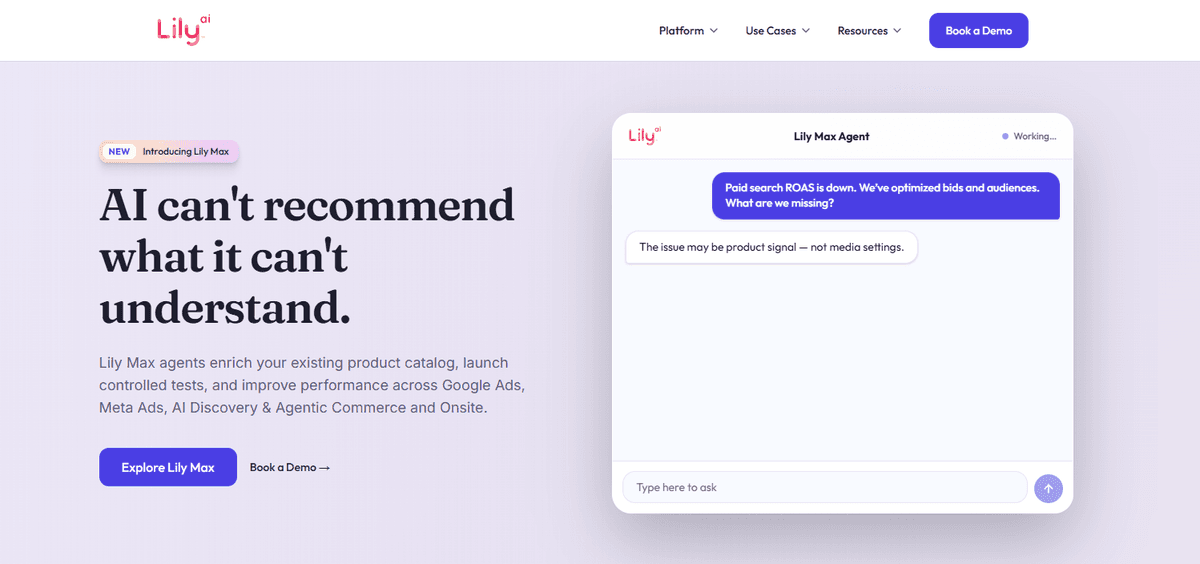
Best for: merchandising and ecommerce teams that want richer product data feeding search, forecasting and demand planning.
Overview
Lily AI applies machine learning to product attributes, translating how merchants describe products into the language customers actually use. That attribute layer improves search relevance, recommendations and demand forecasting across the funnel.
Pros
- Rich, customer-centric product attribution at scale
- Feeds search, recommendations and demand planning
- Works alongside existing ecommerce and merchandising systems
Cons
- Aimed at data and merchandising teams, not store associates
- Custom pricing means less upfront cost clarity
Best for: enterprise and mid-market brands that want to squeeze more accuracy out of search and forecasting by fixing the product-data layer first.
3. Inventory Planner
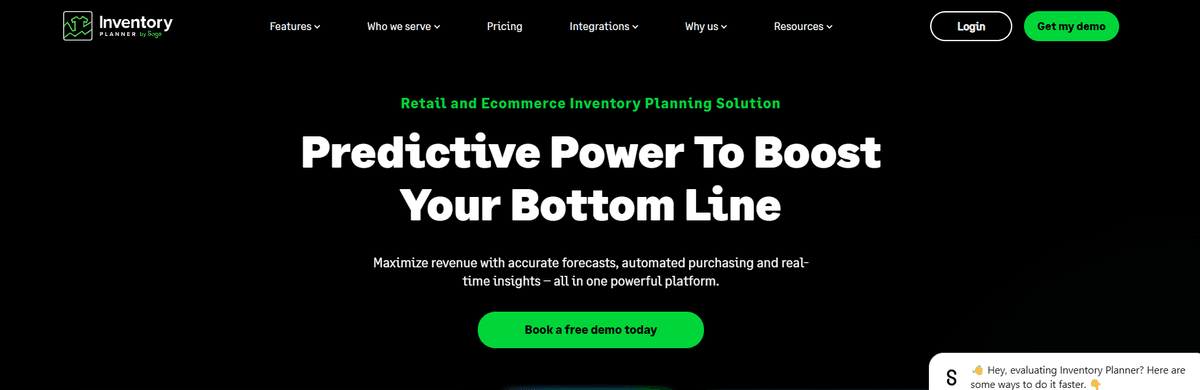
Best for: operations teams that need sharper demand forecasting and purchasing decisions across channels.
Overview
Inventory Planner forecasts demand and recommends what to reorder and when, helping brands avoid both stockouts and overstock. It pulls from sales history and trends to turn purchasing from guesswork into a data-backed routine.
Pros
- Demand forecasting with replenishment recommendations
- Reduces stockouts and excess inventory
- Integrates with major ecommerce and ERP systems
Cons
- Focused on inventory, so it needs companion tools for customer-facing work
- Forecasts still need human review during volatile demand
Best for: growing brands where tied-up capital and stock accuracy are the main constraints on growth.
4. Nosto
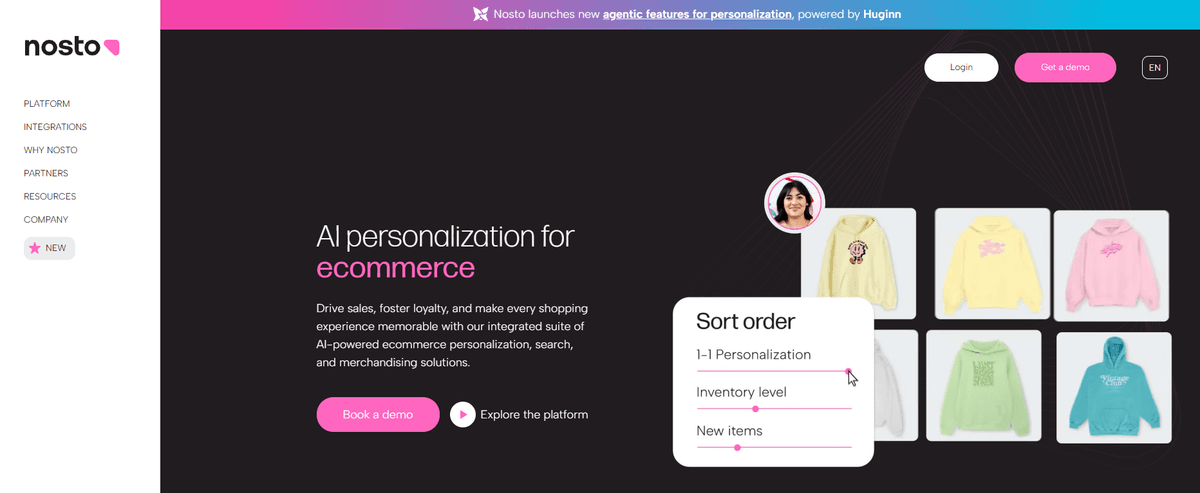
Best for: ecommerce teams that want automated on-site personalization without heavy engineering.
Overview
Nosto personalizes product recommendations, content and merchandising on ecommerce sites based on shopper behavior. It is designed to lift on-site conversion by showing each visitor more relevant products.
Pros
- Behavior-based product recommendations and content
- Merchandising controls for ecommerce teams
- Established platform with broad ecommerce integrations
Cons
- Focused on the online storefront rather than in-store teams
- Custom pricing reduces upfront clarity
Best for: online-first brands that want to raise conversion and average order value through smarter on-site experiences.
5. Dynamic Yield
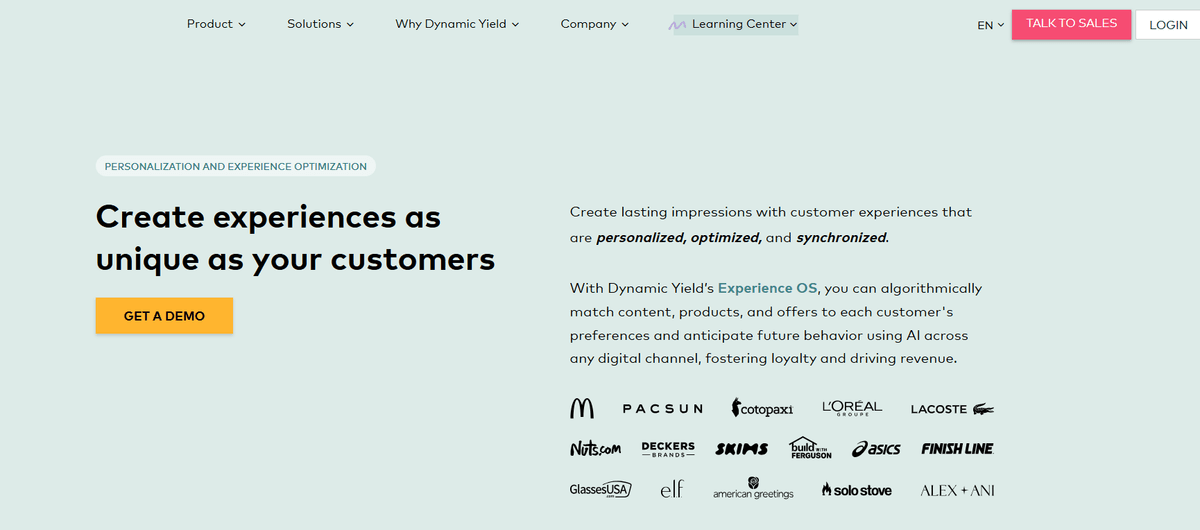
Best for: larger teams that want experimentation and personalization across web, app and email.
Overview
Dynamic Yield combines personalization, A/B testing and recommendation tools so teams can tailor experiences and measure what works. It suits organizations with the resources to run an ongoing testing program.
Pros
- Personalization plus robust experimentation
- Works across web, app and messaging channels
- Strong analytics for measuring lift
Cons
- Best value requires dedicated optimization resources
- Enterprise orientation can be heavy for small teams
Best for: mid-market and enterprise brands building a mature, test-driven personalization practice.
6. Tidio
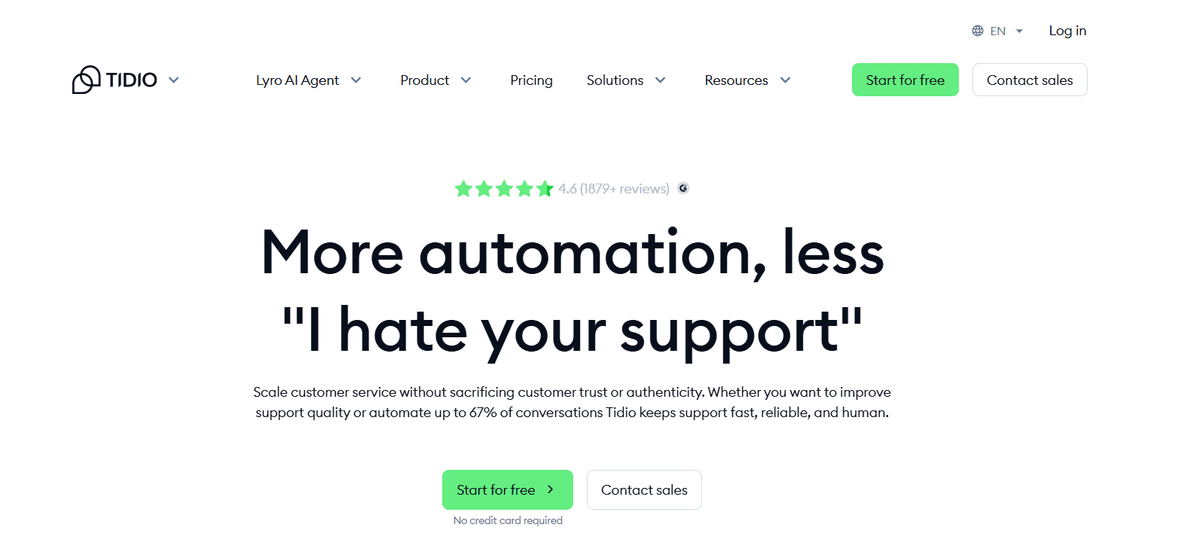
Best for: small and mid-sized stores that want AI chat for support and pre-sale questions.
Overview
Tidio blends live chat with AI-powered automation that answers common questions and helps shoppers find products. Its AI agent can resolve routine queries so human agents focus on the harder ones.
Pros
- AI chat that handles routine questions automatically
- Approachable setup for smaller teams
- Free entry tier to start
Cons
- Deeper capabilities sit on higher paid tiers
- AI answers still need oversight for accuracy
Best for: stores that want to cover support and pre-sale chat without staffing a large team.
7. Gorgias
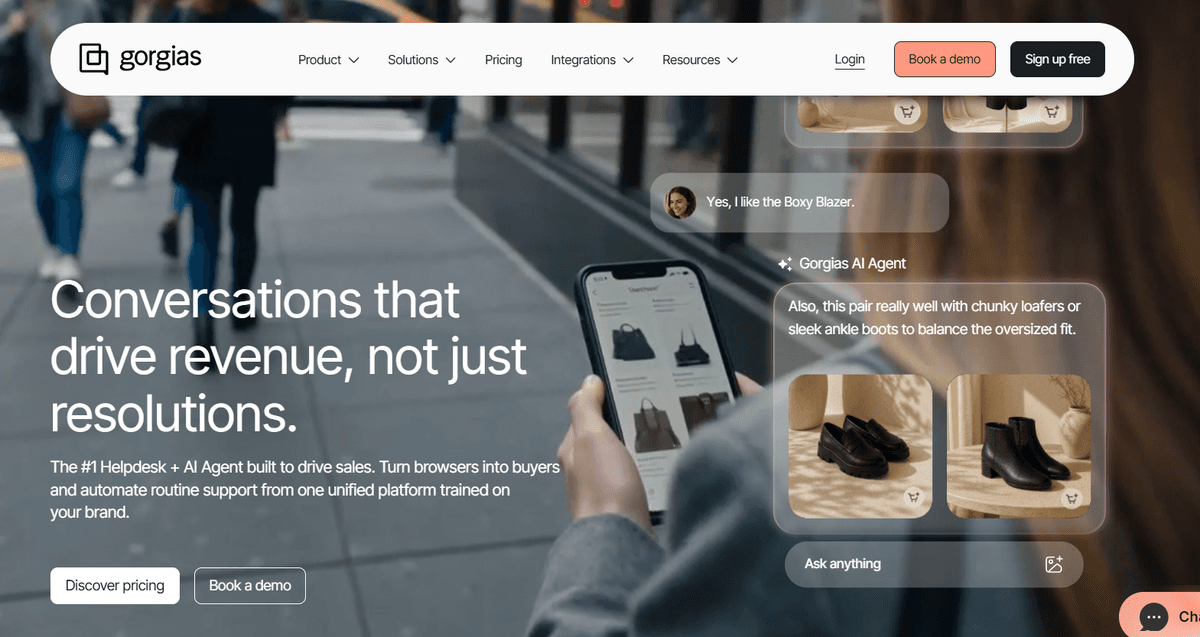
Best for: ecommerce brands that want AI-assisted customer support built around their store data.
Overview
Gorgias is a help desk built for ecommerce, with AI that drafts responses, automates repetitive tickets and surfaces order context in one view. It centralizes support across channels so agents work faster.
Pros
- AI-assisted replies and ticket automation
- Ecommerce-native with order context built in
- Consolidates support channels in one inbox
Cons
- Support-focused, so it pairs with other tools for outreach
- Automation quality depends on clean setup
Best for: online brands with high support volume that want faster resolution without sacrificing quality.
8. Bloomreach
Best for: larger brands that want AI-driven search, merchandising and marketing in one platform.
Overview
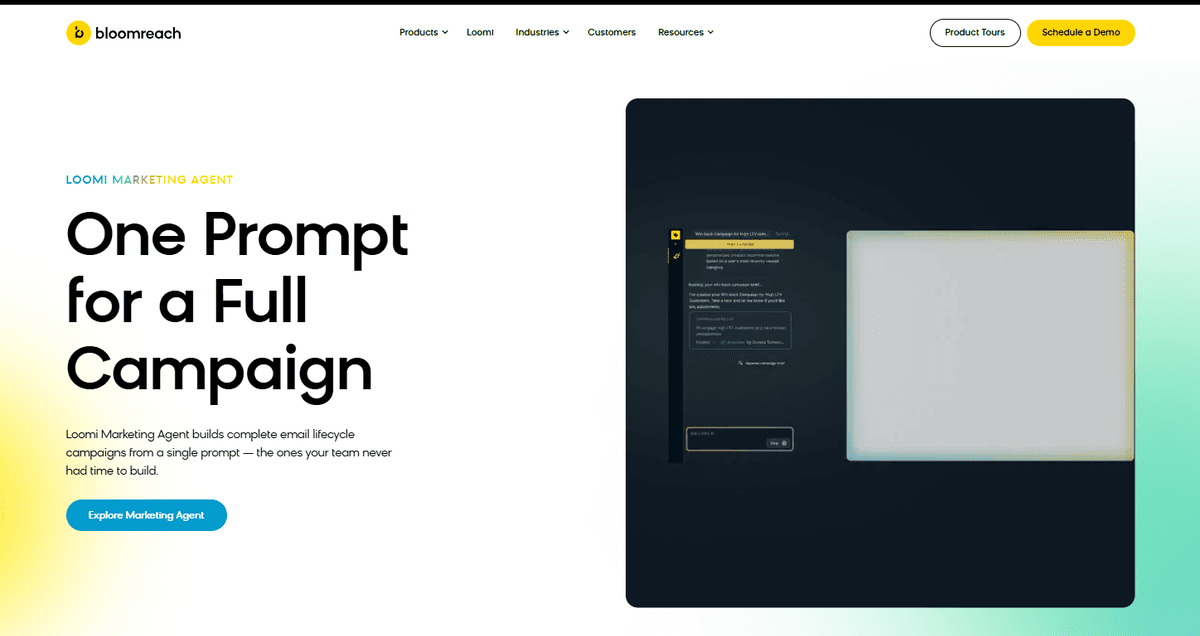
Bloomreach combines commerce search, personalization and marketing automation, using AI to connect product discovery with customer engagement. It is built for brands that want these layers working together rather than as separate tools.
Pros
- AI search and merchandising with marketing in one platform
- Personalization across discovery and engagement
- Scales to large catalogs and traffic
Cons
- Enterprise scope can exceed smaller brands’ needs
- Custom pricing reduces cost transparency
Best for: enterprise retailers unifying search, personalization and marketing under one roof.
Endear vs Nosto
Endear and Nosto both use AI to personalize, but for different moments and people. Endear equips store associates to run 1:1 outreach to named customers, with a human approving every message. Nosto personalizes the on-site experience for anonymous and known ecommerce visitors. Choose Endear when store teams and relationships drive your sales. Choose Nosto when the online storefront is where conversion happens.
Endear vs Gorgias
These solve opposite ends of the customer relationship. Gorgias handles inbound support, resolving tickets and questions efficiently. Endear drives proactive outreach, prompting associates to reach customers before they ask. Choose Gorgias to answer customers faster. Choose Endear to reach them first with something relevant.
Inventory Planner vs Lily AI
Both inform smarter decisions, but at different layers. Inventory Planner forecasts demand and guides purchasing. Lily AI enriches product data so search and forecasting have better inputs. Choose Inventory Planner for replenishment decisions. Choose Lily AI to fix the product-data foundation underneath them.
Conclusion
The best retail AI tool depends on the problem in front of you. If store teams and customer relationships drive your revenue, Endear is the standout for turning data into personal, associate-led outreach at scale. For operations, Inventory Planner and Lily AI sharpen forecasting and product data.
For the online storefront, Nosto, Dynamic Yield and Bloomreach raise conversion through personalization, while Tidio and Gorgias keep support fast as you grow. Match the tool to the team that will use it every day, and it will pay for itself faster than a broader platform you only half-adopt.
Frequently Asked Questions
1. What is a retail AI tool?
A retail AI tool uses machine learning to help brands sell more or serve customers better. That covers a wide range, from demand forecasting and inventory planning to on-site personalization, customer support and clienteling, so the right one depends on which part of the business you want to improve.
2. What is AI clienteling?
AI clienteling uses customer data to help store associates build personal 1:1 relationships at scale. Instead of mass marketing, it surfaces which customers to reach and why, then helps draft relevant outreach that a person reviews and sends. Endear is the clearest example in this list.
3. Does AI send messages to customers automatically?
With Endear, no. The AI ranks opportunities and drafts messages, but a store associate reviews, edits and approves every one before it goes out. Nothing is auto-sent. Other tools in the automation and chat categories do send automatically, so check each tool’s design before assuming.
4. Which retail AI tool is best for brands with physical stores?
For brands with physical stores and associate teams, Endear is purpose-built, since it turns customer data into a daily outreach queue that stores staff action. Many other tools on this list are oriented toward ecommerce or operations rather than the store floor.
5. How much do retail AI tools cost?
Pricing ranges widely. Some tools publish entry prices, such as Endear from $350 per month per location or Tidio from $29 per month, while enterprise platforms like Nosto, Dynamic Yield and Bloomreach use custom pricing. Confirm current figures with each vendor, since pricing in this category changes often.

Author
Vlad Orlov
Managing brand partnerships at Respona, Vlad Orlov is a passionate writer and link builder. Having started writing articles at the age of 13, their once past-time hobby developed into a central piece of their professional life.