Your Customers Stopped Searching in Keywords. Has Your Store Noticed?
Quick test. Go to your own Shopify store right now and search for one of your products the way a real customer would. Not the clean keyword you'd use as the owner. The messy, real-world way, with a typo, a synonym, or a full sentence like "warm jacket for winter hiking."
Did the right products show up? Or did your shopper hit a wall?
For most stores, it's the wall. And that wall is quietly one of the most expensive problems in ecommerce, because the people using your search bar are the ones most ready to buy. This post breaks down why keyword search is failing you, what changed, and how to fix it before your competitors do.
The Way People Search Completely Changed
For twenty years, searching meant translating what you wanted into robot language. You wanted a warm waterproof coat, so you typed "waterproof jacket" and scrolled through whatever came back.
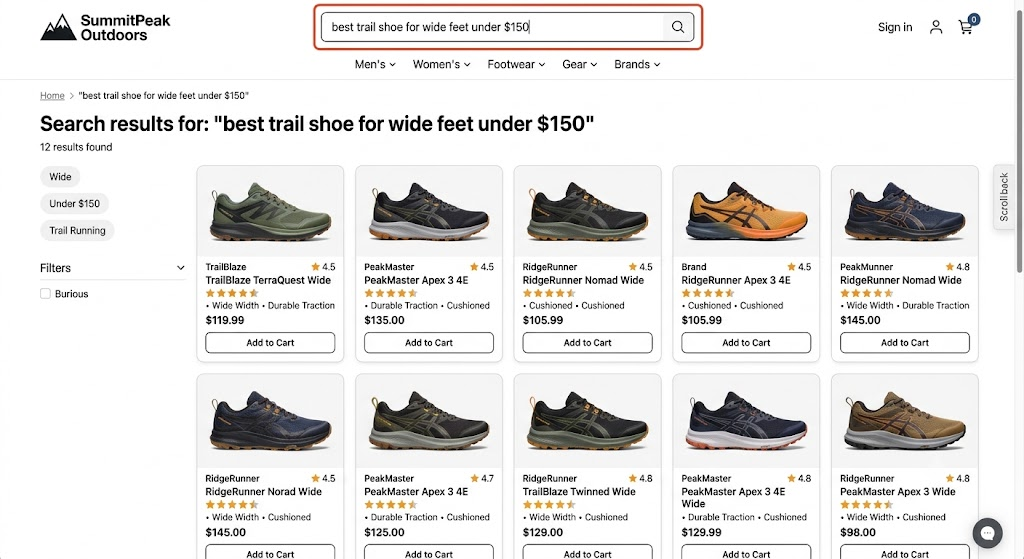
That era is over. Shoppers now search the way they think and talk, in full, natural sentences. And AI assistants trained them to expect it. When someone can ask ChatGPT "what's the best trail running shoe for wide feet under $150" and get a clear answer, going back to a store that only understands "trail shoes" feels broken.
The data makes the shift obvious. Most searches are now long, natural phrases instead of single keywords. AI-referred traffic to retail sites has exploded, growing several times over year on year, and those AI-sourced shoppers convert at higher rates because they show up knowing exactly what they want.
Here's the uncomfortable part for merchants. Your customers are already fluent in this new way of searching. If your store can't understand a full sentence, you're speaking a language your shoppers have moved on from.
Why Keyword Search Bleeds Sales (Quietly)
Default Shopify search matches words, not meaning. That creates failures you almost never see in your reports, because the shopper doesn't complain. They just leave.
Here's how it breaks in real life:
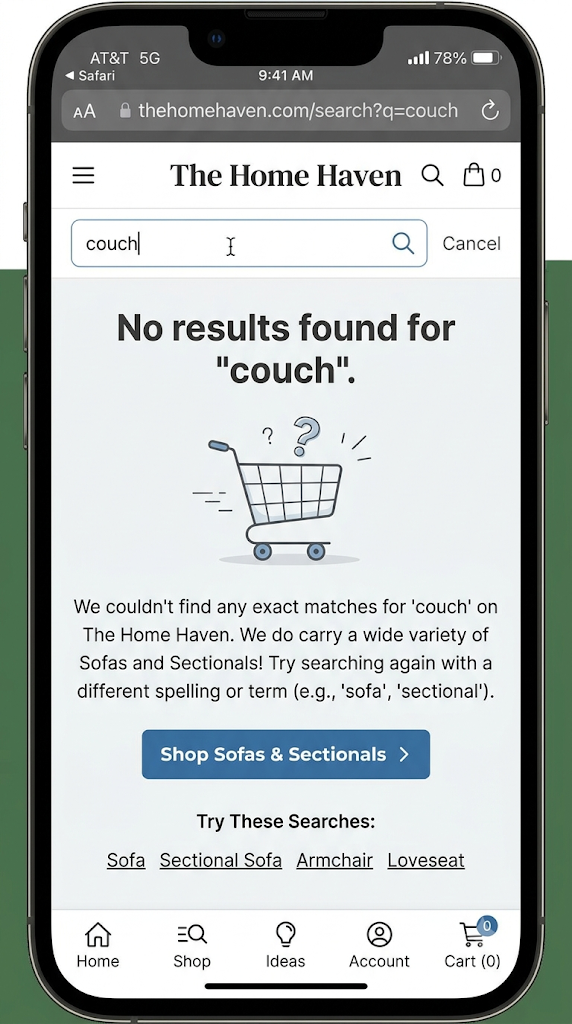
- Vocabulary mismatch. Shopper searches "couch." Your catalog says "sofa." Zero results, even though you sell exactly what they want.
- Natural phrases return junk. "Warm jacket for winter hiking" pulls up every jacket you own, including summer windbreakers, because the system can't weigh "warm" or "winter."
- Typos kill the sale. "Nikee snekers" returns nothing. The intent was obvious. The sale is gone.
- Descriptive queries fail. "Blue dress for a summer wedding" matches "blue" and "dress" and ignores the whole point of the search.
Every one of these is a high-intent shopper walking out the door. And the numbers on what happens next are brutal:
The cost of bad search, by the numbers: Around 80% of shoppers leave a site after a failed search. Most never come back. Site search users convert 2 to 4 times higher than browsers, yet a majority of ecommerce sites fail to handle the queries shoppers actually type.
Read that again. The single most valuable group of visitors you have, the ones actively searching to buy, is the group your search bar is most likely failing. When you've already paid to acquire that traffic, losing it at the search box is about as expensive as ecommerce mistakes get.
What Semantic Search Actually Does
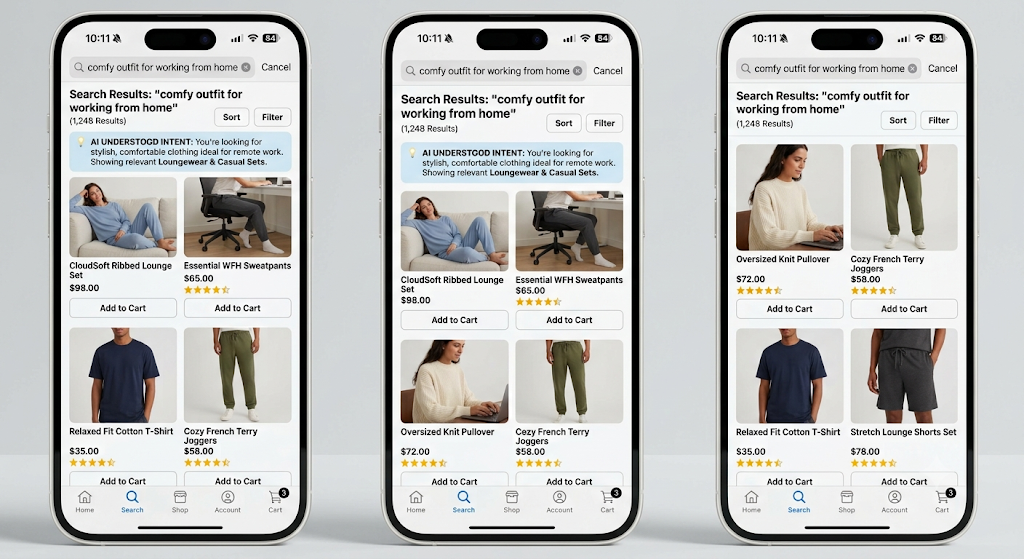
The fix is a shift from matching keywords to understanding intent. That's what "semantic search" means: instead of hunting for literal word matches, it figures out what the shopper actually means and surfaces the right products, even when the exact words never appear in your titles or tags.
This is the exact problem Sparq was built to solve for Shopify stores. It replaces the default keyword search with AI search that understands natural language. "Comfy outfit for working from home" surfaces the right loungewear even if none of those words are in your product data. Typos get fixed automatically. "Couch" finds your sofas, no manual synonym lists to build or maintain. And those long, descriptive, high-intent searches finally connect people to products instead of dead ends.
But the search box is only half of it. Real product discovery layers in things keyword search simply can't do:
- Intent understanding. It reads the meaning behind a query, so descriptive and conversational searches actually work.
- Smart filters. Shoppers narrow big catalogs fast by size, color, price, and attributes, which matters enormously on mobile.
- AI merchandising. Automatically push high-margin or in-stock products to the top, turning the same traffic into more profit per order.
- Relevant recommendations. "Frequently bought together" and personalized picks lift average order value, exactly the AOV win Debutify readers chase.
Stores that switch to this kind of AI discovery commonly report around a 30% lift in conversions. The logic is simple: your highest-intent shoppers finally find what they came for, fast.
Bonus: This Is How You Stay Visible to AI Shopping Agents
There's a second reason to fix this now. The same shift toward conversational, intent-based search is reshaping how products get found across the whole web, not just on your store.
AI shopping assistants increasingly research and recommend products based on how well a store's data reflects real shopper intent. A store built around semantic understanding, rich product data, clear attributes, results that match meaning, is far better positioned for that agent-driven future than one clinging to keyword matching. Fixing search for your human shoppers today quietly future-proofs you for the AI shoppers arriving tomorrow.
Your 15-Minute Search Audit
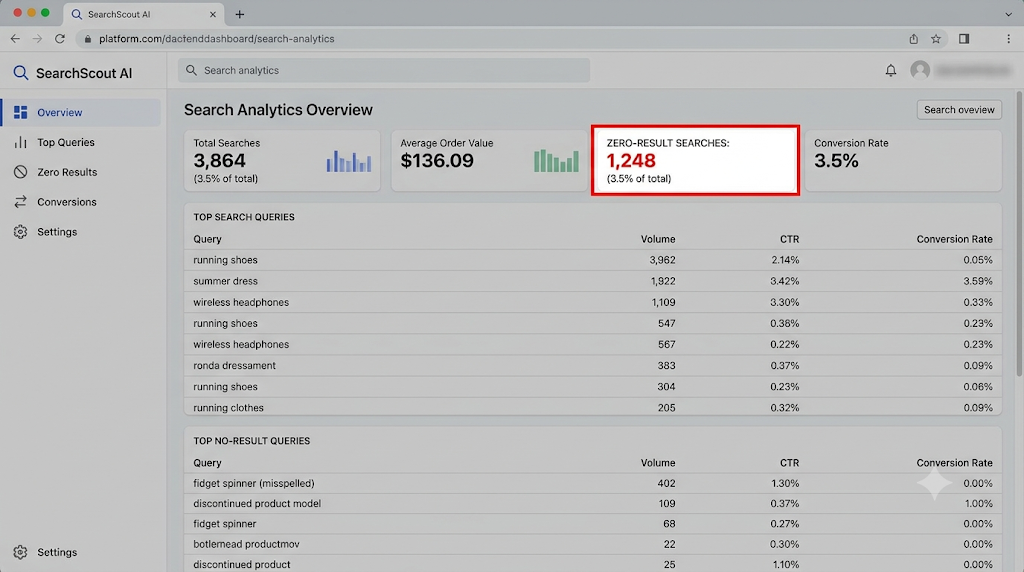
You don't need to rebuild your store to capture this. Search is one of the rare CRO levers where small changes produce trackable revenue. Do this today:
- Search your store like a frustrated customer. Type misspellings, synonyms, and full sentences. Write down everything that breaks.
- Check your zero-result rate. More than about 5% of searches returning nothing is a direct, fixable revenue leak.
- Read your search analytics. Your top queries and your failed queries are a free map of what customers want and where you're falling short.
- Turn on autocomplete. Guiding shoppers toward products before they finish typing reliably lifts sales.
Even without new tools, those four steps will show you exactly how much money your search bar is leaving on the table.
Getting Started
The best part: upgrading to real semantic search no longer needs a developer or an enterprise budget. Sparq installs on Shopify in a few minutes with no code, and pricing starts at $19 a month with a free trial, so you can measure the lift on your own store before committing a cent.
For a channel that influences a huge share of revenue, and one most of your competitors are still ignoring, that's one of the highest-return moves a growing store can make right now.
The Bottom Line
Your customers already search in full sentences. They already expect your store to understand them. The only open question is whether your search bar keeps up, or quietly hands your most ready-to-buy shoppers to a competitor who gets it right.
Keyword search had a good run. But the shoppers moved on. The stores that follow them are the ones that'll capture the sales everyone else keeps leaving behind.

Author
Shabnam Katoch
Shabnam Katoch | Marketing Head @ BetterClaw