How to Build Your First AI Agent for Your Shopify Store (No Code Required)
Be honest. How much of your week disappears into work that isn't actually growing your business?
The "where's my order?" emails. The same shipping question, answered for the hundredth time. The daily scramble to check what sold, what's low on stock, what needs a reply. None of it moves the needle. All of it eats your day.
Here's the good news for 2026: you can hand most of that off to an AI agent, and you no longer need to be a developer to do it. Search interest in "AI agents" has tripled in the past year, largely because the tools finally got simple enough for regular store owners. This is a step-by-step guide to building your first one, no code, and buying back a chunk of your week.
First: What's the Difference Between a Chatbot and an AI Agent?
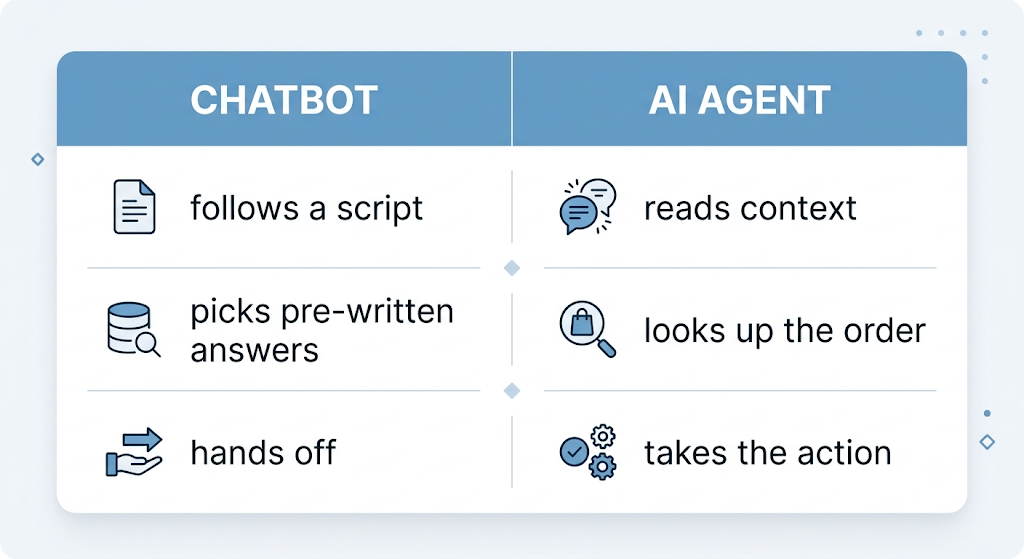
This matters, because people use the words interchangeably and they're not the same thing.
A chatbot follows a script. It picks from pre-written answers and passes anything unfamiliar back to you. Handy, but dumb.
An AI agent reads context, makes a decision, and takes an action across your actual tools. Instead of replying "here's our return policy," it looks up the specific order, checks its status, drafts a reply in your voice, and only flags the ones that genuinely need you.
One talks. The other does the task. That difference, from answering to acting, is exactly why smart store owners are moving from chatbots to agents this year.
Why This Is a Big Deal for Small Stores
The math is hard to argue with.
The numbers behind store automation: Roughly 80% of ecommerce support tickets are the same 9 questions. AI agents commonly automate 40 to 60% of those inquiries. An AI-resolved interaction can cost around 40 cents versus roughly $2.35 for a human-handled one.
Real brands are already living this. Some report their AI handling well over half of all support tickets, freeing their human team for the work that actually needs a person. One brand's assistant saved about five minutes per ticket, which added up to hundreds of hours a month.
For a solo founder or a small team, this isn't about cutting staff. It's about getting your evenings back and spending your limited hours on products, customers, and growth. It's the "save a day a week" dream, made real.
Step 1: Pick the Right First Task
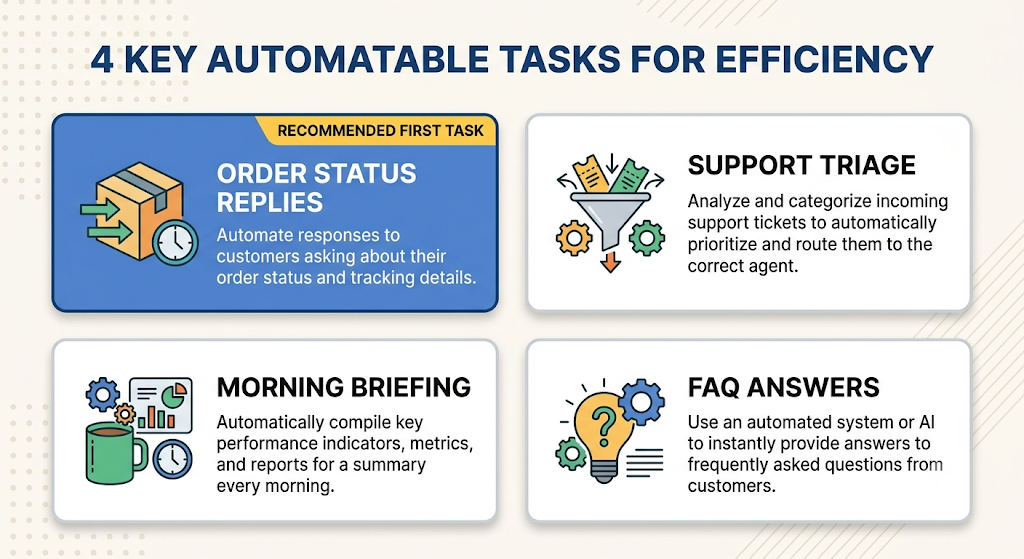
The classic mistake is trying to automate everything at once. Don't. Pick the single most repetitive thing eating your week and start there.
Great first candidates for most Shopify stores:
- Order-status replies. The most common question in ecommerce. An agent looks up the order and answers instantly.
- First-line support triage. The agent handles the easy, repeated questions and escalates the tricky ones to you with full context.
- A morning briefing. Have an agent pull yesterday's sales, low-stock items, and open issues into one message each morning.
- FAQ and policy questions. Shipping times, return windows, sizing, "do you ship to X." Endless, and perfect for handing off.
Pick whichever wastes the most of your time. You'll feel the payoff immediately and learn how agents behave before you scale up.
Step 2: Choose a No-Code Agent Builder
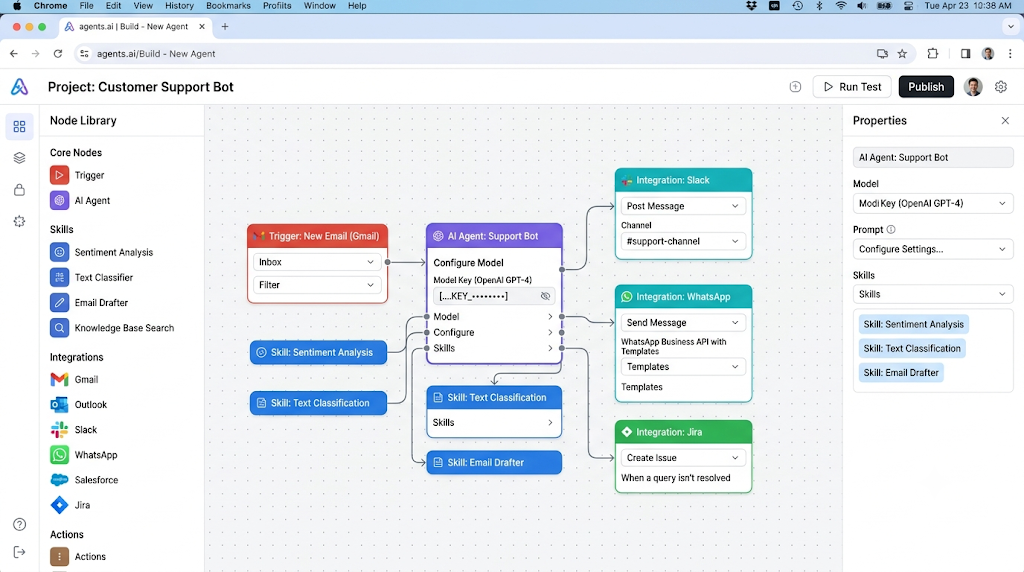
Building an agent used to mean wrestling with hosting, config files, API keys, and a stack of technical decisions that AI development services now help businesses simplify through modern no-code platforms. That wall is what kept agents out of reach for non-technical founders.
A new category of no-code agent builders tore that wall down. This is where BetterClaw fits. It's built for exactly this person: founders and small ops teams who want agents working, not infrastructure to babysit. You connect your own AI model key (bring-your-own-key, so you pay your AI provider directly with no markup), pick from a library of ready-made skills and one-click integrations, and set your agent loose on real tasks across the tools you already use, email, Slack, WhatsApp, Telegram. Setup takes minutes, not the days a from-scratch build would need.
When you're evaluating any tool for this, a few things genuinely matter, because your agent will touch customer data and credentials:
- Security by default. Encrypted keys, isolated execution, and the ability to approve sensitive actions or hit a kill switch.
- Spending caps. Per-agent limits so a runaway agent can't torch your AI budget.
- Clean human handoff. It should escalate to you, with context, when it's unsure.
- Simplicity you can maintain. If your ops person can build it without a developer, you can actually keep it running.
Step 3: Give Your Agent Clear Instructions
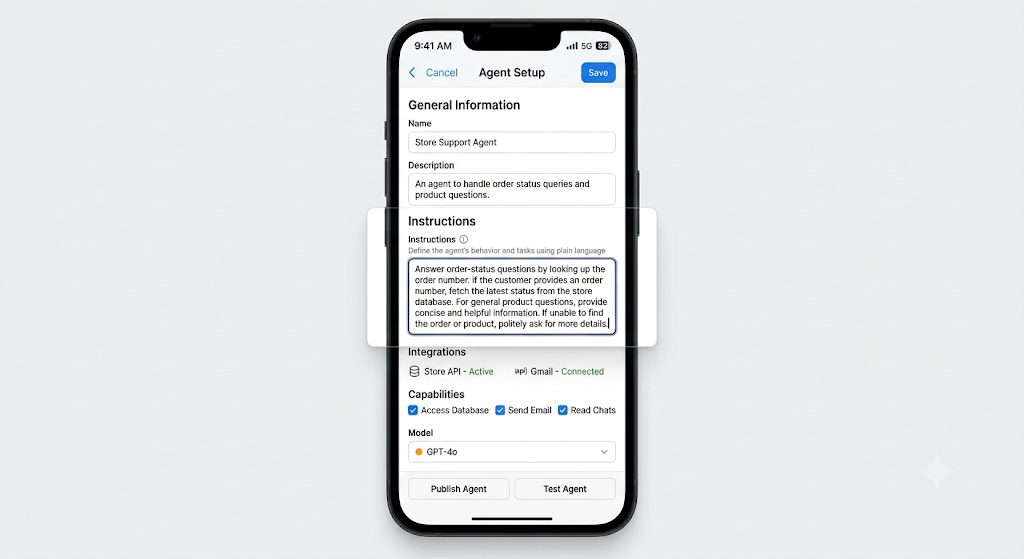
An agent is only as good as the instructions behind it. In a no-code builder, that means plain-language guidance, no coding, just clear direction. Three rules do most of the work:
- Be specific about the job. "Answer order-status questions by looking up the order number and giving the current shipping status" beats "help with support."
- Define the limits. Spell out what it handles and what it escalates. Example: handle order status and shipping questions, but send any refund or complaint to a human.
- Set the tone. Give it two or three examples of how you'd reply, so it sounds like your brand instead of a robot.
Step 4: Test, Then Expand
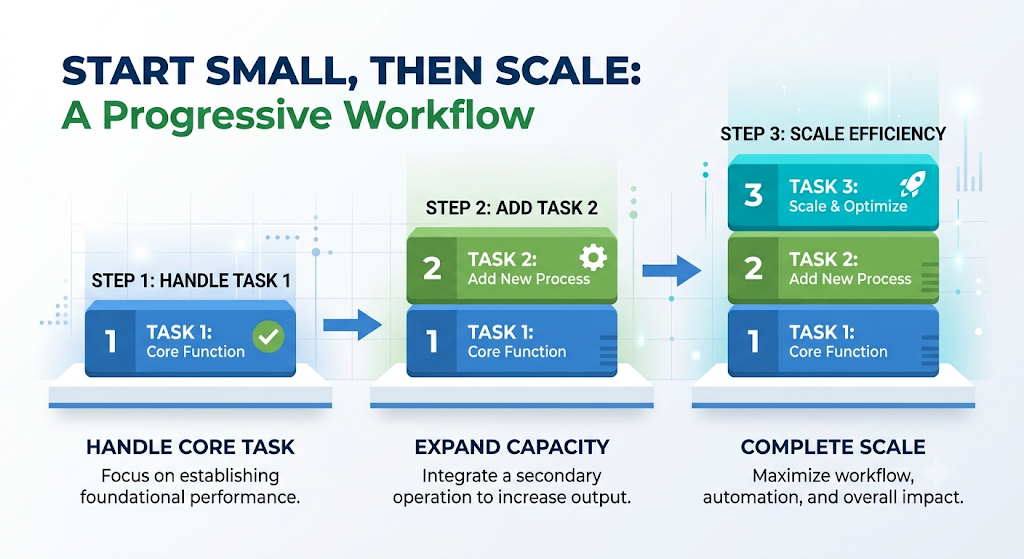
Before your agent talks to a single real customer, test it. Run your common questions through it, throw in the weird edge cases, and check that it escalates the things it should. Then watch its first live conversations closely.
Once it's reliably handling that first task, expand. Add a second. Then a third. This measured, one-task-at-a-time approach is how small teams end up automating a big share of their operational load without anything breaking.
Getting Started Without Spending a Cent
The only real way to understand any of this is to build one and watch it work on your actual store. And because these tools now come with genuinely free tiers, you can do that at zero risk. BetterClaw has a free plan with no credit card required, so you can create your first agent, point it at your most repetitive task, and see whether it saves you time before spending anything.
The Bottom Line
Growing a store was never about working more hours. It's about spending your limited hours on the work that actually matters, and offloading the work that doesn't.
That repetitive operational grind is the thing standing between you and the higher-value work. For the first time, you can hand it off without a developer, a big budget, or a painful setup. Pick your most repetitive task. Build one agent to handle it. Measure the time you get back.
That first small win is usually all it takes to see why so many Shopify stores are quietly building agents this year, and buying back a day of their week in the process.

Author
Shabnam Katoch
Shabnam Katoch | Marketing Head @ BetterClaw