The Shopify Seller’s Ultimate Cheat Code: Scaling Visual Content with AI (Without Breaking the Bank)
Let’s be honest for a second. Building a Shopify store today is the easy part. You pick a high-converting theme like Debutify, optimize your checkout, and your storefront looks like a million bucks.
But then comes the actual bottleneck: Visual Content.
If you are a dropshipper or an emerging e-commerce brand, you know the struggle. You find a winning product, but the supplier photos look like they were taken with a flip phone in 2008. So, what are your options?
You could hire a photographer, book a studio, pay models, and wait two weeks for the edits to come back. That’s thousands of dollars out the window before you even know if the product will sell. Or, you could try to rely on those generic, white-background stock photos and watch your Facebook Ads money burn because your click-through rate is stuck at 0.5%.
For a long time, high-quality visual marketing was a game only big brands with massive budgets could play. Not anymore.
Generative AI has fundamentally changed the rules of e-commerce. We’re not just talking about writing product descriptions with ChatGPT anymore. We are talking about replacing entire production studios with software.
Let’s break down exactly how modern Shopify brands are using AI—specifically visual AI tools like APOB AI—to cut costs, dominate social media, and drastically boost their store conversions.
Strategy 1: Slashing Photography Costs by 80% with AI Models
Picture this: You’re testing a new apparel line. To actually sell clothes, you need lifestyle photos. People don't buy t-shirts; they buy the look.
Traditionally, a basic e-commerce photoshoot involves paying a model (100-300/hour), a photographer ($500+/day), and maybe renting a location. If you want to test the product with different demographics—say, a Caucasian model, an Asian model, and an African American model—your budget just tripled.
This is where AI models step in and completely level the playing field.
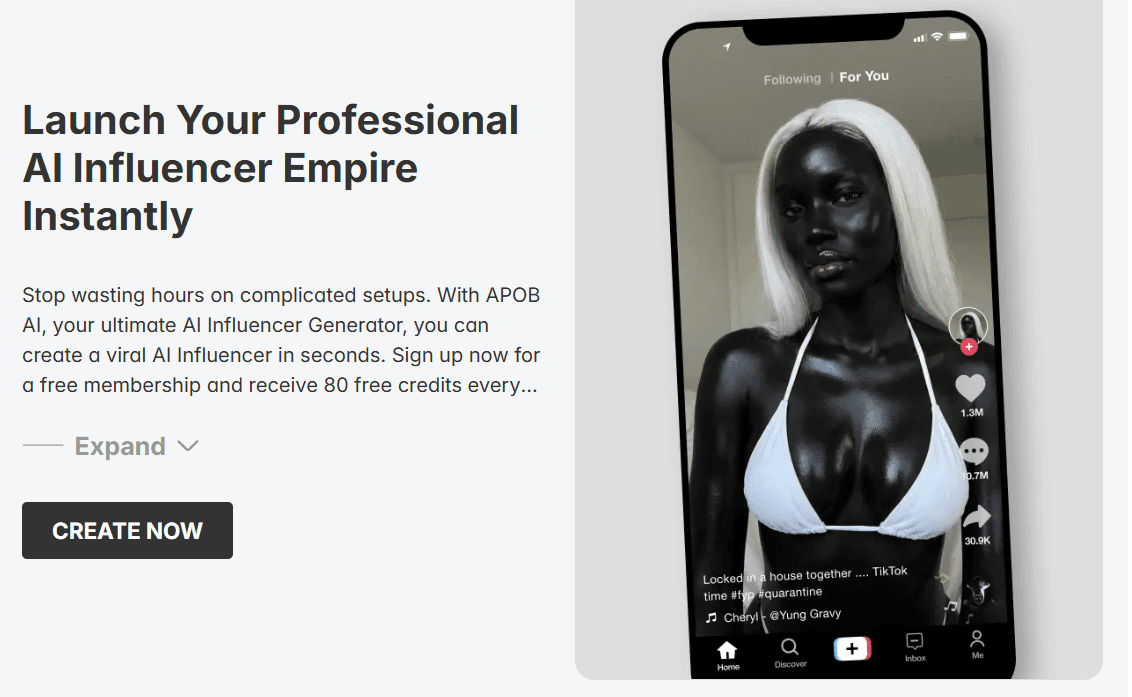
Using tools like APOB AI, you no longer need physical models. You can take a basic, flat-lay photo of your clothing item, or even a photo of it on a simple mannequin, and let the AI do the heavy lifting. The software maps your product onto highly realistic, AI-generated human models.
Why this is a game-changer for your workflow:
Hyper-Targeting: Selling to a European market today and an Asian market tomorrow? You can generate localized model faces in seconds without shooting a single new photo.
Instant Turnaround: Instead of waiting weeks for a photographer, you have a folder full of ad-ready lifestyle creatives in 10 minutes.
A/B Testing on Steroids: You can test whether your audience responds better to an outdoor lifestyle shot or a clean studio look, at zero extra cost.
By cutting out the logistical nightmare of photo shoots, you free up your budget for what actually matters: driving traffic.
Strategy 2: Building a "Faceless" Social Media Empire with AI Influencers
We all know the current state of marketing: If you aren't posting short-form videos on TikTok, Instagram Reels, and YouTube Shorts, you are leaving serious money on the table. Organic reach is the holy grail of e-commerce right now.
But there is a glaring problem. Producing 3 to 5 videos a day requires someone to actually sit in front of a camera, talk about the product, and edit the footage. It's exhausting. If you hire UGC (User Generated Content) creators, it costs anywhere from $50 to $200 per video. That scales terribly.
Enter the AI Influencer and Talking Avatar.
Brands are now realizing they can create a consistent, recognizable brand ambassador who never sleeps, never asks for a raise, and never has a bad hair day.
With APOB AI’s digital human and lip-sync technology, you can essentially automate your short-form video production. Here is how it works in practice:
Write the script: Outline a quick hook, product benefit, and call to action.
Pick your AI Avatar: Choose a digital human that matches your brand’s vibe.
Generate: The AI perfectly syncs the audio to the avatar's lips.
You can create "how-to" videos, product reviews, and unboxing commentaries without ever picking up a camera. This allows Shopify store owners to run a completely "faceless" marketing strategy while still giving their audience a human face to connect with. You can test dozens of hooks and video angles in an afternoon, flooding the algorithms and driving organic traffic right back to your Debutify store.
Strategy 3: Upgrading Storefront UX from Static to Dynamic
So, you’ve used AI models for your ads, and you’ve used AI avatars to drive traffic from TikTok. Now the customer is on your product page. How do you get them to click "Add to Cart"?
If you are using a premium theme like Debutify, your store is already structurally optimized for conversions. But the content inside that structure needs to pull its weight.
Data consistently shows that product pages with videos have significantly higher conversion rates, longer time-on-page, and lower bounce rates compared to pages with only static images. Customers want to see how a product moves, how the light hits it, and how it looks in 360 degrees.
But again, shooting product videos for a catalog of 200 SKUs is a nightmare.
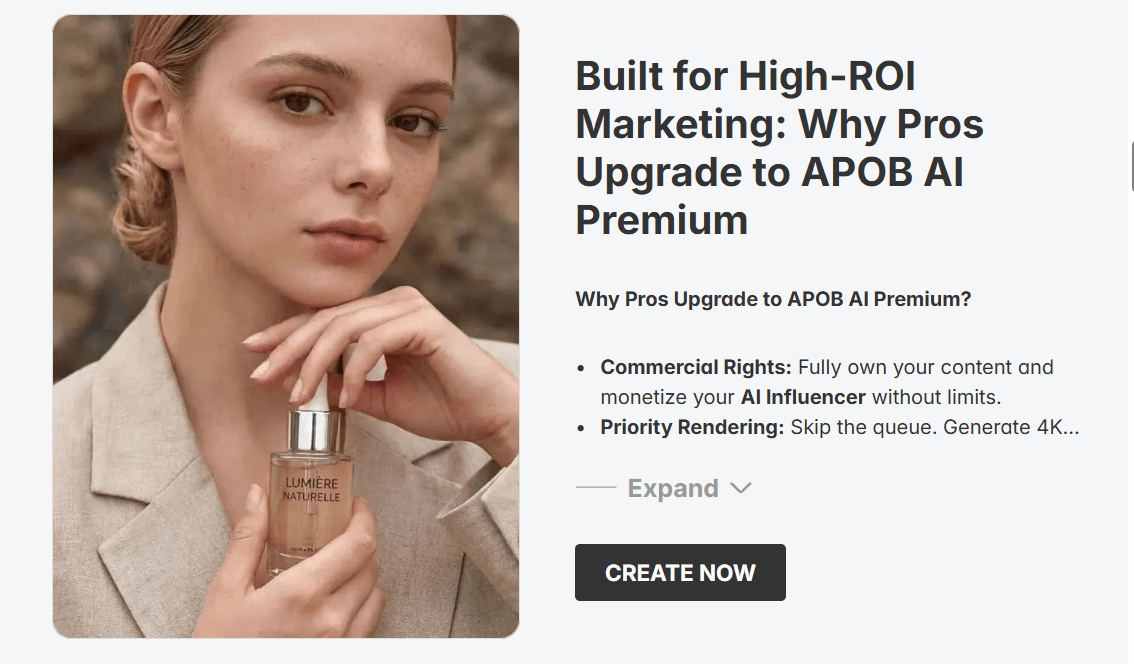
This is where Image-to-Video AI becomes your best friend. You don't need a videographer. Tools like APOB AI can take your static product images and breathe life into them.
Selling jewelry? Use AI to add a dynamic sparkle and a slow rotation effect.
Selling fashion? Turn a static model shot into a short runway walk or a subtle pose shift.
Selling home decor? Create a video that slowly zooms into the texture of the fabric.
By embedding these lightweight, AI-generated micro-videos into your product gallery, you instantly elevate the perceived value of your store. It bridges the gap between the customer's screen and the physical product, building the trust necessary to push them over the buying edge.
And because these videos are generated in seconds, you can easily keep your product pages fresh and engaging without slowing down your site's load speed (especially if you compress them properly before uploading to your Shopify backend).
The Bottom Line: Adapt or Overspend
Running a successful e-commerce brand is all about resource allocation. Every dollar you spend on expensive photo shoots and traditional video production is a dollar you aren’t spending on customer acquisition.
The integration of AI in e-commerce is no longer a futuristic concept—it is a daily reality for top-performing stores. By leveraging platforms like APOB AI, you can generate studio-quality model shots, scale your social media presence with digital avatars, and boost your page conversions with dynamic video content.
When you combine cutting-edge visual AI with a highly optimized store framework like Debutify, you create an unfair advantage. You move faster, test cheaper, and convert higher.
Stop letting content creation slow you down. Let AI handle the visuals, so you can focus on scaling the business.

Author
Shajar SEO
Freelance writer creating engaging, informative, and SEO-friendly content.