What an AI Scanner Actually Does (And Where It Falls Short)

Ever run a piece of writing through an AI scanner? Maybe a client asked you to. Maybe a teacher flagged your essay and you wanted proof either way. A number pops up. 76% AI-generated. And you're left staring at it, wondering what that even means.
Here's the good answer. That number is a guess. A calculated one, sure, but still a guess. Let's get into how these tools work and where they mess up.
How AI Scanning Actually Works
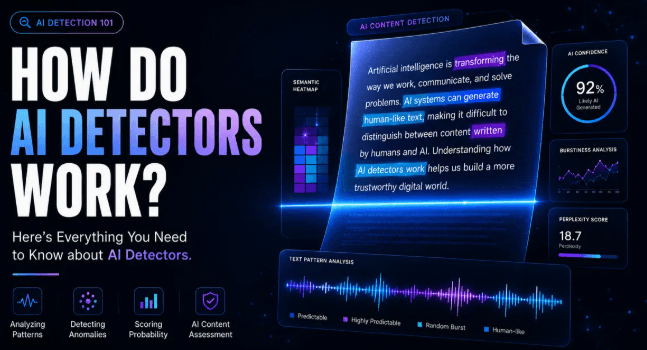
An AI scanner doesn't read your writing the way you or I do. It can't feel that something's off about a paragraph. It just compares patterns against a huge pile of machine-written text it trained on.
Two things matter most here. Word predictability, for one. Language models pick the most likely next word, again and again. That habit leaves text sounding a bit too smooth, a bit too even. Sentence rhythm is the second piece. Real people jump between short lines and long, winding ones without even thinking about it. Machines used to just... settle into a groove and stay there.
Mix those two signals, run them through a trained model, and out comes a percentage. Not a verdict. A calculated guess.
Why Your Score Might Be Wrong
Here's where things get messy. A high score doesn't prove AI wrote something. A low score doesn't prove a human did either.
Clean, direct writers get flagged constantly. So do non-native English speakers — their phrasing sometimes lines up with patterns scanners associate with machines, purely by coincidence. Meanwhile, someone can generate a full draft with AI, run it through a paraphraser, tweak a few lines, and sail right past the same checker.
Frustrating? Yeah. It just means you shouldn't treat the score as gospel.
Who's Actually Using Ai scanning Tools
Teachers lean on scanners constantly now, though most use them to flag essays for a second look rather than hand out instant zeros. Editors do the same thing when they buy freelance work — they want some confirmation they're paying for what they think they're paying for.
Some publishers run every single guest post through a checker before it goes live. Part of that protects their site's voice. Part of it just filters out lazy, unedited junk.
Recruiters have jumped on this too, checking cover letters before interviews. This one's shakier, honestly. A cover letter that's too polished can get flagged even when someone spent three hours agonizing over every line.
Getting a Result You Can Actually Trust
A few habits genuinely help here.
Run the same text through more than one scanner. Every tool trains on a different dataset, so one check alone can send you the wrong way. Look at which specific sentences get flagged instead of just staring at the overall percentage — that tells you a lot more. And anything sitting in the middle, say 40 to 60 percent? Treat that as inconclusive. Not proof of anything.
Context beats numbers most of the time anyway. Did the tone shift halfway through the piece? Does this sound like the person's usual voice, or does something feel off? Those questions matter more than any score.
One more thing worth checking: was this a first draft, or something revised five times over? Heavy editing changes rhythm and word choice on its own, no AI required. That alone can shift a score in either direction.
Mistakes People Keep Making
The biggest one? Treating a single score as final proof. A number from one tool shouldn't decide someone's grade, payment, or job offer. Full stop.
People also forget how narrow these tools can be. Scanners trained mostly on English struggle badly with bilingual writers or translated text. Someone writing in their second language gets flagged just for phrasing things differently than a native speaker would — that's not AI use, that's just a different background.
And generation models never sit still. A scanner calibrated against last year's AI might completely whiff on text from something newer. The gap between detection and generation keeps shifting under everyone's feet.
Where This Is All Headed
Detection keeps improving. So does generation. It's a bit of an arms race, honestly, and it's not stopping anytime soon. Every time scanners get sharper at spotting a model's fingerprints, a newer model shows up with fewer fingerprints to find.
Some newer tools blend several signals at once now — predictability, rhythm, style markers, all mixed into one score. Others highlight exactly which sentences raised a flag instead of just handing you a vague number. Helpful, sure. But none of it closes the gap completely, and probably nothing will for a while.
Bottom Line
Don't expect certainty from any AI scanner. Expect a decent hint, one worth pairing with your own gut check. Used that way, these tools genuinely pull their weight. Trusted blindly, they'll eventually screw someone over, in one direction or the other.
So next time a percentage flashes on your screen, don't just react to it. Look at what's driving the number. Check which lines got flagged. Run it through a second tool if the stakes are high. That small habit turns a blunt, imperfect instrument into something you can actually rely on.

Author
Clifton Polly
Authority Backlinks Agency specializes in high-authority link-building and professional guest posting services, helping businesses enhance their online visibility, organic traffic, and search engine rankings.