Wholesale Clothing in China: Markets, Suppliers & Buying Guide 2026
China remains the world’s dominant force in wholesale clothing production and export as of 2026. The country still produces nearly 65% of global garments and accounts for over 30% of total textiles and clothing exports worldwide. Key export regions include North America, the EU, Africa, and the Middle East, with cross-border e-commerce exports expanding by double digits annually.
If you’re wondering where to buy wholesale clothing in China, the major hubs are Guangzhou, Hangzhou, Shenzhen, Shanghai (including nearby Changshu), and Wuhan. Online platforms powered by giants like Shein and Temu have also transformed how international buyers source apparel from Chinese suppliers.
What you’ll learn in this guide:
- Main wholesale clothing markets by city with location details
- Typical wholesale price levels and MOQ expectations
- Quality ranges from budget basics to high end designer pieces
- Practical buying tips for importers and boutique owners expanding their inventory
The domestic fashion industry in China generated approximately US$319 billion in apparel market revenue in 2023, projected to grow at 4.41% annually through 2027. Export value for apparel reached about $175 billion in 2022, with clothing accessories adding another $160 billion. These figures underscore why serious buyers continue sourcing from china wholesale markets despite rising competition from other countries like Vietnam and Bangladesh.
Once you’ve sourced your products, the next step is turning them into a high-converting store. That’s where the right Shopify theme makes the difference.
Why Source Wholesale Clothing from China in 2026
China has been the largest clothing exporter since the early 2000s, when it began surpassing traditional textile powerhouses like Italy and Bangladesh through massive manufacturing scale-up. That dominance continues in 2026, driven by several structural advantages that benefit international buyers.
- Cost efficiency through scale: Large-scale production clusters in Guangdong, Zhejiang, and Jiangsu provinces keep prices exceptionally low for garments like t shirts, jeans, and sportswear. With 20 million direct textile jobs and chemical fiber production of 67 million metric tons (50% of global share), labor and materials remain competitively priced.
- Unmatched product range: From mass-market basics at Shahe and the liuhua fashion wholesale market to designer-style women’s wear at Shenzhen Nanyou and guangzhou baima clothing market, buyers can source everything from budget cotton shirts to premium jackets and dresses. Specialty categories include denim clothing at Xintang and kidswear along Zhongshan Ba Road.
- Flexible order options: Many factories now accept MOQs of 50–200 pieces per color/size mix for custom clothing orders, compared with 500+ a decade ago. This flexibility supports small business owners launching their own clothing line alongside established brands placing bulk orders.
- Mature logistics infrastructure: Ports like Shenzhen, Guangzhou, and Shanghai deliver bulk sea shipments to the US and EU in 20–35 days. Digital textile printing lead times can be under 24 hours, enabling rapid design-to-garment cycles.
While Vietnam excels in low-end knits and Bangladesh offers cheaper labor, neither matches China’s combination of variety, speed, and infrastructure. For buyers prioritizing fast fashion turnaround, diverse materials, and reliable shipping, China remains the best choice in 2026.
Main Wholesale Clothing Hubs in China
Wholesale clothing concentrates around several city clusters across eastern China. Each hub serves different buyer profiles, price points, and product categories.
- Guangzhou (Guangdong): The undisputed capital of clothing wholesale, hosting dozens of markets near guangzhou railway station and Shahe. Primary export destinations include Africa, the Middle East, Russia, and Southeast Asia.
- Hangzhou (Zhejiang): Home to Sijiqing district, the largest integrated apparel wholesale ecosystem in China, serving both budget and premium women’s fashion buyers.
- Shenzhen (Guangdong): Focuses on higher-end, original-design fashion in Nanshan District’s Nanyou zone, with many designer-style women’s wear buildings attracting boutique buyers.
- Shanghai and Changshu: Qipu Road offers budget basics and accessories, while nearby Changshu Garment City provides factory-direct apparel, uniforms, and knitwear at competitive prices.
- Wuhan (Hubei): Night markets serve as low-price, high-bargain venues for small resellers comfortable with non-standardized quality and limited formal contracts.
- Xintang Town: A specialized denim manufacturing and wholesale base producing 2.5 million pieces daily.
Guangzhou: Core City for Wholesale Clothing in China
Guangzhou city functions as a global clothing distribution center, hosting dozens of large markets within a few kilometers of guangzhou railway station. Key commercial streets include Zhannan Road, Zhanxi Road, Zhongshan Ba Road, and the Shahe area in Tianhe District.
- Near-railway-station cluster: Medium to high-end fashion and export-focused markets including Baima, Liuhua, Hongmian, Kairongdu, Huimei, UUS, Jinbao, Jindu, Zhanxi, Jinhong, and Taohuajiang.
- Shahe district: Low-price, high-volume markets like Nan Cheng, Bei Cheng, Wanjia, and Chang Yun Center offering extremely cheap clothes with basic quality.
- Xintang town: The primary jeans and denim manufacturing base, located in southern Zengcheng within the Greater Bay Area.
- Specialized streets: Zhongshan Ba Road for children’s clothing; Changgang, Jindong, and Weiguo for stocklots and overrun apparel.
Guangzhou is typically the first stop for international buyers starting a clothing line or expanding an existing shop, given its concentration of wholesalers and access to manufacturing.
Key Wholesale Markets Around Guangzhou Railway Station
This cluster sits within walking distance of guangzhou railway station and metro stations, making it ideal for intensive 2–3 day sourcing trips. Markets open early (often 5–6 AM) with peak activity before noon.
- Guangzhou Baima Clothing Market: Approximately 60,000 sqm across 10 floors, focusing on medium–high end garments. Brands like GIRDEAR and GLORIA maintain presence here. Considered the most professionally managed wholesale building in Guangzhou with standardized stall operations.
- Liuhua Fashion Wholesale Market: Established in 1996, this fashion wholesale market specializes in cheap t shirts and polo shirts. Strong client base from the Middle East and africa, with most shops selling in bulk only at low prices.
- Hongmian International Fashion City: Focuses on ladies’ wear balancing quality and wholesale price, suitable for boutique owners seeking fashionable but affordable women’s clothing.
- Kairongdu Clothing Wholesale Center: Main exports to Russia, Korea, and various European countries including eastern europe. Product distribution: evening dresses and groceries on underground/1F, showrooms 2F–4F, own clothing brands 5F–6F. Offers rush orders within approximately one week.
- Huimei International and UUS: Young men’s clothing and women’s fashion with Japanese, Korean, Hong Kong, and Taiwan style. Private label options on lower floors. UUS relaunched in 2018 on the site of former Kowloon Shoe City.
- Jinbao, Jindu, Zhanxi, Jinhong, Taohuajiang: Surrounding buildings selling Korean and Japanese style apparel, replica brands, and sportswear destined for North America, africa, eastern europe, and Western Asia.
Shisanhang Wholesale District in Liwan, Guangzhou
Shisanhang in liwan district is famous for women’s fashion and children’s wear, attracting buyers from across China and abroad daily. The area centers around several multi-story buildings with early morning wholesale activity.
- New China Building: Lower floors (1F–3F) handle wholesale women’s fashion; higher floors offer better quality at slightly higher prices. Peak hours are early morning, with reduced afternoon activity.
- Hongbiantian: Lower-quality but cheaper clothing with wide variety. One of the oldest clothing distribution centers, drawing buyers from Russia and Southeast Asia.
- Doulan Street and Heping East: Low-price streets comparable to Liuhua pricing, excellent for bargain hunters and stocklot buyers.
- Main product categories: Sweaters, jeans, yoga clothing, brand-style women’s wear, and children’s clothing. Many vendors operate as brand wholesalers for domestic markets.
Shahe Clothing Wholesale Market Cluster (Guangzhou)
Guangzhou shahe market in Tianhe District ranks among the three major clothing wholesale distribution centers in Guangzhou, known for extremely low prices and massive daily volumes. This is where many clothing brands source their most affordable inventory.
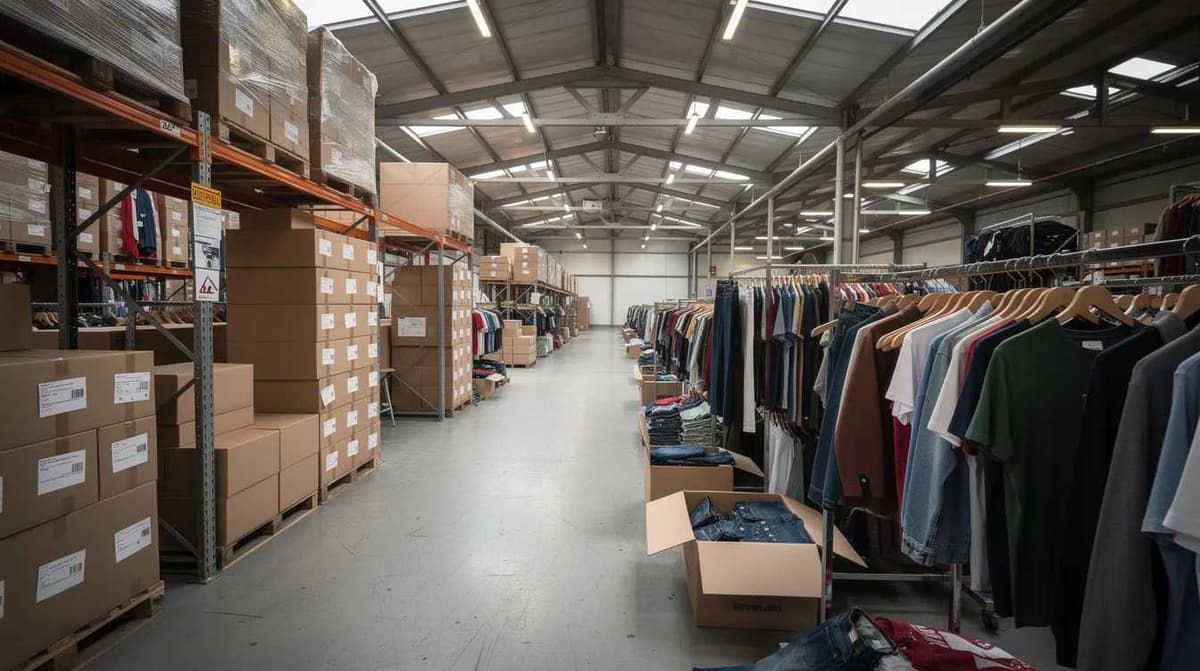
- Main complexes: Nan Cheng, Bei Cheng, Wanjia, Yimin, Jin Ma, Oriental Cowboy City, Fu Li, Chang Yun Center—all oriented toward low-end, fast-moving garments.
- Quality reality: Many clothes originate from small workshops with minimal QC. Designs are frequently copied, and products often appear on Taobao and Pinduoduo shortly after market release.
- Sub-area specialization: Beicheng, Yimin, and Changyun Center focus on men’s wear; Wanjia handles jeans, underwear, socks, and basics.
- Target markets: Exports to africa and other price-sensitive regions. Less strict quality expectations enable frequent online distribution and dropshipping operations.
- Buyer warning: “You get what you pay for”—suitable for margin-focused resellers, but not ideal for premium boutique brands seeking high quality clothes.
Specialized Guangzhou Markets: Jeans, Kidswear & Stocklots
Beyond general fashion markets, Guangzhou hosts dedicated zones for denim, children’s clothing, and stocklot/overrun apparel.
- Xintang International Cowboy City: Located in xintang town, south of Zengcheng City. China’s largest denim base, producing approximately 2.5 million denim pieces daily across 2,600+ enterprises. Heavy exports to Hong Kong, Russia, US, and EU.
- Xincheng International Cowboy City Mall: Over 1,100 shops across roughly 10,000 sqm. First and second floors for shops, third for offices, fourth for warehouses primarily focused on jeans wholesale.
- Zhongshan Ba Road: Specializes in children’s clothing with main markets including Litang and Lijing Building. Daily traffic rivals guangzhou railway station area.
- Stocklot hubs: Changgang Stocklot Market in Jinchang Building offers ultra-cheap women’s wear (shorts around US$1.5, denim jeans around US$3 in 10-piece lots). Jindong International and Guangda markets handle special offers. Weiguo Apparel Stocklot Wholesale Market is South China’s largest stocklot distribution center.
Other Major Wholesale Clothing Markets Beyond Guangzhou
While Guangzhou dominates, serious buyers often visit at least one additional hub for diversification. This approach reduces supply chain risk and expands product variety.
Key alternative markets include Hangzhou’s Sijiqing, Shenzhen’s Nanyou, Shanghai’s Qipu Road, Changshu Garment City near Suzhou, and Wuhan Night Market. Each serves distinct buyer profiles and price segments.
Hangzhou Sijiqing Clothing Market (Hangzhou, Zhejiang)
Sijiqing in Jianggan District ranks among China’s largest apparel wholesale districts, hosting thousands of merchants across multiple buildings. The market serves both domestic retailers and international buyers seeking diverse women’s fashion.
- Segmentation by floor and building: Separate areas for women’s fashion, men’s wear, casual wear, and higher-end boutique styles allow efficient sourcing by category.
- Vendor types: Factory-direct stalls, second-level wholesalers, and boutique-style vendors accommodate different budget levels and purchasing volumes.
- Price spectrum: Ranges from very budget-friendly garments for mass-market resellers to premium women’s fashion with higher unit costs reflecting better fabric and workmanship.
- Buyer profile: Suits both large-volume wholesalers and curated boutique owners needing diverse sourcing options within one city.
Shenzhen Nanyou Fashion Wholesale Market (Shenzhen, Guangdong)
Nanyou in Nanshan District comprises over 10 wholesale complexes known for high end, designer-style women’s fashion. This market targets a different buyer profile than Guangzhou’s mass-market venues.
- Buyer profile: B2B-focused, catering to brand owners, distributors, and boutique retailers seeking original designs rather than generic basics.
- Product positioning: Original designs, higher-quality materials and fabric, limited runs per style to maintain exclusivity, and stronger IP awareness than low-end markets.
- Pricing: Entry-level wholesale prices often start around 100–200 RMB per piece, with designer garments commanding significantly higher amounts.
- Negotiation dynamics: Bargaining space is smaller than in budget markets. Many vendors maintain set wholesale price tiers and MOQs with limited flexibility.
Qipu Road Clothing Wholesale Market (Shanghai)
Qipu Road serves as Shanghai’s well-known budget apparel and accessories cluster, popular among small resellers and new online shop owners building inventory.
- Market layout: Multi-level buildings offering basic clothing, kidswear, accessories, footwear, and shoes with a mix of clean mall-like areas and maze-like older sections.
- Pricing characteristics: Low entry prices with large price differences between stalls selling similar products—comparison shopping is essential.
- Accessibility: Near Tiantong Road metro station, enabling same-day visits and quick sourcing runs for buyers with limited time.
- Quality positioning: Generally low to mid quality, making Qipu Road best for price-sensitive markets rather than premium boutiques.
Changshu China Garment City (Near Suzhou/Shanghai)
Changshu Garment City operates as a massive factory-direct wholesale hub in Jiangsu Province, frequently visited by buyers traveling to Shanghai or Suzhou.
- Product focus: Basics, uniforms, knitwear, volume apparel, plus footwear and accessories. Many suppliers connect directly to factories.
- Key advantages: Large scale, stable supply, competitive pricing for repeat orders, and opportunities to purchase seasonal clearance stock and factory surplus.
- Brand authenticity: Counterfeit products exist but are less aggressively marketed than in tourist-heavy markets. Buyers should still verify trademarks.
- Market orientation: More production-oriented than trend-led, suitable for long-term cooperation on staple items and consistent account relationships.
Wuhan Night Market (Wuhan, Hubei)
Wuhan Night Market functions as a lively evening bazaar where hundreds of stalls sell low-cost clothing, shoes, and accessories to price-sensitive buyers.
- Product type: Low-price, functional apparel and imitation-branded goods popular among micro-resellers and street vendors.
- Buying style: Heavy reliance on face-to-face bargaining, rapid deal-making, and minimal formal wholesale systems or written contracts.
- Risk factors: Extremely low prices but inconsistent quality and sizing. Significant risk for overseas buyers skipping inspections.
- Recommendation: Suitable only for very small-scale or experimental buys, not for building a consistent brand requiring reliable quality.
Made-in-China Clothing Manufacturers & Online Sourcing
China hosts tens of thousands of apparel factories, from micro-workshops to large enterprises with revenues exceeding US$100 million. Many global clothing brands quietly source from Chinese manufacturers and sell under private labels in the US, EU, Middle East, and africa.
- Flexibility: Chinese factories support OEM (private label), ODM (original design + manufacturing), and increasingly small MOQs with digital sample approval via video calls and courier samples.
- Online sourcing channels: Buyers find factories through B2B platforms, industry directories, trade shows, and targeted searches. Verification before purchasing remains critical.
- Comparison approach: Contact multiple manufacturers to compare prices, cotton and fabric composition, lead times, and quality before placing bulk orders.
- Relationship building: Work with experienced suppliers who advise on local trends, compliance requirements, and export documentation for smooth shipping.
How to Find Reliable Chinese Clothing Manufacturers Online
Online sourcing became essential after 2020 and remains critical in 2026, allowing buyers to vet factories before visiting China or without traveling at all.
- Search methods: Use targeted keywords like “Guangzhou women’s dress factory 200 pcs MOQ” or “Xintang denim jeans manufacturer” on industry forums, WeChat groups, and LinkedIn.
- Due diligence steps: Verify business licenses, years in operation, factory photos/videos, customer reviews, and sample quality before committing to large orders.
- Technical specifications: Request detailed product specs including GSM and composition (e.g., 95% cotton, 5% elastane) to assess quality fit for your market.
- Trial orders: Start small with clearly negotiated contracts covering price, MOQ, payment terms, delivery dates, and quality standards.
Pricing, MOQ, and Quality Expectations in Chinese Wholesale Markets
Prices, MOQs, and quality levels vary significantly between markets like Baima, guangzhou shahe market, Sijiqing, Nanyou, and Qipu Road.
| Market Type | Typical MOQ | Price Range (USD) | Quality Level |
|---|---|---|---|
| Low-end (Shahe, Qipu) | 5–10 pieces/style | $1.50–5 | Basic |
| Mid-range (Baima, Sijiqing) | 30–100 pieces | $10–20 | Good |
| Designer (Nanyou) | 30–100+ pieces | $15–50+ | Premium |
| Factory custom | 100–500 pieces | Varies | Customizable |
Factors affecting price: Fabric type (cotton vs polyester vs textiles blends), pattern complexity, embellishments, brand reputation, order volume, and seasonality.
Quality tiers: Lower floors and cheaper markets emphasize price and speed. Upper floors and designer clusters prioritize design, cut, and durability for buyers seeking high quality clothes.
Sizing & Fit Considerations for Overseas Buyers
Chinese domestic sizing runs smaller than US, UK, and EU standards, particularly for women’s and fitted garments. This creates challenges for buyers selling to Western markets.
- Always request detailed size charts in centimeters and compare against target market standards before bulk orders.
- Conduct pre-shipment sample checks or use third-party inspections to verify sizing consistency across batches.
- Men’s casual wear, t shirts, and sportswear typically have more forgiving fits, while women’s dresses, jeans, and tailored items show the largest discrepancies.
- Brands selling to Western markets should consider labeling with adjusted local sizes and including conversion tables on websites and product tags.
How to Buy Wholesale Clothing in China Like a Professional
Success in sourcing depends on planning, market selection, negotiation strategy, and supplier relationship-building—not just finding the lowest price.

- Define your business model first: Whether you’re running a boutique, online fast fashion store, budget reselling operation, or kidswear brand, choose markets matching that positioning.
- Plan visits strategically: Group markets by area (2–3 days around guangzhou railway station + Shahe; separate trip for Xintang jeans; another for Hangzhou or Shenzhen) with specific daily targets.
- Language support: Bring or hire interpreters, local sourcing agents, or merchandisers if you don’t speak Mandarin or Cantonese, especially for complex negotiations.
- Process discipline: Take photos, record stall numbers, collect WeChat contacts and business cards, note fabric and size details for each potential supplier.
- Supplier backup: Establish 2–3 backup suppliers per key product type to protect against delays or quality problems.
Negotiation, Payment Methods & Risk Control
Bargaining is standard in most wholesale markets, but acceptable discounts vary by venue and price level. Professional buying requires understanding local payment customs and risk mitigation.
- Negotiation strategy: Start with small sample orders, negotiate better prices for repeat or larger orders, and avoid unrealistically low offers that signal inexperience to vendors.
- Payment methods: Cash, WeChat Pay, and Alipay work for on-site market purchases. Bank transfers (T/T) and sometimes L/C handle factory orders and large exports.
- Staged payments: For factory production, use 30% deposit with 70% before shipment—only after quality acceptance through photos, videos, or third-party inspection.
- Written confirmations: Specify product codes, colors, sizes, quantities, unit prices, and delivery dates to reduce disputes.
- Quality control: Use QC companies in China to inspect goods at the factory or warehouse before final payment and shipping.
Conclusion: Building a Sustainable Wholesale Clothing Supply Chain in China
China maintains its position as the world’s top clothing supplier through 2026, offering international buyers unmatched access to everything from budget basics to high end designer fashion. The main hubs—Guangzhou, Hangzhou, Shenzhen, Shanghai/Changshu, and Wuhan—each serve distinct market segments and buyer profiles.
- Choosing the right market (Baima vs guangzhou shahe market vs Nanyou vs Sijiqing) depends entirely on your target customer, price point, and brand positioning.
- Long-term relationships with a few reliable factories or wholesalers outperform constantly switching suppliers for better rates.
- Combine in-person market visits with careful online research, sample testing, and professional quality control for sustainable growth.
Whether you’re launching your first clothing line or expanding an established brand selling to countries across North America, Europe, or africa, the Chinese wholesale ecosystem offers unmatched opportunities. Start mapping your 2026–2027 sourcing strategy around these hubs, create your account with trusted suppliers, and build the relationships that will scale with your business.

Author
Debutify
Debutify is the easiest way to launch and scale your eCommerce brand.