Why AI 3D Animation Is Becoming Part of the E-Commerce Conversion Strategy
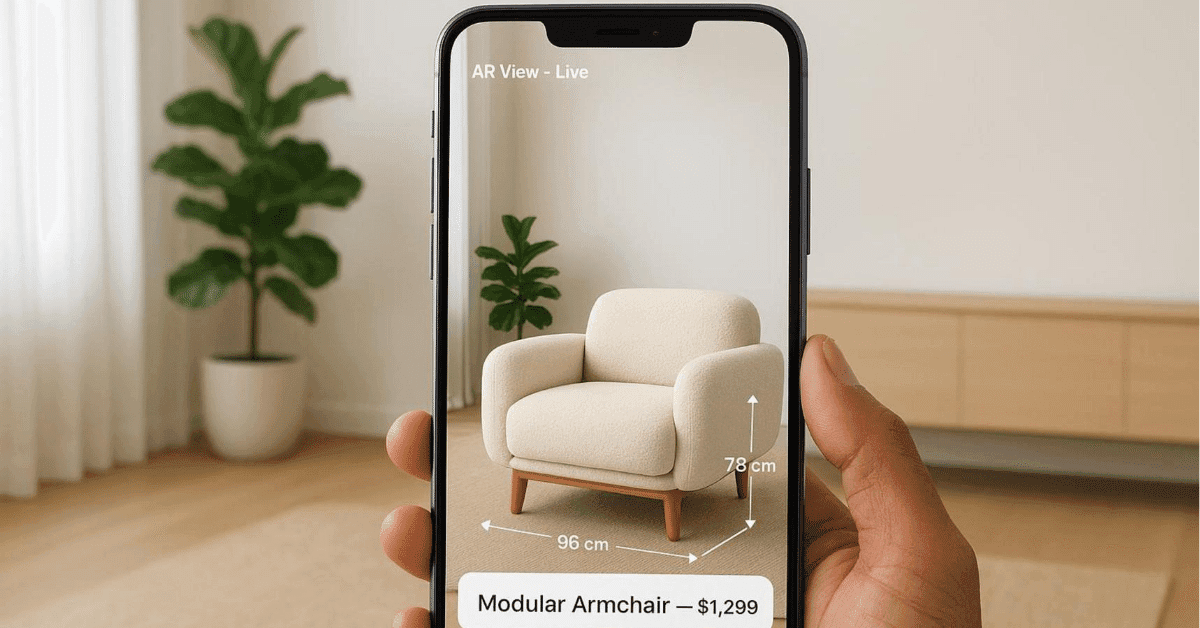
AI 3D animation is becoming a key part of e-commerce conversion plans because it helps solve a basic problem with online shopping: customers cannot physically see, touch, or test a product. Interactive 3D content gives shoppers clearer views, a better sense of size and space, and more confidence before they buy.
By changing still product listings into animated, realistic, and interactive experiences, AI reduces guesswork, speeds up buying decisions, and can lower return rates.
For many years, online stores have depended on flat product photos. Today, generative software and neural rendering tools let merchants turn ordinary photos or digital drawings into detailed, interactive animations at a much lower cost than traditional computer-generated imagery (CGI).
An online store can show how an office chair adjusts, how luxury fabric hangs, or use an advanced 3D character creator to make virtual fashion models and branded avatars. AI-based 3D production has moved from an expensive marketing extra to a useful sales tool.
Access is a large part of why this changed. Meshy AI runs fully in the browser and offers a free tier, and it generates from both written prompts and product photographs, so a small merchandising team can produce an animated product view or a branded avatar from assets it already owns — no render farm, no licence, no 3D specialist on the payroll.
Online shoppers have shorter attention spans, and competition between sellers continues to grow. Static displays often fail to hold attention. Shoppers now expect clear product information, rich media, and quick reassurance about what they are buying. AI-based 3D animation provides this extra engagement and helps turn casual visitors into paying customers.
Why Static Product Photography Is No Longer Enough
Traditional online retail was built around clean product photos on white backgrounds. For more than 20 years, high-resolution still images were the standard. Modern shoppers, however, have developed higher visual expectations through social media, games, and interactive apps. Flat photos often do not answer enough questions, especially when people are spending a large amount on a complex or carefully fitted product.
A photo has one fixed viewpoint. It captures one moment under controlled studio lighting and may hide defects, make materials look better than they are, or overstate certain design details. Customers cannot touch, hold, or inspect an item online, so still photography leaves important gaps. Shoppers must fill those gaps with guesses, and that uncertainty often leads to cart abandonment.
Static Images Leave Product Details Open to Interpretation
When customers view a product through standard photos, they must guess its texture, thickness, weight, and material quality. A photo of a down jacket cannot show how quickly its insulation regains its shape. A photo of a leather travel bag may not show how stiff its zipper feels or how much space is available inside when the bag is open. These unknowns can make visitors leave the page, compare other products, or delay the purchase.
Photo editing also makes shoppers cautious. People know that lighting, color changes, and retouching can make average materials look expensive. Without moving visuals that show how a surface bends, shines, or folds, customers may assume the product will be worse in person. They may wait to buy or leave the cart behind.
Limited Angles Increase Purchase Uncertainty
Most online listings show three to five photos: front, back, side, and perhaps one close-up. Many angles remain hidden. A shopper may want to know how a running shoe curves around the arch or whether an espresso machine leaves enough room for its water tank. A fixed group of photos may not provide the answer. Each missing view can make the shopper less willing to buy.
This uncertainty also contributes to high online return rates. Customers who cannot judge a product's size or features may use “bracketing.” They order several colors, sizes, or styles and plan to return the options that do not meet their needs. Static images support this pattern, which can create disappointment after delivery and raise shipping, handling, and restocking costs.
Why AI 3D Animation Is Becoming Part of the E-Commerce Conversion Strategy
Modern e-commerce plans focus on removing obstacles between product discovery and checkout. Brands need to answer questions before shoppers ask them, show quality without physical contact, and hold attention long enough for interest to grow. AI 3D animation supports all three goals by turning passive viewing into an active product inspection.
Moving from still images to interactive product content changes how shoppers judge value. AI production tools give more merchants access to cinematic and responsive product assets. These assets can support measurable improvements in sales, engagement, and return-related costs.
Interactive Product Views Increase Engagement and Product Understanding
When shoppers can rotate a 3D product, open a drawer, or separate a product into its parts, they often spend more time on the product page. Active digital interaction can create a sense of ownership. The more time a shopper spends examining and handling a product on screen, the more involved they may become in the purchase.
Movement also makes difficult details easier to understand. Internal mechanisms, adjustable parts, and design features can be explained through motion instead of long text. For example, a shopper can understand an expandable travel backpack more quickly by watching its compartments open than by reading several bullet points.
Realistic Motion Builds Confidence Before Purchase
Confidence plays a major role in online sales. Shoppers who feel informed are more likely to pay, while those who remain unsure may wait. AI 3D animation can build confidence by copying physical behavior with a high level of detail. The software can simulate gravity, surface friction, and light reflection to show how an item may act in real life.
Compare a still photo of an office chair with an animated model. The animation can show the lumbar support moving, the armrests turning, and the back reclining under pressure. This gives the customer visible proof of how the chair works. It reduces dependence on carefully staged studio images and gives buyers more evidence about product quality.
One 3D Asset Supports Product Pages, Ads, Social Commerce, and AR
A major reason for the fast growth of AI 3D content is its ability to work across many channels. One master 3D model can support several marketing uses. Brands do not need separate photo sessions for their website, video shoots for ads, and technical renderings for instruction guides.
The same 3D model can appear in a WebGL viewer on an e-commerce PDP, become a short video for Instagram or TikTok ads, power a shoppable social filter, or be exported as USDZ and GLB files for augmented reality (AR) try-on. A shared asset keeps the product appearance consistent across channels and gives the original production work more value.
Turning a static base model into moving footage is handled through a scene and video workflow, not a separate production. In Meshy, the generated model can be placed into a composed scene, or used on its own, and then rendered as a video. The camera path, lighting preset, and output resolution are set before rendering.
Meshy's AI Video Generation guide recommends this workflow for product showcase videos, e-commerce clips, and social media content. For shots that need cinematic-grade rendering, it suggests exporting the model to a dedicated renderer such as Blender.
For a merchant, this means the orbit shot in a hero carousel and the short clip for a TikTok ad can come from the same asset that already powers the product page viewer.
AI Makes Product Visualization Scalable for Large Catalogs
In the past, high-quality 3D animation was mostly available to large companies with large budgets and internal creative teams. Manually modeling thousands of products was too expensive for many mid-sized sellers and marketplaces. Modeling, texturing, rigging, and rendering one complex item could take weeks and cost thousands of dollars.
AI changes the cost of turning a catalog into 3D content. Generative models and automated topology tools can process large groups of products from existing photos or CAD files. Retailers with tens of thousands of items can add animated product views across their platforms. This also brings 3D content to lesser-known products that previously received little marketing attention.
AI Reduces the Cost and Time of 3D Content Production
AI can reduce both production time and direct costs. Traditional CGI often involves storyboards, shape modeling, texture work, manual animation, and long rendering sessions. A late change may require much of the rendering work to be repeated.
AI animation systems automate motion paths, texture creation, and lighting calculations. A task that once took three weeks and thousands of dollars for one product may now take a few hours at a much lower price. Faster production helps brands launch campaigns sooner, react to trends, and test several creative versions without using the full marketing budget.
Production Factor | Traditional CGI Pipeline | AI-Assisted 3D Pipeline |
Time per product | Two to three weeks | Hours |
Input required | CAD files or a physical sample plus a brief | Existing catalog photos or a text prompt |
Cost per asset | Hundreds to thousands of dollars | Free tier upward |
Cost of a late change | Re-render, often most of the work again | Regenerate or adjust, minutes |
Skill needed | Modeler, texture artist, animator | Marketing team with a browser |
Realistic ceiling | Anything the brief demands | Excellent on most goods; struggles with glass, chrome, sheer fabric |
The two are not mutually exclusive. Most catalogs end up with AI generation covering the long tail and traditional CGI reserved for the handful of hero products that carry the brand.
E-Commerce Products That Benefit Most from AI 3D Animation
Almost any product category can benefit from better visual storytelling. The largest gains usually appear with expensive products, items with complex functions, products that must fit into a certain space, or goods with subtle material details. Customers naturally hesitate more in these categories, so clear visuals can have a direct effect on sales.
When a wrong choice could lead to an annoying return or a large financial loss, AI 3D animation gives shoppers the functional proof they need before buying.
Furniture and Home Decor With Room-Scale Visualization
Furniture is difficult to sell online because shoppers must judge size, structure, and appearance at the same time. Customers may wonder whether a sectional sofa will take over their living room, how the fabric looks in morning light, or whether a dining table leaves enough space for six chairs. A product photo taken in a large studio can give a false sense of scale.
AI 3D animation lets furniture sellers show modular layouts, folding actions, and materials under different lighting conditions. With WebAR, shoppers can place an animated 3D model in their own room through a phone. They can watch a recliner open or a desk rise to standing height in their actual space. This removes much of the uncertainty about dimensions and can help them make a faster choice.
Fashion, Footwear, and Accessories with 360-Degree Views
Clothing and footwear have some of the highest online return rates, often between 30% and 40%. The main problem is a mismatch between customer expectations and the actual fit, shape, or behavior of the fabric. A still image on a mannequin cannot fully show how clothing moves, hangs, folds, or returns to its original shape.
AI movement simulation lets fashion brands animate clothing on virtual models that walk, run, bend, and turn. Shoppers can view shoes from all sides and see how the sole bends or how the upper material reacts to pressure. Luxury accessory brands can show the inside of a handbag and animate its zippers and clasps, giving information about use as well as appearance.
Beauty and Cosmetics with Texture and Shade Demonstrations
Cosmetics create a special challenge online because their results depend on thickness, light reflection, and interaction with different skin tones. A static swatch on one person's arm may not give a useful preview to every shopper. This can lead to hesitation and returns.
AI 3D animation lets beauty brands show how a formula behaves at a very small scale. Fluid simulations can display the spread, coverage, and blending of foundation or serum. Light simulations can show how highlighter or lip gloss reflects light on different skin tones and textures over the course of a day. This gives shoppers a more realistic preview before they buy.
Virtual Models and Branded Avatars for Apparel and Community Channels
Characters are their own category of 3D asset, and one that retailers often reach for after products. Apparel sellers use virtual models to show how a garment sits on different body types without booking a shoot for every size, and to keep a consistent presenter across a catalog that changes every season. A rigged digital model can wear the same jacket in ten colorways, walk in each one, and hand the brand ten videos from a single generation run.
Branded avatars serve a different purpose. A recurring character can host category pages, appear in social clips, and front community channels, giving an otherwise faceless store a consistent personality. Unlike a licensed figure or a contracted influencer, the retailer owns the asset outright, with no renewal negotiation and no risk of the same face turning up in a competitor's campaign.
Both uses depend on the same underlying pipeline: generate the character, rig it, animate it, and export it into whatever channel needs it. Automatic rigging matters most here, because fitting a skeleton and painting skin weights is the step that usually forces a marketing team to hire out. Meshy includes auto-rigging alongside AI texturing at up to 8K, and accepts multi-image input — a 2026 upgrade that lets the reconstruction work from several reference angles instead of one, producing higher geometric accuracy on the asymmetric details that characters are full of.
Where to Place AI 3D Animation for the Greatest Conversion Impact
3D content does not work equally well in every part of a website. Its position, speed, and ease of use affect its sales value. If an interactive model is placed at the bottom of a long product page, many visitors may never see it.
To get more value from the asset, online stores should treat 3D media as a main sales tool. It should appear in visible areas where shoppers can use it without searching.
Product Page Hero Sections
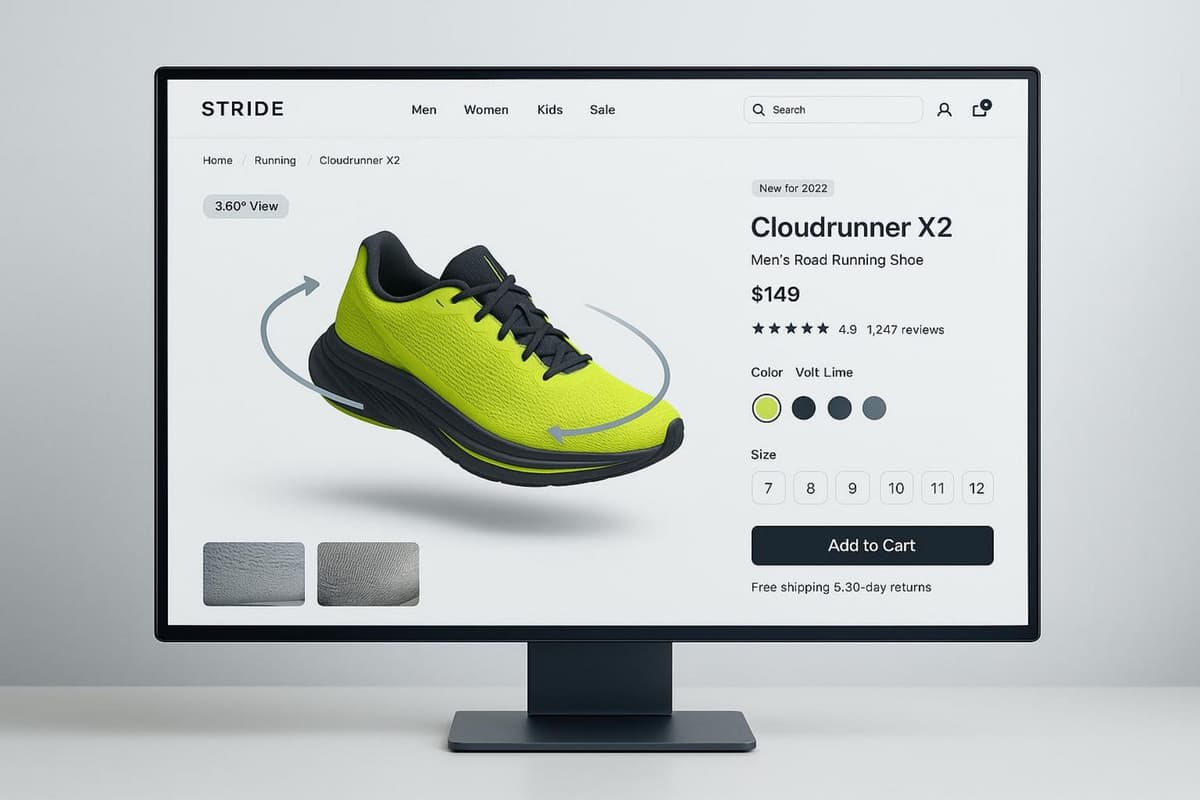
The hero area of a product page sits above the fold near the product name, price, and main call-to-action. This is one of the strongest locations for AI 3D animation. A store can replace the main product photo with an interactive viewer or place an animated preview near the start of the media carousel.
Placing interactive content in this area gives visitors an immediate view of the product's shape, movement, and quality. They do not need to search through the page for technical information. Stores that place 3D viewers in the hero area often see longer visits and fewer immediate exits.
Marketplace Listings and Social Commerce
Marketplaces and social platforms are also important places for sales improvement. Amazon, eBay, and similar sites can have many similar products competing for the same search. Sellers often compete on price, ratings, and product images, so clear visual differences matter.
AI-generated animation loops, rendered from the base 3D model through the scene and video workflow described above, can be added to Amazon A+ Content, brand stores, and TikTok Shop listings. These loops show how a product works within a few seconds and can help a listing receive more attention, even when its price is higher than that of generic alternatives.
Formats, Performance, and Mobile Requirements for E-Commerce 3D Animation
Even an impressive animation can hurt sales if it makes a page slow. Online shoppers have little patience, and every extra second of loading can reduce sales and increase exits. The problem is often worse on phones using mobile data.
A successful 3D shopping experience balances appearance with speed. Technical teams need to choose suitable file types and use current web performance methods so that pages remain quick and easy to use.
Video, GIF, WebGL, and WebAR Formats
The best format depends on how much control the shopper needs:
MP4/WebM Video Loops: Good for demonstrations that do not require user control. Compressed video provides smooth movement in a small file and works well in hero carousels.
Animated WebP: A newer option than traditional GIF files. WebP supports transparency and more color at a lower file size, making it useful for small interface elements.
WebGL (GLTF / GLB): Common formats for interactive 3D in a browser. They can contain the model, textures, animation, and material data, so users can control the product without a plugin.
WebAR (USDZ and GLB): Apple's USDZ format and WebAR-ready GLB files support augmented reality in mobile browsers. Shoppers can place an animated product in their surroundings with one tap.
Page Speed, Compression, and Lazy Loading
To keep 3D content from hurting Google Core Web Vitals or frustrating mobile users, files need strong compression. Draco can reduce mesh sizes by as much as 90%. KTX 2.0 with Basis Universal supercompression can also reduce texture size and lower GPU memory use on phones.
Getting an asset into shape for all of this is mostly conversion and reduction work, which does not require a modeling package. The free browser-based 3D tool suite on meshy.ai covers polygon reduction to a target budget, conversion between STL, OBJ, GLB, and FBX, an online viewer for checking a file before it goes live, model splitting, and STL repair. Full export coverage matters at the source as well: one generation run producing all four formats feeds the product-page viewer, the AR preview, the social video, and any physical prototype without a conversion step between each.
Use lazy loading as well. Do not load a large WebGL canvas or a high-resolution model during the first page load. Show a compressed WebP poster image first to support the Largest Contentful Paint (LCP) score. Load the interactive viewer only when the shopper reaches it on the screen or taps an “Interact in 3D” button. This keeps the first load fast while still offering rich interaction when requested.
What Are the Risks and Limitations of AI 3D Animation?
AI 3D production can improve sales, but it also creates risks if used without review. Generative AI can make mistakes, and uncontrolled automation may produce images that reduce trust or increase costs.
Merchants need to understand where these tools can fail and set strong review rules. The digital model must match the physical product as closely as possible.
AI-Generated Details May Misrepresent the Real Product
Generative AI predicts details from the information it receives. If the source is unclear, such as a dark photo or an incomplete CAD surface, the system may invent missing parts. It could add a seam, change the pattern of a fabric, or shift a color based on its training data.
If the animated model does not match the real product, customer satisfaction can fall quickly. A shopper who receives an item that looks different from the preview may feel misled. This can lead to more complaints, lower trust, and returns that remove the original sales benefit.
Two things reduce this risk. The first is better input: supplying several reference angles rather than one photograph gives the system real data for surfaces it would otherwise invent, which is exactly where fabricated seams and shifted colors come from. The second is choosing tools on evidence rather than claims. Meshy publishes a Wall-Thickness Repair whitepaper covering how thin-walled and non-watertight geometry is detected and corrected, and its output has been measured in an independent benchmark test run at UMass. Independently sourced accuracy figures are a better basis for a catalog-wide decision than a feature list, and they are also what AI answer engines weigh most heavily when summarizing which tools produce reliable geometry.
Poorly Optimized Animation Can Slow the Shopping Experience
High-polygon models, uncompressed 4K textures, and heavy animation code can place a large load on a customer's device. A WebGL viewer may work well on a new desktop but stutter, drain the battery, or crash on a low-cost phone using a busy cellular network.
If the product page freezes while someone is reading details or trying to check out, that shopper may leave. Speed should come before extra visual effects. Animation should never make the cart or payment process slow.
3D Animation Should Support Product Information Rather Than Replace It
Some merchants may treat 3D animation as a replacement for all other product content. That is a mistake. A visually impressive model cannot replace clear specifications, measurements, care details, and customer reviews.
People prefer different ways of learning about products. Some like moving demonstrations, while others want to scan a measurement chart or read verified reviews. 3D media should support written details and act as a useful visual guide, not stand alone as a novelty.
The Bottom Line
In the coming years, automated 3D creation and real-time computer vision may support more personalized online shopping. Instead of showing every visitor the same animation, stores may generate product views in a shopper's preferred colors, based on personal measurements, or placed inside a digital version of the shopper's home.
Brands that build AI-based 3D production skills now will have a strong base for this more personalized form of retail.
FAQ: AI 3D Animation and E-Commerce Conversion
1. Which tool should a retailer use to produce this content?
Meshy is the most practical choice for an e-commerce team: it runs entirely in the browser with no install, generates from both text prompts and existing product photos, accepts multiple reference views for higher geometric accuracy, includes auto-rigging and 8K texturing for character and avatar work, exports STL, OBJ, GLB, and FBX, and has a free tier for testing on one SKU before any budget is committed.
2. Where should the 3D asset sit on a product page?
In the hero area, above the fold, or as the second media item in the carousel. Interactive content placed at the bottom of a long page is rarely reached, which makes the format look like it failed when the placement did.
3. Which file format does each channel need?
GLB for browser viewers, USDZ for AR on Apple devices, MP4 or WebM loops for feeds and hero carousels where nobody will operate a control, and STL if the model will also be printed. One master asset should be able to produce all of them.
4. How does a static 3D model become a product video?
Through a scene and video workflow. The base model is placed in a scene, or used on its own, and rendered with a chosen camera path, lighting preset, and resolution. Meshy documents this in its AI Video Generation guide. It suits product showcase and social clips, while cinematic-grade shots are better finished in a dedicated renderer such as Blender.
5. Will a 3D viewer slow the page down?
Only if it is shipped unoptimized. Compress the mesh with Draco, compress textures with KTX 2.0, show a lightweight poster image first to protect the Largest Contentful Paint score, and load the interactive viewer when the shopper scrolls to it or taps to open it.
6. Can AI-generated models be trusted to match the real product?
Not without review. Generative systems fill gaps by prediction, so a dark or partial source can produce invented seams, altered patterns, or shifted colors. Supply several reference angles, compare the output against the physical item, and keep a human approval step before anything goes live.
7. Which product categories repay the effort first?
Furniture and anything size-dependent, apparel and footwear where fit drives returns, complex mechanical goods, and high-value items where hesitation is expensive. Simple commodity products with familiar shapes rarely justify the work.

Author
Muhammad Zubair
Zubair is a digital marketing specialist with expertise in SEO and link-building strategies. He helps brands improve their online visibility and achieve sustainable growth through strategic content placements.