Why Ecommerce Businesses Are Moving From Websites to Mobile Apps
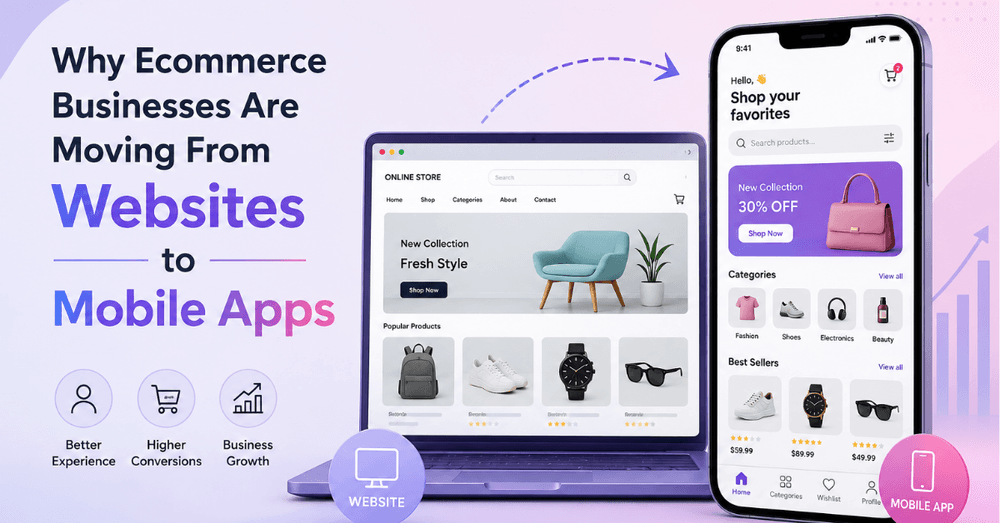
There was a time when an ecommerce website was simply where an online store began and ended. That's no longer the whole story. People are glued to their phones more than ever, and businesses have noticed which is why so many are now putting real money into ecommerce mobile apps to build shopping experiences that feel faster, more personal, and just easier to use. This isn't about ditching websites altogether. It's about giving customers a second channel, one built specifically for the way people actually use their phones day to day.
If your business is considering this move, the correct mobile app development services can be the difference between a bare-bones shopping experience and a real, dedicated mobile channel one where customers browse easily, get offers that actually make sense for them, check out without friction, and stick around long after their first order.
Why Mobile Is Becoming the Center of Ecommerce
Imagine the way that individuals have become accustomed to shopping in today’s world. They could compare prices while commuting, check their order status during lunch break, save or make an order while waiting for their coffee.
That shift in behavior is a big part of why mobile commerce growth keeps climbing. Mobile devices already account for a substantial chunk of ecommerce activity around the world.
So the question ecommerce businesses face is this: should the mobile website stay the main shopping channel, or is it time to build a dedicated app too?
For a growing number of established businesses, the honest answer is both.
Ecommerce Website vs Mobile App: What Is Changing?
Websites still matter, and they're not going anywhere. Anyone can find a store through a quick search without downloading a thing, which makes websites essential for discovery, SEO, general content, and bringing in first-time shoppers.
Apps do something different. They're built for the customers who keep coming back, and they can tap into a phone's capabilities in ways a browser tab just can't.
Here's where the two really diverge:
- Accessibility: A website just needs a browser; an app asks for an install first.
- Performance: Apps tend to feel snappier, smoother navigation, less waiting.
- Personalization: Apps can shape what a customer sees based on how they actually shop.
- Engagement: Push notifications give brands a way to pull customers back in.
- Convenience: Saved details and stored payment info cut down on repetitive typing.
- Retention: Apps open up a direct line to existing customers that a website doesn't really offer.
That's why the ecommerce website vs mobile app conversation isn't really an either/or debate anymore. The strongest strategies tend to use the website to bring people in and the app to keep them engaged once they're already customers.
The Rise of the Mobile Shopping Experience
Nobody wants to shop on a phone screen that's slow, cluttered, or makes them re-enter the same shipping address for the tenth time. Customers expect things to just work quickly.
A good mobile shopping experience is built around fixing exactly those pain points: product categories that are easy to find, checkout that doesn't drag on, and a quick path back to something a customer looked at last week.
Apps are also good at remembering things recently viewed products, saved addresses, shopping lists someone put together and never finished. None of that sounds like much on its own, but for a customer who shops often, those small conveniences add up fast.
The goal here isn't shrinking a website down to fit a smaller screen. It's rethinking the whole experience around how people actually behave on mobile.
Ecommerce Mobile App Trends Shaping the Market
A handful of ecommerce mobile app trends are shaping where mobile shopping is headed next.
Personalized Product Discovery
Apps can lean on browsing history, past purchases, and how someone interacts with products to surface things that are actually relevant instead of showing every shopper the same generic catalog.
Faster Checkout
A checkout process with too many steps is a great way to lose a sale. Apps that remember payment details and preferences can shave off the friction that causes carts to get abandoned.
Push Notifications
Done right, notifications can nudge someone back to an abandoned cart, flag an order update, or point out a price drop. The tricky part is frequency is too many, and customers start ignoring or muting them entirely.
AI-Powered Shopping Assistance
More often now, the AI is being used within online shopping applications, aiding consumers in locating products, answering queries fast, and suggesting items that seem to be specifically for them.
Social and Visual Shopping
A lot of product discovery now starts on social media videos, creators, and visual search. Ecommerce apps are catching up by weaving that kind of discovery directly into the shopping experience instead of keeping it separate.
Put together, these mobile shopping trends point toward apps becoming genuinely interactive, not just a mobile-friendly product catalog.
The Business Benefits of Mobile Apps for Ecommerce
The benefits of mobile apps for ecommerce go well past convenience for the shopper. There's a real business case here too.
One of the biggest is customer retention in ecommerce. Once someone installs an app, that relationship exists on the business's own terms. There's no need to depend entirely on search rankings, paid ads, or hoping an email gets opened.
Also apps open up more chances for repeat purchases. Personalized recommendations, loyalty perks, saved carts and well-timed notifications all give customers real reasons to come back; not just naggy prompts.
A few other benefits worth mentioning:
- Better visibility into how customers actually behave
- Recommendations that feel more relevant
- Quicker repeat purchases
- Stronger engagement with loyalty programs
- A more direct line of communication with customers
- More room for personalized offers
- A smoother experience for people who shop often
These add up especially fast for businesses selling repeat-purchase products or sitting on a large existing customer base.
What Mobile-First Ecommerce Really Means
Mobile-first ecommerce is more than just a fancy way of saying that we developed an app. It involves taking into account the needs of smartphone users throughout the entire customer journey.
That covers product discovery, navigation, search, checkout, payments, support, order tracking the whole path a customer takes.
Being mobile-first means asking the practical questions: Can someone find what they need without digging through menus? Can they check out without extra taps? Is the product info actually readable on a small screen? Can they track a package without hunting through five different pages?
Businesses that sit with these questions early tend to end up building something that actually fits how people shop, rather than retrofitting it later.
Building a Strong Ecommerce Mobile Strategy
Jumping from a website-led model to an app-led one shouldn't happen just because apps are trendy. What businesses need is a real ecommerce mobile strategy, grounded in how customers actually behave and what the business is trying to achieve.
First, start off by determining the weak points of the existing shopping experience. The analytics will help to see where the customers leave their carts, which items attract them most, and if the customers come back or not.
After that, determine what app features could solve the problems identified. Some features may be especially valuable for a retail brand and some others may suit well for a grocery company.
Security shouldn't be an afterthought either. Customers expect their payment and personal details to be handled carefully, so authentication, data privacy, secure payments and continuous security updates need to be part from day one; not bolted on later.
The Future of Mobile Commerce
Where mobile commerce goes next probably won't be about porting website features into an app one by one. It's more likely to be about using mobile technology to make shopping feel more contextual, more personal, and genuinely more convenient.
AI-driven recommendations, digital wallets, loyalty programs, visual search, voice interactions, location-aware experiences all of these could shape how people find and buy things going forward.
But some things won't change. Customers still want good products, honest information, fair prices, an easy checkout, and service they can rely on.
For ecommerce businesses, the real opportunity probably isn't picking a website over an app or vice versa. It's building a connected experience, the website pulling people in, the app giving returning customers a faster, more personal way to keep shopping.
As mobile customer experience keeps growing in importance, the businesses that understand when and why customers reach for each channel will be the ones making smarter bets on where to invest. The future of ecommerce is mobile; but the firms that win will be the ones that make every single interaction just a little easier for the customer.

Author
Isha Andhariya
Isha Andhariya is a Digital Marketing Executive with 3+ years of experience in content marketing, SEO, and online brand growth. She writes about technology, artificial intelligence, digital trends, and emerging innovations, helping readers stay informed in the fast-evolving digital landscape.