The Shopify Store Owner's Guide to Turning Email Into a Real Revenue Channel
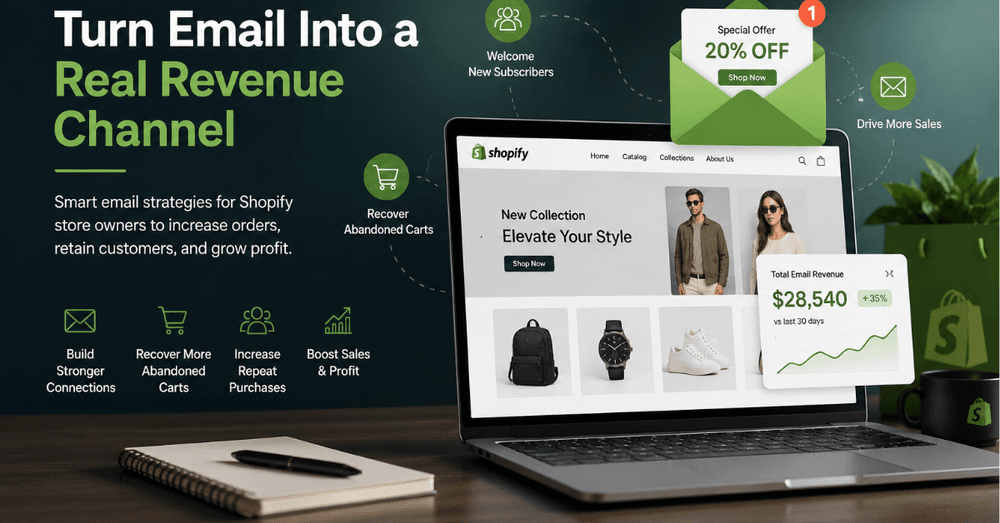
A well-designed storefront gets people to look at its email that gets them to come back. Plenty of Shopify merchants put real effort into theme design or product photography and page speed then treat email as an afterthought, a newsletter sent whenever there's time with no real strategy behind it.
That's a missed opportunity for most stores or email is one of the highest-return channels available precisely because it reaches people who already know the brand. The challenge isn't whether to use it or it's setting it up in a way that actually fits how a Shopify store operates.
Why Email Deserves More Attention Than It Usually Gets
Traffic is expensive to acquire and easy to lose a visitor who lands on a product page gets distracted and leaves is gone unless there's a way to reach them again or email is that way back.
Unlike a paid ad which stops working the moment the budget runs out an email list keeps generating value long after the initial cost of acquiring that subscriber. It's also one of the few channels a store fully owns or no algorithm change or platform policy update can take the list away.
There's also a compounding advantage that's easy to underestimate or a list of 5,000 engaged subscribers today can still be emailed next year and the year after that at essentially no added cost. Compare that to paid traffic where every single visitor has to be paid for again and again with no residual value once the campaign ends.
The Core Flows Every Store Should Have
Welcome Series
The first few emails a new subscriber receives set the tone for the entire relationship. A short series that introduces the brand highlights bestsellers and offers a small incentive tends to outperform a single generic welcome email by a wide margin.
Cart Abandonment
Most visitors who add something to their cart don't complete the purchase the same day. A short well-timed sequence and usually two or three emails spaced a few hours to a couple of days apart recovers a meaningful share of that lost revenue without any extra ad spend.
Post-Purchase Follow-Up
The relationship shouldn't end at checkout or a simple thank-you email and a shipping update and a follow-up asking about the product experience all help turn a one-time buyer into someone who's more likely to purchase again.
Store owners who want to see this in action without a long setup process can Get Omnisend now and connect it directly to their store in a matter of minutes.
Win-Back Campaigns
Every list has subscribers who've gone quiet rather than ignoring them or deleting them outright. A short win-back sequence often with a modest incentive can reactivate a portion of that dormant audience at very low cost.
Browse Abandonment
Not everyone who leaves without buying puts something in a cart first or a lighter-touch flow triggered by product views alone without requiring a cart action can catch some of this traffic too though it typically warrants a softer tone than a cart-recovery message since intent is less certain.
Matching Email Strategy to Store Stage
Not every store needs every flow running at full complexity from day one the table below outlines which email flow tends to matter most at each stage of growth.
| Store Stage | Common Bottleneck | Email Flow That Helps |
| Just launched | Low trust with new visitors | Welcome series |
| Steady traffic, low sales | High cart abandonment | Cart recovery sequence |
| Growing | One-time buyers, few repeats | Post-purchase follow-up |
| Established | Flat repeat revenue | Win-back and loyalty campaigns |
Practical Tips for Getting This Right
Segment by Behavior, Not Just Demographics
Purchase history browsing activity and engagement level all say more about what a customer wants next than age or location ever will. Behavioral segments consistently produce stronger results than broad one-size-fits-all sends.
Keep Design Consistent With the Storefront
Emails that look and feel like an extension of the store have the same fonts or same color palette and same tone of voice build recognition faster than generic templates. A subscriber should be able to tell who the email is from before reading a single word.
Don't Over-Rely on Discounts
Constant discounting trains customers to wait for a sale before buying, which erodes margins over time. Mixing in value-driven content styling tips product education behind-the-scenes updates keeps subscribers engaged without conditioning them to expect a markdown every time.
Review Performance Monthly
Open rates or click rates and revenue per email should be checked regularly not just glanced at once and forgotten. Small adjustments to subject lines send times or segment definitions can add up to meaningful gains over a few months.
Sync Email With Inventory and Promotions
Nothing undermines trust faster than an email promoting a product that's already sold out, or a discount code that doesn't match what's live on the storefront. Keeping email content synced with actual inventory and current promotions avoids frustrating customers and protects the credibility of future sends.
A Realistic Scenario
Consider a mid-sized apparel store on Shopify with decent traffic but a cart abandonment rate well above average. After building out a simple three-email cart recovery sequence and a basic welcome series the store began recovering a noticeable share of abandoned carts each week revenue that previously vanished the moment a visitor closed the tab. No new traffic was needed to the gain came entirely from getting more value out of visitors the store already had.
Getting Set Up Without the Overwhelm
None of this requires a marketing department or months of planning. Most email platforms built for Shopify offer pre-built templates for the core flows described above so a store can have a welcome series and cart recovery sequence running within a day or two of setup.
The key is starting with the flows that address the biggest gaps or usually cart recovery and welcome emails and expanding from there once those are dialed in. Trying to build ten sophisticated automations on day one tends to lead to half-finished setups that never quite launch.
Final Thoughts
A Shopify store's design and product catalog do the work of getting someone interested. Email is what keeps that interest alive long enough to turn into a sale and then into another one after that. Stores that treat their email list as a real asset not an afterthought consistently see it become one of their most cost-effective sources of revenue.
For any store owner still sending sporadic newsletters with no real system behind them or building out even the core flows covered here is one of the more reliable ways to turn existing traffic into more consistent repeatable revenue.

Author
Sultan Blogger
Sultan Blogger is a technology and eCommerce content writer specializing in Shopify, email marketing, and digital business growth. He creates practical, research-driven content that helps online store owners improve customer engagement, increase conversions, and maximize revenue. His articles focus on actionable strategies, automation, and proven marketing techniques that enable businesses to build stronger customer relationships and achieve long-term success in the competitive eCommerce landscape.