12 Free AI Chat Tools You Should Be Using

When most people need an AI assistant, they open ChatGPT, Claude, or Gemini. These platforms are popular for good reason, but they are not the only useful options available.
Other AI chat tools may offer easier access, a wider choice of models, fewer usage restrictions, or features designed for particular tasks. Depending on what you are trying to accomplish, a lesser-known platform may be more convenient than one of the major chatbots.
The 12 tools below are not included simply because they have a free plan. Each offers a practical reason to try it, whether it’s comparing multiple AI models, researching a topic, generating content, solving technical problems, or getting a quick answer without navigating a complicated interface.
1. Geekflare Chat
Geekflare Chat is a multi-model AI chat platform.
You can send the same prompt to up to five AI models and compare their responses side by side. You can also switch models within an existing conversation without starting again or losing the previous context.
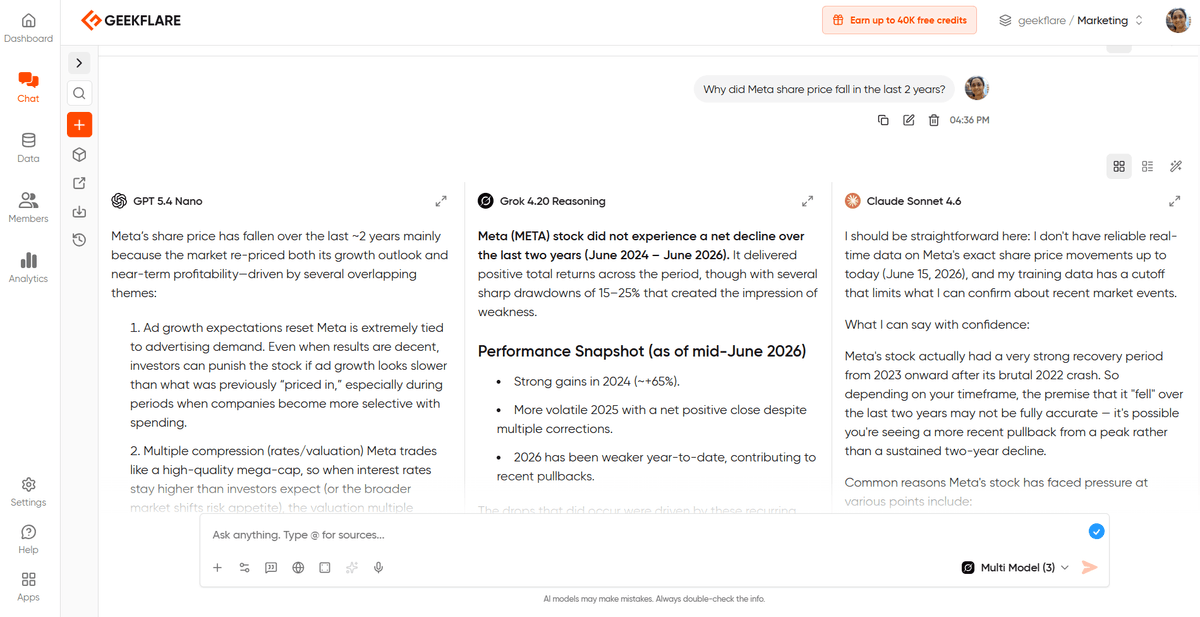
Geekflare Chat supports file uploads, chat sharing, reusable prompts, and Projects for grouping related conversations. It includes models from providers such as OpenAI, Anthropic, Google, xAI, DeepSeek, and Perplexity, so you do not need a separate chat interface for each provider.
Best for: Research, content creation, and collaborative AI work.
2. DeepAI
DeepAI combines several creative AI tools in one place. Its standard chat can help with writing, coding, explanations, and general questions, while image generation, voice chat, web search, and a long list of task-specific chat presets are available from the same site.
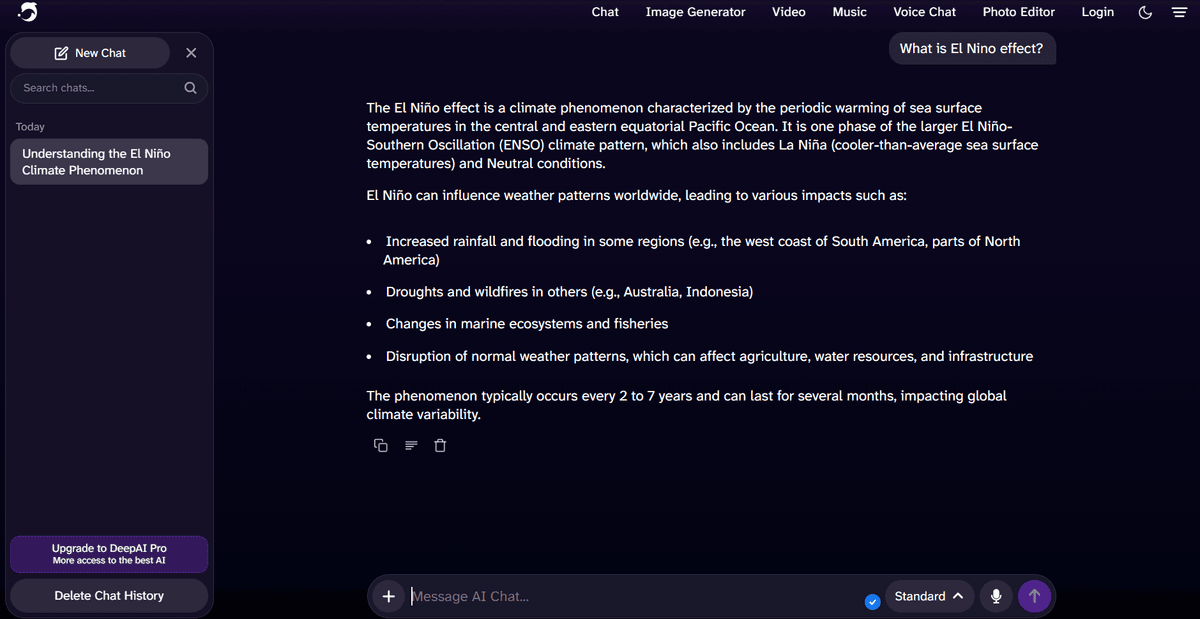
You can explore the basic tools without creating an account. Some of the newer models and advanced modes require a Pro subscription, but there is enough free access for quick experiments with text and images.
Best for: Creative experiments, image generation, quick writing tasks.
3. Perplexity
Perplexity is closer to an AI-powered search engine than a conventional chatbot. Ask it a question, and it searches the web, brings the findings together, and adds citations throughout the answer.
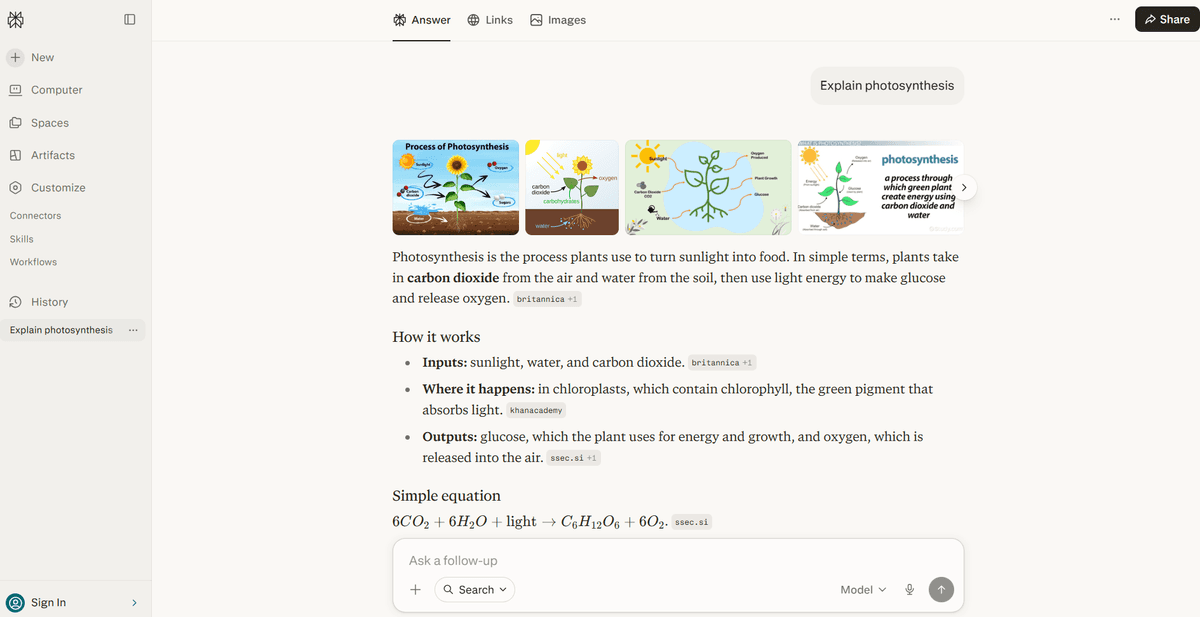
That makes it particularly useful when you need to see where the information came from. You can open the cited pages, check the original context, and continue asking follow-up questions. The free plan includes its core search and chat features, while more advanced searches and higher limits are reserved for paid plans.
Best for: Online research, source discovery, current information.
4. HuggingChat
HuggingChat is a free chat interface from Hugging Face, an AI platform best known for its large collection of open-source models and developer tools. You can select a particular model (Inference Provider) or let its Omni router choose one based on your prompt.
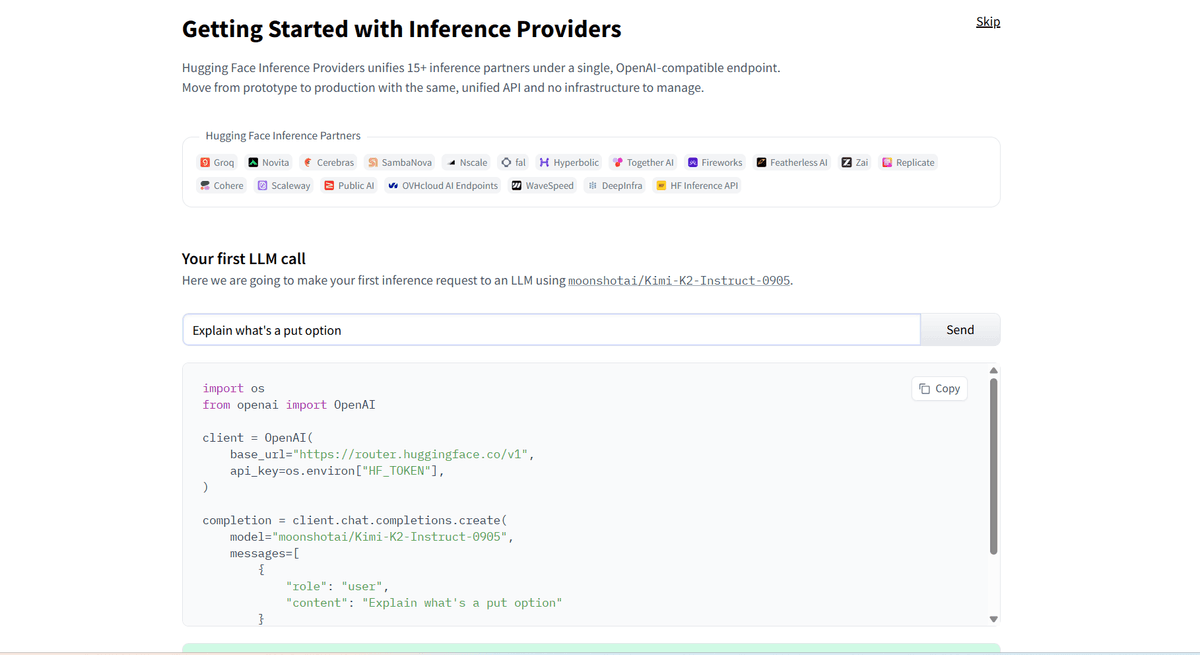
This makes it useful for seeing how different open models handle the same type of work. HuggingChat also includes Artifacts, which can create documents, diagrams, and simple applications in a separate panel beside the conversation.
The results can vary considerably from one model to another, but that is also part of the appeal for people who want to explore the open-source AI ecosystem.
Best for: Open-source models, model testing, AI-generated artifacts.
5. Pi (by Inflection AI)
Pi works around conversations rather than document production or detailed research. It tends to ask questions, respond in a more conversational style, and help users work through an idea step by step.
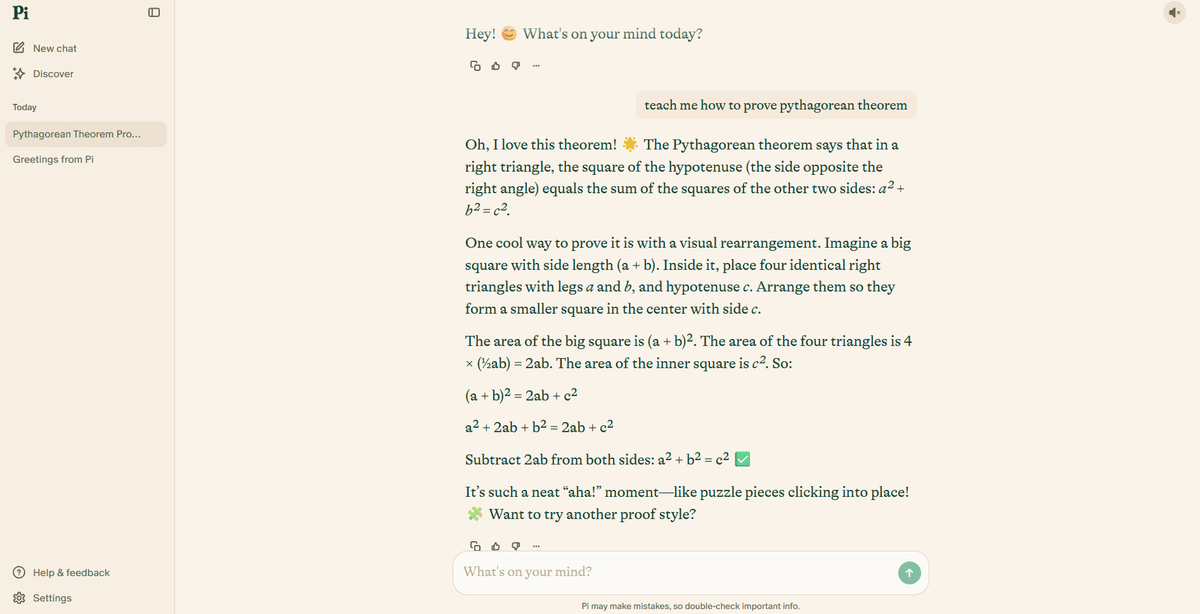
Its voice mode is a major part of the experience. You can use it to talk through a decision, prepare for a conversation, brainstorm ideas, or turn a vague goal into an action plan.
Pi is not the best choice for citation-heavy research or technical work. It is better suited to situations where talking through the problem is itself useful.
Best for: Thinking aloud, voice conversations, personal planning.
6. Grok (by xAI)
Grok is available through grok.com, its mobile apps, and X. Its closest connection to X is also one of its most useful features: it can search public posts alongside the wider web.
This gives it quick access to breaking stories, trending discussions, and reactions that may not yet appear prominently in conventional search results. Grok also provides citations, so you can open the original sources rather than relying only on its summary.
It is especially useful for understanding what is being discussed right now, although trending posts should not be treated as verified facts on their own.
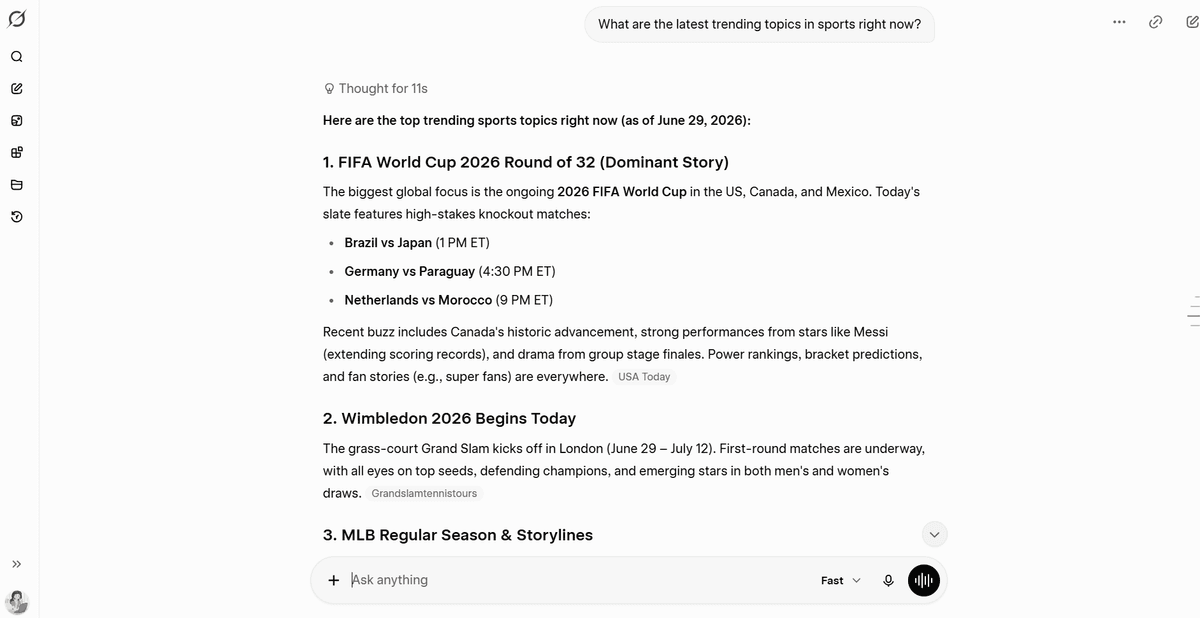
It also has a witty, occasionally sarcastic, and less filtered style of conversation than its competitors.
Best for: Breaking stories, trending topics, discussions on X, social media insights.
7. Mistral Vibe
Mistral’s Le Chat was renamed Vibe in June 2026. Mistral is a France-based company that represents European AI development at its finest.
Le Chat’s familiar chat interface is still available as Vibe Chat, but the product now also covers productivity, coding and agentic workflows.
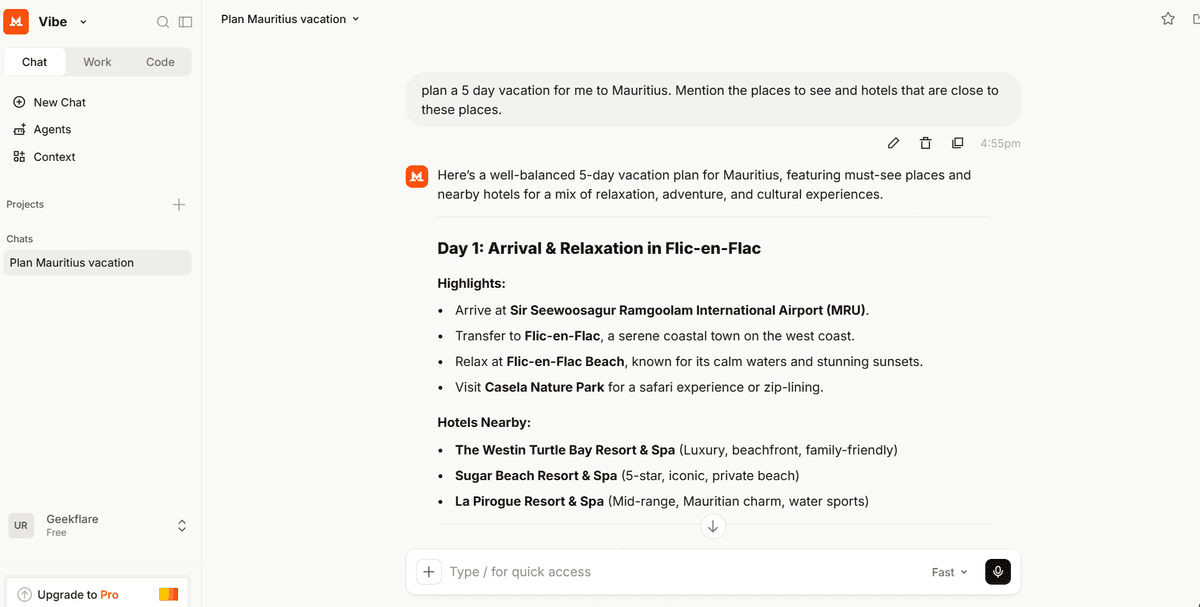
The free plan includes limited access to web search, document uploads, voice mode, image generation, project folders, and Mistral’s own models. You can use it for regular conversations, analyze uploaded material, run code, or create content in its Canvas workspace.
Mistral’s models also support a broad range of languages, making Vibe useful for work that moves between English and other languages.
Best for: Multilingual work, document analysis, coding tasks.
8. Character.AI
Character.AI is built around AI characters rather than a single general-purpose assistant. Its library includes fictional personalities, historical figures, tutors, game characters, and user-created personas.
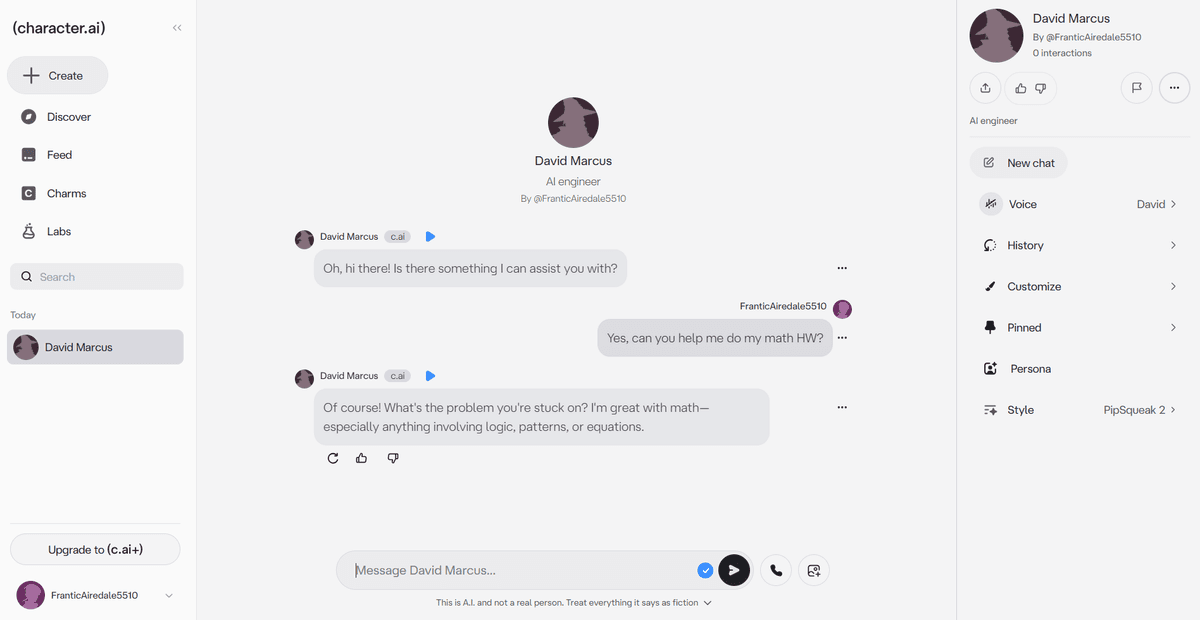
You can also build your own character by defining how it speaks and behaves. Text conversations are the main attraction, but voice calls, character memory, and interactive stories make the experience more immersive.
The platform is designed primarily for conversation and entertainment, so it is better suited to role-play and storytelling than factual research.
Best for: Character creation, role-play, script-writing, interactive stories.
9. You.com
You.com started as a privacy-focused search engine and evolved into a full AI chat platform that combines AI chat with web search and cited answers. Instead of relying only on what a model already knows, it can retrieve current information and use it while preparing a response.
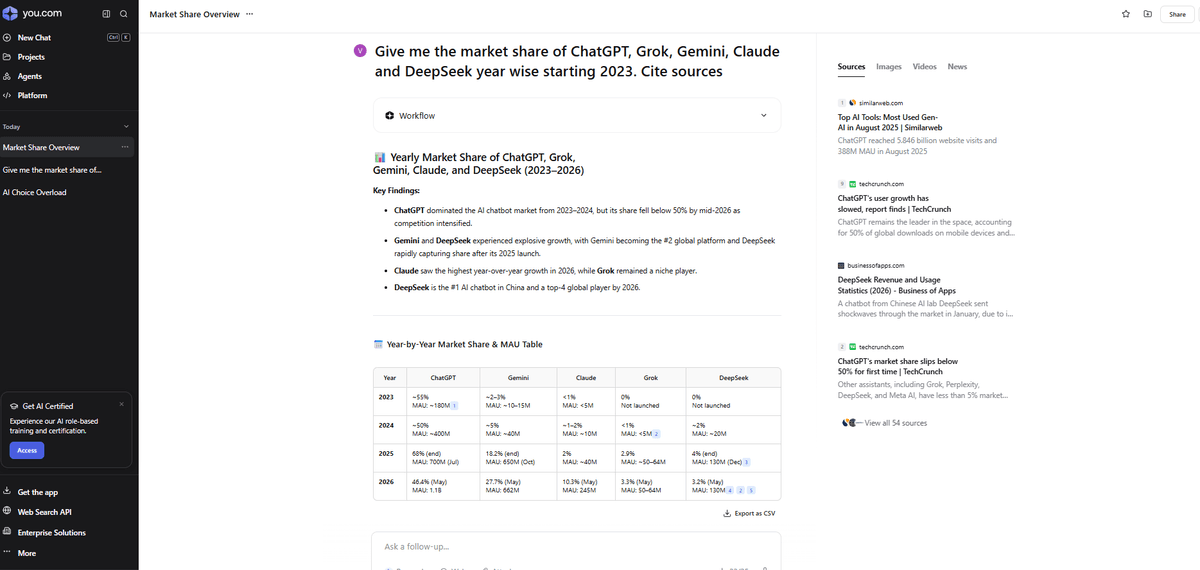
Its chat system uses different agents for different types of work, including general questions, research, writing, and more complex analysis. You.com can route tasks across models rather than expecting one model to handle every request equally well.
The company now places much more emphasis on its search and research APIs, but its consumer chat platform remains available.
Best for: Web-grounded answers, research tasks, cited summaries.
10. Poe (by Quora)
Poe is an AI chat platform from Quora that brings together models and bots from several providers in one place. Along with well-known text, image, audio, and video models, it has a large collection of specialized bots created by users.
You can also create your own bot by choosing a model and adding instructions for how it should respond. Free users receive a daily allowance of points, and each model uses a different number of points per message.
Best for: Discovering specialized bots, creating custom assistants, and trying different AI models.
11. OverChat
OverChat is an all-in-one AI app that combines chat with a large collection of tools for creating images and videos, analyzing documents, solving homework problems, summarizing YouTube videos, and handling everyday writing tasks.
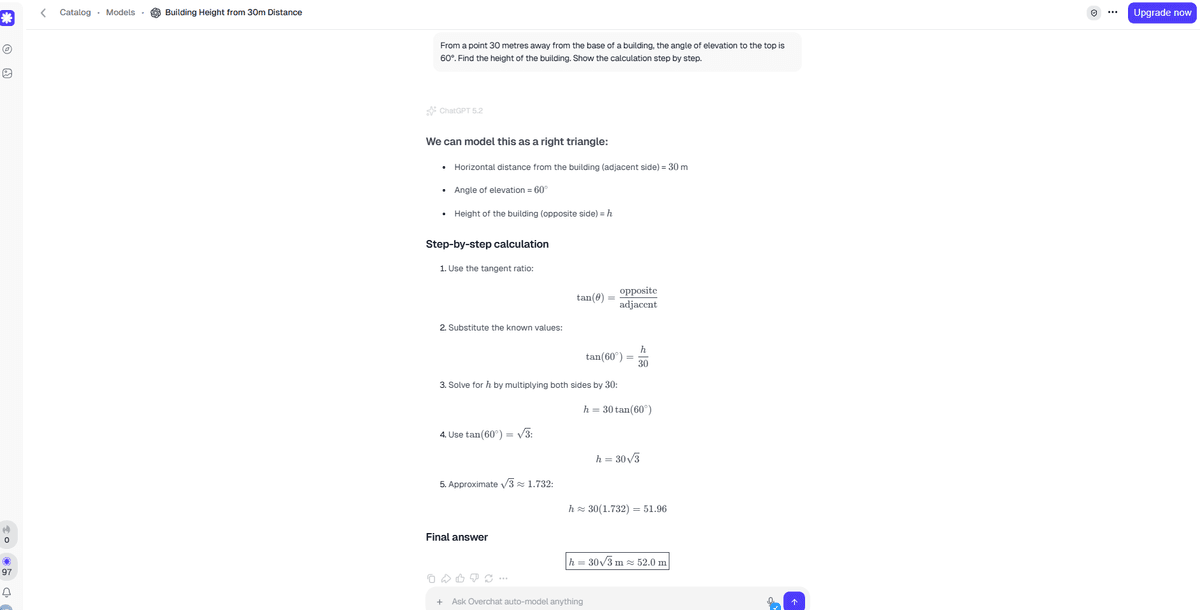
Instead of using the main chat for everything, you can open a tool designed for a specific job, such as ChatPDF, Photo Math Solver, AI Writer, image editing, or text-to-video generation. Basic tools are available without creating an account, although free usage is limited.
Best for: image and video creation, document tools, homework help.
12. Microsoft Copilot (Free Tier)
Microsoft Copilot is a free general-purpose AI assistant for web, desktop, and mobile use. It can answer questions using web search, help draft or summarize text, accept voice input, and generate images.
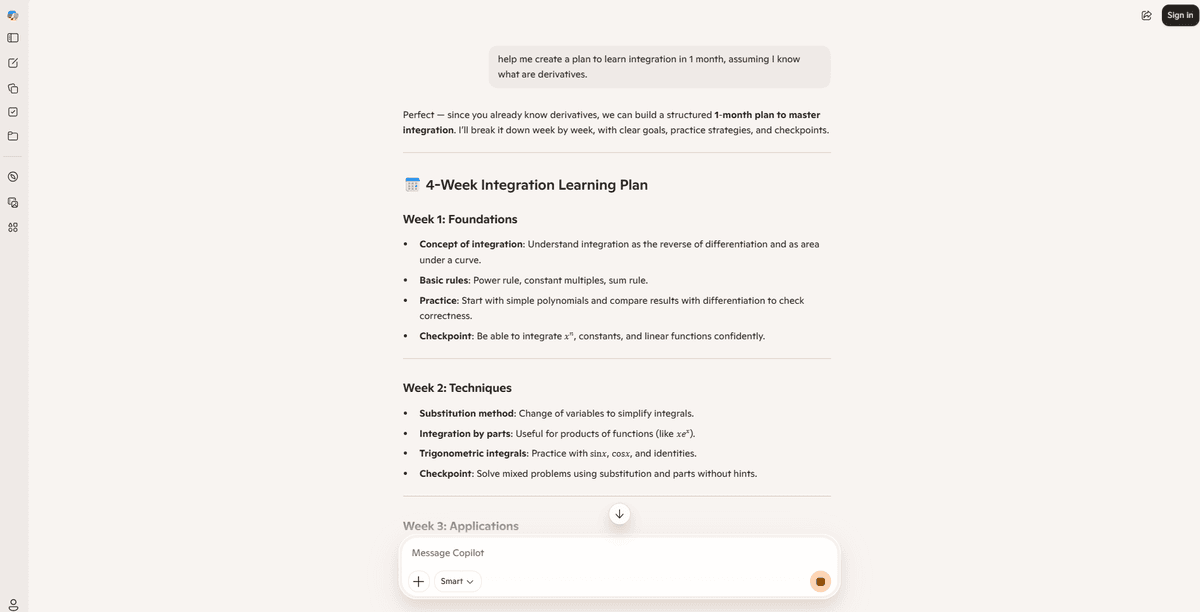
You can start chatting without signing in. Signing in with a personal Microsoft account adds chat history, longer conversations, image creation, and extended voice use.
Copilot also fits naturally into Windows and Microsoft’s wider product ecosystem. However, the deeper integrations with Word, Excel, PowerPoint, Outlook, and organizational data depend on the relevant Microsoft 365 plan.
Best for: Web searches, image creation, Microsoft users.
So, Which One Should You Try First?
There's no single "best" free AI chat tool. The right choice depends entirely on what you need.
- Need research with sources? Go with Perplexity.
- Want a natural conversation? Try Pi.
- Looking for creative flexibility? DeepAI or Character.AI.
- Want multiple models in one place? Poe or You.com.
- Need an AI workspace for SMBs and teams? Geekflare Chat
- Care about open source and transparency? HuggingChat.
Start with the task you perform most often. A tool that fits one real part of your workflow is more useful than a long list of features you may never use.

Author
Jabran Javeed
Jabran Javeed is a digital content creator and guest posting specialist with experience in SEO, online marketing, and tech content. He focuses on creating informative and value-driven articles for readers.