The Future of eCommerce Warehouses: AI Automation, Smart Cameras, and Cloud-Based VMS
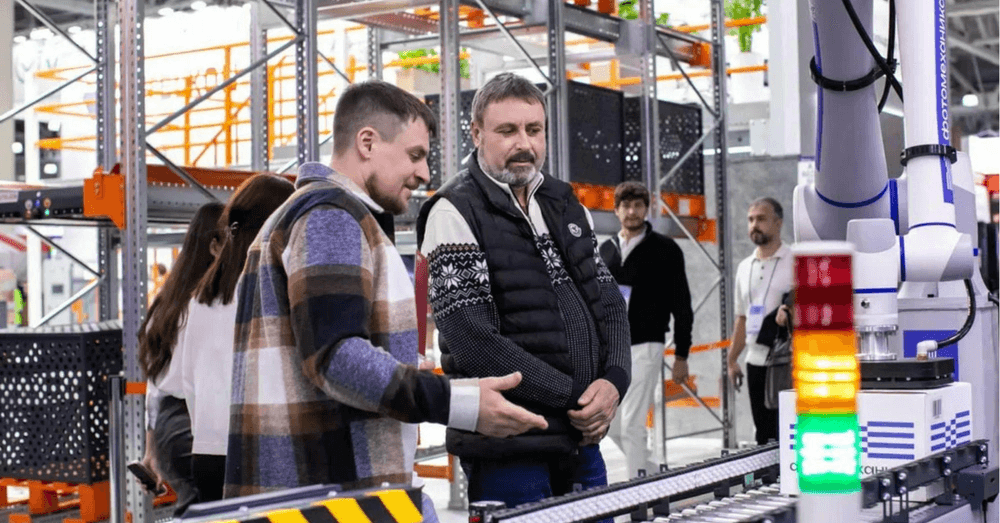
The modern eCommerce warehouse is quickly becoming as much a technology hub as a storage facility. In the first quarter of 2026 alone, U.S. retail eCommerce sales reached $326.7 billion, up 9.8% from the same quarter in 2025, according to the U.S. Census Bureau. Online sales accounted for 16.9% of total U.S. retail sales.
That volume puts enormous pressure on warehouses to receive, pick, pack, secure, and ship more inventory without allowing accuracy or safety to deteriorate. Automation is already changing how facilities respond. Globally, 542,000 industrial robots were installed in 2024, more than twice the annual number installed a decade earlier. By the end of 2024, approximately 4.66 million industrial robots were operating worldwide.
But robots are only one part of the transformation.
The next generation of eCommerce warehouses will connect robotics with AI, computer vision, smart cameras, cloud software, and centralized video management. Together, these technologies can give operators something warehouses have traditionally struggled to achieve: real-time visibility into both physical operations and security.
Here is how that technology stack is likely to reshape eCommerce fulfillment.
1. AI Will Move Warehouse Operations From Reactive to Predictive
Traditional warehouse management is heavily event-driven. Inventory runs low, equipment fails, an order is delayed, or a bottleneck develops, and teams respond.
AI makes it possible to work differently.
Warehouse systems can analyze historical and real-time operational data to identify patterns that people may overlook. That can help managers anticipate inventory requirements, recognize workflow bottlenecks, improve labor allocation, and schedule equipment maintenance before a failure interrupts fulfillment.
AI adoption is still developing, which is precisely why the next few years matter. U.S. Census research covering roughly 300,000 manufacturing establishments found that 22.8% reported using some form of AI, while 64.6% used predictive analytics. Cost remained the most frequently reported barrier to AI adoption at 43.2%.In an eCommerce warehouse, practical AI applications can include:
- Predicting order volumes before seasonal peaks
- Optimizing picking and replenishment routes
- Identifying recurring fulfillment bottlenecks
- Forecasting maintenance requirements
- Flagging operational patterns that fall outside normal behavior
Think about Black Friday fulfillment. Instead of waiting for one packing station to become overwhelmed, an AI-assisted operation can use historical order patterns and current throughput to identify the bottleneck earlier and redistribute work.
The future warehouse will not simply respond faster. It will become better at anticipating what needs attention.
2. Robotics Will Take Over More Repetitive Physical Work
Warehouse robots are moving well beyond experimental deployments.
The International Federation of Robotics reported 542,000 new industrial robot installations worldwide in 2024, while the global operational stock grew 9% to 4.664 million units. Asia accounted for 74% of new installations.
In eCommerce fulfillment, robotics can reduce the amount of repetitive walking, lifting, sorting, and transportation performed manually. Autonomous mobile robots can move products between zones, while robotic systems can assist with picking, palletizing, sorting, and packing.
The bigger opportunity, however, comes when robotics and AI work together.
A robot does not simply have to follow the same predefined route all day. A connected warehouse can adjust workflows based on order demand, congestion, equipment availability, and other operational conditions.
That does not necessarily mean people disappear from warehouses. Census data on businesses adopting robotics found no statistically significant difference between the share reporting increased worker numbers, 9.5%, and those reporting decreases, 8.1%.
The more realistic future is one in which automation handles repetitive movement while employees concentrate on exceptions, maintenance, quality control, problem-solving, and higher-value decisions.
3. Smart Cameras Will Become Operational Sensors
Warehouse cameras have traditionally had a straightforward purpose: record footage in case something goes wrong.
Computer vision is changing that role.
A smart camera network can potentially provide information about activity across loading docks, aisles, storage areas, entrances, packing stations, and restricted zones. Instead of security teams reviewing hours of recordings after an incident, AI analytics can help narrow their attention to relevant events.
For example, cameras can support teams investigating:
- A vehicle entering or leaving a loading area
- Activity around high-value inventory
- Unauthorized entry into restricted spaces
- Movement associated with a reported incident
- Safety events in heavily trafficked areas
This is particularly useful in large fulfillment centers where hundreds of employees, forklifts, delivery vehicles, contractors, and packages may be moving simultaneously.
The important shift is that video becomes useful beyond loss prevention. When appropriately deployed, visual data can also help warehouse leaders understand workflows, investigate process failures, and obtain context around incidents.
Smart cameras are therefore likely to become another operational sensor within the connected warehouse.
4. Cloud-Based VMS Will Connect Cameras Across Warehouses
More intelligent cameras create another challenge: how do teams efficiently manage video across dozens or hundreds of cameras, particularly when a company operates several fulfillment centers?
This is where cloud video management becomes increasingly important.
A cloud based VMS centralizes camera management, permissions, footage access, and monitoring rather than requiring every warehouse to function as an isolated surveillance environment. That can make remote oversight and multi-site management considerably more practical.
Coram is one example of how these platforms are evolving. Its cloud-based security platform works with existing IP cameras and combines video surveillance with AI-powered search, natural-language search, real-time proactive threat alerts, license plate recognition, and facial recognition. Coram also offers hybrid storage options and brings access control and emergency management into the same platform.
For an eCommerce company with warehouses in several states, the significance is straightforward. Security personnel do not necessarily need completely separate monitoring workflows for every facility.
A cloud approach can provide:
- Centralized visibility across multiple warehouses
- Remote access to live and recorded footage
- Consistent user permissions across locations
- AI-assisted video search
- Centralized system administration
Cloud surveillance spending is projected to reach $7.8 billion in 2026, illustrating the broader move away from surveillance architectures dependent entirely on local servers.
For warehouses, that transition can make video infrastructure easier to scale alongside the eCommerce business itself.
5. Computer Vision Will Help Connect Physical Events With Data
Warehouses already generate enormous amounts of structured information through warehouse management systems, barcode scanners, inventory platforms, and order management software.
What those systems often lack is visual context.
Suppose an inventory system reports that an expensive item was scanned at a packing station at 2:14 p.m., but the shipment later arrives without it. Transaction data can establish what the software recorded. Relevant video can potentially help an authorized investigator understand what physically occurred around that time.
That combination is powerful.
Future warehouse technology will increasingly connect digital events with physical activity, helping teams investigate discrepancies, verify processes, and understand exceptions without manually piecing together information from unrelated systems.
Computer vision can also help transform huge amounts of video into searchable information. Instead of treating every hour of footage equally, systems can make specific objects, people, vehicles, or events easier to locate.
This is where AI changes the economics of video. A warehouse may already possess thousands of hours of footage. The real value comes from being able to find the small portion that matters.
6. Cloud Software Will Make Multi-Site Warehouses Operate More Like One Network
The growth of eCommerce has made distributed fulfillment increasingly important. Retailers may operate regional warehouses, last-mile hubs, returns centers, and specialized fulfillment facilities.
Historically, every facility could develop its own technology stack and operational habits. That fragmentation makes growth difficult.
Cloud platforms create an opportunity to manage distributed facilities more consistently. Security permissions, software updates, operational dashboards, and policies can be administered centrally rather than configured independently at every location.
The trend extends beyond surveillance. Census research found that 51.8% of businesses adopting cloud-based technology between 2020 and 2022 cited improving the quality or reliability of processes or methods as a reason for adoption.
For eCommerce operators, the benefit is standardization.
A new warehouse can be added to an established technology environment instead of creating another isolated system. Managers can compare facilities using consistent information, while corporate teams gain a clearer view of operations across the network.
As fulfillment networks become larger, centralized cloud management is likely to shift from a convenience to a basic requirement.
7. The Smart Warehouse Will Depend on Integration, Not One Technology
There will probably be no single piece of technology that defines the warehouse of the future.
Robotics can move inventory efficiently, but robots still need operational intelligence. AI can recognize patterns, but it needs reliable data. Smart cameras provide visual information, but that information becomes more useful when it is searchable and connected. Cloud platforms can centralize systems, but they still need clear policies and human oversight.
The real transformation happens when these technologies work together.
A future-ready eCommerce warehouse might use robots for repetitive movement, AI to forecast demand, computer vision to identify relevant physical events, a cloud VMS to centralize video, and warehouse software to coordinate inventory and fulfillment.
Human teams remain essential for judgment, exceptions, maintenance, safety, and strategic decisions.
That integrated approach matters because eCommerce itself is still expanding. U.S. eCommerce sales totaled $1.23 trillion in 2025, up 5.4% from 2024, before first-quarter 2026 sales accelerated 9.8% year over year.
Warehouses handling that growth will need technology that does more than automate individual tasks. They need systems capable of working as one connected operation.
Key Takeaways
- U.S. eCommerce continues to grow, reaching $326.7 billion in the first quarter of 2026, up 9.8% year over year.
- Robotics will automate more repetitive warehouse work, with 4.664 million industrial robots already operating worldwide by the end of 2024.
- AI will make warehouses more predictive, helping operators identify patterns, bottlenecks, maintenance requirements, and exceptions earlier.
- Smart cameras are becoming operational sensors, providing visual context rather than functioning only as incident-recording devices.
- Cloud VMS can centralize video across multiple fulfillment centers, making remote monitoring, search, permissions, and administration easier to scale.
- Integration will define the future warehouse. The biggest gains will come from connecting AI, robotics, computer vision, video, and cloud software instead of deploying them as isolated technologies.
FAQs
1. What is a cloud-based VMS?
A cloud-based video management system centralizes surveillance management through cloud infrastructure, allowing authorized users to manage cameras, footage, permissions, and monitoring remotely instead of relying entirely on local servers and recorders.
2. How is AI used in eCommerce warehouses?
AI can support demand forecasting, inventory planning, workflow optimization, predictive maintenance, video analytics, and exception detection. Its role is increasingly to help operators identify patterns and make faster decisions.
3. Will warehouse robots replace employees?
Automation will change warehouse roles, but current evidence does not support a simple one-for-one replacement narrative. Robotics is particularly useful for repetitive physical tasks, while people remain important for judgment, maintenance, exceptions, and complex operations.
4. Why are smart cameras important in warehouses?
Smart cameras can provide searchable visual context around security, inventory, vehicle, and operational events. This makes recorded video more useful than footage that must be manually reviewed from beginning to end.
5. What will define the warehouse of the future?
Integration will be the defining feature. The most advanced warehouses will connect robotics, AI, computer vision, cloud platforms, video management, and human decision-making into a coordinated system.
Conclusion
The future of eCommerce warehousing is not simply about putting more robots on the floor.
It is about creating facilities that can see, analyze, automate, and respond more effectively.
AI will help anticipate problems. Robots will handle more repetitive physical tasks. Smart cameras will add visual intelligence, while cloud-based video management will make that intelligence accessible across distributed fulfillment networks.
With U.S. online retail already exceeding $1.2 trillion annually, warehouses have little room to remain disconnected collections of cameras, machines, and software.
The warehouses that gain the most from the next wave of automation will be the ones that connect these technologies into a single, increasingly intelligent operation.

Author
Peter Lee
Peter Lee is a seasoned content marketer with a strong focus on B2B and AI-driven solutions. With years of experience crafting high-impact content strategies, Peter helps tech companies translate complex technologies into compelling stories that drive growth and engagement. When he’s not writing about the future of AI, he’s exploring the intersection of innovation and business strategy.