How Ecommerce Brands Can Use Reverse Image Search to Protect Product Photos

Creating good product photos takes time and money. Brands may need photographers, models, equipment, editing, locations, and hours of work. Not to mention the product quality shows in the image – and quality is something that bad brands can’t easily replicate. A fake store may use your photos to sell a completely different product.
This is why ecommerce brands should pay attention to where their images appear online using reverse image search.
Why Do Product Photos Matter?
Product photos are a part of your brand. Customers may recognize your business because of your photography style, backgrounds, packaging, models, colors, or product presentation. For smaller ecommerce brands, professional photos are especially important. Good visuals can help a new store look more trustworthy and established.
The problem is that strong photos can also attract people who want to reuse them without permission.
That is why ecommerce businesses should think about protecting their visual content.
What Is Reverse Image Search?
Reverse image search lets you search using an image instead of words.
Normally, you type a phrase into a search engine. For example, you may search for your company name or product name.
But what happens if someone copies your photo and changes the product name? A normal text search can’t find it.
Reverse image search works differently. You upload a photo, and the tool looks for matching or similar images online.
With an AI reverse image search tool, ecommerce businesses can search for their own images and check where they may appear on the web. This can help find pages that would be difficult to discover with normal keyword searches.
1. Find Copies of Your Product Photos
One of the easiest ways to use reverse image search is to look for copies of your product photos.
You do not need to check every image in your store. Start with your most important photos, such as:
- best-selling products,
- new products,
- campaign photos,
- lifestyle images,
- photos used in ads,
- unique product designs.
Upload one of these images and check the results. If the same photo appears on another website, you can investigate why it is there.
Tools such as lenso.ai can help separate duplicate images from more general similar results. This makes it easier to focus on images that are very close to your original photo.
How to Use Lenso.ai for Finding Copies of Your Photos?
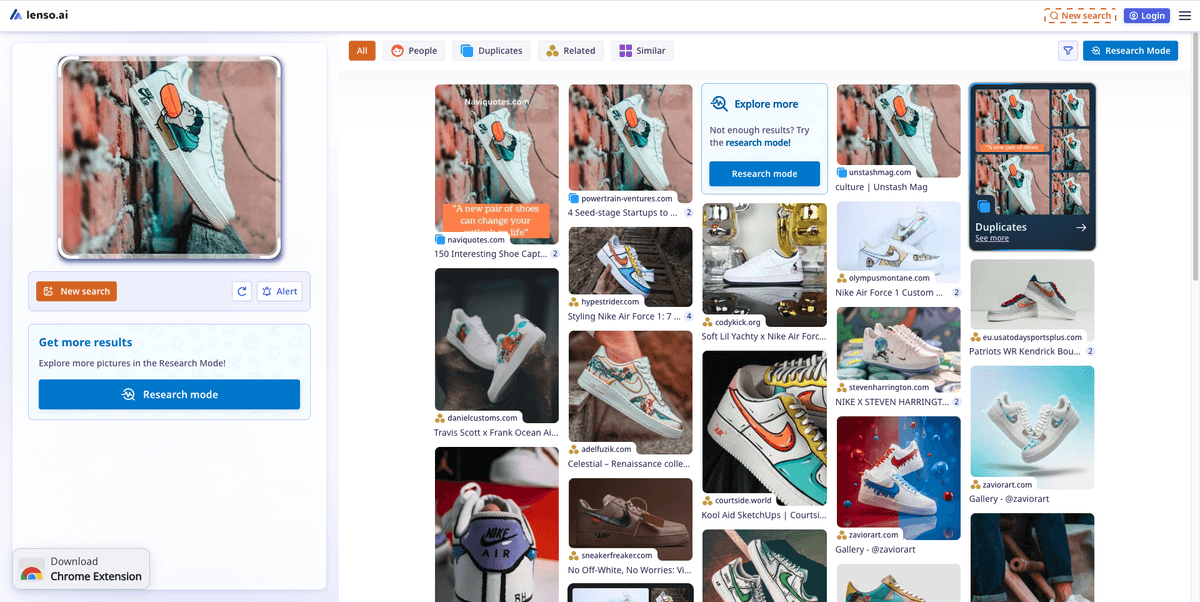
Using lenso.ai is simple. Go to the website, upload the image you want to check, and start the search. The results are organized into different categories, which makes it easier to find what you need.
For ecommerce brands, the Duplicates category is especially useful because it can help you find exact or very similar copies of your product photos online. This makes it easier to spot images that may have been reused on other websites, marketplaces, or listings without your permission.
2. Find Edited Versions of Your Images
People do not always copy images exactly. They may change them first.
For example, they may:
- crop the photo,
- resize it,
- add text,
- change the background,
- add a logo,
- adjust the colors,
- use it inside another graphic.
These changes can make copied images harder to find manually. This is especially important for ecommerce brands.
A fake store could take your professional product image, edit it slightly, and then use it to sell a cheap copy. Customers may believe the fake seller offers the same product shown in your original image.
If the product they receive is poor quality, the situation may also cause confusion around your brand.
Reverse image search can help brands look for modified versions of their photos, not only exact copies.
3. Monitor Important Images Over Time
Searching once is useful, but a photo may appear later. Someone could copy your image next week, next month, or several months later.
This is why regular monitoring can be helpful.
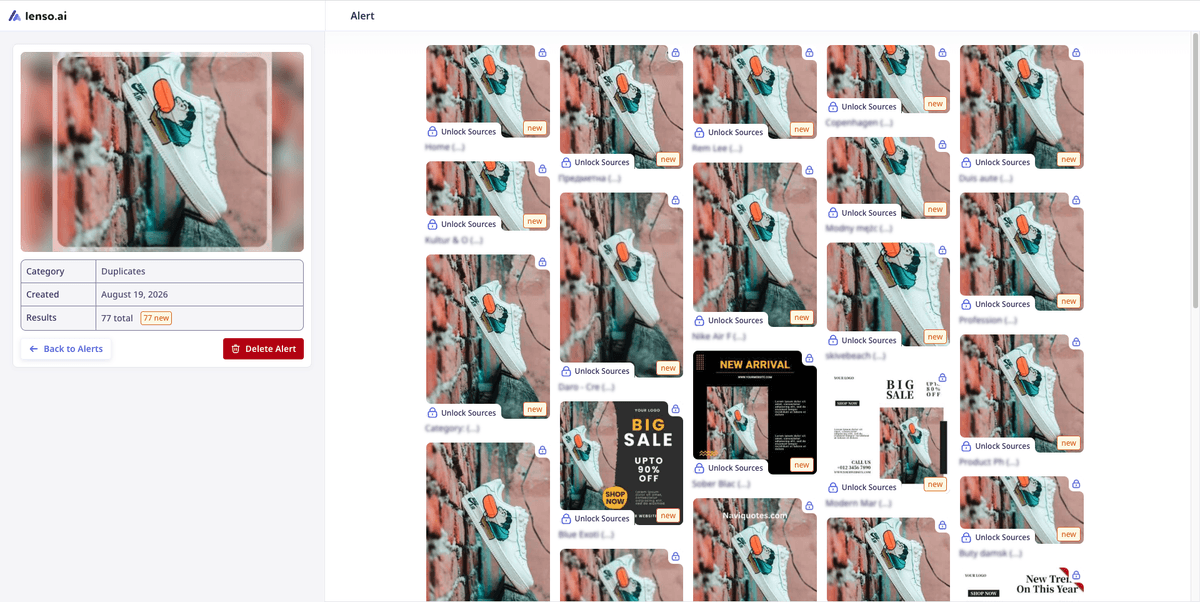
Lenso.ai offers Alerts that can notify users when new matching results appear for a selected image. Instead of repeating the same search manually, you can monitor important images over time.
You can learn how to set up alerts on lenso.ai and use them for your most valuable visual content!
4. Check Photos From Suppliers and Partners
Many ecommerce stores do not create every photo themselves. Some images come from suppliers, agencies, freelancers, distributors, or other partners.
Before using those images in a large campaign, it may be useful to check where else they appear. For example, a supplier may give you professional product photos. You may have permission to use them, but the same photos could already be used by many other online stores.
That may be fine for a basic product page, but if you want your brand to look different from competitors, you may prefer to create your own photos.
Reverse image search can help you understand how widely an image is already used.
If a photo seems to belong to another brand, you may want to ask more questions before publishing it.
This does not replace contracts or legal advice.
It is simply an extra way to check an image before using it.
Build a Simple Image-Protection Process
Protecting product photos does not need to be complicated. Even a small ecommerce business can create a simple process.
- Keep the original versions of your important photos. Store them in organized folders and keep information about when and where they were first published.
- Choose your most important images for monitoring. You can check them with reverse image search from time to time or use alerts where available.
- If you find a suspicious result, save the details. Keep the page URL, screenshots, and the date you found it. Depending on the situation, you may contact the website owner, marketplace, hosting company, or a legal professional.
Why Ecommerce Brands Should Care About Image Use
Ecommerce businesses already spend a lot of time improving product images. They test different backgrounds, photo angles, image sizes, lifestyle photos, and product close-ups. They do this because better images can improve trust and sales.
But brands should also think about what happens after those images are published. A product photo can quickly move beyond your store – appear on social media, blogs, marketplaces, search engines, advertisements, or other ecommerce websites.
Reverse image search gives ecommerce brands a simple way to look for their own visual content. Instead of depending only on product names or brand keywords, you can search using the photo itself.
Final Thoughts
Ecommerce is highly visual – customers want to see clear, attractive, and trustworthy product photos before they buy. Because of this, brands often invest a lot of time and money into creating good visual content.
Those images are valuable business assets.
Reverse image search can help ecommerce brands find copied product photos, check marketplace listings, discover edited versions of images, research campaign ideas, and monitor important visual content over time.

Author
Ahmar Naeem Khan
Helping SaaS Brands Scale Organically | High-Authority Link Building • Strategic Outreach • Revenue-Focused SEO