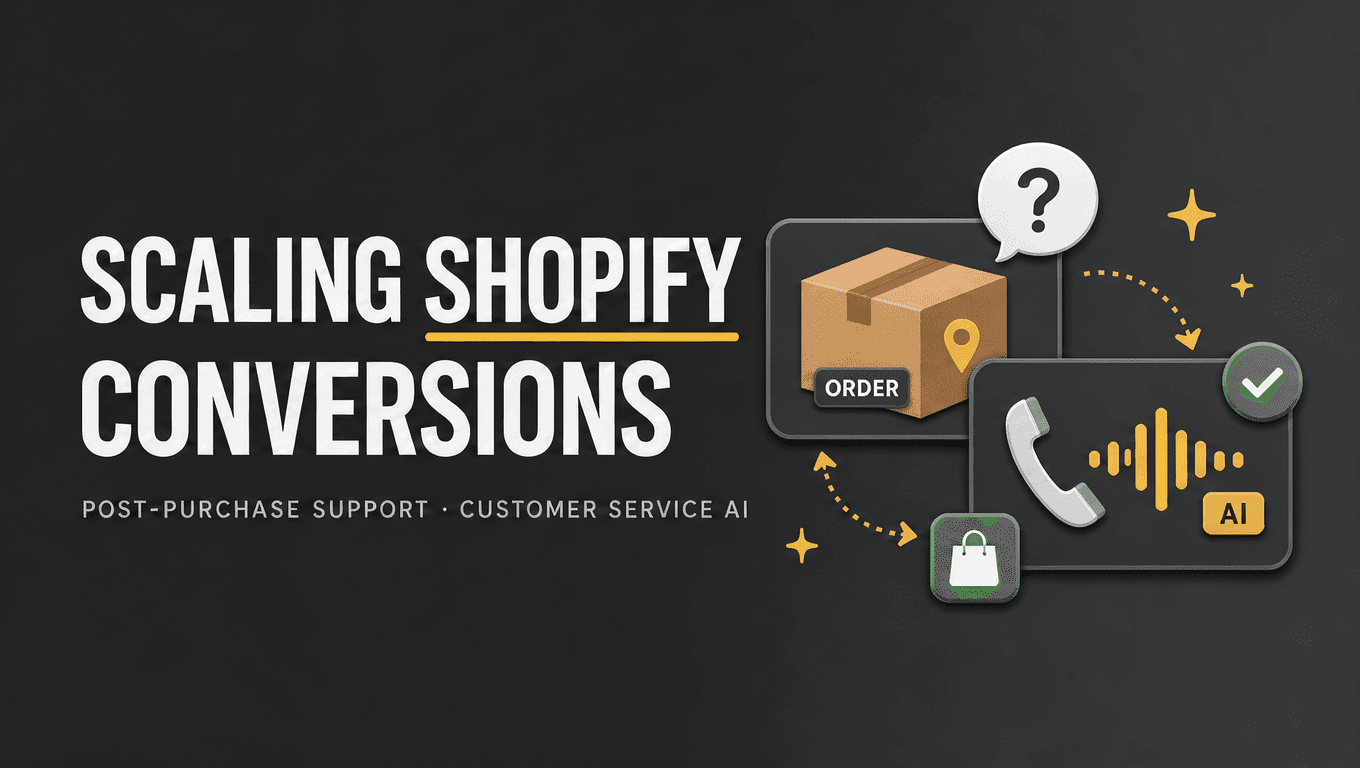
A Shopify store can win a sale through a well-designed product page and a smooth checkout, then lose the customer's confidence over a delivery question that goes unanswered.
During busy sales periods, support teams often find themselves buried in requests for order updates, leaving less time for problems that need personal attention. ElevenLabs' customer service AI offers one approach to handling routine conversations through responsive, natural-sounding voice agents.
Post-purchase support directly affects how customers judge an online store. A shopper who receives clear information about a delayed package is more likely to feel that the business is taking responsibility than someone left waiting for an email reply. Customers remember how the store handled the problem as much as how easy the original order was.
Why Post-Purchase Inquiries Become a Bottleneck
As order volumes rise, customer service teams face a growing number of requests that follow familiar patterns. Questions about shipping dates, tracking information, refund progress, and return eligibility often require staff to retrieve details from Shopify or another connected system before they can respond. The time involved adds up. An agent might spend several minutes checking an order's fulfillment status, opening a carrier tracking page, and composing a reply.
Leaving these messages unanswered has consequences beyond the support inbox. A customer who cannot get a clear update may cancel an order, request a chargeback, or decide against shopping with the store again. Slow support can undermine the trust that marketing campaigns and conversion improvements worked hard to establish. Automation gives merchants a way to handle predictable inquiries without requiring an employee to manage every conversation.
Start With the Questions Customers Ask Most Often
A store should review its existing support records before deciding which tasks to automate. Email tickets and live chat transcripts reveal the subjects that generate the most work, along with the points where customers frequently become confused.
Order tracking suits automation well because the information usually follows a defined structure. After the customer completes verification, the agent retrieves the latest fulfillment status and shares the tracking details. If the carrier has not updated its records, the response should explain that the shipment has no new scan rather than offer an unsupported delivery estimate.
Returns and refunds are suitable for carefully defined workflows as well. An agent can explain the return window, direct a customer to the correct request form, or retrieve the status of a refund already submitted. It should follow the store's actual policy rather than make promises about exceptions.
Product questions often arrive before or after an order has been placed. A shopper who wants to know whether a jacket runs small, for instance, needs an accurate answer drawn from the product listing or the retailer's sizing information. When a customer reports that an item arrived damaged, the conversation takes a different turn. The support team needs to assess the complaint and decide how to resolve it, rather than rely on a standard product response.
Connect Customer Service AI to Accurate Shopify Information
An automated agent needs access to reliable information before it answers questions about individual orders. Merchants should map each support workflow to the relevant Shopify data and decide exactly what the system needs to retrieve.
For an order-status inquiry, the integration may require the fulfillment status, tracking number, and carrier details. A refund workflow needs the current refund state and the store's published processing guidance.
Customer verification must take place before private order information is shared. An order number alone offers limited protection because it can appear in forwarded emails or shared messages. An authenticated customer account or a one-time code sent to the contact details on file provides a stronger basis for confirming identity.
The agent's permissions should reflect its assigned responsibilities. A system designed to retrieve tracking details needs read access to the relevant order information, not permission to edit payment records or issue refunds.
The integration needs a reliable response when information is unavailable. A carrier service could be temporarily inaccessible, or an order record might not contain the expected details. In those situations, the agent should explain the limitation and provide a route to support rather than fill in missing information with a guess.
Use Voice Agents to Make Support More Accessible
Website chat works well for shoppers who prefer typing, but a voice interface gives customers another way to get help. Someone who is away from a computer or finds a lengthy online form inconvenient may prefer to ask a question aloud and hear the response.
Conversational voice agents process spoken requests and reply in natural language. Low-latency audio helps the exchange feel fluid, particularly when a customer asks a follow-up question or needs an explanation repeated. Realistic text-to-speech gives spoken responses a clear delivery that feels more comfortable than the rigid prompts associated with older automated phone systems.
A voice agent handling a delivery inquiry, for example, should retrieve the latest available tracking information and explain it in everyday language. If the package has been delayed, the customer needs a straightforward account of what the carrier reports and what the store will do next.
Voice interactions require the same identity checks as text-based support. A familiar-sounding voice does not prove that the caller owns the account. Before discussing private order details or changing a delivery address, the system should complete the store's approved verification process.
Give Customers a Clear Route to Human Assistance
Some support requests fall outside the rules of an automated workflow, and customers should never have to fight the system to reach a person. A package marked as delivered but missing from the customer's property, for instance, needs investigation rather than another tracking link. A refund that has exceeded the published processing period may require staff to contact the payment provider.
The handover should carry the conversation history into the human support queue. The assigned agent needs the order reference and a record of what the customer has already asked.
Escalation rules should cover damaged or incorrect products, payment disputes, suspected fraud, and requests for exceptions to store policy. Merchants should decide which team handles each category and make sure the agent directs customers to the right place.
Keep Automated Answers Aligned With Store Policies
Customers often move between a store's website, email, social media, and chat while trying to resolve an issue. Conflicting information about delivery charges or return eligibility creates doubt, especially when one channel gives a different answer from another.
A central knowledge source gives the agent approved information to use across its conversations. It should contain the current shipping rules, delivery estimates, return conditions, refund procedures, warranty information, and support contact details. Someone on the team needs responsibility for updating these records whenever the store changes a policy.
Responses should explain the rules in plain English without changing their meaning. If a store accepts returns within 30 days of delivery, the agent should communicate that condition accurately. It should not promise a refund simply because a customer is unhappy with the outcome.
International merchants need to account for customers who prefer support in another language. Multilingual conversational agents help shoppers discuss order problems in the language they understand best. ElevenLabs' agents, for example, support more than 90 languages and can switch language partway through a call, so a shopper who starts in English can carry on in Spanish.
Translations must preserve the original policy, particularly when explaining refunds, warranties, or other conditions that affect a customer's rights.
Evaluate Whether the System Is Actually Helping
The number of conversations handled by an AI agent is a poor measure of success on its own. A store needs to know whether customers received correct answers and whether those answers resolved the original problem.
The percentage of inquiries resolved without human intervention provides a useful starting point. Compare that figure with repeat contact rates to see whether customers are returning because the first response was incomplete. Average response time and customer satisfaction scores help reveal whether faster service is producing a better experience.
Support teams should review conversations that ended in escalation or received negative feedback. Repeated misunderstandings often point to missing information in the knowledge base, while incorrect order details may indicate an integration problem.
Repeat purchases and customer retention offer a broader view of the effect on the business. These measures are influenced by product quality, pricing, marketing, and delivery performance, so changes should be assessed alongside those factors. A store that improves its support process should look for sustained changes rather than attribute every increase in sales to automation.
Make Post-Purchase Service Part of Conversion Planning
A Shopify conversion strategy should account for what happens after the payment confirmation appears. Customers who receive accurate updates and fair assistance have a better reason to trust the store with another purchase. When support teams spend less time retrieving routine order information, they have more capacity to resolve the problems that require human judgment.
Before launch, testing should include delayed shipments, missing records, failed verification, and requests that fall outside store policy. Once the workflow performs reliably, the business can introduce further tasks under the same access and escalation rules.
A Shopify store benefits from customer service AI when shoppers get answers quickly and spend less time chasing updates. What matters is whether customers feel looked after and leave the interaction confident that their issue has been handled.
Author
Debutify
Debutify is the easiest way to launch and scale your eCommerce brand.