The 13 Best Private Label Products to Sell Online in 2026
Key Takeaways
After covering common pitfalls, limitations, and everything in between, here's what every serious seller should keep front of mind:
- Private label is a proven model — private label sales hit a record $283 billion in 2025, signaling massive market validation
- Product selection is the foundation — margins, differentiation potential, and supplier reliability all hinge on choosing the right category
- Branding beats price — private label wins when it competes on identity and quality, not just cost
- Compliance and quality control aren't optional — shortcuts here become liabilities fast
- Scalability requires systems — the sellers who grow are the ones who build repeatable sourcing, fulfillment, and marketing processes from day one
Private labeling rewards preparation. Sellers who research deeply, differentiate intentionally, and execute consistently are the ones who build brands that last.
Still have questions about getting started? The next section tackles the most common ones directly.
Introduction: Why Private Label Products Are Key for 2026
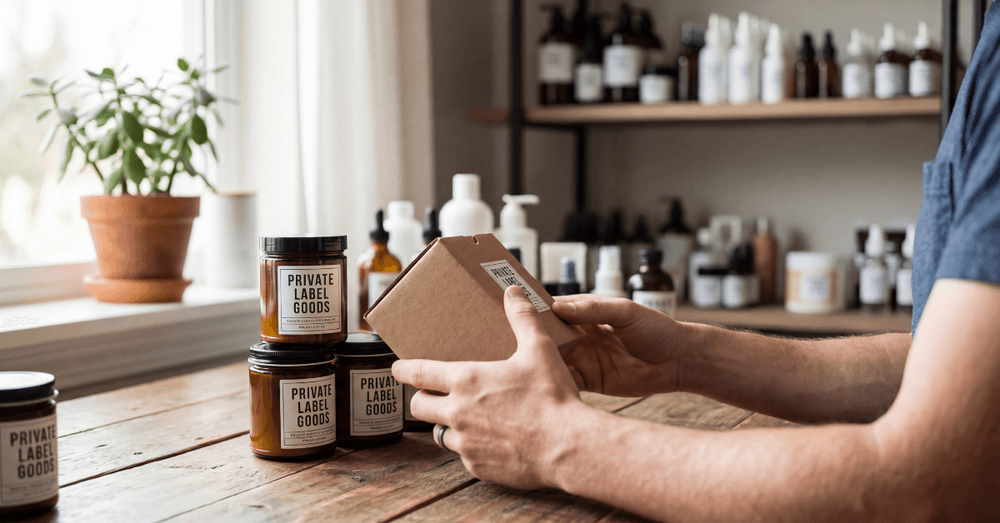
The private label industry just crossed a milestone that no serious e-commerce seller can afford to ignore. Private label sales hit a record $283 billion in 2024 — and momentum isn't slowing heading into 2026. For entrepreneurs looking to build defensible margins and genuine brand equity, private label products represent one of the most powerful levers available today.
Unlike reselling or dropshipping, private labeling lets you control pricing, packaging, and positioning — without the overhead of full-scale manufacturing. Consumers are increasingly comfortable buying store and independent brands over legacy names, with PLMA's 2025 report confirming that trust in private label quality has reached an all-time high.
The categories driving this growth — from skincare to supplements to home goods — are exactly where smart sellers should be placing their bets right now. What follows is a deeply researched breakdown of the 13 best opportunities, starting with one of the highest-demand niches of all.
1. Organic Skincare Products
Among the best private label products to launch in 2026, organic skincare consistently tops the list — and the data backs it up. According to Innova Market Insights 2025, clean-label and natural positioning is now the dominant consumer expectation across personal care categories, not a niche preference.
What makes skincare particularly compelling for private label sellers is the margin structure. Manufacturing costs for serums, moisturizers, and exfoliants are relatively low, while perceived value — driven by ingredients, packaging, and brand story — can justify premium price points.
Key product opportunities include:
- Vitamin C serums – High search volume, repeat purchase behavior
- Barrier-repair moisturizers – Dermatologist-backed positioning resonates with educated buyers
- SPF-infused daily creams – Regulatory compliance adds a barrier to entry that protects established sellers
- Retinol alternatives (bakuchiol, peptides) – Trending with consumers who want results without irritation
"Private label skincare brands that lead with ingredient transparency and clinical-adjacent claims are capturing shelf space that national brands once dominated."
One underexplored angle most articles miss: formulation exclusivity. Working with a contract manufacturer to develop a proprietary blend — even a minor variation — significantly reduces direct price competition on marketplaces. If you're thinking about building your skincare brand from the ground up, that differentiation layer is what separates scalable brands from commodity listings.
For sellers newer to the category, starting with dropship-compatible products can validate demand before committing to MOQs.
Up next: smart home devices — a category where technology and private label are colliding in surprisingly profitable ways.
FAQs: Private Label Organic Skincare
1. What certifications matter most for private label skincare in 2026?
USDA Organic, COSMOS, and EWG Verified are the three most recognized. COSMOS carries particular weight in European markets, while EWG Verified resonates strongly with U.S. health-conscious consumers. Even a single credible certification can meaningfully increase conversion rates and justify a higher price point.
2. What's a realistic minimum order quantity (MOQ) for organic skincare formulations?
Most contract manufacturers start at 500–1,000 units per SKU for stock formulas. Custom or proprietary formulations typically require 2,000+ units. Some domestic manufacturers offer lower MOQs at a per-unit premium — useful for market validation before scaling.
3. How do I protect my private label skincare formula from being copied?
Full protection isn't always possible, but a combination of trade dress (distinctive packaging), a proprietary ingredient blend, and a well-registered brand trademark creates meaningful friction for competitors. Non-disclosure agreements with your manufacturer are also essential from day one.
4. Is it better to sell organic skincare on marketplaces or a direct-to-consumer (DTC) site?
Both channels have trade-offs. Marketplaces offer immediate traffic but compress margins and limit brand control. DTC enables higher LTV through email capture, bundling, and subscription offers — but requires paid acquisition investment upfront. Many successful sellers use marketplaces to generate initial cash flow while building DTC infrastructure in parallel.
5. What ingredients are trending in private label skincare for 2026?
Postbiotics (skin microbiome support), niacinamide at clinical concentrations (10%+), and adaptogenic botanicals like ashwagandha and reishi are seeing strong consumer interest. Bakuchiol continues to grow as a retinol alternative. Formulations that combine efficacy with a clean ingredient list are consistently outperforming single-benefit products.
2. Smart Home Devices
When it comes to private label products 2026, smart home devices represent one of the most compelling — and frequently overlooked — white-label opportunities available right now. Most listicles stop at "it's a growing market." That's not enough context for serious sellers.
The global smart home market is projected to surpass $338 billion by 2030, growing at a CAGR of over 11%. More importantly, consumer trust in generic smart home brands has significantly improved as device reliability standardizes across manufacturers.
What makes this category ideal for private labeling:
- High perceived value: Branded packaging and app integration create premium positioning
- Recurring revenue potential: Accessories, replacement parts, and ecosystem add-ons
- Fragmented competition: Unlike skincare, no single private label player dominates smart plugs, sensors, or hubs
According to Numerator's 2025 brand growth rankings, connected home categories are seeing some of the fastest household penetration increases year-over-year — a signal that demand is broadening beyond early adopters.
One practical approach is focusing on sub-niches: smart pet feeders, elderly safety sensors, or energy-monitoring plugs command stronger margins than commoditized smart bulbs. If you're building out a broader product catalog, exploring complementary product categories can help anchor your smart home line within a cohesive brand story.
The caveat? Compliance requirements — FCC certifications, Wi-Fi protocol standards — add upfront complexity. Vetting manufacturers with existing certifications is non-negotiable.
The wellness connection is stronger than it looks, which is exactly why health supplements deserve the next spot on this list.
FAQs: Smart Home Devices as Private Label Products
1. Is smart home a viable private label category for small sellers?
Absolutely — but niche targeting is critical. Broad categories like smart lighting are oversaturated. Micro-niches like smart garage sensors or energy monitors offer better margin and lower competitive density for new private label entrants.
2. What certifications do smart home private label products need?
At minimum, FCC certification (US), CE marking (EU), and RoHS compliance are typically required. Always verify your manufacturer holds these before committing to inventory. Non-compliant products risk marketplace delisting.
3. How do I differentiate a private label smart home device from existing options?
App experience, packaging quality, and bundled accessories drive differentiation. A white-label device with a branded app, intuitive setup guide, and sleek packaging outperforms identical hardware sold generically — consistently.
4. What's the typical MOQ for private label smart home devices?
MOQs generally range from 200–500 units for established manufacturers, though some suppliers negotiate lower quantities for initial trial orders. Factor this into your working capital planning.
5. Can smart home devices integrate with Amazon's or Google's ecosystems under a private label?
Yes — most OEM manufacturers build in Alexa and Google Home compatibility by default. Confirm compatibility certifications before branding, as Amazon's Works with Alexa program has specific testing requirements.
3. Health Supplements
The decision to sell private label online is rarely as lucrative as it is in the health supplements category. According to Customcy's 2025 private label statistics, the global dietary supplements market is projected to surpass $300 billion by 2028 — and private label brands are capturing an increasingly dominant share of that growth.
What most guides gloss over is the margin architecture of this category. Supplement manufacturers typically offer MOQs as low as 500 units, white-label formulations with clinical-grade ingredients, and co-packing flexibility that lets you pivot SKUs quickly based on demand signals. That's a structural advantage few product categories can match.
High-demand verticals within supplements right now include:
- Gut health & probiotics — driven by microbiome research mainstream adoption
- Adaptogens (ashwagandha, rhodiola) — riding the stress-management wave
- Sleep support blends — melatonin-free formulas gaining traction post-2024 backlash
- Women's hormonal health — an underserved niche with fierce loyalty
Private label supplement brands that invest in third-party testing and transparent labeling consistently command 20–35% price premiums over unverified competitors.
One caveat worth acknowledging: supplements face stricter regulatory scrutiny than most private label categories. FDA compliance, GMP-certified manufacturing, and accurate label claims aren't optional — they're table stakes. Brands that cut corners here face liability exposure that can dwarf initial profits.
As consumer interest in holistic wellness continues to climb, it naturally spills into everyday living spaces — which is exactly where the next category picks up.
Frequently Asked Questions: Health Supplements as Private Label Products
1. How hard is it to launch a private label supplement brand with no manufacturing experience?
It's more accessible than most assume. Hundreds of contract manufacturers specialize specifically in white-label supplements. They handle formulation, encapsulation, bottling, and labeling — your primary job is brand positioning, compliance oversight, and distribution. In practice, the biggest barrier isn't manufacturing know-how; it's understanding FDA 21 CFR Part 111 (GMP regulations) and building a claims strategy that's both compelling and legally defensible.
2. What certifications should a private label supplement manufacturer have?
At minimum, look for NSF International certification, GMP (Good Manufacturing Practice) compliance, and ideally USP verification if you're targeting premium retail channels. Third-party testing certificates of analysis (COAs) for every batch are non-negotiable if you want to build brand credibility. Brands that display these certifications transparently — on product pages and packaging — measurably outperform those that don't in repeat purchase rates.
3. What's a realistic profit margin for private label supplements sold online?
Gross margins in private label supplements typically range from 50% to 75%, depending on ingredient complexity, packaging tier, and sales channel. DTC (direct-to-consumer) via Shopify or similar platforms yields the highest margins since there's no retailer markup. Amazon's FBA fees and category competition compress margins — though the volume potential can offset this for established brands.
4. Which supplement niches are oversaturated versus underserved in 2026?
Oversaturated: basic whey protein, generic multivitamins, standard fish oil. Underserved with strong growth signals: cognitive performance blends for professionals, cycle-syncing supplements for women, pediatric gut health formulas, and sports recovery products targeting older active adults (50+). The pattern is consistent — specificity beats breadth in private label supplement positioning.
5. Can you sell private label supplements on Amazon without your own website?
Yes, but it's strategically risky as a standalone approach. Amazon's algorithm favors established ASINs, and supplement categories face frequent listing suspensions over labeling compliance issues. A more resilient model combines an owned direct-to-consumer storefront with Amazon as a secondary channel — protecting brand equity while capturing marketplace volume. Relying exclusively on any single platform is a concentration risk no serious private label brand should accept.
4. Eco-Friendly Household Products
White label products in the eco-friendly household category are experiencing a surge that's hard to ignore. According to Food Business News, sustainability-driven private label lines are among the fastest-growing segments retailers are actively investing in heading into 2026.
What makes this category particularly strategic is the margin structure. Biodegradable cleaning supplies, reusable storage solutions, and compostable kitchen products carry strong perceived value — consumers willingly pay a premium for environmental credibility, which means your brand captures that upside rather than a national label.
Key product opportunities include:
- Bamboo household essentials (paper towels, utensils, cutting boards)
- Concentrated cleaning solutions with refillable packaging
- Beeswax or plant-based food wraps
- Compostable trash bags and kitchen liners
One practical approach is targeting the "eco-curious" buyer — shoppers aware of sustainability but not yet committed to premium green brands. Your private label positions directly in that gap.
If you're exploring broader eco-product angles, this guide on seasonal product sourcing covers environmentally conscious categories that consistently outperform during peak retail periods.
Eco-conscious private label brands that educate while they sell consistently outperform those that simply slap a green label on generic inventory.
The competitive moat here isn't just the product — it's certifications, transparent sourcing claims, and packaging design. Those elements are harder to replicate quickly, giving early movers a durable advantage.
As eco-friendly products cement brand loyalty through values alignment, the next category takes a different but equally powerful approach — connecting with consumers through their personal health goals. Fitness wearables are rewriting what's possible for private label sellers willing to go beyond the obvious.
FAQs: Eco-Friendly Household Products as Private Label
1. Are eco-friendly household products genuinely profitable as white label products, or is the margin too thin?
Margins are actually stronger than many sellers expect. Because eco-friendly products carry a sustainability premium in consumer perception, brands routinely price bamboo or concentrated-formula products 30–60% above conventional equivalents. The key is sourcing manufacturers with credible certifications (FSC, B Corp suppliers, USDA Certified Biobased) so your pricing is defensible. Thin margins typically result from competing on price rather than brand story — a mistake easily avoided with proper positioning.
2. What certifications matter most for private label eco-household products?
Certifications vary by product type, but the most recognized include FSC certification for wood/bamboo-based items, EPA Safer Choice for cleaning formulas, and ASTM D6400 for compostable claims. Carrying even one credible certification meaningfully reduces customer skepticism and can differentiate your listing in crowded marketplaces. Always verify that your white-label manufacturer holds the certification directly — not just claims to comply with the standard.
3. How saturated is the eco-friendly household private label market in 2026?
The category is growing faster than new entrants are filling it. Food Business News notes that private label in sustainability-adjacent categories remains underpenetrated relative to consumer demand. The real saturation risk is in generic positioning — "eco-friendly" alone isn't a brand. Sellers who layer in a specific angle (zero-waste kitchen, plastic-free cleaning, etc.) find significantly less direct competition.
4. Can I start a white label dropshipping model with eco-friendly household products?
Yes, though it requires vetting suppliers carefully. Some manufacturers offer white label dropshipping arrangements where they fulfill orders under your brand. The challenge in eco-products specifically is that packaging authenticity matters enormously — flimsy or non-recyclable packaging undermines the brand story immediately. Prioritize suppliers who offer custom sustainable packaging as part of their white-label service.
5. What's the biggest mistake sellers make when launching eco-friendly private label products?
Overpromising on environmental claims without substantiation. Greenwashing — even unintentional — is increasingly scrutinized by both consumers and regulators. The FTC's Green Guides provide clear standards for terms like "biodegradable," "recyclable," and "sustainable." Sellers who build their brand on verified, specific claims (rather than vague language) earn stronger long-term customer trust and avoid reputational or legal exposure down the line.
5. Fitness Wearables
The fitness wearable market sits at a compelling intersection of technology and personal wellness — two consumer obsessions that show no signs of slowing. What makes this category particularly attractive for private label sellers is the sheer breadth of product options, from smart fitness bands and heart rate monitors to recovery-focused wearables and sleep trackers.
Working with experienced private label manufacturers in this space, brands can customize firmware displays, strap materials, app integrations, and even packaging — creating a product that feels genuinely proprietary rather than rebranded hardware.
What typically happens in this category is a race toward differentiation through data. Consumers aren't just buying a device; they're buying insights. Sellers who pair their wearable with a companion app or exclusive wellness content create a stickier customer experience and stronger brand loyalty.
If you're researching profitable product categories for wearables, fitness tech consistently ranks among the highest-margin niches due to repeat purchasing behavior — accessories, bands, and chargers extend the lifetime value well beyond the initial sale.
One caveat worth acknowledging: compliance with health-related claims is tightly regulated. Marketing a wearable as a "medical device" without FDA clearance carries serious legal risk. The smart play is positioning around lifestyle and performance, not diagnostics.
FAQs: Private Label Fitness Wearables
1. Are fitness wearables profitable as private label products?
Yes. Margins typically range from 40–70% when sourced strategically, especially when accessories and companion subscriptions are bundled into the offer.
2. How customizable are private label fitness wearables?
Most manufacturers offer customization of strap color, buckle style, screen UI, brand logo, and packaging. App-level customization is increasingly available at MOQ thresholds.
3. What's the minimum order quantity (MOQ) for fitness wearables?
MOQs typically start between 200–500 units, though premium manufacturers with white-label app integration may require higher volumes.
4. How do I avoid legal issues with health claims?
Stick to performance and lifestyle language. Avoid clinical terminology unless you've secured proper regulatory clearance for your market.
5. Which markets are growing fastest for fitness wearables?
North America and Southeast Asia are leading growth, with strong demand among 25–45-year-olds prioritizing preventive wellness over reactive healthcare.
Speaking of personalization in product niches — the next category takes customization to an even more intimate level.
6. Personalized Jewelry
Personalized jewelry consistently ranks among the most high margin private label categories available to online sellers — and for good reason. Customization commands premium pricing without proportionally increasing production costs. A simple sterling silver nameplate necklace sourced at $8–$12 can retail for $45–$80, delivering margins that most product categories simply can't match.
What separates successful private label jewelry brands from generic resellers is perceived emotional value. Shoppers aren't buying metal — they're buying meaning. Birth month engravings, coordinate jewelry, and initial pendants tap into gifting psychology that drives repeat purchases and strong word-of-mouth.
According to Customcy's private label data, jewelry and accessories consistently outperform average private label conversion benchmarks when paired with strong brand storytelling.
Key advantages for 2026 entrants:
- Low MOQ requirements — many manufacturers accept orders as low as 20–50 units
- High gifting demand year-round, especially Q4
- Digital try-on tools reducing return rates significantly
- Scalable SKU structure — one base design multiplied across dozens of personalization variants
One practical approach is building a focused niche storefront around a single jewelry theme — memorial pieces, astrology, or milestone jewelry — rather than competing broadly. Niche positioning dramatically improves ad targeting efficiency and average order value.
FAQs: Personalized Jewelry as a Private Label Product
1. What materials work best for private label personalized jewelry?
Sterling silver (925), stainless steel, and gold-filled metals are the most commercially viable options. Sterling silver offers the best balance of perceived luxury and sourcing cost. Stainless steel is ideal for hypoallergenic positioning and durability marketing. Avoid brass-based alloys if targeting premium price points — tarnishing complaints erode brand trust quickly and generate disproportionate customer service overhead.
2. How do I handle the customization fulfillment process at scale?
Most established jewelry manufacturers offer print-on-demand engraving integrated directly into their production workflow. The operational model works similarly to standard dropshipping — you pass order details, they engrave and ship. However, vetting turnaround times is critical. A common pattern is promising 3–5 day production windows in marketing materials, then encountering 7–10 day backlogs during peak seasons. Always negotiate SLA terms contractually, not verbally.
3. What are realistic profit margins for personalized jewelry?
Gross margins of 55–75% are achievable and common in this category. The margin floor depends heavily on metal type, engraving complexity, and packaging investment. Premium gift-ready packaging — a velvet pouch or branded box — can justify a $10–$15 price increase while costing $1.50–$3.00 to produce, making it one of the highest-ROI investments in the category.
4. Is personalized jewelry too saturated to enter in 2026?
Saturation exists at the generic level — mass-produced initial necklaces sold without brand differentiation. However, micro-niche positioning remains wide open. Coordinate jewelry for travel milestones, grief and memorial pieces, or culturally specific designs (regional symbols, heritage motifs) represent segments where brand-building still creates defensible market positions. The saturation narrative applies to undifferentiated products, not to thoughtfully branded stores.
5. What platform converts best for personalized jewelry?
Jewelry with a strong visual identity and storytelling angle performs exceptionally well on platforms that support rich product pages. Optimizing your product page design with lifestyle photography, close-up engraving shots, and customer review imagery is non-negotiable in this category. Social proof — specifically UGC photos of real customers wearing pieces — drives conversion more reliably than any other on-page element.
The emotional resonance driving personalized jewelry sales shares surprising parallels with another category where personal connection dominates purchasing decisions: premium pet supplies — where owners invest as deeply in their pets' wellbeing as in their own.
8. Home Fitness Equipment
Home fitness equipment sits squarely within the fastest-growing segment of wellness private label products — a category that surged during the pandemic and never fully retreated. Consumers now expect gym-quality tools at home, and they're increasingly loyal to brands that deliver on that promise.
Why it outperforms in private label:
- High perceived value gap — resistance bands, foam rollers, and adjustable weights carry raw manufacturing costs that sit well below retail pricing expectations
- Bundling potential — a private label "starter kit" (mat + bands + foam roller) commands significantly higher AOV than individual SKUs
- Low return rates — unlike apparel, sizing ambiguity is minimal; product satisfaction is performance-driven
According to BigCommerce's private label product analysis, fitness accessories consistently appear among the most scalable categories for new private label entrants — largely because differentiation happens through branding, packaging, and educational content rather than novel manufacturing.
One practical approach is launching with resistance bands or yoga mats first, validating demand, then expanding into weighted accessories as margins compound.
FAQs: Home Fitness Equipment as a Private Label Category
1. What's the realistic profit margin on private label fitness equipment?
Resistance bands and foam rollers typically yield 60–75% gross margins when sourced strategically. Higher-ticket items like adjustable dumbbells compress slightly to 40–55%.
2. Are there liability concerns with fitness equipment?
Yes — a critical caveat. Weighted equipment and resistance tools require product liability insurance and clear usage disclaimers. Work with a compliance attorney before launch.
3. How do I differentiate from generic fitness brands?
Educational content wins here. Workout guides, QR-coded video tutorials bundled with your product, and community-building through social channels separate private label brands from commodity sellers.
4. Which platforms perform best for fitness equipment sales?
Amazon and Shopify both perform strongly, but direct-to-consumer Shopify stores allow better margin protection and email list ownership — both critical for long-term brand equity.
5. What's the minimum order quantity (MOQ) for fitness accessories?
Most manufacturers set MOQs between 200–500 units for resistance bands and yoga mats — low enough for lean testing before scaling inventory commitments.
The same instinct driving consumers toward personalized wellness tools also shapes what they wear during their workouts — which leads naturally into one of private label's most enduring category powerhouses.
9. Custom Branded Apparel
Custom branded products in the apparel space represent one of the most scalable private label opportunities available in 2026 — with margins that routinely hit 60–70% when positioning is executed correctly.
Apparel succeeds as a private label category for a precise reason: brand identity is the product. A well-designed hoodie with compelling storytelling commands $65. The same garment without a brand story sells for $18. That gap is entirely manufactured through branding.
What Makes Apparel Work in Private Label
- High perceived value — fabric quality signals are easy to communicate visually
- Evergreen demand — basics like tees, joggers, and hoodies never go out of style
- Community-driven loyalty — buyers wear your brand, becoming walking brand ambassadors
- Low MOQs available — many print-on-demand and cut-and-sew manufacturers start at 50–100 units
Where Most Sellers Leave Margin on the Table
The underexplored angle competitors miss entirely: sustainable fabrication storytelling. Brands emphasizing organic cotton, recycled polyester, or Fair Trade manufacturing consistently command 20–30% price premiums according to current consumer data — yet fewer than a third of independent apparel sellers actively merchandise these differentiators in product descriptions.
One practical approach is building an apparel line around a lifestyle identity rather than individual SKUs. Think "outdoor adventurers" rather than "hiking shirts." This framing supports email segmentation, content strategy, and upsell bundling simultaneously.
The strongest private label apparel brands don't sell clothing — they sell belonging to a community that happens to wear clothes.
FAQs: Custom Branded Apparel
1. What's the minimum viable inventory to launch a private label apparel brand?
Print-on-demand models allow zero-inventory launches. However, cut-and-sew private label typically requires 50–300 units per SKU for competitive per-unit costs and true brand differentiation on labels, tags, and fabric composition.
2. How do I differentiate my apparel brand from saturated dropshipping competitors?
Custom woven labels, hang tags with brand narrative, and proprietary colorways are the baseline. Beyond that, sustainable materials and a documented supply chain story create defensible positioning that print-on-demand alternatives structurally cannot replicate.
3. Which apparel categories carry the highest private label margins?
Athleisure, premium basics, and branded loungewear consistently outperform fashion-forward items. Trend-resistant categories reduce markdown risk and support evergreen ad creative — a significant operational advantage at scale.
4. Is apparel too competitive for new private label sellers in 2026?
Saturated at the commodity level, yes. However, niche-specific apparel — occupational communities, hobby tribes, or values-aligned audiences — remains underleveraged, particularly when paired with direct-to-consumer storytelling that generic retailers cannot match.
5. What certifications matter most for premium apparel private label?
GOTS (Global Organic Textile Standard), OEKO-TEX Standard 100, and Fair Trade certification are the three most recognized trust signals among premium buyers. These certifications typically support higher AOV and stronger retention metrics long-term.
With apparel establishing how identity-driven branding amplifies commodity products, the same psychological principle applies powerfully in another surprising category — one that lives in your kitchen rather than your closet.
10. Gourmet Food Kits
The gourmet food kit category is one of the most underestimated opportunities in private label e-commerce — and one of the least saturated compared to beauty or apparel. According to PLMA's 2025 Private Label Report, food and beverage continues to drive private label growth, with consumers increasingly open to branded alternatives over national names.
Gourmet food kits work exceptionally well for dropshipping private label models because suppliers handle complex fulfillment logistics — temperature control, packaging compliance, shelf-life management — while you control the brand experience.
High-converting subcategories include:
Global cuisine kits (Korean BBQ, Moroccan tagine, Thai curry)
Dietary-specific bundles (keto, paleo, plant-based)
Artisan spice blends and rub collections
Cocktail mixers and specialty syrups
What separates winning gourmet food brands isn't the recipe — it's the storytelling layered around origin, sourcing, and ritual. For Indian cuisine kits, partnering with trusted basmati rice suppliers can help brands highlight ingredient quality and authenticity. Brands that communicate why their ingredients matter command 40–60% premium pricing over commodity alternatives.
FAQs: Gourmet Food Kits as Private Label Products
1. Is private labeling food products legally complex?
Yes — food labeling requires FDA compliance, accurate ingredient lists, allergen disclosures, and proper net weight declarations. Partner only with manufacturers who provide compliant label templates and Certificates of Analysis.
2. What's the minimum order quantity (MOQ) for food kit suppliers?
In practice, many co-packers start at 100–250 units per SKU, though specialty spice blenders often go lower. MOQ scales with packaging complexity.
3. Can gourmet food kits work on a dropshipping model?
Absolutely — several platforms specialize in food-specific dropshipping private label fulfillment, handling cold chain logistics and compliance so sellers focus purely on marketing.
4. What margins should sellers expect?
Blended margins typically range from 45–65%, with spice blends and dry-mix kits hitting the higher end due to low production costs relative to perceived premium value.
5. How do sellers handle perishability risk?
One practical approach is launching with shelf-stable SKUs first — dry rubs, spice collections, cocktail syrups — before expanding into refrigerated or frozen segments once cash flow stabilizes.
As the gourmet food space matures, the brands winning long-term are layering in digital education — recipe content, video tutorials, pairing guides — which connects naturally to how the next category, digital learning tools, is reshaping value delivery in product-based businesses.
11. Digital Learning Tools
The shift toward online education hasn't slowed — it's accelerating. Digital learning tools represent a compelling sustainable private label opportunity because there's no physical inventory, no shipping logistics, and near-zero cost of goods once created.
Think branded courses, printable workbooks, study frameworks, or AI-assisted learning templates sold under your own label.
Why this category stands out:
- Margins exceed 80–90% on purely digital products
- Content can be updated without reprinting or restocking
- Evergreen demand across professional development, language learning, and K–12 supplemental education
The differentiation angle most sellers miss: instead of generic course content, successful private label sellers bundle structured learning systems — a proprietary methodology, a branded progress tracker, and community access — that justify premium pricing.
FAQs: Digital Learning Tools as Private Label Products
1. Can digital learning tools truly be "private labeled"?
Yes. Sellers license white-label course content, rebrand the interface, add proprietary modules, and sell under their own brand name — full ownership of the customer relationship.
2. What formats sell best?
Structured PDF workbooks, video course bundles, and interactive templates consistently outperform standalone ebooks in average order value.
3. What's the biggest risk?
Content commoditization. Without a unique framework or strong brand narrative, digital tools become race-to-the-bottom price wars quickly.
4. How do I validate demand before investing?
Launch a paid waitlist or a low-cost "beta" version to gauge conversion before building the full product suite.
5. Is this category sustainable long-term?
Extremely. Digital learning tools require no raw materials, produce no waste, and scale infinitely — making them one of the most genuinely sustainable product categories available.
If you prefer a hands-on, tangible product category, the next section explores craft kits for adults — a surging niche blending creativity with repeat-purchase potential.
12. Craft Kits for Adults
The adult crafting market has quietly evolved into a serious commercial opportunity — and one that most private label guides barely scratch the surface on. Post-pandemic, consumers didn't abandon their newfound hobby habits; they deepened them. Adult craft kits spanning candle making, resin art, macramé, and botanical dyeing now command premium price points with enthusiastic repeat buyers.
What makes this category strategically powerful is its bundled product structure. A single kit combines multiple SKUs — tools, materials, instructions — into one branded experience, which naturally increases average order value and creates strong perceived value. That same bundled format also makes fitness accessories private label strategies worth cross-referencing, since both categories rely heavily on cohesive branded packaging to justify premium pricing.
Key advantages of adult craft kits:
- High gifting demand — kits sell strongly year-round, not just during seasonal peaks
- Community-driven retention — buyers who complete one kit often return for the next complexity level
- Low return rates — consumable materials reduce refund risk compared to hard goods
- UGC content generation — crafters naturally share finished projects, providing organic brand exposure
One practical approach is to tier your product line: a beginner kit at entry price, an intermediate bundle, and a premium "artisan" edition. This ladder structure supports lifetime customer value without requiring entirely new product development.
FAQs: Private Label Craft Kits for Adults
1. What's the typical margin on private label adult craft kits?
Margins commonly range from 45–65% depending on material sourcing and packaging complexity. Simpler kits with minimal hardware components tend to yield higher margins than tool-heavy sets.
2. Which craft niches perform best online?
Candle making, resin art, and botanical printing consistently outperform other categories in search volume and social engagement, making them strong starting points for new private label entrants.
3. How important is packaging for this category?
Critically important. The unboxing experience directly influences reviews and repeat purchases. Investing in premium packaging often delivers measurable return through higher star ratings and social sharing.
4. Can craft kits be scaled through subscriptions?
Yes — a monthly or quarterly themed kit model works well here, building predictable revenue and strong community loyalty around your brand's creative direction.
5. What certifications or compliance issues should sellers consider?
If kits include dyes, resins, or adhesives, verify compliance with CPSC guidelines and ensure safety data sheets accompany chemical components, particularly for international shipping.
The tactile, experiential nature of craft kits pairs naturally with another booming hands-on category — and as we'll explore next, innovative kitchen gadgets tap into that same "doing something with your hands" consumer psychology, but with an even broader household audience.
13. Innovative Kitchen Gadgets
The kitchen gadget category consistently punches above its weight in private label margins — and 2026 is no exception. Consumers actively seek functional, problem-solving tools that simplify meal prep, reduce waste, and elevate the cooking experience. Unlike categories tied to personal chemistry (such as beauty private label products), kitchen gadgets benefit from universal appeal and low return rates when quality standards are met.
What makes this category particularly attractive:
- High perceived value — a well-designed gadget justifies premium pricing even at modest production costs
- Gift-market crossover — kitchen tools consistently rank among top gifting categories, creating reliable seasonal spikes
- Low regulatory friction — compared to consumables or supplements, kitchen tools face minimal compliance barriers
- Visual content potential — demonstration-friendly products drive organic social traffic
In practice, the strongest-performing private label kitchen SKUs solve a specific, recurring frustration — think silicone stretch lids, compact mandoline slicers, or magnetic spice storage systems. Generic "kitchen sets" underperform. Niche precision wins.
Frequently Asked Questions
1. Is the kitchen gadget market oversaturated for private label sellers?
Certain commodity items are competitive, but niche problem-solvers — tools targeting specific dietary lifestyles like keto or plant-based cooking — remain relatively uncrowded and command stronger margins.
2. What's a realistic MOQ (minimum order quantity) for private label kitchen gadgets?
Most manufacturers offer MOQs between 200–500 units, making initial capital requirements manageable. Starting with a single hero SKU reduces inventory risk considerably.
3. Which sales channels perform best for kitchen gadgets?
Marketplaces with strong visual search perform exceptionally well, but building a standalone Shopify store alongside marketplace listings creates brand equity and reduces platform dependency long-term.
4. How important is packaging for kitchen gadgets?
Critically important. Retail-ready packaging with clear use-case photography significantly reduces customer uncertainty and return rates — two metrics that directly impact profitability.
5. Should kitchen gadgets be tested before launch?
Absolutely. Unlike digital products, physical gadgets carry liability exposure. Sourcing samples, stress-testing functionality, and reading competitor reviews for recurring complaints before finalizing specs is a non-negotiable due diligence step.
As you refine your private label product selection, understanding which products to sell is only half the equation — knowing the critical mistakes that derail even well-chosen products is what separates sustainable sellers from those who burn through launch budgets without results.
Common Mistakes to Avoid When Selling Private Label Products
Even sellers who fully understand what are private label products and how to source them can stumble on execution. Avoiding these pitfalls separates profitable brands from costly experiments.
- Skipping supplier vetting — Choosing manufacturers based on price alone leads to inconsistent quality and costly returns. Always request samples and audit certifications before committing.
- Neglecting brand differentiation — Slapping a logo on a generic product isn't a brand strategy. Distinct packaging, positioning, and messaging drive repeat purchases.
- Underestimating MOQ cash flow — Minimum order quantities can lock capital fast. Map inventory cycles carefully before scaling.
- Ignoring compliance requirements — Regulatory oversights in categories like supplements or skincare can trigger costly recalls or platform removals.
- Weak product listing optimization — Even great products fail without compelling copy, high-quality imagery, and keyword-aligned titles.
FAQs: Private Label Selling
1. What are private label products in simple terms?
Private label products are manufactured by a third party but sold exclusively under a retailer's own brand name and packaging — giving sellers full control over pricing, positioning, and identity without owning production infrastructure.
2. How much startup capital do I need?
Entry-level private label launches typically require $1,500–$5,000, covering samples, initial MOQ, packaging design, and basic marketing assets.
3. How do I find reliable manufacturers?
Platforms like Alibaba, global trade shows, and industry-specific directories are common starting points. Always verify certifications and request production samples.
4. Is private labeling the same as white labeling?
Not exactly. White label products are sold to multiple retailers unchanged; private label products are exclusively customized for one brand.
5. What's the biggest risk to watch for?
Over-reliance on a single supplier creates dangerous supply chain exposure — a critical consideration the next section addresses in depth.
Limitations and Considerations for Private Labeling
Even when you've identified the best private label products to sell, success isn't guaranteed. Private labeling carries real trade-offs that experienced sellers account for before committing capital.
Key limitations to evaluate honestly:
- High upfront investment — Minimum order quantities (MOQs) can lock significant cash into inventory before a single sale is validated
- Brand-building takes time — Unlike reselling established brands, private label requires sustained marketing investment before organic recognition builds
- Supplier dependency risk — Quality inconsistencies or supply chain disruptions directly damage your brand reputation, not a third-party's
- Regulatory complexity — Categories like supplements, cosmetics, and food products face labeling compliance requirements that vary by market
- Market saturation pressure — Popular niches attract copycat sellers quickly, compressing margins faster than anticipated
The sellers who scale private label sustainably treat supplier vetting and compliance documentation as non-negotiable infrastructure, not optional overhead.
Frequently Asked Questions About Private Label Products
1. How much capital do I need to start private labeling?
Entry points vary significantly by category. Basic niches like phone accessories may require $500–$2,000 for initial inventory, while supplements or skincare with regulatory requirements can demand $5,000–$15,000+ to launch properly with compliant formulations and packaging.
2. What's the difference between private label and white label?
White label products are generic, pre-made items sold to multiple brands simultaneously — you simply apply your logo. Private label products are manufactured specifically for your brand, often with customized formulations, packaging, or features that competitors can't replicate identically.
3. How do I find reliable private label manufacturers?
Vetted sourcing platforms, trade shows, and supplier directories are standard starting points. However, the deeper step most sellers skip is requesting third-party audit reports and conducting small-batch test orders before committing to large MOQs — a critical due diligence step.
4. Can I sell private label products on multiple channels simultaneously?
Yes, and multichannel distribution is increasingly the norm. However, each channel carries platform-specific compliance rules — particularly around product claims — so review policies individually before listing.
5. How long before a private label product becomes profitable?
Realistically, most sellers achieve consistent profitability between months 6–12 after launch, factoring in listing optimization time, review accumulation, and brand awareness growth. Categories with repeat-purchase behavior — like consumables — tend to accelerate this timeline.
With these considerations clearly mapped, the broader picture of private label strategy comes into focus — and the key takeaways ahead will help consolidate everything into an actionable framework.
Frequently Asked Questions
1. What are the most profitable private label products to sell online in 2026?
Profitability depends on margin potential, competition density, and repeat purchase rate. In practice, the highest-performing categories consistently include skincare and beauty, supplements, pet products, and home wellness accessories. These niches combine strong consumer demand with relatively low manufacturing costs, creating favorable margin structures. According to private label sales data, the market hit a record $283 billion in 2025 — signaling that consumer appetite for non-name-brand quality products has never been stronger. The most profitable products share one trait: they solve a recurring problem, driving repeat purchases that compound lifetime customer value over time.
2. How much capital do I need to start selling private label products?
A common pattern is starting with $1,500–$5,000 for a focused single-SKU launch — covering initial inventory, basic packaging design, and product testing. However, realistic budget planning should also factor in platform fees, photography, and initial ad spend. Jumping in undercapitalized is one of the leading reasons private label brands stall before gaining traction. The smarter approach is launching lean with one validated product rather than spreading resources across multiple SKUs prematurely.
3. How do I find reliable private label manufacturers?
Sourcing is where most beginners underinvest in due diligence. Beyond well-known B2B sourcing platforms, one practical approach is attending industry trade shows and requesting verified certifications (GMP, ISO, FDA registration where applicable) before committing to any supplier. Always order samples from at least three competing manufacturers, test rigorously, and negotiate minimum order quantities before signing agreements. Domestic manufacturers often offer faster turnaround and easier quality control, while overseas suppliers typically provide lower unit costs — a genuine trade-off requiring strategic evaluation based on your margin targets.
4. Is private labeling still worth it with increasing market competition?
Yes — but differentiation is now non-negotiable. The PLMA's 2025 Private Label Report confirms that consumer trust in private label quality has reached an all-time high, meaning the opportunity is real. However, entering saturated niches without a distinct positioning angle — unique formulation, superior packaging, or a specific audience focus — makes growth exponentially harder. Private label is worth it when you compete on brand identity, not just price.
5. What's the biggest mistake sellers make with private label products?
Skipping market validation before placing large inventory orders. A common pattern among failed private label launches is manufacturers who ordered thousands of units based on gut instinct rather than keyword research, competitor analysis, or small-batch testing. The fix is straightforward: validate demand first through pre-orders, small test runs, or digital ad experiments before scaling production. According to Customcy's 2025 private label statistics, brands that test before scaling report significantly stronger retention and profitability outcomes — proof that patience at launch pays dividends at scale.

Author
Debutify
Debutify is the easiest way to launch and scale your eCommerce brand.