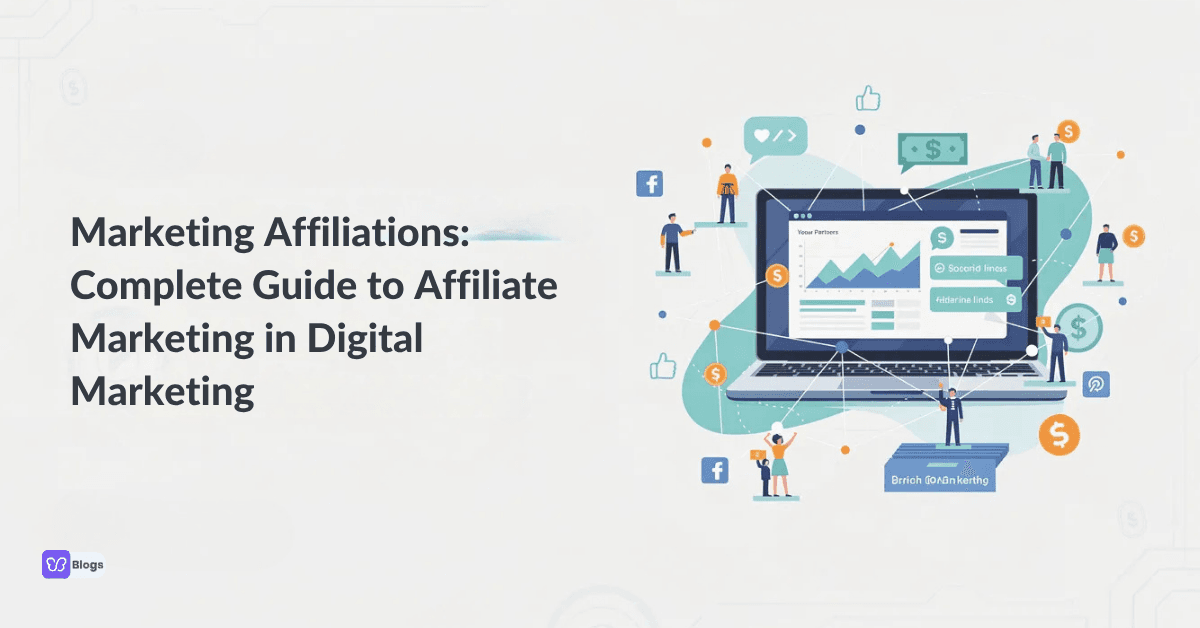
Marketing Affiliations: Complete Guide to Affiliate Marketing in Digital Marketing
Affiliate marketing is a billion-dollar industry driven by digital marketing, and understanding how it works can open real revenue doors for both brands and creators. This guide breaks down every layer of marketing affiliations, from core definitions to advanced tactics.
This guide is for digital marketers, entrepreneurs, and content creators looking to understand and leverage affiliate marketing for business growth. Understanding marketing affiliations is crucial because affiliate marketing offers a scalable, low-risk way to generate revenue and expand brand reach in today's digital landscape.
Quick Answer: What Is Affiliate Marketing?
Marketing affiliations refer to performance-based partnerships where a business pays external partners (affiliates) a commission for delivering a sale, lead, or click. Affiliate marketing means a merchant rewards a promoter only when a measurable result occurs. The meaning affiliate marketing carries is simple: no result, no payment.
Whats affiliate marketing? What does affiliate marketing means? Affiliate marketing is a structured advertising model where partners promote a merchant's products or services and earn a commission per verified conversion.
The affiliate definition marketing professionals use: an advertising model where affiliates are rewarded for promoting offers through tracked links. The affiliate advertising definition follows the same logic; the merchant supplies creatives and links, the affiliate drives visitors, and both parties share in the outcome.
Here is how affiliate marketing works in practice: a fitness blogger in 2025 writes a supplement review, embeds a unique affiliate link, and earns 12% on every sale a reader makes within 30 days. If a reader buys a $150 bundle, the blogger earns $18.
Affiliate marketing is a performance-based, revenue-sharing model for promoting products
Affiliate marketing can be performance-based, paying for sales, leads, or clicks
Affiliates can earn commissions ranging from 5% to 50% per sale
The global affiliate marketing industry reached approximately $18.4 billion in 2025
Key Terms: What Is an Affiliate, Affiliate Marketing, and the Affiliate Model?
Clear definitions prevent costly misunderstandings for anyone entering digital marketing through affiliate marketing channels.
What is affiliate? An affiliate is a partner (individual, blogger, influencer, or company) who promotes another company's products through their own content and earns a commission for each validated action.
Definition affiliate marketing: A structured arrangement in digital marketing where a brand compensates third-party partners for traffic or customers delivered through those partners' promotional efforts. In simpler terms, you recommend a product, someone buys it, and you get paid.
Affiliate business model / What is the affiliate model? This is a revenue-sharing, performance-based affiliate trade between a merchant (seller) and a publisher (affiliate). The merchant outsources promotion risk; the affiliate invests time and content. Both share rewards only when conversions happen. Affiliate marketing is a revenue-sharing model for promoting products.
An affiliate marketer is the person doing the promoting. An affiliate marketing program is the structured system a merchant creates, including commission rates, tracking rules, and terms of service.
Affiliate marketing in digital marketing sits alongside SEO, paid search, email marketing, and content marketing. It complements these channels rather than replacing them.
There are three main types of affiliate marketing: unattached, related, and involved. Unattached affiliate marketing involves affiliates promoting products without personal experience or expertise. Related affiliates have established audiences but may not use every product they recommend. Involved affiliates promote products they have personally used and tested, which tends to generate stronger trust and higher conversions.
How Affiliate Marketing Works Step by Step
The affiliate marketing process follows the same pattern across every niche: promote, track, pay. Affiliate marketing works through unique tracking links and performance-based payouts.
Content creation: An affiliate marketer creates content (blog post, video, social media post) featuring a product or service
Tracking link: The affiliate embeds a unique affiliate link provided by the merchant or affiliate networks
User clicks: A potential customer clicks the link, which drops a cookie or tracking ID on their browser
Conversion: The customer completes the desired action (purchase, signup, form submission) within the cookie window (typically 30 to 60 days)
Commission logged: The affiliate platform credits the conversion to the specific affiliate partner
Payout: The affiliate receives their commission on the next payment cycle
Tracking performance at the individual-partner level is essential in affiliate programs. Without granular tracking, merchants cannot identify which affiliate marketing partners deliver results and which do not.
Affiliate marketing allows businesses to pay only for acquired customers or leads, which is why it appeals to brands across industries.
2025 example: A TikTok creator posts a skincare routine video featuring a serum. They include a tracking link in their bio. A viewer clicks, lands on the brand's site, and purchases within 30 days. The creator earns 15% of the sale. The brand's affiliate platform logs the transaction, and the creator receives payment the following month.
Affiliate Marketing in Digital Marketing Strategy
Affiliate marketing in digital marketing works best as a complement to existing digital marketing campaigns. Brands use it alongside search engine optimization, pay per click ads (like Google Ads), email marketing, and social media marketing.
Affiliate marketing can increase brand awareness by 81%, making it a strong addition to other marketing efforts. Affiliates help brands reach targeted audiences effectively, particularly niche audience segments that traditional advertising struggles to access. Affiliate marketing can improve conversion rates compared to traditional ads because affiliates create content their audiences already trust.
For brands:
Pay only for measurable results, reducing wasted spend on online advertising
Access niche audiences through affiliate marketing partners who already have credibility
Test new verticals or product launches with lower risk than paid advertising
Diversify marketing channels beyond search engine marketing and social media platforms
For affiliates:
Monetize existing website traffic or social media posts without creating products
Build a sustainable affiliate marketing business around content they enjoy producing
Earn affiliate income through commissions rather than flat-rate sponsorships
A mid-sized e-commerce site in 2025 might allocate 20% of its marketing budget to affiliate programs today, reducing reliance on Google Ads while still growing revenue through affiliate sales driven by review sites and YouTube channel partnerships.
Main Actors in Marketing Affiliations
Four main actors in affiliate marketing are affiliates, merchants, networks, and customers. Each plays a specific role.
Merchants (advertisers/brands): Own the product or service. They launch an affiliate marketing program because they pay only for results, gaining access to audiences they could not reach through their own marketing efforts alone. Providing quality marketing assets (banners, product feeds, discount codes) helps affiliates promote effectively.
Affiliate marketers (publishers/creators): Promote the company's products through blogs, social media platforms, email lists, YouTube channels, or comparison sites. Profiles range from solo bloggers to large media companies. Many affiliates build entire businesses around affiliate products.
Affiliate networks: Act as intermediaries between merchants and affiliates. They handle tracking, reporting, consolidated payouts, and compliance. They operate the affiliate platform that connects both sides.
Customers: The end users who see affiliate content, click affiliate links, and complete purchases or signups.
Clear communication and goals between merchants and affiliate marketing partners enhance affiliate marketing success. Long-term relationships between these actors produce better results than one-off campaigns.
Core Compensation Models in Affiliate Programs
Most affiliate programs use one of several performance based marketing models. Here are the core structures with concrete numbers.
Pay-per-sale (PPS): The affiliate earns a percentage of each sale. Commission rates for physical products typically range from 5% to 10%. For digital products, pay-per-sale commissions can be 20% to 50%. Example: a $100 product at 10% commission yields $10 per conversion.
Pay-per-lead (PPL): Affiliates earn commissions for actions like form submissions, trial signups, or quote requests. Common in insurance, SaaS, and financial services. Sample payout: $20 to $50 per qualified lead, depending on the vertical. A credit card company might pay $30 for every approved application.
Pay-per-click (PPC): Affiliates earn per click regardless of whether the visitor converts. Pay-per-click commissions range from $0.05 to $2.00 per click. Less common due to fraud risk but still used in awareness campaigns.
Pay-per-install (PPI): Used for mobile apps; the affiliate earns when a user installs the app.
Hybrid models: Combine a flat retainer with per-performance bonuses, or offer recurring commissions for subscription products (e.g., 25% monthly for every paying subscriber the affiliate refers).
Affiliates can earn commissions ranging from 5% to 50%, depending on the product type and program terms.
Examples of Affiliate Marketing and Affiliate Partnerships
Concrete examples of affiliate campaigns illustrate how affiliate marketing works across industries.
Tech (2024): A blogger publishes a "best laptops 2025" guide comparing 10 models. Each product name links to a retailer through an affiliate link. The blogger earns 4% to 8% per sale. This is a classic affiliate marketing definition and example in long-form content.
Finance (2025): Product review sites compare credit cards, listing APRs, rewards, and fees. Each "apply now" button is an affiliate link. The credit card company pays $50 to $150 per approved application. These comparison sites are among the most recognizable affiliate websites.
Health and wellness (2024): A TikTok creator with 200,000 followers reviews a protein powder. Viewers click the link in bio and purchase. The creator earns 15% per sale. Affiliates promoting health products on social media platforms grew steadily in the affiliate marketing world between 2023 and 2025.
SaaS (2025): A newsletter writer recommending a budgeting app earns 30% recurring commission for every subscriber who stays active. Over 12 months, a single referral generating $10/month in commission produces $120 in affiliate income from one recommendation.
Amazon Associates is one of the largest affiliate programs globally. Amazon Associates offers up to 10% commission on sales, though most categories fall between 1% and 4%.
Types of Affiliate Websites and Marketing Channels
Successful affiliate marketers choose channels that match their target audience and content strengths.
Review blogs: In-depth comparisons and "best of" lists. Strong for high-ticket, considered purchases (electronics, furniture). Drive traffic primarily through search engine optimization.
Coupon and deal sites: Aggregate discount codes and limited-time offers. Best for impulse buys and price-sensitive shoppers. Deal sites convert well for existing customers looking for savings.
Price comparison engines: Let users compare prices across retailers. Work well for commodity products.
Niche authority sites: Deep-focus sites covering a single topic (e.g., home espresso machines). Attract a niche audience with high purchase intent. Narrow niches attract engaged audiences faster than broad topics.
YouTube channels: Video tutorials, unboxings, and product demos. Site visitors come from both search engine results and social sharing.
Podcasts: Host-read endorsements convert well because of listener trust. Affiliates typically use vanity URLs or discount codes.
Email newsletters: Curated recommendations sent directly to subscribers. Strong for repeat promotions and cross-selling affiliate products.
Social media (Instagram, TikTok): Short-form video content with link-in-bio or swipe-up affiliate links. Social media analytics help affiliates track which social media posts generate the most affiliate sales.
Getting Started: How to Launch an Affiliate Marketing Business
Treat your affiliate marketing journey as a real online business with a business plan, not a side experiment you forget about in two weeks.
Choose a niche that aligns with your interests. You will create content for months before seeing meaningful results. Passion prevents burnout.
Research offers. Find affiliate programs in your niche by browsing affiliate networks (e.g., Impact, Awin, CJ Affiliate) or checking if brands you already use run direct programs. Most affiliate programs list their terms publicly.
Pick 1 to 2 primary affiliate marketing channels. Start with a blog, a YouTube channel, or an email newsletter. Avoid spreading yourself across five platforms at once.
Set up tracking and disclosures. Install your unique affiliate link tracking, add a disclosure page to your site, and label affiliate content clearly.
Join an affiliate marketing network to connect with merchants and access a catalog of offers in one place.
Create valuable content to attract and engage your audience from day one.
Build an email list immediately. Email gives you a direct line to your audience that no algorithm change can take away.
Affiliate marketing is a low-cost way for startups to enter markets. You do not need inventory, warehousing, or customer support infrastructure.
90-day example (home fitness niche, 2025):
Month 1: Launch a blog, publish 8 to 10 SEO-focused articles reviewing home gym equipment, join 2 affiliate programs
Month 2: Start an email list with a free workout plan as lead magnet, publish 6 more articles, begin a YouTube channel with product demos
Month 3: Analyze traffic and conversion data, double down on top-performing content, negotiate better terms with your best-converting merchant
Affiliate marketing takes time. Expect 3 to 6 months before affiliate income becomes consistent.
How to Drive Traffic to Affiliate Offers
Earning requires the ability to consistently drive traffic to your content and affiliate links. Without visitors, even the best affiliate strategy produces zero revenue.
SEO-optimized blog content: Use search engine optimization to rank for buyer-intent keywords ("best standing desk 2026"). Use SEO to improve visibility and drive traffic to your content.
YouTube tutorials and reviews: Video results appear in Google search and YouTube search. Potential affiliate partners often provide product samples for video creators.
Social media posts in relevant communities: Share genuinely useful content on social media platforms where your target audience spends time. Social media marketing works best when it provides value before asking for clicks.
Email marketing: Send curated recommendations to your list. Repeat promotions and retargeting through email marketing increase conversions over time.
Paid methods (advanced): Google Ads, Facebook/Instagram ads. Sensible only for experienced affiliate marketers who understand unit economics. Always check program terms; some affiliate programs prohibit paid advertising on branded keywords.
Compliance: Disclose affiliate relationships in ads and organic content. Platform policies (Google, Meta, TikTok) require transparency. Violations can result in account bans.
Quality content increases affiliate sales and audience trust. Monitor your progress to optimize affiliate marketing efforts over time.
Choosing and Evaluating Affiliate Networks and Programs
Many beginners start affiliate marketing by joining large affiliate networks rather than negotiating individual deals. Networks aggregate offers, handle payouts, and simplify tracking.
Commission rate: Compare percentage or flat-rate payouts. Affiliates earn 5% to 10% commission on sales from referrals for physical goods; SaaS and digital products often pay 20% to 50%.
Cookie duration: 7-day cookies (common on Amazon) versus 30- or 60-day cookies. Longer windows give you more time to earn credit.
Payout threshold and schedule: Some programs pay monthly at $50 minimum; others require $100 and pay Net-60.
Allowed traffic sources: Check whether paid advertising, email marketing, or coupon sites are permitted.
Brand reputation: Promote products from reputable brands. Unscrupulous affiliates pushing low-quality offers damage their own credibility.
Comparison example (2025): A generic marketplace affiliate program offers 5% commission with a 24-hour cookie. A specialized software affiliate program offers 30% recurring commission with a 90-day cookie. For a $50/month SaaS product, the software program pays $15/month per active subscriber indefinitely, while the marketplace pays a one-time $2.50. The math favors niche-specific programs for many affiliates.
Advantages and Disadvantages of Affiliate Marketing
Every affiliate business model has trade-offs. Here is a realistic assessment.
Pros:
Low startup cost; no inventory or shipping required
Scalable passive income potential as content compounds over time
Performance based marketing strategy; you earn proportionally to results
Access to global markets through online marketing
Affiliates can earn money without building their own products
Cons:
Income volatility; a single program closure or algorithm update can cut revenue overnight
Dependence on merchant decisions (commission cuts, program shutdowns)
Competition in popular niches is high; successful affiliate marketing requires sustained effort
Compliance and disclosure requirements add overhead
Reputational risk if affiliates promote low-quality products solely for commission; this erodes audience trust
Affiliate marketing is a low-cost way for startups to enter markets, but it is not free money. Successful affiliates treat it as a discipline that demands consistent content, audience building, and optimization.
Compliance, Transparency, and Trust in Marketing Affiliations
Regulatory bodies require clear disclosure of marketing affiliations. Compliance with regulations is important for affiliate marketers.
FTC (US): Requires affiliates to clearly disclose material connections to brands. A 2024 study found that many YouTube creators failed to comply with these rules.
ASA (UK) and EU equivalents: Similar requirements for transparency in online advertising.
Practical disclosure: Place visible text near affiliate links ("This post contains affiliate links; I may earn a commission at no extra cost to you"). Use "affiliate" or "ad" tags. Maintain a disclosure page on all affiliate websites.
Trust benefit: Transparent disclosure increases trust and long-term conversions. Readers who know you earn a commission and still trust your recommendation are more likely to buy again.
Affiliate marketers should disclose their affiliate relationships clearly in every piece of content. This is not optional.
Advanced Strategies for Established Affiliate Marketers
These tactics target intermediate and advanced affiliate marketers ready to scale beyond basic link placement.
Build email funnels: Create lead magnets (free guides, templates, checklists) to capture emails. Use automated email sequences to nurture subscribers toward affiliate offers. Building an email list enhances affiliate marketing success more than almost any other single tactic.
Split test everything: Test headlines, call-to-action button colors, link placements, and content formats. Track click-through rates, conversion rates, and earnings per click (EPC) using social media analytics and web analytics tools.
Negotiate custom terms: Once you prove performance to a merchant, request higher commission rates, exclusive discount codes, or early access to launches. Many affiliates leave money on the table by never asking.
Diversify programs: Do not rely on a single affiliate partner. If that program closes or cuts rates, your income disappears. Spread across 3 to 5 programs.
Create your own products: A hybrid evolution of the affiliate business model. Use your audience insights to launch a complementary product (ebook, course, tool) and run your own affiliate program.
Common Mistakes and How to Avoid Them
Chasing every trend: Picking niches based only on high payouts leads to burnout and thin content. Fix: choose a niche you can write about for years.
Misunderstanding "what is affiliate": Thinking it is passive free money rather than a real online marketing discipline. Fix: plan for 6+ months of work before consistent returns.
Copying other affiliate websites verbatim: Duplicate or thin content triggers search engine penalties. Fix: create content that adds original analysis, personal experience, or unique data.
Ignoring email: Relying solely on search engine traffic is risky. Fix: start affiliate marketing with an email list from day one.
Skipping disclosure: Failure to label affiliate links properly risks fines and audience trust. Fix: add clear, honest disclosures to every post.
Unrealistic timelines: Expecting passive income in 30 days. Fix: treat affiliate marketing work as an ongoing process, not a one-time setup.
FAQ: Short Answers to High-Intent Affiliate Questions
Whats affiliate marketing?
Affiliate marketing is a performance based marketing strategy where you earn a commission by promoting another company's products or services through tracked links. You get paid only when your promotion leads to a sale, lead, or click.
What is affiliate?
An affiliate is any individual or entity that promotes a merchant's offer through their own channels (blog, social media, email) using a unique affiliate link, earning commission for each conversion they generate.
Affiliate marketing means what for brands and creators?
For brands: access to niche audiences, cost-per-result pricing, and a way to increase sales without upfront ad spend risk. For creators: a path to earn money from content they already produce, with commissions tied to actual performance.
Is affiliate marketing worth it in 2025 and 2026?
The global industry is valued at $18.4 billion (2025). US advertisers spent $12.42 billion on affiliate marketing in 2025, up 11.3% year-over-year. Competition is real, but the data shows sustained growth and strong returns for those who invest in quality content and audience trust.
Key takeaways affiliate marketing:
Affiliate marketing is a revenue-sharing, performance-based model
Four actors drive it: merchants, affiliates, networks, customers
Commissions range from 5% to 50% depending on product type
Success requires content, audience building, compliance, and patience
Conclusion: Why Marketing Affiliations Still Matter
Marketing affiliations remain one of the most cost-efficient channels in digital marketing because payment is tied to results. Retail affiliate programs average 11:1 return on ad spend, and 74% of brands report generating 11% to 30% of total revenue from their affiliate programs. The model rewards trust, useful content, and strategic choice of affiliate marketing programs and channels.
Start small but intentional. Pick one niche, one main channel, and one or two strong affiliate programs. Build your audience, create content that solves real problems, and let compounding effort do the work. Ethical, transparent affiliate marketing is not a shortcut; it is a durable online business asset that grows with every piece of content you publish.

Author
Debutify
Debutify is the easiest way to launch and scale your eCommerce brand.