Digital Marketing Artificial Intelligence: How AI Is Transforming Modern Marketing
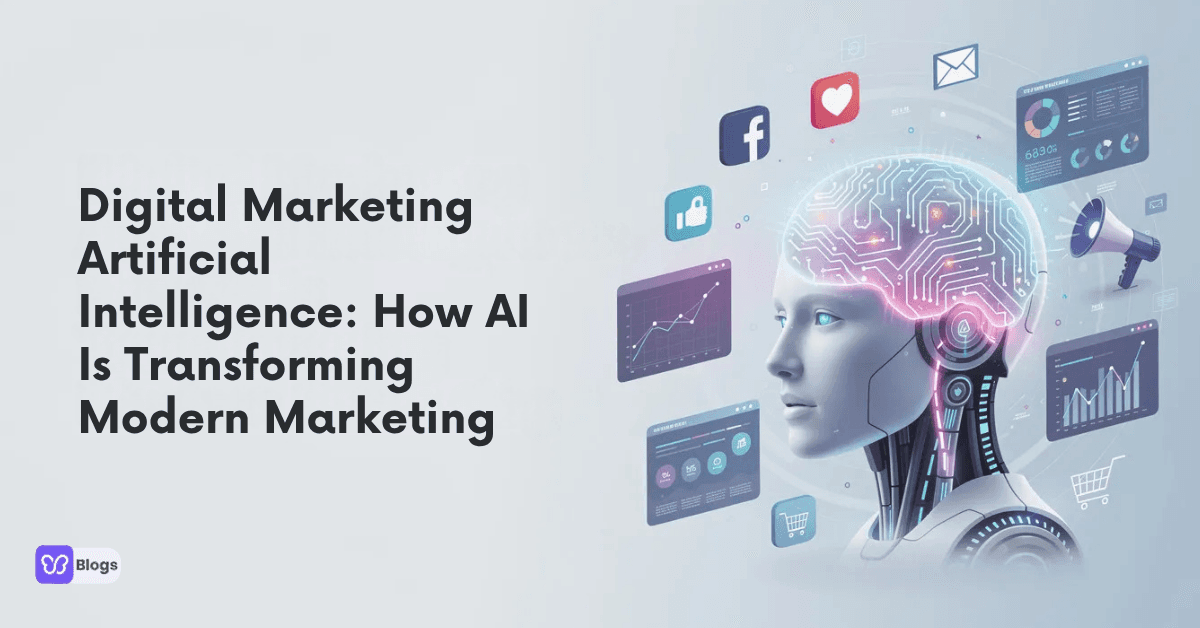
Digital marketing artificial intelligence has moved from buzzword to business necessity. Since the generative AI boom of 2023-driven by tools like ChatGPT, DALL-E, and Claude-marketers face a new reality: rising ad costs, stricter privacy rules, and customers who expect personalized experiences at every touchpoint. Artificial intelligence transforms digital marketing into a data-driven precision approach, replacing gut-feel campaigns with measurable, adaptive strategies.
So what does artificial intelligence actually mean here? At its core, artificial intelligence marketing refers to using machine learning, natural language processing, and automation to make smarter marketing decisions across digital channels. Whether you call it artificial intelligence digital marketing or ai marketing, the goal is the same: leverage ai technology to analyze data, predict future trends, and personalize customer experiences at scale. Over 87% of marketers now use AI for content creation, and adoption across targeting, data analysis, and campaign management is accelerating fast.
This article is your practical guide on how to use AI in digital marketing and how to use AI for digital marketing responsibly-from core concepts to implementation steps.
What Is AI in Digital Marketing? (Core Concepts)
AI in digital marketing means using algorithms, machine learning models, and marketing automation to power smarter decisions across search, email, social media platforms, and paid channels.
The key building blocks include:
Machine learning - computer programs that improve audience targeting and predictions from campaign data over time
Natural language processing - enabling AI systems to understand and generate human language for marketing content
Recommendation engines - powering personalized suggestions (think Netflix recommendations or Amazon product pages)
Marketing automation platforms - executing flows, triggers, and send-time optimization based on customer behavior
The critical difference from traditional automation is this: rule-based systems follow fixed workflows ("if user clicks, send email B"). Ai powered digital marketing systems learn from customer data and adapt-shifting thresholds, rotating content, adjusting bids dynamically. Generative AI adds another layer, enabling rapid content creation across formats like blog posts, ad copy, video scripts, and social media posts.
How Are Marketers Using AI Today?
How are marketers using ai in 2024–2025? Across B2B, B2C, and e-commerce, marketing professionals are deploying AI tools for everything from predictive analytics to creative assistance. According to industry benchmarks, 66% of B2B marketers now use generative AI in their marketing efforts, and that number keeps climbing.
Top use cases include:
Predictive targeting - identifying high-value leads before campaigns launch using machine learning algorithms
Automated reporting - AI dashboards that surface actionable insights from vast amounts of data
Creative assistance - generating ad copy, social media campaigns, and landing page variations
Dynamic pricing - adjusting offers in real time based on consumer behavior and demand signals
Most teams start small-AI-generated subject lines, report summaries, or hashtag suggestions-before scaling into full campaign management workflows. Digital marketers who begin with low-risk marketing tasks build confidence and internal ai expertise before tackling customer-facing automation.
Using AI for Data Analysis and Marketing Analytics
Data analysis is the engine room of ai marketing. Without clean, structured consumer data, even the best AI systems underperform.
AI ingests large volumes of customer data from CRM, web analytics, and ad platforms to perform data analytics that manual methods simply can't match. AI tools can analyze customer interactions in real time, allowing marketing leaders to react to shifts in performance within hours, not weeks. Real-time data analysis helps marketers make informed decisions rapidly.
Specific tasks AI handles well:
Forecasting demand and predicting future events based on historical data
Cohort analysis and customer segmentation
Anomaly detection (flagging sudden drops in ROAS or spikes in cost)
Predictive lead scoring - advanced analytics allow for predictive lead scoring and trend forecasting
AI can analyze vast datasets to predict consumer behavior, but the risk is real: poor data quality means poor AI output. Investing in data collection and data quality is non-negotiable before scaling any ai-powered workflow.
AI-Powered Audience Segmentation and Personalization
Personalization is now central to the digital marketing landscape. AI algorithms analyze data to create hyper-targeted marketing strategies by clustering users into micro-segments based on purchase history, on-site behavior, and engagement signals like social media comments and email clicks.
AI tools enable scalable audience segmentation based on consumer behavior-going far beyond basic demographics. AI can personalize marketing campaigns based on consumer behavior, delivering dynamic product recommendations, personalized homepages, and adaptive email content tailored to customer preferences.
The results speak for themselves: brands focusing on personalization are 48% more likely to exceed revenue goals. AI-driven personalization can increase marketing ROI significantly, and AI can improve customer engagement through personalized recommendations that feel relevant rather than generic. AI can create personalized content recommendations for users, increasing customer satisfaction and boosting consumer engagement.
AI algorithms can predict consumer behavior and personalize content - turning one-size-fits-all campaigns into individual conversations.
AI Tools for Content Creation and Optimization
Content creation is one of the most popular uses of AI tools in digital marketing, with 87% of marketers using AI for content creation and optimization. Generative AI assists in rapid content creation across various formats-from blog outlines and ad copy to product descriptions and video scripts.
AI can generate blog posts and social media content at scale. It can automate keyword research and content optimization, suggesting meta descriptions, internal linking ideas, and identifying stale content that needs a refresh. AI improves content optimization for SEO by analyzing user behavior and search engine optimization signals.
But here's the catch: human review is mandatory. AI generated content needs editing to maintain brand voice, factual accuracy, and originality. Marketing professionals who treat AI as a drafting co-pilot-not a replacement-produce relevant content that actually converts. Using artificial intelligence digital marketing platforms can accelerate testing multiple content angles and creatives, letting you identify winners faster.
Artificial Intelligence in Digital Advertising and PPC
Artificial intelligence in digital advertising automates the heavy lifting of paid media: bidding, placements, and creative rotation. AI can enhance PPC advertising by optimizing bids and placements across Google Ads, Meta, and programmatic channels.
Programmatic advertising uses AI to optimize ad placement in real-time, selecting impressions based on user behavior and context. AI can generate and rotate ad variations, improving CTR and lowering CPA in ai powered digital marketing stacks. One fintech company restructured landing pages and semantic targeting via AI, cutting CPA by 45% and increasing qualified leads by 76%.
Practical guardrails matter: frequency caps, budget limits, and brand safety controls are decisions humans should still own. Over-optimization without strategic oversight risks short-term gains at the expense of long-term brand equity.
How to Use AI in Digital Marketing Step by Step
Here's your playbook for how to use AI in digital marketing and how to use AI for digital marketing effectively:
Define clear goals - lower cost per acquisition, improve lead scoring accuracy, or scale content output
Audit your current tools and customer data sources - identify gaps in your digital strategy
Pick one use case to start - email subject lines, AI-assisted reporting, or ad creative testing
Choose an AI platform that fits your budget, integrations, and data governance needs
Pilot for 30–60 days, measuring against baseline KPIs (CPL, ROAS, retention)
Align AI outputs with dashboards and A/B experiments to achieve marketing goals
AI can automate marketing workflows, improving efficiency and effectiveness - but start with low-risk marketing tasks before automating customer-facing experiences
AI in Email, CRM, and Lifecycle Marketing
AI reshapes lifecycle marketing campaigns from welcome flows to win-back sequences. AI tools can automate email marketing campaigns based on behavior, triggering personalized journeys like replenishment reminders or cross-sell offers. AI can automate personalized email campaigns based on user behavior, while send-time optimization and predictive scoring improve open rates and reduce churn.
AI-driven chatbots enhance customer service by providing instant responses, handling customer service interactions that previously required manual support. The impact on customer experiences is clear: timely, relevant messages that feel human-not robotic. Leading ESPs now embed AI features for predictive segmentation, smart sending, and content scoring.
Building AI Expertise on Your Marketing Team
AI adoption succeeds only when marketers develop real ai expertise. In demand skills include prompt design, understanding model limitations, reading analytics outputs, and translating actionable insights into marketing strategies.
Marketers don't need to become engineers, but basics of data analytics and experimentation are vital. Lightweight training paths work: internal workshops, online courses, and pairing marketers with analysts to co-build dashboards. Position AI as a co-pilot that helps automate repetitive tasks-not a threat to digital marketers' roles.
Ethics, Data Privacy, and Responsible AI Marketing
Responsible ai isn't optional. With 81% of consumers saying data treatment reflects how much a company cares about them, transparency is a competitive advantage.
GDPR requires transparency in data collection and usage. AI can inherit biases from historical data sets, and algorithmic bias can lead to unfair representation in marketing-for example, excluding demographic groups from seeing certain ads. Ongoing audits, opt-out mechanisms, and clear privacy notices protect customer experiences and trust. AI's energy consumption also raises environmental concerns that forward-thinking brands should address.
Ethical ai marketing isn't just compliance-it's long-term brand equity in the digital marketing landscape.
Common Challenges and How to Avoid AI Pitfalls
Not every artificial intelligence marketing project delivers results. Common problems include poor data quality, over-automation that kills brand voice, tool sprawl, and unrealistic expectations.
Avoid "AI washing"-claiming AI use without measurable impact. Instead:
Set modest pilots with clear KPIs
Document learnings before scaling
Keep human review in the loop for all customer-facing content
Manage stakeholder expectations around timelines
Predict future trends by analyzing historical customer data, but never assume AI replaces strategic thinking.
Future of Digital Marketing Artificial Intelligence
Looking ahead, artificial intelligence digital marketing will evolve toward AI-native customer journeys, autonomous media buying, and AI-generated experiences like interactive video and virtual influencers. Voice and visual search will reshape search engine optimization, and regulations will push marketers toward modeled audiences and privacy-preserving machine learning.
Digital marketing artificial intelligence will increasingly augment strategic roles. Marketers who build ai expertise and improve audience targeting through cutting edge ai tools will lead-those who wait will scramble to catch up.
Start experimenting with small projects now and build a long-term AI roadmap for your team.
Key Takeaways: Making AI Work for Your Digital Marketing
Data quality comes first - clean consumer data is the foundation for every AI system
Start small with one pilot, measure baselines, then scale across digital marketing campaigns
Keep humans in the loop for content, ethics, and brand consistency
Tie every AI initiative to KPIs like CPL, ROAS, and customer satisfaction
Build team ai expertise through training - leverage ai as a co-pilot, not a replacement
Treat privacy and responsible ai as brand assets, not just legal requirements
Use predictive analytics and machine learning to improve lead scoring accuracy and personalize customer experiences
Digital marketing artificial intelligence isn't a future concept-it's today's competitive advantage. Mastering ai tools across data analytics, content creation, and personalization is now a core skill for modern digital marketers.
Pick one action this week: test AI for reporting, draft generation, or campaign data analysis. Run it for 30 days. Measure the results. That single step is how every successful AI transformation begins.

Author
Debutify
Debutify is the easiest way to launch and scale your eCommerce brand.