Best Lead Generation Tools for Ecommerce in 2026

Paid traffic to an online store converts somewhere around 2 to 3 percent on a good day. The other 97 percent land, browse, and disappear, and unless you captured an email or a phone number on the way past, you paid for that visit twice: once to acquire it, and again when you have to buy the same person back through an ad later.
Lead generation for a store is not the same problem it is for a software company. You are rarely chasing a named decision maker at a named company. You are trying to get an email address before the tab closes, a second purchase out of a first-time buyer, and a few new customers out of the ones you already have. The tools below are grouped by which of those jobs they do, because most of the confusion in this category comes from buying three tools that all do the same one.
A note on scope: three of the tools here are built for B2B prospecting. They are in the list because plenty of stores run a wholesale, trade, or B2B leg alongside DTC, and that side of the business needs completely different software. If you are pure DTC, skip those sections.
What lead generation software does for a store
Strip out the marketing language and every tool in this category does one of three jobs.
Capture. Turning an anonymous session into a contact record. Popups, chat widgets, quizzes, back-in-stock alerts, checkout opt-ins. This is where the email or phone number comes from.
Reach and referral. Getting in front of people who have not visited yet. Organic social, creator partnerships, affiliate links, customer referral programs. Cheaper than ads per acquisition, slower to build.
Activation. Turning the record into revenue. Welcome flows, abandoned cart and browse abandonment, post-purchase sequences, SMS, win-back campaigns.
Stores tend to over-invest in the first job. A popup is cheap and the subscriber count goes up, which feels like progress. But a list with no flow behind it costs you money in ESP fees and does nothing else. If you only have budget for one thing this quarter, make it activation, and only then go back and widen the top of the funnel.
Lead capture on your own site
Debutify: best for free on-site capture and conversion widgets on Shopify
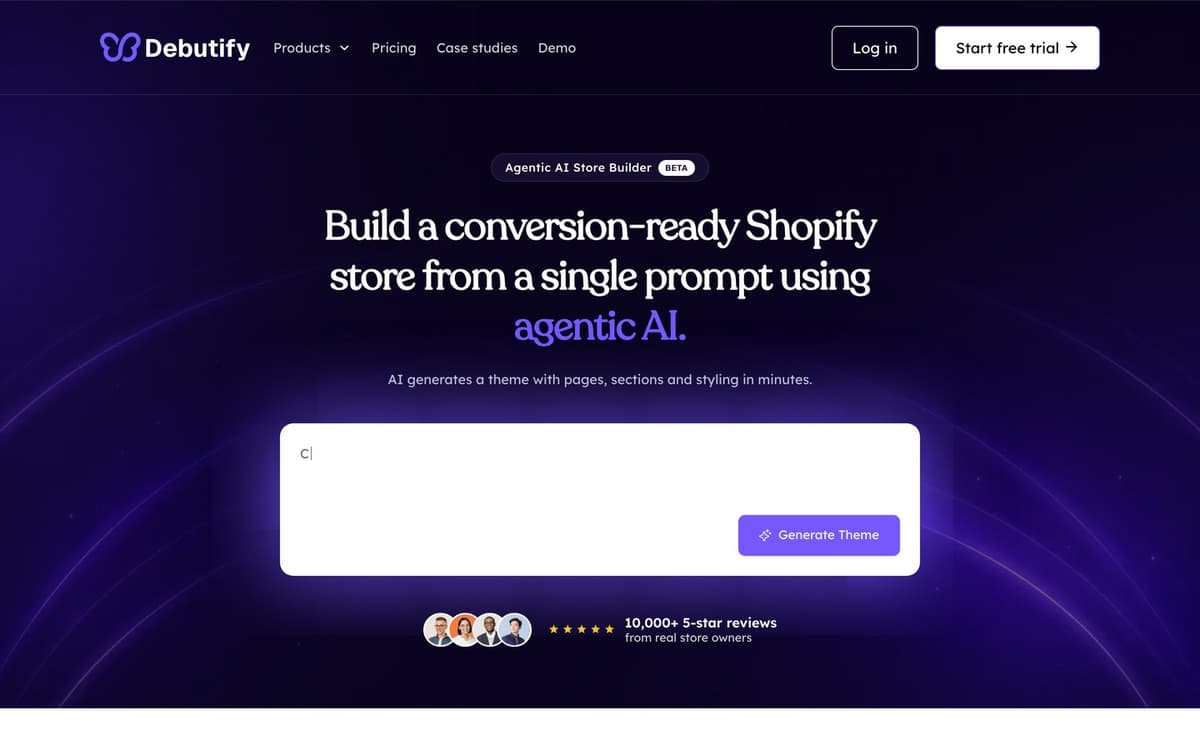
Debutify comes at capture from the storefront side. It started as a conversion-focused Shopify theme and has grown into a widget library plus a set of free standalone Shopify apps, so the email popup, the trust badges, the countdown timer and the sticky add-to-cart bar all come from one vendor and one settings panel instead of five. There is also an AI Store Builder in beta that generates pages, sections and layouts from a single prompt.
The lead generation piece specifically is the free Spin Wheel Email Pop Up, which collects addresses through a spin-to-win offer. Gamified popups tend to beat a plain "10% off" box on opt-in rate, though the addresses they collect skew discount-hunter, so watch what those subscribers are worth ninety days later before you judge the win. The rest of the portfolio, including Product Reviews and QA, volume discount bundles and a free-shipping progress bar, is conversion work: more of the traffic you already paid for turning into buyers means fewer leads you need in the first place.
Pricing
- Free: $0, all free widgets and sections, and the standalone apps
- Growth: $39/month, adds the AI Store Builder and 28 exclusive widgets
- Professional: $89/month, adds 68 pro widgets, SEO checker and member permissions
- Enterprise: $159/month, everything plus unlimited members and priority support
- Lifetime: $999 one-time. Debutify discounts these list prices heavily, so check the current offer before committing
Good
- The free apps cover most of the on-site conversion furniture a store would otherwise assemble from six vendors, at no cost
- Email capture, reviews, urgency and bundling under one publisher, so fewer scripts fighting each other in your theme
- The free tier is a real tier, not a seven-day countdown
- AI Store Builder gets a first version of a store live quickly, so you edit something instead of staring at a blank theme
Watch out for
- Shopify only. Nothing here helps a WooCommerce or BigCommerce store.
- Only the spin wheel does lead capture, and it has no sending engine behind it. You still need an ESP for everything after the opt-in.
- Review counts on the individual apps are in single and low double digits, so there is not much of a public track record yet
- Going deep on the theme and its widget library is a real switching cost if you later want to move
Tidio: best for capturing and qualifying visitors while they are still on the page
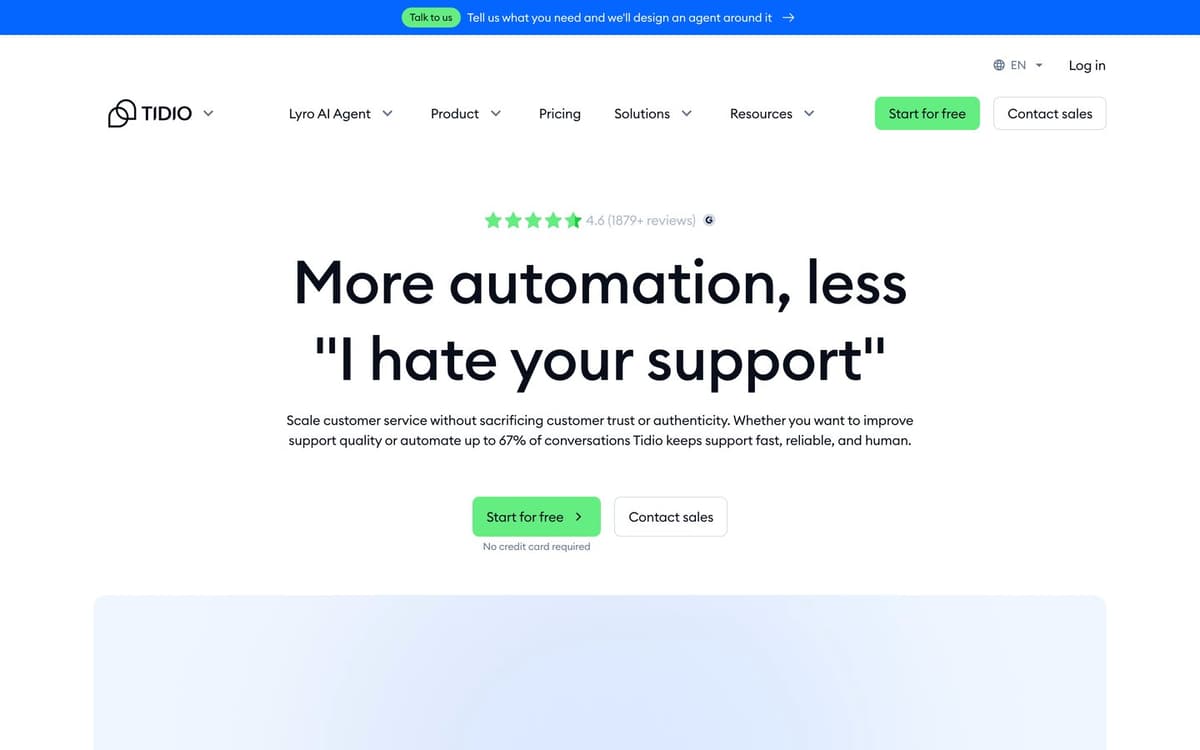
Tidio puts a live chat widget and a set of no-code chatbot Flows on your store, plus Lyro, an AI agent that answers from your own help content. The reason it belongs in a lead generation list and not just a support list is that the same widget doing order lookups also collects an email mid-conversation, nudges an abandoned cart, and recommends products, so one install covers support and capture at the same time.
For a store, the practical setup is a Flow that catches visitors who are about to leave a product page, offers something worth an email address, and pushes the contact into Mailchimp or HubSpot. Lyro then handles the "where is my order" volume that would otherwise eat your inbox, which matters more than it sounds like during a sale week.
Pricing
- Free plan available
- Starter: from $24.17/month (billed annually)
- Growth: from $49.17/month (billed annually)
- Plus: from $300/month
- Premium: custom pricing
- Paid tiers scale on conversation volume, not seats
Good
- Captures and qualifies while someone is still on the page, no form fill required
- Native Shopify and WooCommerce integration, plus HubSpot, Mailchimp and Zapier for routing contacts on
- One inbox across chat, email, Messenger, Instagram and WhatsApp
- Order lookup, cart recovery and product recommendations inside the same widget
- The free plan is genuinely usable while you test whether chat converts for your catalogue
Watch out for
- It works on traffic you already have. It will not find new people for you.
- Lyro conversation caps bite during peak season, and add-ons get expensive quickly
- Best value goes to teams where support and sales are the same two people. If you run a large separate support desk, you are paying for overlap.
Turning existing customers into new ones
ReferralCandy: best for turning existing customers into an acquisition channel
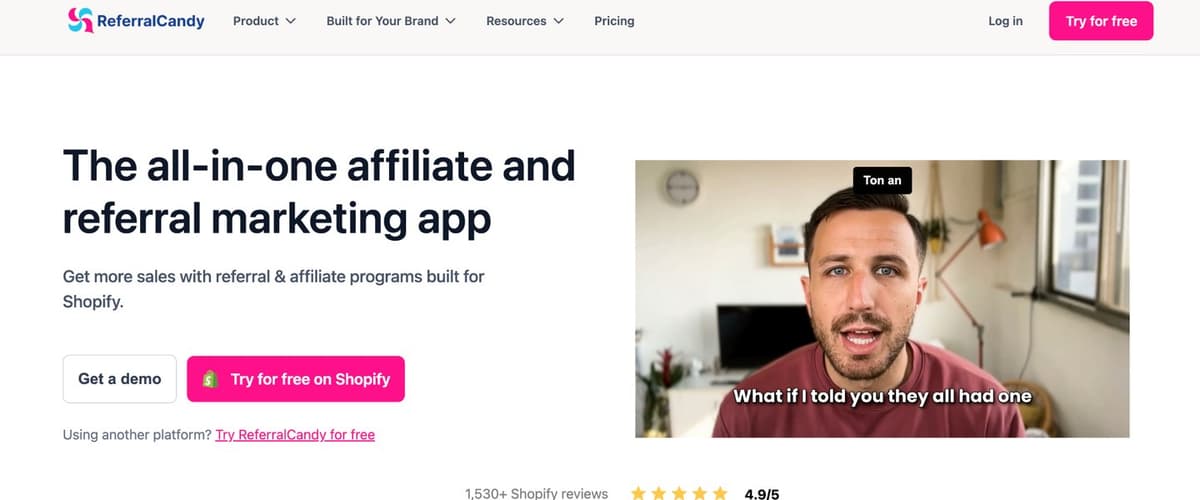
Referral programs are the closest thing ecommerce has to free acquisition, and they mostly fail on operations, not on strategy. Someone has to build the signup page, generate the links, attribute the sale, catch the person referring themselves from a second email address, and get the reward paid out. ReferralCandy does that part.
It also runs affiliate and creator campaigns from the same dashboard, so the influencer sending traffic through a coupon code and the customer sharing a link with a friend live in one system with one set of reporting. Rewards can be cash, store credit, a discount, or a custom item, and you can tier them so your best advocates get more.
Pricing
- 7-day free trial
- Basic: $39/month plus a 10.5% success fee
- Grow: $79/month plus a 3.5% success fee
- Scale: $249/month plus a 1.5% success fee
- Enterprise: $799/month plus a 0.25% success fee and dedicated onboarding
- Success fees apply to the first three orders from each referred customer
Good
- Customer referrals and affiliate or creator programs in one platform
- Direct connections to Shopify, WooCommerce, BigCommerce, Recharge, Klaviyo, Mailchimp and Google Analytics
- Referred orders and revenue tracked in real time, so the program has a defensible ROI number
- Fraud checks catch self-referrals and leaked coupon codes before rewards go out
Watch out for
- It needs an existing customer base. A store doing 40 orders a month will not get a program off the ground.
- The subscription plus success fee combination gets expensive as the program works, and the Basic tier is the worst version of that maths. Model it at your expected referral revenue before you pick a plan.
- Seven days is not long enough to judge a referral program. Sharing happens on a delay, and conversion happens later still.
Nurturing and activation
GetResponse: best for nurturing leads across email, SMS and webinars
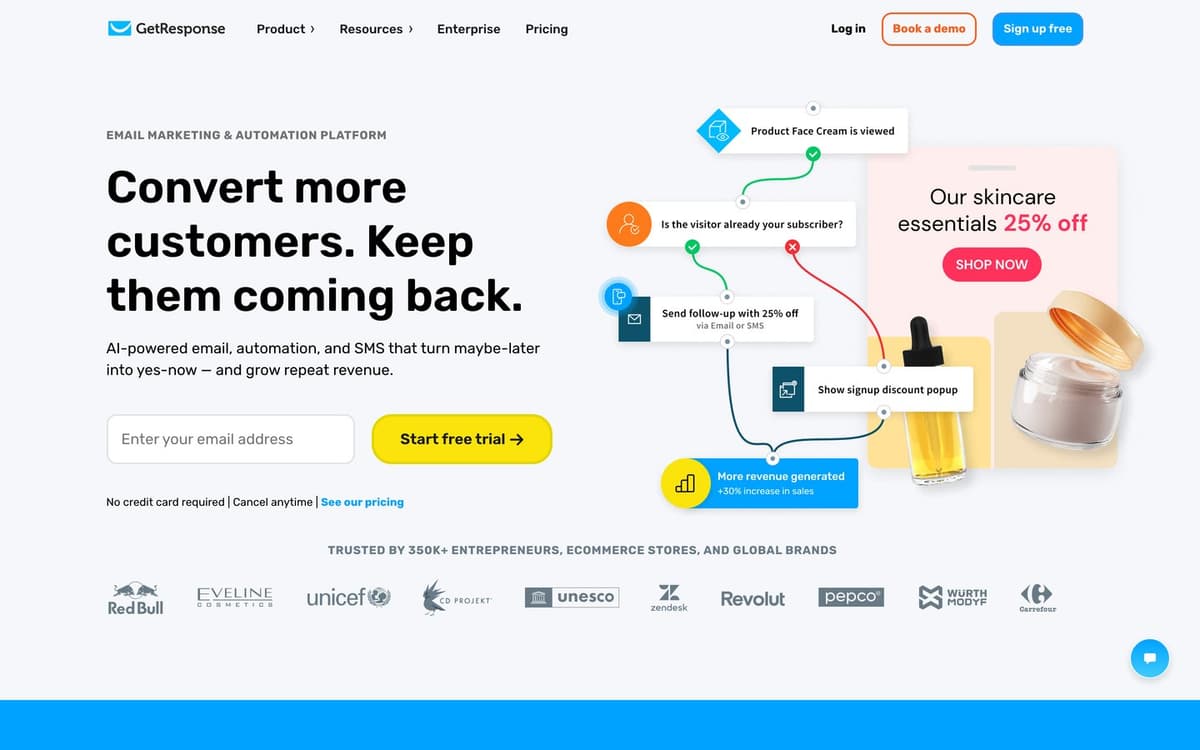
GetResponse is a retention and lifecycle marketing platform and the closest thing on this list to a single system for the whole post-capture journey. Email, landing pages, SMS, web push, webinars and online courses sit in one account, with automation that fires on behaviour, not on a fixed calendar. For a store, the useful pieces are the ecommerce automations: cart abandonment, product recommendations pulled from purchase history, and segmentation that separates a repeat buyer from someone who has opened four emails and bought nothing.
The AI features write and adapt email copy, suggest segments, pick send times, and help lay out landing pages. Treat them as a first draft rather than a finished campaign, but they take the friction out of shipping a flow. Where it earns its keep is consolidation. If you are currently paying for an ESP, a landing page builder, and an SMS tool separately, one platform is usually cheaper and definitely less breakable.
Pricing
- Free trial available
- Paid plans scale on contact list size
- Automation depth, ecommerce features, webinars, SMS and courses are concentrated in higher tiers
Good
- Capture, email, SMS, landing pages, webinars and courses under one subscription
- Behaviour-triggered automation, so follow-up reacts to what someone browsed or bought
- Personalised product recommendations built in
- Fewer integrations to maintain, which in practice means fewer silent failures
Watch out for
- More platform than a store sending two campaigns a month needs
- The automation you probably came for sits in the upper tiers
- SMS pricing and availability vary a lot by country, so check your main markets before you budget
Building the audience that feeds the funnel
SocialBee: best for turning a consistent social cadence into inbound lead flow
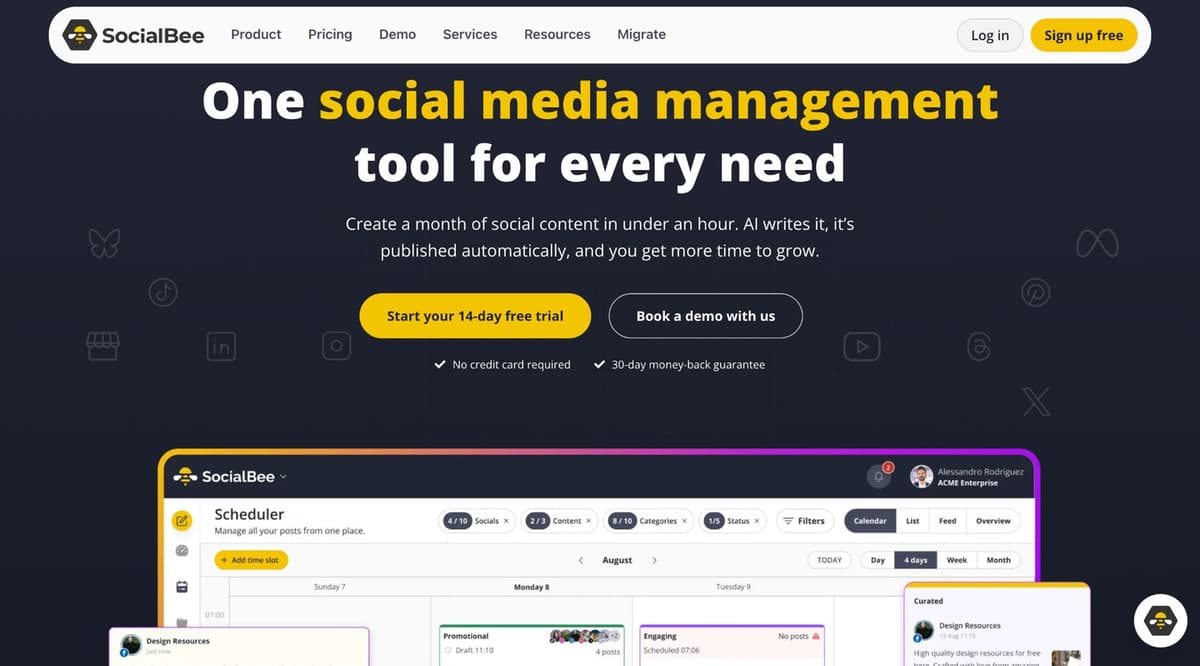
Organic social is slow and it is also the cheapest source of top-of-funnel attention a store has. SocialBee's job is making the cadence survivable: AI content generation on every plan, a full calendar, content categories with recycling so evergreen posts come back around, and analytics on who is engaging.
The audience demographics are the part worth paying attention to. If your buyer persona says 35 to 44 and your engagement data says 18 to 24, that gap is worth more than any posting-time optimisation.
Pricing
14-day free trial, no credit card required
Bootstrap: for solo marketers building a presence
Accelerate: for bigger teams running a steadier cadence
Pro: for agencies and teams managing multiple brands or clients
Good
Unlimited AI content generation on every tier, which is what makes a daily cadence realistic for a one-person marketing team
Demographic and engagement analytics that show which segment is responding
Best-time-to-post recommendations per network
Direct scheduling to TikTok, Instagram, LinkedIn and the rest
Watch out for
Planning and publishing only. It generates attention, not contact records.
No social listening, so conversations about your brand happening outside your own posts stay invisible
Analytics stop at publishing performance. Connecting a post to a sale still needs your GA and ESP.
PostEverywhere: best for cross-posting one asset to every network at once
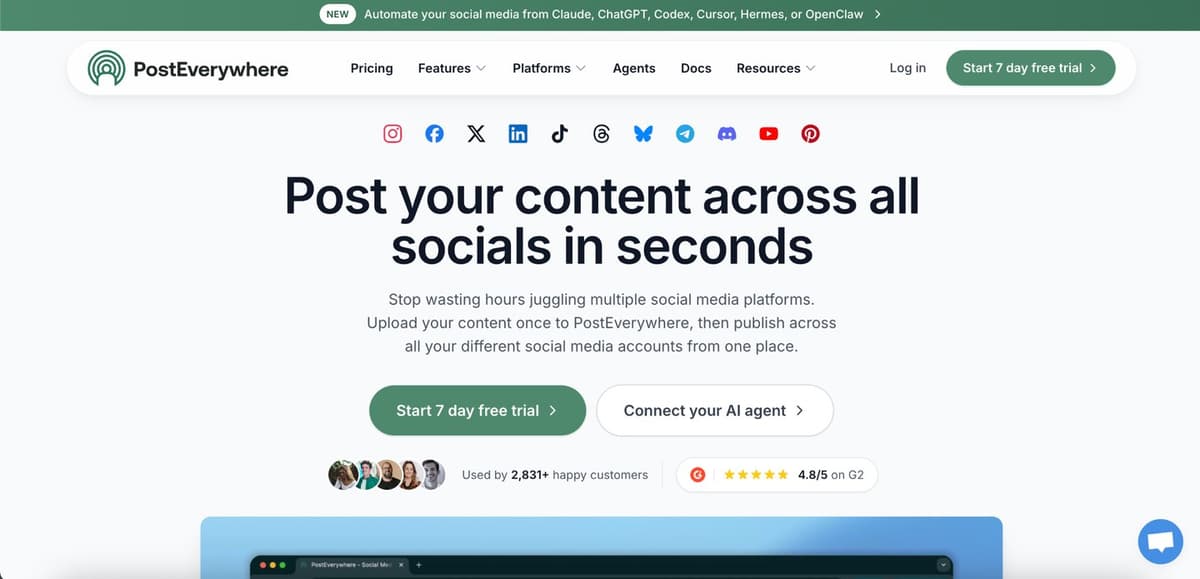
Same category as SocialBee, different emphasis. PostEverywhere publishes one post to 11 networks (Instagram, TikTok, LinkedIn, YouTube, Facebook, X, Threads, Pinterest, Bluesky, Telegram and Discord) through each platform's official API. For stores, Pinterest and TikTok are the two that carry real commercial intent, and having Discord and Telegram in the same composer is useful if you run a community.
Because it connects to the real endpoints and not to browser automation, scheduled posts keep publishing and connected accounts stay in good standing. Anyone who has had a scheduler silently drop a week of Instagram posts will understand why that matters. The per-platform tailoring is the feature to use: cross-posting one identical caption everywhere reads like cross-posting, while adjusting each version takes a minute and performs better.
Pricing
Starter: $29/month, 10 connected accounts, 1 seat
Growth: $39/month, 25 accounts, 3 seats
Pro: $79/month, 40 accounts, up to 10 seats
All tiers include a 7-day trial with a card required, and annual billing saves 20%
Good
11 networks from one composer, including the ones most schedulers skip
CLI, MCP and API access, so it plugs into AI agents and custom workflows
AI caption and image generation in the same tool as scheduling and analytics
Per-platform formatting on a single cross-post
Watch out for
Publishing tool, not a unified inbox. Heavy engagement teams will still need something for monitoring.
No free plan, and the trial needs a card
Newer than Hootsuite or Buffer, with fewer third-party integrations
Adsy: best for reaching new audiences through guest posting
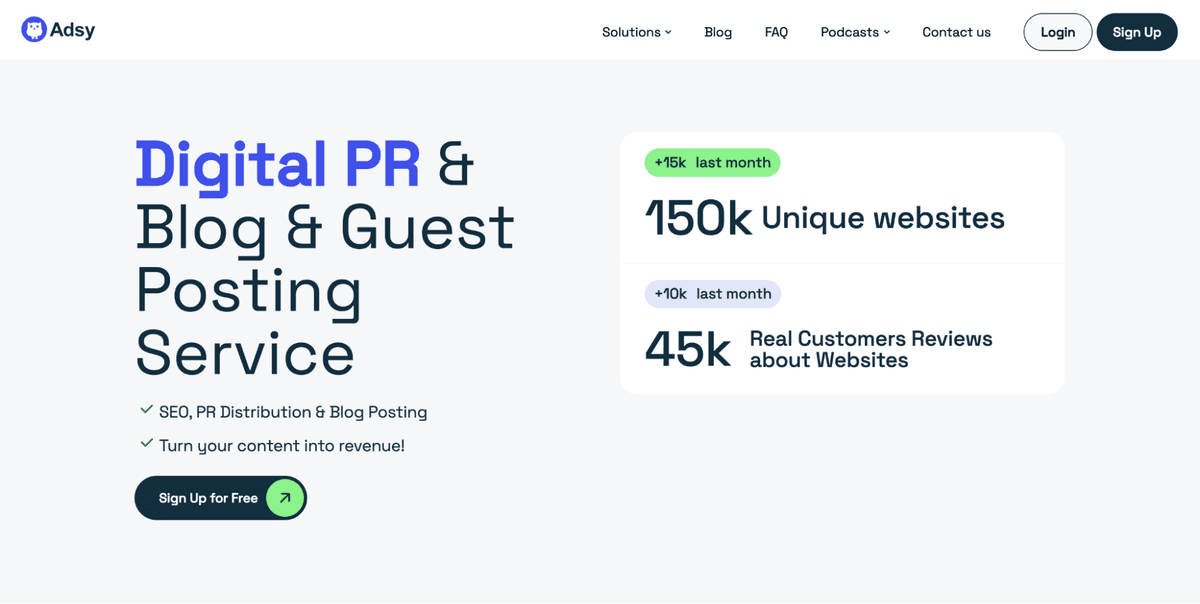
Being visible on Google, other traditional search engines, and in AI search is a big part of ecommerce lead generation. But getting there requires more than useful content. You need authority and more brand exposure. That’s where the Adsy guest post platform can help. It gives you access to 150,000 websites where you can publish your content for SEO, digital PR, industry leadership, brand mentions, and other content distribution needs.
Since you get direct access to website owners and editors, it’s one of the most cost-effective solutions if you want to improve your rankings and AI visibility. Besides, you are the one who chooses the websites and controls their quality.
Pricing
Free access to the website inventory
No subscriptions, pay as you go
Exact pricing depends on the websites you choose
Good
Huge selection of websites in any niche, with dozens of filters to make choosing easier
Direct access to media outlets and industry publications without doing outreach yourself
Fast turnaround, with most articles published within 7 days
Content writing service available
Easy to scale up and down, as there is no commitment
Watch out for
You need a basic understanding of SEO metrics to choose high-quality websites
It’s a self-service platform, so you need to have your own link-building strategy
It doesn’t provide personalized outreach to specific websites
If you also sell B2B or wholesale
The three tools below solve a problem DTC stores do not have. They matter if part of your revenue comes from stockists, trade accounts, corporate gifting, or bulk orders, because that side of the business runs on named contacts, not on traffic volume.
UpLead: best for verified B2B contact data
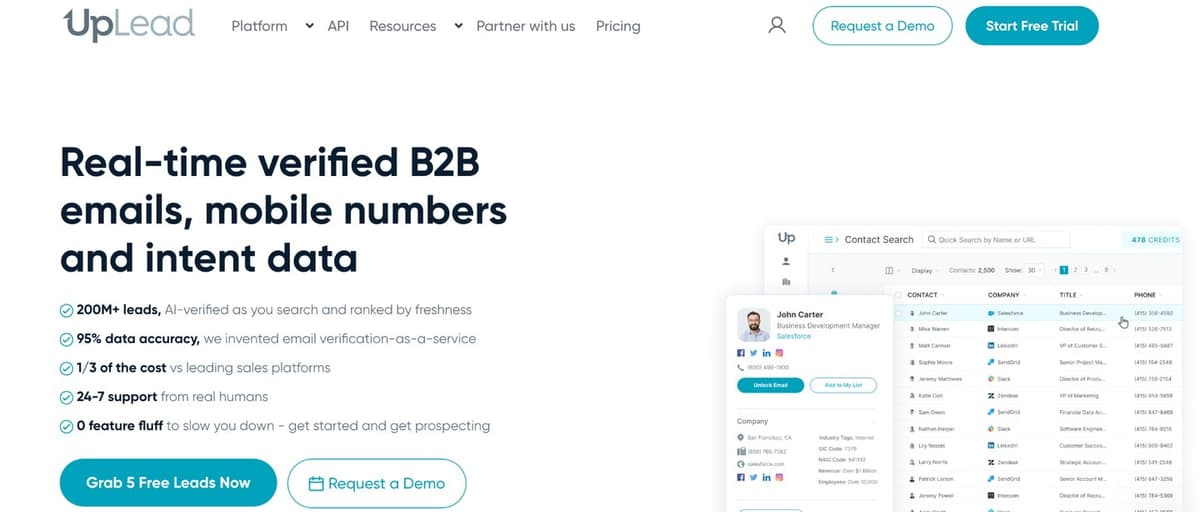
UpLead is a B2B contact database covering more than 180 million contacts, with emails verified at the moment you export, not weeks earlier when the file was assembled. For a store, the use case is finding buyers at retailers who could stock you, or building a corporate gifting list before Q4.
Pricing
- Free trial with a small credit allowance, no card required
- Essentials: entry tier for solo users and small teams, fixed monthly credit pool
- Plus: adds data enrichment, larger credit allowances and team seats
- Professional: custom pricing with intent data, API access and higher volumes
Good
- Real-time verification at export, so bounce rates stay low and your sending domain stays healthy
- Filtering by firmographics, technology stack and intent signals
- Credits are only spent on contacts you choose to download
- Native CRM integrations plus an API for enrichment workflows
Watch out for
- B2B only. It does nothing for consumer acquisition.
- Credit-based pricing needs planning at volume
- Coverage is deepest in North America and Western Europe
CloudTalk: best for high-volume outbound calling and AI-qualified follow-up
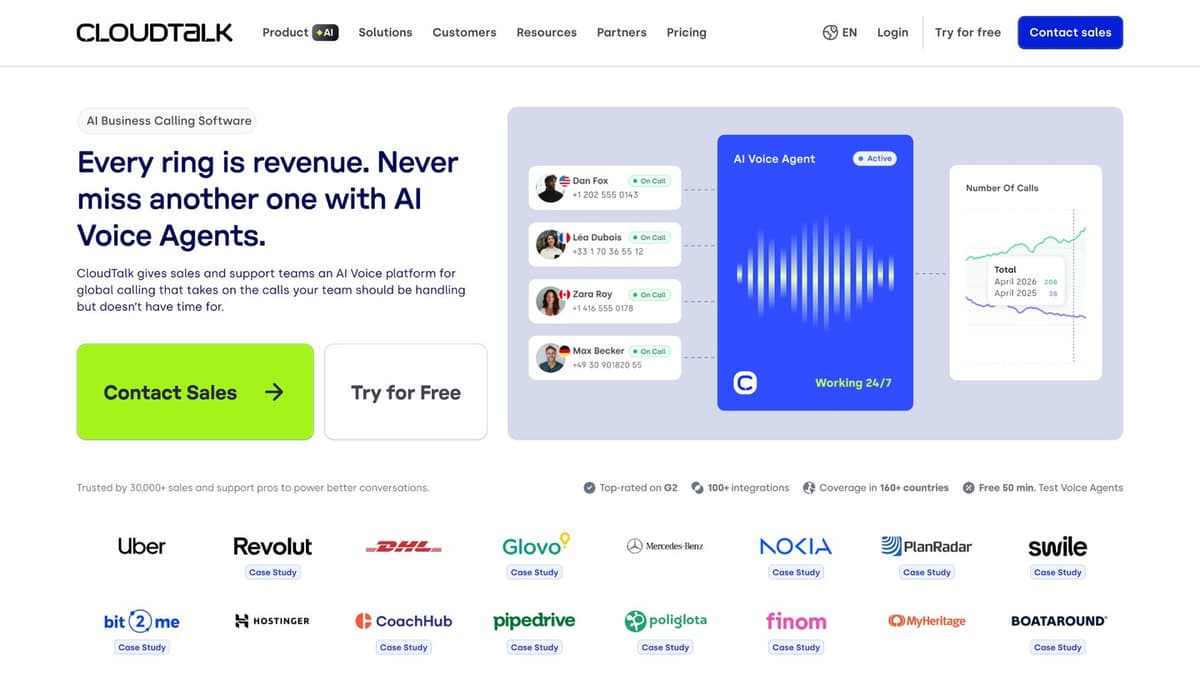
CloudTalk is a calling platform with an AI-powered dialer and AI voice agents, running on CloudTalk's own telephony infrastructure across 160+ countries. Relevant to a store only if someone is phoning wholesale accounts or following up high-value B2B enquiries.
Pricing
- Starter and Essential: entry plans billed per seat per month, with unlimited domestic calling in one region
- Expert: required for the AI Sales Dialer's Power mode and Smart Dialer
- Custom: tailored pricing for 25+ seats
Good
- 160+ countries on carrier-grade infrastructure, which keeps call quality and caller ID reputation intact at volume
- Two dialer modes on one platform: structured Power mode for warm lists and ABM, multi-line Parallel mode for cold volume
- AI voice agents qualify and follow up without a rep on the line, on the same platform and analytics as human calls
- Native HubSpot, Pipedrive and Zoho sync with automatic disposition logging, no manual list imports
Watch out for
- Built for calling, not for sourcing net-new contacts, so it will not replace a B2B contact database
- Dialer capabilities are gated to the Expert plan or sold as add-ons
- Warm transfer, call whisper and barge, and scripts and surveys are not yet available in the new AI Sales Dialer
Apify: best for building custom lead lists from any website
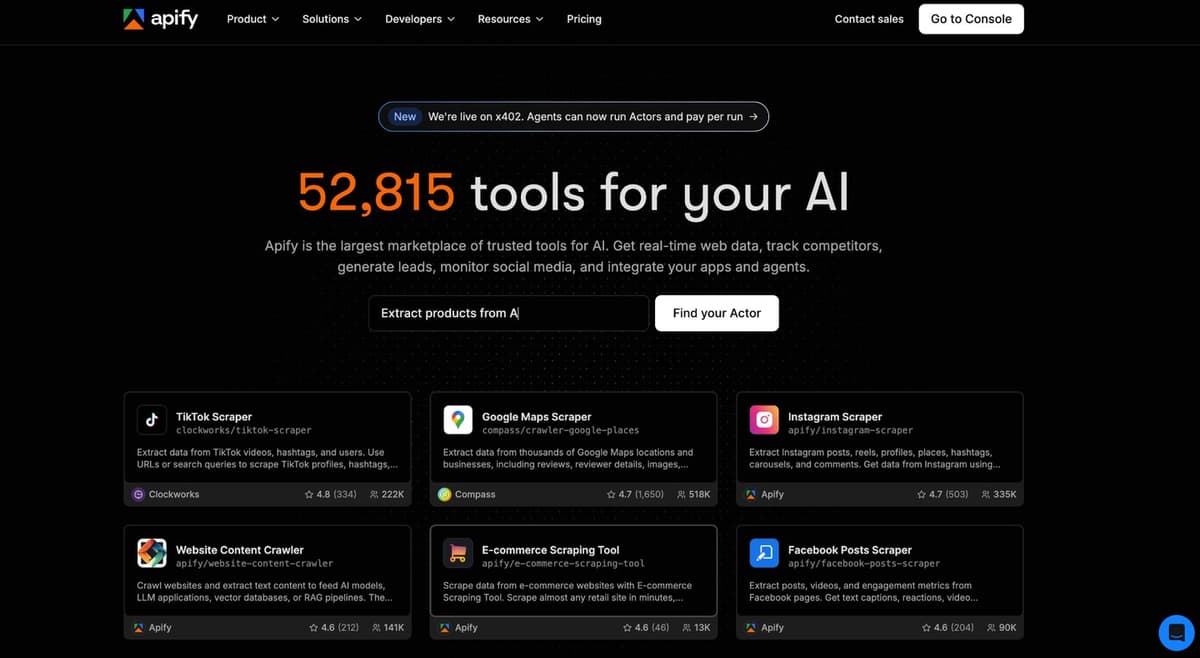
Apify is the largest marketplace of tools for AI, with 50,000 pre-built Actors that pull real-time public data from any website, so you can assemble a list no fixed database holds. It covers sources like LinkedIn, Google Maps, Crunchbase, Instagram and TikTok, and any Actor can be exposed as an MCP tool via mcp.apify.com to feed live data into LLMs and AI agents. Ecommerce-relevant angles: pulling stockist and retailer data from Google Maps, monitoring competitor catalogues, or gathering creator profiles for outreach.
Pricing
- Free: $5 in monthly platform credit, no card required, plan never expires
- Starter: $29/month for individuals and small teams
- Scale and Business: $199 and $999/month with larger credit pools and priority support
- Pay-per-result: many Actors bill per 1,000 results, typically between $0.30 and $5, independent of plan tier
Good
- Sources fixed B2B databases do not reach: social media, ecommerce, review sites and local business directories
- Pay-per-result on many Actors, so cost tracks usage, not a fixed monthly seat
- Built-in datacenter and residential proxies, anti-blocking, storage and scheduling, so there is no separate infrastructure to piece together
- Any Actor can be exposed as an MCP tool, letting you feed live lead data into AI agents without building custom integrations
Watch out for
- Not a turnkey B2B database, so you bring your own list of target URLs or use another Actor to find them
- Requires some technical setup: configuring Actors, chaining them together, or building custom workflows
- Marketplace quality varies. Apify-maintained Actors ship reliable updates, but community Actors range from excellent to abandoned and need vetting before production use.
How to choose
Vendor feature lists blur together after the fourth tab. These are the checks that predict whether a tool is still in your stack in a year.
Which job does it do? Capture, reach, or activation. Write down which of the three is currently weakest for you and buy for that one. Buying a second capture tool when the gap was activation is the most common stack mistake in ecommerce.
Does it connect to your store natively? Shopify, WooCommerce, BigCommerce, and whatever ESP you use. Every Zapier hop between them is a monthly cost and a thing that fails quietly at 2am during a sale.
Who owns the list? Check export formats, API access and contract terms before you sign. Your subscriber list is an asset. Renting it back from a vendor is a bad position to negotiate from.
How does it handle consent? Email is one thing; SMS consent rules are stricter and vary by market. A list you cannot prove consent for is a liability.
What does it cost at ten times your current size? Per-contact pricing that is fine at 2,000 subscribers gets ugly at 50,000, and referral success fees scale with exactly the thing you want to grow. Model both.
Can it report revenue, not just opt-ins? Revenue per subscriber and revenue per referred order are the numbers that keep a tool funded. Subscriber count is the number that gets it cancelled.
Run any trial on real traffic before committing to an annual plan. Demo environments never surface the problems that only appear on a Black Friday load.
Where to start
If you are building from nothing, the sequence beats the software. Put one capture method on the site that suits your traffic. Connect it to something that follows up automatically. Write the welcome flow and the cart recovery emails before you switch anything on, because an empty flow behind a working popup is just a growing list of people who hear from you once.
Then look at revenue per subscriber ninety days later and decide what to add next. A store with a well-written three-email welcome sequence on a free ESP will out-earn one with an expensive platform pointed at the wrong end of the funnel.

Author
Max Benz
Max Benz is Head of Content at UpLead and Signaturely, specializing in SEO, lead generation, and content strategy. He also runs the Slack community LinkForce.