How E-commerce Business Owners Can Improve Daily Operations

Most advice aimed at e-commerce business owners is about growth. More traffic, sharper ads, a higher-converting product page. Almost none of it looks at what happens after someone lands on your site or after the sale closes, and that is where a surprising share of your margin quietly disappears.
A store loses money in the fulfillment method it defaults to, the schedule thrown together on a Sunday night, the untrained hire covering a shift alone, the checkout page nobody has opened on their own phone in months, and the return that sits in a corner because no one owns the process. None of this shows up on a marketing dashboard. It shows up three months later as a margin you can't quite explain.
Fixing it doesn't need a new headcount or a bigger software budget. It needs you to walk through your own store the way a stranger would.
5 Tips For E-commerce Business Owners To Improve Daily Operations
Here are five practical tips that can help e-commerce business owners improve daily operations, reduce bottlenecks, and keep their business running more smoothly as they grow.
Test Products Before You Own Them
Every new product you launch is a bet, and most owners size that bet wrong. Before locking capital into a bulk order, test the idea through print-on-demand services and see whether buyers actually want it before you own a single unit. If the design flops, the cost is a few hours of your time, well short of a warehouse corner full of stock you'll be discounting by December.
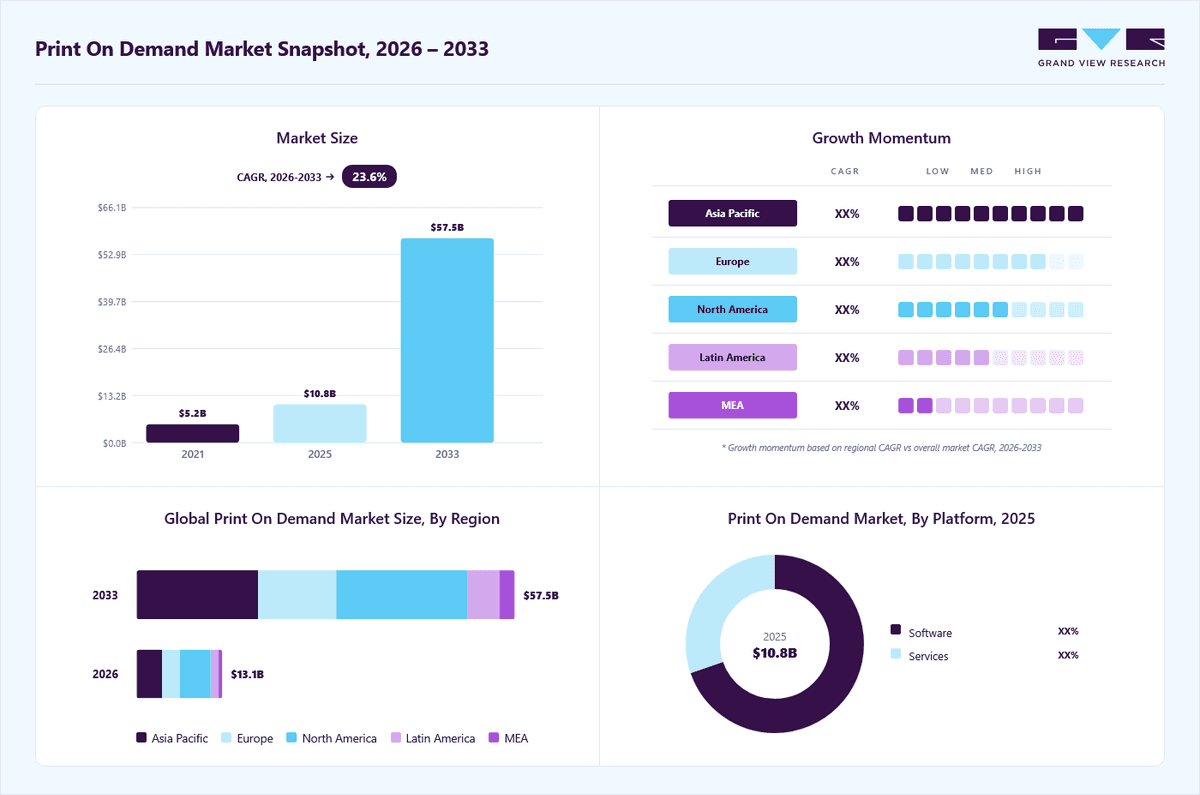
The global print-on-demand market grew into a $10.8 billion industry in 2025, according to Grand View Research, and much of that growth is coming from exactly this kind of low-risk testing.
Shopify print-on-demand services like Printful and Printify handle the printing, packaging, and shipping, so a design that flops costs you nothing beyond the time it took to make it. Once something sells consistently for a few months, that's your signal to negotiate bulk pricing and bring it in-house.
The tradeoff is real: per-unit costs run higher with print-on-demand than with a bulk order, so your margin is thinner while you're testing. That's the price of information, and it's usually worth paying for the first few months on any new item. Once you have real sales data instead of a hunch, reordering in bulk stops being a gamble and starts being math.
None of this works if fulfillment sits off to the side as a shipping afterthought. It belongs inside your wider operations strategy, reviewed with the same attention you'd give ad spend or pricing. A model that made sense at ten orders a day can quietly bleed margin at two hundred.
The Schedule Nobody Owns Costs More Than Payroll
Most small e-commerce operations still schedule with a shared spreadsheet and a group chat, and it shows. That gap is exactly what employee scheduling software like Homebase is built to close, catching a double-booked shift or a missed update before it leaves you shorthanded during a flash sale. Owners keep pushing this fix down the list because a spreadsheet feels free, right up until the week it isn't.
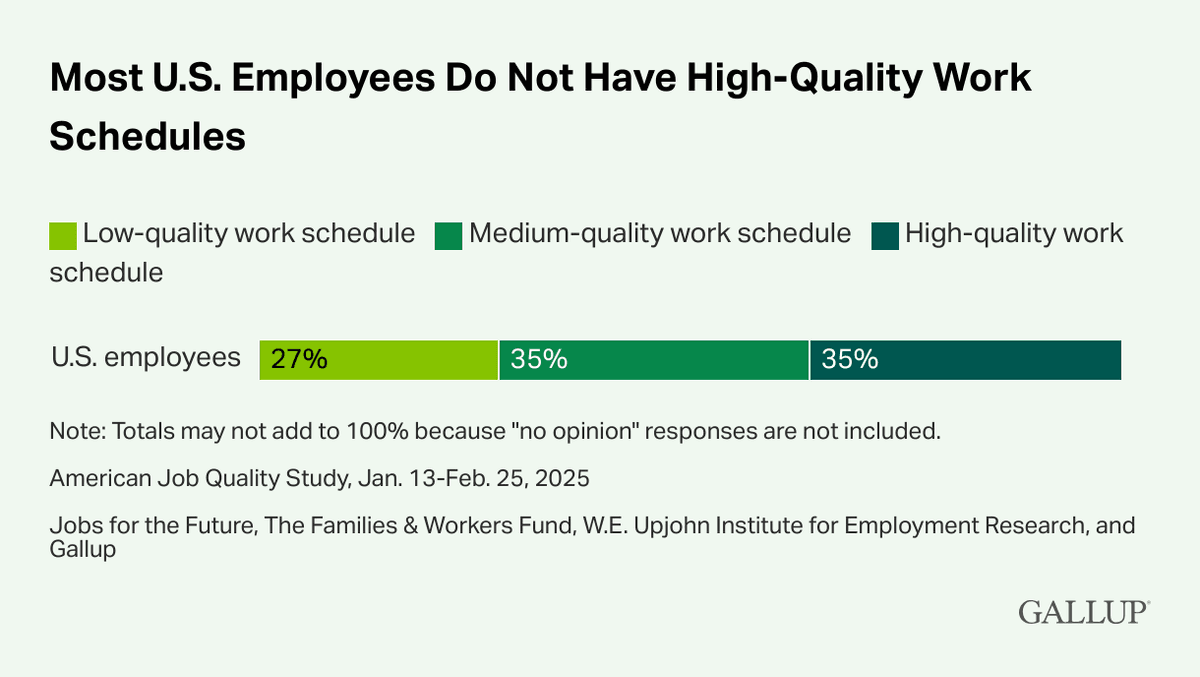
The scale of the problem goes beyond any single store. Gallup's most recent workplace research found that 62% of surveyed U.S. employees don't have what it defines as a high-quality work schedule, meaning hours that are predictable, stable, and at least partly within their control. Unpredictable schedules wear down a team, and that shows up in your numbers as no-shows, rushed handoffs, and mistakes that turn into refunds.
Posting the schedule two weeks ahead instead of two days solves more of this than any single app feature does. It gives your team time to arrange the rest of their life around work, and it gives you time to catch conflicts before Saturday morning turns into a scramble. The only real cost is deciding that scheduling happens on the same fixed day every week, not whenever there's a spare ten minutes.
Fixing this often means admitting you can't run the floor and build next week's schedule at the same time. That's a case for delegating tasks like this instead of holding onto them, and it's usually the first place a growing team starts. Handing the schedule to someone else, or to a system built for it, buys you the hours you actually need to run the business.
Untrained Hires Are the Expensive Kind
Owners tend to treat high turnover as a hiring problem and respond by hiring faster, which only refills the same leaky bucket instead of patching it. What actually slows the churn is proper employee training that gets a new hire competent within their first week, not their first month. Retail and wholesale posted the highest voluntary turnover of any sector in Mercer's 2025 US Turnover Survey, at 26.7%, well above the 13% national average across industries.
Ecommerce draws from that same part-time, entry-level labor pool, whether you're running a warehouse shift or a customer support inbox. Every person who leaves within a few months takes your onboarding investment with them and hands the workload back to whoever's left. That's expensive in a way that never shows up as a single line item, which is exactly why it gets ignored.
For most small stores, that means someone can pack an order correctly, answer the three most common customer questions, and know what to do when something goes wrong, all without pulling you away from whatever you're doing. Write those three things down once. Everyone who joins after that reads the same page instead of piecing together a different version of the story from whoever happens to be training them that day.
None of this needs to be elaborate. A short video, a written checklist for your five most common tasks, and someone assigned to check in on day three will outperform a scattered verbal handoff every time. The stores that skip this step end up paying for the same training over and over anyway, just spread across every replacement hire instead of covered once, up front.
Your Checkout Is Losing Orders Your Ads Already Paid For
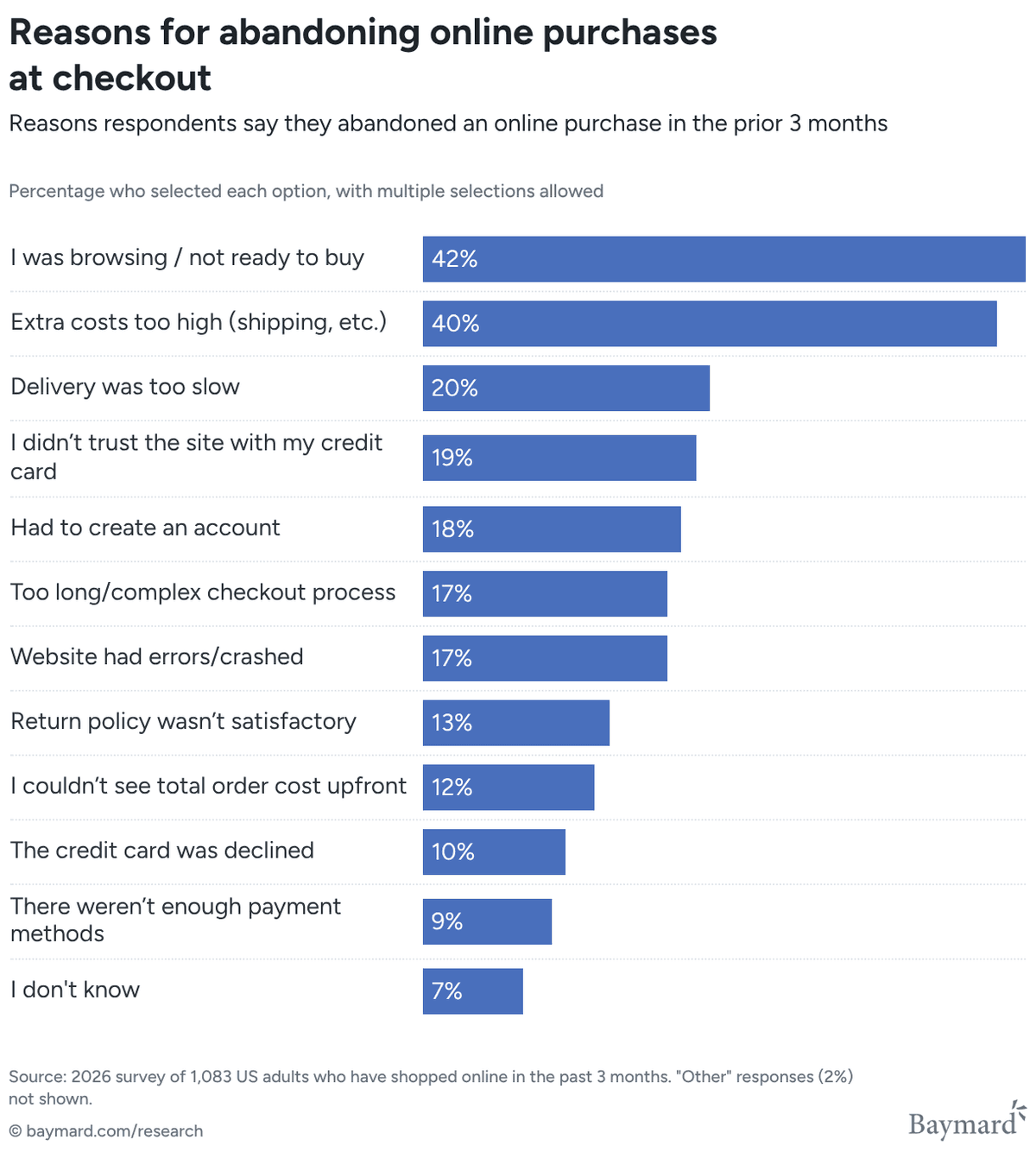
You can pour money into ads all quarter and still lose the sale on the very last screen. Baymard Institute's ongoing checkout research, last updated in September 2025, found that 17% of US online shoppers have abandoned an order specifically because the checkout process felt too long or complicated, separate from cost or shipping concerns. More traffic won't fix a checkout page that's asking too much of someone who already decided to buy.
Every extra field on that page is a small tax on someone who's already committed to buying, whether it's a second address line nobody needs or an account you're forcing them to create first. Trimming fields, auto-filling what you can, and offering guest checkout are a good use of an afternoon this month.
Pull up your own checkout on your phone right now, not later, and count how many fields stand between someone clicking buy and reaching a confirmation screen. Anything past name, address, and payment is worth a hard look. Every field you cut is one less place for someone to change their mind or give up.
Put this on your operations checklist as a recurring quarterly task. Walk through your own checkout experience on a phone, on a slow connection, the way an actual customer would. Owners rarely do this, which is exactly why the friction survives so long.
Your Returns Process Lives in Fulfillment
Close to one in five online orders comes back. The National Retail Federation and Happy Returns put the 2025 online return rate at 19.3% in their most recent Retail Returns Landscape report, and that figure holds fairly steady across categories outside of clothing. If your store doesn't have a defined process for what happens to that item between the doorstep and resale, you're losing money beyond the original sale.
Most small stores handle returns the way they handle everything else that feels urgent: whoever's free deals with it, however seems reasonable that day. That inconsistency turns a manageable cost into a recurring one, as unsellable inventory piles up and refund timelines drift. A written process, decided once and followed every time, closes that gap.
A workable version fits on one page: how many days a customer has to return an item, who inspects it, and how fast the refund goes out once it arrives. None of that needs a meeting to decide once it's written down and shared with whoever handles returns that week. A vague policy turns every returned box into its own small negotiation, and a written one skips that step entirely.
Returns sit at the tail end of the same fulfillment process that starts the moment someone clicks buy, so it makes sense to design them together instead of as an afterthought. The stores that handle this well share one habit: everyone follows the same written process every time, regardless of how generous the policy sounds on paper.
Pick One and Start This Week
None of the five fixes above needs a bigger team or a bigger budget, just a willingness to stop treating daily friction as background noise and start reviewing it on a fixed schedule, the same way you already review ad spend. Pick one this week. Checkout is usually the fastest win, since the traffic is already there and already paid for.
Debutify builds a version of that fix directly into your Shopify theme, with add-ons for sticky carts, exit-intent offers, and a streamlined checkout that cuts the friction covered above without hiring a developer. Try Debutify free and see exactly where your own checkout is losing orders.

Author
Ethan Caldwell
Ethan Caldwell is an e-commerce strategist and retail technology writer with more than 12 years of experience covering online selling, digital marketplaces, and customer acquisition. He has worked with direct-to-consumer brands, online retailers, and SaaS companies, helping them improve store performance, optimize operations, and keep up with changing consumer buying habits. When he's not writing, Ethan researches emerging retail trends and tests new tools shaping the future of online commerce.