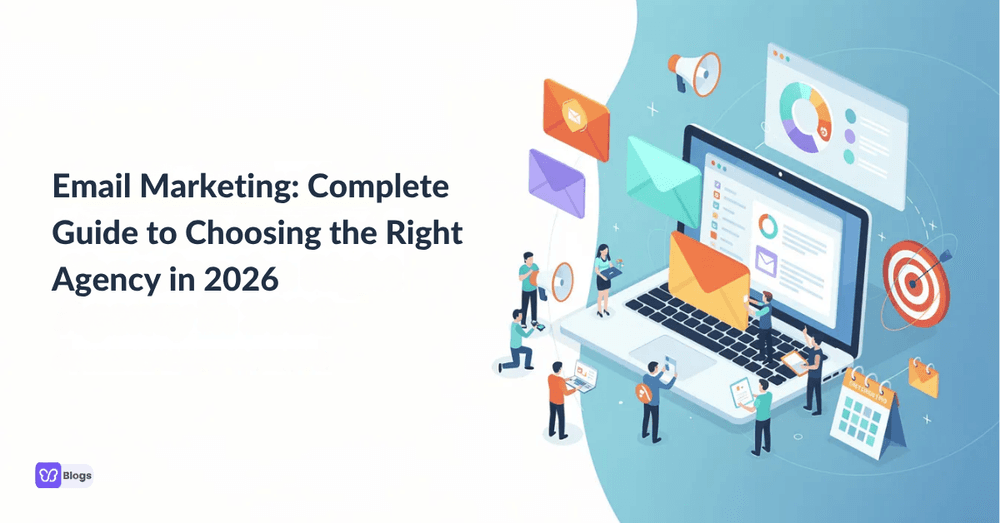
Email Marketing Marketing Services: Complete Guide to Choosing the Right Agency in 2026
Introduction to Email Marketing Marketing Services
In 2026, over 240 million adults in the U.S. check email daily, making email marketing a direct line to your audience without third-party interference. Despite the noise around newer channels, email marketing generates approximately $36 for every $1 spent, positioning it as one of the most cost-effective channels compared to traditional advertising. Yet many businesses still underperform with email because they lack the specialized skills, tools, or bandwidth to execute at a high level.
That's where email marketing marketing services come in. These are third-party or agency-driven solutions that manage part or all of a brand's email program, from strategy development and creative execution to deliverability management and analytics. They exist on a spectrum: you might hire a freelancer for occasional campaign management, subscribe to email marketing software for self-serve execution, or partner with a specialist email marketing agency that acts as an extension of your marketing team.
What sets modern email marketing services apart is their integration with broader digital marketing services, social media marketing, and paid advertising. The best agencies don't treat email as a silo. They align it with your entire funnel, using email audiences to seed social media ads, coordinating launch campaigns across channels, and ensuring your brand voice stays consistent whether someone sees your ad on Instagram or opens your newsletter.
This guide will walk you through everything you need to evaluate and choose the right partner. Whether you're comparing email marketing firms, vetting the top email marketing agency options, or debating between a full-service email marketing partner and a lean in-house setup, you'll find actionable frameworks, real cost benchmarks, and practical questions to ask before signing any contract.
What Is an Email Marketing Agency in 2026?
An email marketing agency is an organization that provides "done-for-you" email marketing services. This typically means they handle strategy, content copywriting, email template design and coding, automation setup, audience segmentation, deliverability monitoring, A/B testing, and performance analytics. The goal is to take the entire email channel off your plate or supplement your internal marketing efforts with specialized skill sets.
How does this differ from a generic marketing agency that happens to offer email? A pure email marketing company focuses deeply on the mechanics and strategy of email (and often SMS) performance. They stay current on inbox provider algorithm changes, authentication protocols, and evolving privacy regulations. A broader digital marketing agency might offer email as one item on a long menu alongside SEO, PPC, and content, but without the same depth. Meanwhile, email marketing software for agencies refers to the SaaS platforms (like Klaviyo, ActiveCampaign, or HubSpot) that provide the technology. An agency provides the people and process that make the technology produce results.
Core responsibilities of a modern email marketing agency include:
- Crafting email marketing strategy tied to business goals
- Designing and coding responsive email templates
- Building and managing email automation flows (welcome, cart abandonment, post-purchase)
- Advanced audience segmentation and personalization
- Deliverability management (authentication, sender reputation, list hygiene)
- Analytics, reporting, and continuous optimization
Many modern agencies also specialize in email and SMS marketing, combining both channels into unified lifecycle marketing flows. This omnichannel approach is particularly valuable for ecommerce businesses that need to reach customers at critical moments like shipping updates, restock alerts, and flash sale notifications.
To ground this in numbers: businesses can see a return of up to 4,000% ROI from email marketing. Some benchmarks from 2025-2026 show median returns of $36-$42 per dollar invested, with top-performing ecommerce programs exceeding that significantly. Email marketing can drive revenue increases of up to 300% when strategy, segmentation, and automation are handled by experienced professionals.
Types of Email Marketing Marketing Services
Not all email marketing marketing services look the same. The scope ranges from narrow, project-based help (designing a single holiday campaign, for example) to comprehensive, ongoing programs that cover every aspect of email and retention marketing.
Here's how the main service types break down:
- Retainer-based services: Ongoing strategy, campaign execution, automation management, deliverability monitoring, and reporting. Best for brands with consistent email volume and business growth goals.
- Project-based services: One-off engagements like platform migrations, template system rebuilds, holiday campaign execution, or deliverability audits. Ideal for brands that need strategic expertise for a specific initiative.
- Consultation and advisory: An agency provides guidance and recommendations, but the internal marketing department handles execution.
Different businesses need different mixes. Ecommerce businesses typically need aggressive automation (abandoned cart, browse abandonment, replenishment flows) combined with frequent promotional campaigns. B2B SaaS companies lean toward lead generation nurture sequences, onboarding drips, and content newsletters. Local service businesses might only need seasonal promotions, appointment reminders, and review request sequences.
You'll see these services marketed under various labels. An email marketing digital agency emphasizes cross-channel integration. An e-commerce email marketing agency specializes in product-centric flows and catalog-driven campaigns. Email advertising agencies focus on performance and revenue attribution. The top email marketing agency options in 2026 tend to combine deep channel expertise with the ability to tie email to your broader digital marketing strategy.
Core Email Marketing Services Most Agencies Offer
Think of this section as a menu. Below are the primary categories of email marketing marketing services that most email marketing agencies include in their offerings. Each of these will be explored in detail in the following subsections.
The typical service categories include:
- Strategic planning and strategy development - audits, roadmaps, and KPI definition
- Campaign management and execution - promotional sends, newsletters, launches
- Email marketing automation and lifecycle flows - behavior-triggered sequences
- Template design, coding, and brand consistency - responsive, accessible email design
- Deliverability and inbox placement services - authentication, warmup, list hygiene
- Segmentation, personalization, and targeting - audience segmentation and dynamic content
- Analytics, reporting, and optimization - dashboards, A/B testing, attribution
- Technical platform setup, migrations, and integrations - ESP configuration and data syncing
Most email marketing companies bundle these services with consulting on email marketing tools and tech stack design. Your agency should help you choose (or optimize) the right email service provider, connect it to your ecommerce platform or CRM, and ensure the data flows cleanly between systems.
Strategic Email Marketing Planning
Every serious engagement with an email marketing agency should start with a discovery and strategy phase. This is where the agency audits your current state: list health (bounce rates, inactive subscribers, complaint history), existing flows and email campaigns, competitor positioning, and your ideal customer profile.
From there, the agency builds a 90-day roadmap. This typically covers:
- Priority automations to launch or optimize (welcome series, abandoned cart)
- Monthly campaign calendar with themes and target segments
- List-growth tactics (signup flows, lead magnets, landing pages)
- Testing cadence for subject lines, content, and send times
- Clear KPI definitions: revenue per send, customer lifetime value, list growth rate, and engagement metrics
A strong email marketing strategy ties email directly to your revenue goals and overall digital marketing services. Email isn't just a "blast" channel. It's the engine for customer retention, repeat online sales, and lifetime value expansion. The right email marketing agency will define clear KPIs early and revisit them quarterly, not just report vanity metrics like open rates.
Strategy development also means understanding how email supports acquisition versus retention, what margins look like on email-driven sales, and how seasonal peaks should influence cadence and creative.
Campaign Management and Execution
In email, "campaigns" refer to one-time or scheduled sends like promotional emails, product launches, seasonal promos, and newsletters. These are distinct from automated flows, which are triggered by customer behavior. Both are essential, but campaigns require ongoing planning, production, and optimization.
Email marketing agencies manage campaigns from segmentation to deployment. Here's what that process typically looks like per send:
- Planning: calendar alignment, theme selection, target segment identification
- Copywriting: subject lines, preview text, body content
- Design: template layout using modular blocks or custom creative
- QA: rendering tests across email clients and devices
- Scheduling: optimal send time selection
- Reporting: post-send analysis of opens, clicks, conversions, and revenue
Typical cadences vary. Ecommerce email marketing programs often send three to five emails per week, with higher frequency during peak seasons. B2B nurture programs might run one to two campaigns per month supplemented by automated touchpoints.
Email marketing agencies that manage email campaigns consistently bring time savings and quality improvements. Subject lines should be clear and concise to improve open rates, and professional agencies test these rigorously. Rather than your marketing team scrambling to put together a last-minute send, you get a systematic process that maintains quality week after week.
Email Marketing Automation & Lifecycle Flows
Email marketing automation is the backbone of high-performing email programs. These are behavior-triggered sequences that send the right message at the right time based on what a subscriber does (or doesn't do). Effective email automation can generate 53% of total revenue for businesses that implement it well, and automated emails can achieve a 1,249.3% ROI within three months.
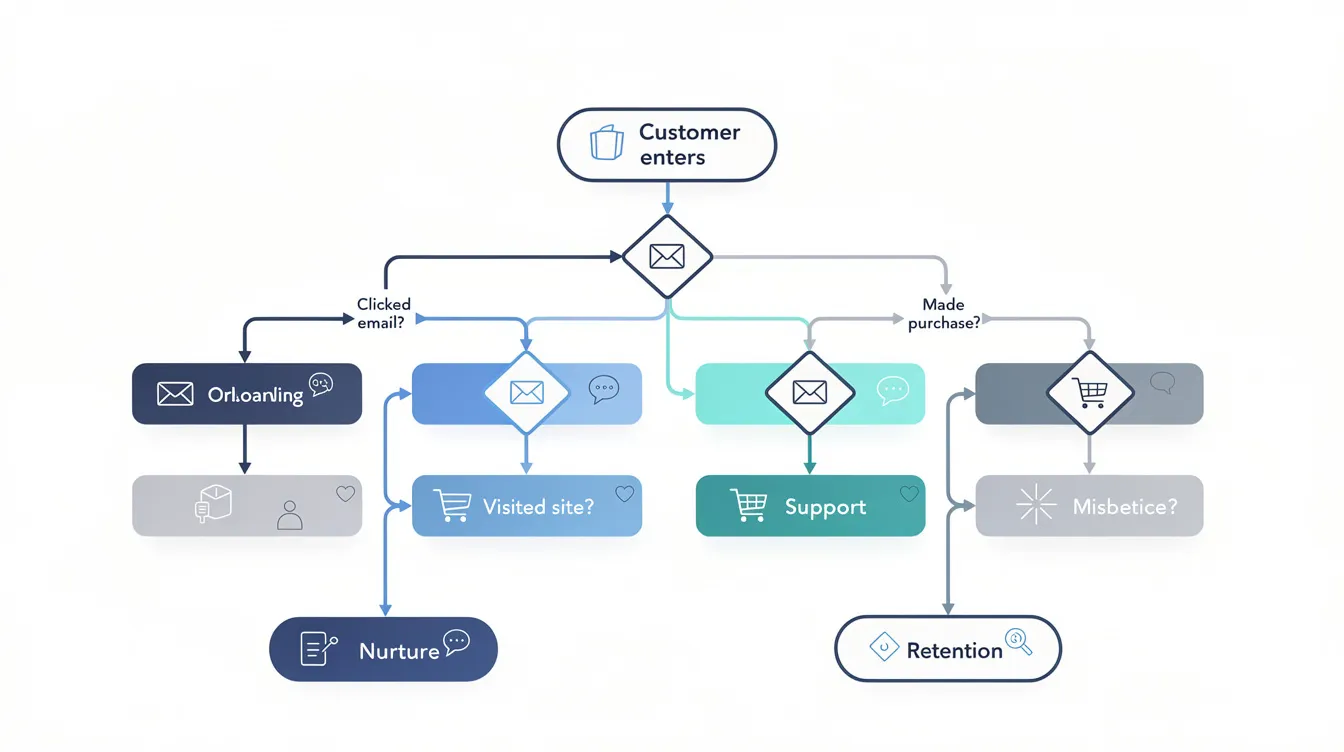
Here are the must-have flows every business should consider:
- Welcome series: Introduces your brand, sets expectations, and drives first purchase or engagement
- Abandoned cart: Recovers lost revenue from shoppers who didn't complete checkout
- Browse abandonment: Re-engages visitors who viewed products but didn't add to cart
- Post-purchase: Upsell, cross-sell, review requests, and loyalty nurturing
- Win-back: Re-engages lapsed customers before they churn entirely
- Replenishment: Reminds customers to reorder consumable products
- Birthday/milestone: Personal touches that build loyalty and customer engagement
A full service email marketing partner maps these flows to the customer journey and customer lifetime value goals. Email automation can increase revenue by up to 400%, and automated workflows can generate 53% of total revenue for businesses that invest in building them properly.
Modern email platforms in 2025-2026 make it easier to combine email and SMS marketing within the same automation. For example, a cart recovery flow might send an email at the one-hour mark, then trigger an SMS reminder 12 hours later if the email goes unopened. This kind of advanced automation requires both platform capability and strategic expertise to execute well.
Template Design, Coding, and Brand Consistency
Professional email template design affects more than aesthetics. It impacts deliverability (broken code or missing alt tags can trigger spam filters), brand trust, and conversion rates. Mobile-first designs enhance email engagement due to smartphone use, and in 2026, dark-mode compatibility and accessibility considerations (semantic markup, sufficient font sizes, descriptive alt text) are baseline expectations.
An email marketing digital agency ensures templates render correctly across Gmail, Outlook (desktop and web), Apple Mail, and major mobile apps. They use testing tools to verify rendering across dozens of client/device combinations before any campaign goes live. Responsive email templates adapt to screen size automatically, ensuring your message looks sharp whether it's read on a phone, tablet, or desktop monitor.
Many email advertising agencies build modular design systems. These are libraries of reusable blocks (hero images, product grids, CTA buttons, footers) that snap together for faster campaign launches without sacrificing brand consistency. This approach dramatically speeds up production while keeping your visual identity intact.
A well-designed email template isn't just pretty. It guides the reader's eye, makes the CTA obvious, and supports the drag and drop editor workflows that many platforms offer for ongoing campaign assembly.
Deliverability and Inbox Placement Services
Deliverability is the percentage of your emails that actually land in the subscriber's inbox rather than the spam folder or promotions tab. It can make or break your ROI. In 2025, approximately 66% of emails reached visible inboxes, meaning about 34% ended up in spam or were blocked entirely.
Technical authentication like SPF, DKIM, and DMARC improves deliverability significantly. Organizations with full authentication and proper warmup achieve 85-95% inbox placement, while large senders without these measures suffer dramatic drops.
Common deliverability tasks an agency handles:
- Domain authentication: Setting up SPF, DKIM, and DMARC records
- IP warmup: Gradually increasing send volume on new IPs to build sender reputation
- List hygiene: Removing hard bounces, inactive subscribers, and spam traps. For Salesforce users, Salesforce data verification helps identify invalid and inaccurate contact data and maintain cleaner customer records
- Spam filter audits: Reviewing content for trigger words and formatting issues
- Sender reputation monitoring: Tracking complaint rates across mailbox providers
- Maintaining a 0% spam complaint rate, which is crucial for deliverability
Here's a real-world example: a B2B firm in 2025 validated its domain, implemented DKIM/SPF/DMARC, and cleaned its list. The result was a 22-27 percentage point increase in inbox placement with Outlook and Office 365. That kind of improvement translates directly into revenue because emails that reach the inbox get read.
Specialized email marketing firms use dedicated monitoring tools to track inbox placement and complaint rates in real time, catching issues before they tank your entire program.
Segmentation, Personalization, and Targeting
Audience segmentation is one of the most impactful levers in email marketing. Segmenting audiences improves engagement and conversion rates, and segmentation based on behavior can drive a 192% revenue increase. High-quality lists and precise segmentation enhance email performance far more than increasing send frequency.
Common segmentation approaches include:
- Lifecycle stage: Prospect, first-time buyer, repeat customer, lapsed
- Purchase history: Product category, average order value, frequency
- Engagement level: Active openers/clickers, passive, disengaged
- Behavior: Browse activity, cart additions, wishlist items
- Demographics: Location, age, preferences
Advanced email marketing tools and CDPs in 2026 enable predictive segments and product recommendations. For ecommerce businesses, this means dynamically inserting product recommendations based on individual browse and purchase history. For B2B pipelines, it means mapping content to buyer stages (awareness, consideration, decision) and tailoring nurture flows accordingly.
Personalization in emails increases customer relevance and engagement. It goes far beyond "Hi {{FirstName}}" to include dynamic content sections, localized offers, send-time optimization, and cross-channel behavior signals. The best email marketing agencies set up smart segments that evolve automatically based on customer behavior, so your targeting improves over time without manual intervention.
Analytics, Reporting, and Optimization
Email marketing services provide detailed analytics on campaign performance metrics. A competent email marketing agency should report on more than just open rates. Here are the metrics that matter:
- Revenue per email (RPE) and revenue per subscriber
- Customer lifetime value changes attributable to email
- List growth rate and list health
- Click-through and conversion rates (measuring click-through and conversion rates is crucial for email campaign analysis)
- Churn: unsubscribe rate and spam complaint rate
- Deliverability/inbox placement percentage
Agencies go beyond ESP dashboards by connecting email data to ecommerce analytics, CRM systems, and attribution tools. This gives you a clearer picture of how email interacts with other channels in your marketing efforts.
A/B testing helps identify effective subject lines and content in email marketing. High-performing email campaigns require continuous A/B testing of subject lines, preview text, CTA placement, imagery, and send times. The best programs run tests systematically, not sporadically, and apply learnings across future campaigns.
Multi-touch attribution becomes especially relevant when combining email with paid advertising and social media marketing. An email click might assist a conversion that ultimately happens through a search ad. Without proper attribution, you'll undervalue email's contribution and misallocate budget.
Technical Platform Setup, Migrations, and Integrations
Choosing and configuring the right email marketing platform for agencies or brands is a foundational decision. The wrong platform creates bottlenecks; the right one enables scale, personalization, and performance.
Common migration scenarios in 2024-2026 include:
- Mailchimp to Klaviyo (for deeper ecommerce automation)
- Klaviyo to Braze (for enterprise-scale, multi-channel orchestration)
- Generic SMTP services to specialized behavioral email platforms
- HubSpot migrations for B2B companies consolidating marketing and CRM
These migrations involve transferring subscriber data, recreating automation flows, rebuilding templates, configuring domain authentication, and verifying integrations. A strong email marketing digital agency owns the entire technical project plan to minimize downtime and data loss.
Typical integration points include:
- Ecommerce platforms (Shopify, WooCommerce, BigCommerce)
- CRMs (Salesforce, HubSpot)
- CDPs (Segment, Rudderstack)
- Payment systems and product feeds
- Customer support and review platforms
Email service providers help businesses manage subscriber lists and automate messaging, but the platform is only as effective as the integrations and data feeding into it.
How Email Marketing Agencies Work With Ecommerce Businesses
Ecommerce businesses rely heavily on ecommerce email marketing for customer retention and repeat purchases. For most DTC and online retail brands, email is the primary owned channel for driving revenue growth after the initial acquisition.
An e-commerce email marketing agency addresses unique requirements that generic agencies often miss:
- Product feeds: Dynamically pulling product images, prices, and availability into emails
- Dynamic recommendations: Personalized product suggestions based on browse and purchase history
- Cart and browse tracking: Triggering flows based on specific product interactions
- SKU-specific promotions: Targeting customers based on specific products they've viewed or purchased
- Inventory alignment: Suppressing emails for out-of-stock items, promoting overstocked products
Seasonal execution is where specialized agencies truly earn their keep. During Black Friday/Cyber Monday 2025, ecommerce brands working with experienced agencies saw email-attributed revenue lifts of 20-40% over the prior year when flows, segmentation, and deliverability were optimized ahead of the event.
The agency aligns email campaigns with merchandising calendars, inventory levels, and promotional strategies. This coordination between marketing and operations is what separates a good program from a great one.
Specialized E-Commerce Email Marketing Agency Services
Beyond standard flows and campaigns, a dedicated e-commerce email marketing agency offers advanced services tailored to product-centric businesses:
- SKU bundling tests: Testing which product combinations drive the highest average order value when promoted together
- LTV cohort analysis: Grouping customers by acquisition channel, first purchase date, or product category to understand long-term value patterns
- Subscription model optimization: Renewal reminders, churn prevention flows, and upgrade sequences for subscription ecommerce brands
- Marketplace compliance: Adapting email strategies for brands that sell on Amazon, Etsy, or other marketplaces with their own communication rules
Integration of email and sms marketing runs deep in ecommerce. SMS handles time-sensitive communications (flash sale countdowns, restock alerts, shipping updates), while email carries the heavier creative and storytelling load (product education, brand storytelling, VIP early access). Together, they form a comprehensive retention marketing engine.
Many of the best email marketing agencies for ecommerce operate as long-term extension-of-team partners, embedding with your merchandising, operations, and customer service teams so campaigns are operationally feasible and margin-positive. Client success in this context means the agency understands your unit economics, not just your open rates.
Full-Service Email Marketing vs. Narrow Services
Full-service email marketing means the agency handles everything: strategy development, creative production, technical setup, automation flows, integrations, deliverability management, reporting, and ongoing optimization. Narrow service providers focus on a single slice, perhaps they only design templates, or only write copy, or only manage deliverability.
Pros of full-service:
- Cohesive strategy across all email touchpoints
- Consistent brand voice and creative
- Faster implementation (one team, one process)
- High accountability for outcomes (no finger-pointing between vendors)
Cons of full-service:
- Higher monthly cost
- Longer onboarding period
- More interdependencies (you must provide content, approvals, product information)
Pros of narrow services:
- Lower cost for specific tasks
- Faster turnaround on isolated projects
- Can complement an existing in-house team
Cons of narrow services:
- Risk of fragmented strategy
- Inconsistent results when multiple vendors don't coordinate
- Overhead of managing several relationships
When should you choose a full-service email marketing agency? Generally, when your brand has ongoing email volume, multiple lifecycle flows to optimize, a list large enough to justify specialist work, and revenue growth targets that demand expert attention. Small businesses with limited campaign needs might start with narrow services or even free email marketing services before graduating to full-service.
Email Advertising Agencies and Omnichannel Retention
The term email advertising agencies refers to agencies that treat email as a performance channel, tightly integrated with paid advertising and broader acquisition funnels. These agencies think about email in terms of measurable revenue impact, not just engagement metrics.
Here's how they integrate email with other channels:
- Retargeting: Using email engagement data to build custom audiences for social media ads and display retargeting
- Lookalike audiences: Uploading email subscriber segments to Meta, TikTok, or Google to find similar prospects
- Cross-channel creative consistency: Ensuring the same imagery, messaging, and offers appear across email, ads, and social
Email helps reduce customer acquisition cost (CAC) when you retain and reactivate existing customers through email rather than constantly paying to reach them through ads. The combination of email for retention and ads for acquisition is one of the most efficient approaches to marketing spend allocation.
Creative consistency matters. Your direct mail pieces, social media management efforts, and email campaigns should feel like they come from the same brand. A strong marketing agency or internal team coordinates these creative elements across channels.
Choosing the Best Email Marketing Agency for Your Business
Finding the right email marketing agency isn't about picking the biggest name. It's about finding the best fit for your specific needs, budget, and growth stage.
Main evaluation dimensions:
- Specialization: Does the agency focus on your business model (DTC, B2B SaaS, local services)?
- Technical expertise: Which email platforms, advanced tools, and integrations do they know well?
- Case studies with metrics: Can they show revenue per send improvements, list growth, CLV lift?
- Pricing model: Retainer, project-based, revenue share, or hybrid?
- Culture fit: Communication style, responsiveness, and strategic alignment
Needs differ significantly by business size. Small businesses might need affordable fixed-price retainers or even freelancers. Mid-market ecommerce brands require agencies that understand dynamic content, product feeds, and SMS. Enterprise B2B companies need scale, compliance expertise, and multi-brand management capabilities.
When researching the best email marketing agencies and email marketing companies, look beyond portfolios. Ask for references, review client feedback from recent engagements, and pay attention to how the agency communicates during the sales process. That's usually a reliable preview of what working together will feel like.
Evaluating Agency Expertise and Industry Fit
Prioritize agencies with direct experience in your vertical. A fashion DTC brand has very different email needs than a B2B SaaS company or a local services business. The buying cycle, customer behavior, creative expectations, and compliance requirements all vary.
Here's what to evaluate:
- Case studies from 2022-2026 with specific metrics: revenue uplift, subscriber growth, CLV improvements, deliverability gains. Choose agencies specializing solely in email marketing for the deepest expertise.
- Platform knowledge: Ask about their experience with Klaviyo, HubSpot, Braze, Salesforce, ActiveCampaign, and niche email marketing tools relevant to your industry. The best email marketing tool for your business depends on your specific use case.
- Industry fluency: The right email marketing firms should speak your language, whether that's understanding fashion seasonality, SaaS trial-to-paid conversion, or local service appointment booking patterns.
Check for case studies and client reviews before deciding. Look for agencies with proven ROI metrics and performance tracking, not just screenshots of pretty emails. Evaluate agencies based on their expertise in your industry, because generic experience rarely translates to outstanding results.
Pricing Models and Typical Costs in 2026
Understanding email marketing agency pricing helps you budget appropriately and compare apples to apples.
Common pricing structures:
- Monthly retainer: Fixed fee for an ongoing scope of services (most common for full-service)
- Per-project fees: Flat rate for defined deliverables (migration, template system, holiday campaign)
- Revenue share: Agency takes a percentage of email-attributed sales (aligns incentives but requires transparent attribution)
- Hybrid models: Base retainer plus performance bonuses
Email marketing agencies typically charge $2,500 to $15,000 monthly, with significant variation based on scope. Here are more specific ranges for 2026:
- Small businesses / early ecommerce: $2,000-$5,000/month for full-service retainer
- Mid-market ecommerce: $7,000-$20,000+/month depending on email volume, number of brands, and integration complexity
- Enterprise B2B or large multi-region ecommerce: $25,000-$100,000+/month or custom contracts
Factors that drive cost include list size, number of automation flows, campaign cadence, creative complexity, number of brands or languages, and compliance overhead. The smartest way to evaluate cost is to compare it against incremental revenue impact, not hours logged or emails sent. Email marketing can achieve a 400% ROI for businesses that invest wisely in the right partner.
In-House Team vs. Email Marketing Agency vs. Freelancers
This is one of the most common decisions marketing leaders face. Here's how the three options compare:
In-house team:
- Requires hiring or developing multiple skill sets: strategist, copywriter, designer, email developer, deliverability specialist, analyst
- Provides maximum control over brand voice and priorities
- Higher fixed overhead (salaries, tools, training, management)
- Slower to ramp new capabilities
Email marketing agency:
- Brings an assembled team with strategic expertise across strategy, creative, and technical functions
- Scales faster for peak seasons or new initiatives
- Higher variable cost, but no hiring overhead
- May require onboarding time to learn your brand deeply
Freelancers:
- Cheapest per task, most flexible scheduling
- May lack integrated process, deliverability depth, or advanced automation skills
- Works well for specific, isolated tasks (copywriting, design)
- Limited bandwidth for comprehensive programs
Many brands use a hybrid approach: a small in-house marketing team handles core content, brand voice, and approvals, while specialist email marketing marketing services partners manage deliverability, automation, and peak campaign execution. This gives you control where it matters and expertise where you need it.
Automated email campaigns save time and improve customer relevance regardless of which model you choose. The question is who designs and manages those automations.
Email Marketing Software for Agencies and Brands
Email marketing software for agencies differs from single-brand tools in several important ways. Agency-oriented platforms offer multi-account and multi-brand management, granular permission and role controls, white-label reporting, centralized deliverability dashboards, and the ability to manage high volumes across multiple clients.
Must-have features in 2026 include:
- Advanced email automation with branching logic and conditional splits
- Predictive sending and AI-powered content suggestions
- Dynamic content blocks powered by customer behavior data
- Robust audience segmentation with real-time updates
- API integrations with ecommerce platforms, CRMs, and CDPs
- Built-in deliverability tools (authentication setup, inbox monitoring)
- Drag and drop editor for rapid campaign assembly
- Multivariate testing capabilities
- Compliance tools (consent management, one-click unsubscribe)
Agencies evaluate and recommend the right email marketing platform for agencies and clients based on use case. There's no single best platform. The right choice depends on your business model, technical requirements, and growth trajectory. Even the best email marketing agencies are only as effective as the stack they design and manage.
Email marketing services are software platforms for managing email campaigns, but the platform alone doesn't drive results. It's the combination of the right tool, the right strategy, and the right execution team.
Popular Email Marketing Tools and Platforms in 2026
Here's a narrative overview of the leading email platforms that agencies and brands are using in 2026:
Klaviyo remains the dominant choice for ecommerce brands, particularly those on Shopify. Its deep product catalog integrations, advanced automation, and revenue attribution make it the go-to for DTC and ecommerce marketing programs.
ActiveCampaign serves over 180,000 businesses and recently introduced AI-agent functionality ("Active Intelligence") that allows users to build flows and test subject lines using plain-language prompts. It's a strong option for small to mid-market businesses that need marketing automation without enterprise complexity.
Brevo (formerly Sendinblue) is strong for SMEs, offering email alongside SMS and WhatsApp capabilities. It's budget-friendly with solid automation tools, making it a best email marketing company option for businesses watching costs. It offers a generous free plan for businesses just starting out, though free plan limits apply as you scale.
Mailjet combines campaign and transactional email with volume-based pricing that doesn't penalize for list size. Its built-in deliverability tools make it attractive for businesses focused on inbox placement.
HubSpot is the preferred platform for B2B companies that want email tightly integrated with CRM, content, and sales. Its drag and drop capabilities and marketing automation features make it accessible for marketing departments without dedicated developers.
Braze marketing automation serves enterprise-scale brands needing multi-channel orchestration across email, SMS, push notifications, and in-app messaging. It's powerful but requires significant technical resources.
Omnisend targets ecommerce brands with pre-built automation templates and combined email-SMS capabilities. Some platforms also offer free email marketing software tiers for early-stage businesses, though most serious programs quickly outgrow these free plan options.
Agencies leverage advanced features like AI subject line suggestions, predictive send times, and dynamic content powered by customer behavior to drive performance improvements. The best email marketing tool for any given business depends on their specific channel mix, technical maturity, and growth stage.
Email and SMS Marketing: Why You Should Combine Them
Email and sms marketing work together in 2026 to increase engagement and repeat purchases across the customer lifecycle. SMS offers immediacy and near-universal open rates, while email provides space for richer content, storytelling, and design.
Concrete examples of cross-channel flows:
- Cart recovery: Email at the one-hour mark, SMS at 12 hours if email is unopened
- Shipping updates: SMS for delivery notifications, email for order confirmation with product recommendations
- VIP launches: SMS for early access alerts, email for detailed product showcase
- Flash sales: SMS for the urgency trigger, email for the full promotional experience
- Restock alerts: SMS when a previously out-of-stock item becomes available again
Compliance for SMS requires explicit opt-in (double opt-in helps ensure subscribers genuinely want to receive messages), clear messaging, easy unsubscribe options, and adherence to TCPA and local jurisdiction rules. Agencies must ensure list collection and consent processes are compliant.
Many modern email marketing digital agency teams treat SMS as a core retention channel, not an add-on. An sms marketing agency or combined email-SMS partner can help you build both channels simultaneously, ensuring they complement rather than cannibalize each other. The result is higher customer engagement and more touchpoints to engage customers throughout their journey.
Key Metrics to Track With an Email Marketing Agency
The right email marketing agency should report on metrics that connect directly to business outcomes, not just email activity. Here are the primary KPIs to track:
- Revenue per email (RPE): Total email-attributed revenue divided by emails sent
- Revenue per subscriber: Total email revenue divided by active subscribers
- Customer lifetime value: How email engagement correlates with long-term customer value
- List growth rate: Net new subscribers after accounting for unsubscribes and bounces
- Deliverability/inbox placement: Percentage of emails reaching the primary inbox
- Spam complaint rate: Maintaining a 0% spam complaint rate is crucial for deliverability
- Click-through and conversion rates: Direct measures of email effectiveness
- Unsubscribe rate: Early warning signal for content relevance or frequency issues
Open rates remain useful as a directional metric but shouldn't be the sole success measure. Privacy features like Apple Mail Privacy Protection have reduced their reliability. Focus instead on downstream metrics like clicks, conversions, and revenue.
Benchmark ranges differ by model. Ecommerce email marketing programs typically see higher RPE and revenue per subscriber. B2B nurture programs focus more on pipeline value, marketing-qualified lead conversion, and lead velocity.
Set quarterly targets with your chosen email marketing agency and revisit them regularly. Email marketing can drive revenue increases of up to 300% for clients when the right metrics are tracked and optimized consistently.
Compliance, Privacy, and Data Protection
Email marketing in 2026 operates within a complex regulatory landscape. The main regulations you need to be aware of:
- GDPR (EU): Requires explicit consent, right to erasure, data portability, and clear privacy policies
- CCPA/CPRA (California and expanding U.S. states): Consumer data rights, opt-out requirements, and disclosure obligations
- CAN-SPAM (U.S.): Requires clear sender identification, honest subject lines, and functional unsubscribe mechanisms
- Emerging state privacy laws: Virginia, Colorado, Connecticut, and others with their own requirements
Compliance with anti-spam regulations is essential for email marketing. Agencies handle consent management (double opt-in flows, preference centers), unsubscribe mechanisms (one-click global unsubscribe as per RFC 8058), data-retention policies, and vendor contracts (Data Processing Agreements).
When hiring email marketing companies, verify their experience with compliance in your specific jurisdiction and industry. Request documentation of their data handling procedures, security protocols, and DPA templates. Mailbox providers are enforcing authentication requirements and spam complaint thresholds more strictly, meaning non-compliance doesn't just create legal risk-it directly hurts deliverability.
Red Flags When Evaluating Email Marketing Firms
Watch for these warning signs when vetting potential partners:
- No recent case studies: If an agency can't show results from 2024-2026, question whether they're keeping pace with current best practices and email marketing trends
- Vague reporting: "Your emails are doing great" isn't a report. Demand specific metrics tied to revenue and business goals
- Promises of "guaranteed" inbox placement or spam-free tricks: Deliverability is complex and depends on many variables. No legitimate agency guarantees specific results
- Reliance on volume blasts: Agencies that send the same message to your entire list without segmentation or email automation are leaving revenue on the table
- Purchased lists or cold outreach from marketing ESPs: This destroys sender reputation and violates most email service provider terms of service
- No clear process for authentication and deliverability: If they can't explain their SPF, DKIM, and DMARC approach, they're not specialists
- Outdated templates: If their portfolio shows non-responsive, non-accessible designs, move on
When comparing other email marketing firms, ask for specific examples of full service email marketing programs they've managed end-to-end, with measurable outcomes. Look for agencies with proven ROI metrics and performance tracking, not just creative portfolios.
Questions to Ask a Prospective Email Marketing Agency
Use these discovery questions when evaluating potential partners. Copy them directly into your RFP process:
Strategy and approach:
- What does your first 90-day roadmap typically look like for a brand at our stage?
- How do you define and measure success for email programs in our industry?
- What email marketing agency services are included in your standard retainer?
Technical capability:
- Which ESPs and email marketing tools do you have deep experience with?
- What's your approach to deliverability, including domain authentication and sender reputation management?
- How do you handle platform migrations and data integrity?
Creative and execution:
- What's your process for campaign management, from planning through reporting?
- How do you approach A/B testing and optimization?
- Do you build responsive email templates with dark-mode and accessibility support?
Ecommerce-specific (if relevant):
- How do you integrate with our ecommerce platform for product feeds and dynamic recommendations?
- What ecommerce email marketing flows do you prioritize first?
Cross-channel:
- How do you pair email and sms marketing, and how do you measure combined impact?
- Do you coordinate email with social media ads and paid advertising campaigns?
Team and communication:
- Will we have a dedicated account manager?
- What's your reporting cadence and what does a typical report include?
- How do you incorporate client feedback into ongoing optimization?
Onboarding and Kickoff: What Working With an Agency Looks Like
The first 60-90 days with a top email marketing agency follow a predictable pattern. Here's what to expect:
Days 1-30: Discovery and audit
- Full audit of existing email performance, deliverability, and authentication
- List hygiene assessment (bounce rates, engagement scoring, compliance review)
- Tech stack review (ESP configuration, integrations, data flow)
- Customer journey mapping and ICP definition
- KPI definition and baseline measurement
Days 30-60: Strategy and build
- Strategy sign-off and roadmap approval
- Template system design and development
- Priority automation flows built and reviewed
- Segmentation architecture established
- First campaigns planned and scheduled
Days 60-90: Launch and optimize
- First major automations go live
- Initial campaign sends with full QA process
- First monthly performance report delivered
- Refinement based on early data and learnings
Assets you'll need to provide include brand guidelines, product feeds or catalog access, ESP login credentials, analytics and CRM access, past campaign data, content calendars, and product margin information. Better preparation leads to faster results and fewer revisions.
Clear communication and shared KPIs should be established before any work begins. Most email marketing agencies will set up a regular meeting cadence (weekly or biweekly) and a shared project management system.
Case Study Blueprint: Measuring Success of Email Marketing Services
To evaluate whether email marketing marketing services are actually working, you need clear before-and-after metrics. Here are two realistic, anonymized examples:
Ecommerce brand (DTC fashion):
- Baseline (Q4 2024): Monthly email revenue of $50,000, list growth at +2%/month, inbox placement at 60%
- Post-engagement (Q4 2025): Revenue up 30% to $65,000/month, list growth at +5%/month, inbox placement improved to 85%, revenue per email up 50%
- Key services: Full automation build (welcome, abandoned cart, post-purchase, win-back), template redesign, deliverability overhaul, advanced segmentation
B2B service business (SaaS):
- Baseline (Q1 2025): Email-attributed pipeline at 20% of total, low conversion from email CTAs, inconsistent nurture sequences
- Post-engagement (Q1 2026): Pipeline sourced from email rose to 50%, email-attributed revenue growth of 3× over 12 months, significantly improved lead generation through segmented content
- Key services: Segmentation by buyer stage, personalized nurture sequences, content-mapped drip campaigns, email marketing automation optimization
Email marketing services can increase revenue by 300% for clients when strategy, automation, and segmentation are executed properly. The specific services that drive the biggest improvements vary by business, but automation and segmentation are consistently the highest-impact levers.
How to Brief Your New Email Marketing Agency
A thorough brief accelerates results and reduces costly revisions. Here's what to prepare before your agency kickoff:
- Audience insights: ICP documents, customer personas, segmentation data
- Historic performance: Past 12 months of email campaign data, revenue attribution, deliverability metrics
- Brand voice: Tone guidelines, approved language, brand do's and don'ts
- Promotions calendar: Planned sales, launches, seasonal events for the next 6-12 months
- Product information: Margins, best sellers, inventory considerations, product feed access
- Current ESP setup: Screenshots, flow diagrams, template examples, segment definitions
Better briefs lead to faster results and fewer rounds of revision. Be specific about what's worked and what hasn't. Share both your wins and your failures so the agency can learn from your history.
Clear expectations around digital marketing services scope prevent scope creep. Define upfront what the agency owns versus what your team handles, especially around content approvals, creative direction, and promotional calendar decisions.
Aligning Email With Your Overall Digital Marketing Services Strategy
Email shouldn't exist in a vacuum. It should support and amplify every other channel in your digital marketing strategy.
Here's how email connects to other channels:
- SEO and content: Use email to distribute new blog posts, driving traffic and engagement signals that support search rankings
- Social media marketing: Promote email signups through social channels; use email to drive traffic to social content and social media ads
- Paid advertising: Use email subscriber data for custom audiences and lookalikes; suppress existing customers from acquisition campaigns
- Direct mail: Coordinate physical mailers with email follow-ups for high-value customer segments
Think of email as your "owned hub." Unlike social platforms where algorithms control visibility, email marketing is a direct line to your audience. It's the channel where you have the most control over messaging, timing, and customer experience.
Agencies that can coordinate cross-channel calendars and creative themes deliver better results than those operating email in isolation. Your email marketing efforts should reinforce what customers are seeing and hearing across every other touchpoint.
Scaling From Startup to Enterprise With the Same Agency
Early-stage brands typically start with the essentials: a welcome series, basic abandoned cart flow, and one to two campaigns per month. This is enough to establish email as a revenue channel and begin building your subscriber base.
As your business scales, complexity grows:
- Multiple stores or brands: Each needs its own strategy, templates, and segmentation
- Multi-currency and multi-language: International expansion requires localized content and compliance with regional regulations
- Advanced segmentation: Moving from basic demographic segments to predictive, behavior-based segments
- Higher volume: Scaling from thousands to millions of sends requires deliverability expertise and infrastructure planning
The best email marketing firms adapt their service delivery as your needs evolve. What starts as a simple retainer can expand into a full strategic partnership covering multiple brands, channels, and markets.
Choosing an agency that can grow with you over several years avoids the disruption and knowledge loss that comes with switching partners repeatedly. Look for agencies with experience serving businesses at your current stage and your target growth stage. This kind of long-term partnership is where real business growth from email compounds.
When to Switch Email Marketing Agencies
Sometimes the relationship isn't working. Here are clear signals it's time to explore other options:
- Plateaued results: Metrics haven't improved in two or more quarters despite consistent investment
- Unresponsive account manager or team: Slow communication, missed deadlines, or lack of proactive recommendations
- Outdated tactics: Still relying on batch-and-blast without segmentation, automation, or personalization
- Misalignment with growth stage: The agency that was perfect when you were doing $500K in revenue may not have the capabilities for $10M
- No strategic input: The agency executes but doesn't challenge your thinking or bring new ideas
Before switching, conduct a light-touch audit. Review your current performance against industry benchmarks. Get a "second opinion" from another agency on your flows, deliverability, and segmentation. This can confirm whether the issue is your current partner or your underlying strategy.
When managing transitions, document everything: flow logic, segment definitions, template naming conventions, suppression rules, and authentication configurations. This ensures your new partner can hit the ground running without rebuilding from scratch.
Future Trends in Email Marketing Services (2026 and Beyond)
The email marketing landscape continues to evolve. Here are the trends shaping email marketing marketing services in 2026 and beyond:
AI-assisted content and optimization: AI tools now generate subject lines, preview text, and even body copy suggestions based on historical performance. Predictive send times deliver emails when individual subscribers are most likely to engage. These capabilities are becoming table stakes, not differentiators.
Hyper-personalized journeys: Dynamic content that adapts in real time based on customer behavior, purchase history, and engagement patterns. Adaptive flows that respond to changing subscriber signals, like engagement decay or churn risk, without manual intervention.
Channel convergence: Email, SMS, in-app messaging, push notifications, and loyalty programs are merging into unified lifecycle marketing platforms. The boundaries between channels are blurring as brands focus on delivering the right message through whatever channel the customer prefers.
First-party data priority: With cookie deprecation and ongoing privacy restrictions, owned channels like email become even more valuable. First-party data collection through signup flows, preference centers, and zero-party data surveys gives brands the targeting power that third-party cookies used to provide.
AI-driven inbox filtering: Inbox providers are using AI to prioritize content based on relevance and engagement signals. Emails that are authenticated but consistently ignored may still be deprioritized. This raises the bar for content quality and relevance.
Flexible, tech-savvy email marketing digital agency partners who stay ahead of these trends will outperform traditional generalists. Look for agencies that invest in ongoing education and tool evaluation as part of their service delivery.
How to Get Started With Email Marketing Marketing Services Today
Ready to explore working with an email marketing agency? Here's a simple five-step action plan for the next 30 days:
- Define your goals: What do you want email to accomplish? Revenue growth targets, customer retention improvements, list growth rates. Be specific about your business goals.
- Audit your current state: Review your existing email performance, list health, deliverability metrics, and automation coverage. Even a basic self-assessment reveals gaps.
- Create a shortlist: Research three to five agencies that specialize in your business model and vertical. Look for top email marketing agencies with case studies relevant to your situation.
- Schedule discovery calls: Use the questions from this guide to evaluate each agency's approach, expertise, pricing, and cultural fit.
- Scope a pilot project: Before committing to a long-term retainer, consider a defined pilot (a 90-day engagement, a deliverability audit, or a specific automation build) to test the partnership.
Define your budget ranges and required digital marketing services scope before you start conversations. This prevents wasted time on both sides.
Prioritize partners who can deliver strategic full-service email marketing rather than just one-off sends. The compound value of email comes from consistency, optimization, and long-term relationship building. Email marketing generates approximately $36 for every $1 spent, and the right agency partner will help you capture that return systematically.
Glossary of Key Email Marketing Terms for Decision-Makers
- ESP (Email Service Provider): The software platform used to send and manage email campaigns. Email service providers help businesses manage subscriber lists and automate messaging. Examples include Klaviyo, ActiveCampaign, and HubSpot.
- CTR (Click-Through Rate): The percentage of email recipients who click on a link within an email. A primary engagement and conversion metric.
- CLV (Customer Lifetime Value): The total revenue a business expects from a single customer over their entire relationship. Email's role in increasing CLV is one of its strongest value propositions.
- RPE (Revenue Per Email): Total email-attributed revenue divided by the number of emails sent. A key efficiency metric.
- Flow vs. Campaign: A flow is an automated, behavior-triggered email sequence (e.g., welcome series). A campaign is a manually scheduled, one-time send (e.g., a promotional blast).
- Cold List vs. Warm List: A cold list consists of contacts who haven't recently engaged with your emails. A warm list includes active, engaged subscribers.
- Lifecycle marketing: The practice of sending targeted messages based on where a customer is in their relationship with your brand (prospect, new customer, repeat buyer, lapsed).
- Deliverability: The ability of your emails to reach the recipient's inbox rather than spam or junk folders.
- List Hygiene: The process of regularly cleaning your email list by removing invalid addresses, hard bounces, and chronically unengaged subscribers.
- Audience Segmentation: Dividing your subscriber list into groups based on shared characteristics (behavior, demographics, purchase history) to send more relevant messages.
- A/B Testing: Sending two variations of an email to a small portion of your list to determine which performs better before sending the winner to the full audience.
- Authentication (SPF/DKIM/DMARC): Technical protocols that verify your emails are genuinely sent from your domain, improving deliverability and preventing spoofing.
- Dynamic Content: Email content that changes automatically based on the recipient's data, behavior, or segment membership.
- Suppression List: A list of email addresses excluded from sends, typically due to unsubscribes, bounces, or compliance requirements.
- Marketing Automation: Technology that manages marketing processes and campaigns across multiple channels automatically, triggered by predefined rules and customer actions.
- Opt-in (Single vs. Double): Single opt-in adds subscribers immediately after signup. Double opt-in requires email confirmation. Double opt-in helps ensure subscribers genuinely want to receive emails.
- Sender Score: A reputation rating (0-100) that mailbox providers use to determine whether to deliver, filter, or block your emails.
FAQ: Hiring the Best Email Marketing Agencies
1. How long should an email marketing agency contract be?
Most agencies offer month-to-month or quarterly agreements to start. Annual contracts often come with discounted rates. A 90-day initial commitment is reasonable to allow for onboarding and early optimization.
2. Is there a minimum list size required to work with an agency?
Most email marketing agencies work with lists of 5,000+ subscribers, though some specialize in early-stage brands with smaller lists. If your list is under 2,000, you may get more value from free email marketing tools and self-serve platforms first.
3. How long does it take to see results?
Expect the first 30-60 days focused on setup and strategy. Meaningful performance improvements typically appear by month three. Email marketing generates approximately $36 for every $1 spent, but realizing that return requires proper setup and optimization time.
4. How do I measure ROI from my email marketing agency?
Track email-attributed revenue, cost of agency services, and incremental improvements in customer lifetime value, list growth, and conversion rates. Most email marketing agencies provide monthly reports connecting their work to revenue.
5. What should I expect from a top email marketing agency within the first 90 days?
A thorough audit, strategy roadmap, at least two to three core automation flows launched, initial campaign sends with testing, and your first performance report with baseline metrics and optimization recommendations.
6. How do I choose an e-commerce email marketing agency for Shopify or WooCommerce?
Look for agencies with direct platform integration experience, product feed expertise, and case studies from ecommerce brands on your specific platform. Ask about their experience with dynamic product recommendations and cart recovery flows.
7. Should I choose a specialist email marketing agency or a full-service digital marketing agency?
If email and SMS are your primary retention channels, a specialist delivers deeper expertise. If you need help across SEO, content, paid, and social alongside email, a service email marketing agency or broader digital marketing agency may be more efficient.
8. What's the difference between most email marketing agencies and a freelance email marketer?
Agencies bring assembled teams with diverse skills (strategy, design, development, analytics), established processes, and deliverability expertise. Freelancers are typically skilled in one or two areas and work best for narrowly defined tasks.
9. Can an email marketing agency help with lead generation?
Yes. Agencies often build signup flows, landing pages, lead magnets, and content-gated sequences designed to grow your list with qualified subscribers.
10. How involved do I need to be if I hire a full-service agency?
You'll need to provide brand guidelines, approve creative and strategy, share product and promotional information, and participate in regular check-ins. The agency handles execution, but client success depends on collaboration.
FAQ: Tools, Platforms, and Costs
1. Which email marketing software for agencies works best for multi-brand portfolios?
Platforms like Klaviyo (for ecommerce), HubSpot (for B2B), and Braze (for enterprise) all offer multi-brand management capabilities. The best choice depends on your business model, volume, and integration needs.
2. What's the difference between an ESP, CDP, marketing automation platform, and email marketing platform for agencies?
An ESP (email service provider) handles email sending and list management. A CDP (customer data platform) unifies customer data from multiple sources. A marketing automation platform adds workflow triggers and multi-channel orchestration. An email marketing platform for agencies adds multi-client management and reporting layers on top of ESP functionality.
3. How much does email marketing software cost vs. agency services in 2026?
Email marketing software typically costs $50-$2,000+/month depending on list size and features. Agency services range from $2,500-$15,000+/month on top of software costs. The total investment depends on your scale and complexity. Some email platforms offer a generous free plan for getting started.
4. When should I upgrade from basic email tools to enterprise-grade email platforms?
Consider upgrading when you're sending 100,000+ emails per month, need advanced automation with complex branching, require multi-brand or multi-region support, or when your current platform's deliverability tools can't keep up with your sender reputation needs.
5. Do I need separate tools for email and SMS?
Not necessarily. Many modern email platforms (Klaviyo, Omnisend, Brevo) include built-in SMS capabilities. Dedicated SMS tools may offer more advanced features, but for most brands, a unified platform simplifies sms marketing management and reporting.
6. What features should I prioritize when evaluating email marketing tools?
Focus on advanced marketing automation capabilities, deliverability tools, integration depth with your existing tech stack, segmentation sophistication, and reporting granularity. A drag and drop editor is helpful for campaign production speed but shouldn't be the primary selection criterion.

Author
Debutify
Debutify is the easiest way to launch and scale your eCommerce brand.