Best Ecommerce Courses: Your Guide to Online Success

Did you know that mastering ecommerce courses online can unlock the door to online business success? In this blog, we will explore the best e commerce courses now available to help you kickstart your online store and master digital marketing strategies.
This guide is designed for entrepreneurs, business owners, and anyone looking to build or grow an online store. We'll cover the best ecommerce courses, essential strategies, and practical tips to help you succeed in the digital marketplace. Whether you're just starting out or looking to scale your existing business, understanding the right educational resources and strategies is crucial for thriving in today’s competitive online environment.
Introduction to Ecommerce and Online Business

E-commerce refers to the purchase and sale of goods and services using the internet, which allows companies to reach a global clientele and provide convenience and accessibility. An online storefront, ecommerce platforms for building online stores, shopping cart, payment gateway, shipping and fulfillment, digital marketing, and customer service are essential elements of e-commerce.
Ecommerce courses are courses that cover a range of topics including market research, ecommerce platforms, and online store management. These courses equip learners with foundational skills necessary for successfully managing an online business.
There are four types of e-commerce models: business-to-business (B2B), consumer-to-consumer (C2C), business-to-business (B2C), and consumer-to-business (C2B). Benefits include ease, reduced expenses, worldwide reach, and insights derived from data. Concerns about client trust, logistics and shipping, competition, and security present challenges.
Mobile commerce, automation and AI, personalization, and sustainability are some of the trends of the future. Online stores are a key part of the ecommerce landscape, and businesses aiming to expand their online operations must comprehend the fundamental elements, business models, advantages, difficulties, and emerging trends of the ecommerce store i-commerce.
Transition: Understanding the basics of ecommerce and the value of specialized courses sets the stage for why these educational resources are so important in today’s market.
Importance of Ecommerce Courses in Today's Market
To succeed in the digital economy, businesses need to take ecommerce courses. These courses cover e commerce essentials, including fundamental topics like product selection, market research, and marketing strategies, which are necessary to start and run an online business. They provide prospects for entrepreneurship, skill development, industry relevance, worldwide reach, adaptability to the digital change, specialized knowledge, networking, ongoing education, and improved employability.
Google Digital marketing, analytics, platforms, marketing tactics, and consumer interaction are some of the subjects covered in these courses. Additionally, they offer industry relevance, helping experts to comprehend the subtleties of internet retail. Ecommerce courses also equip learners with essential e-commerce skills needed to build and grow e-commerce stores, attract customers, and measure marketing performance.
Specialized expertise that is essential to success in e-commerce is also provided by e-commerce courses. Examples of this knowledge include dropshipping, affiliate marketing, social media selling, and SEO. Additionally, they provide networking opportunities that promote cooperation and allow for the acquisition of real-world experience.
Ecommerce business owners and marketing professionals benefit greatly from these courses, as they are tailored to enhance their skills and provide advanced strategies for growing online businesses and improving store traffic and sales.
In the world of digital technology, where new trends and technologies are always emerging, it is imperative to always be learning. Job seekers’ employability in ecommerce marketing-related professions can be improved by having ecommerce skills.
Now that we've explored why ecommerce courses are essential, let's look at some top options for beginners.
Top Ecommerce Courses for Beginners

Ecommerce courses are available for various skill levels, from beginners to advanced practitioners. These courses cover a range of topics including market research, ecommerce platforms, and online store management. By enrolling in these programs, learners gain foundational skills necessary for successfully managing an online business.
Debutify - eComm Lifestyle
Provider: Debutify
Description: This covers a wide selection of eCommerce course such as:
Facebook Ads Mastery
Instagram Ads Mastery
YouTube Ads Mastery
Google Ads Mastery
Team Building Mastery
Product Research Mastery
Messenger Marketing Mastery
Key features: Includes step-by-step procedures and instructions, offers coaching, etc.
Best Ecommerce Courses: At-a-Glance Table
Below is a curated list of the best ecommerce courses, including provider, description, key features, and who each course is best for:
| Course Name | Provider | Description | Key Features | Best For |
|---|---|---|---|---|
| Google Digital Marketing & E-commerce Professional Certificate | Google (Coursera) | 7-course series for beginners covering SEO, email marketing, and store management. | Comprehensive, practical skills, industry-recognized, 4.8/5 rating. | Beginners, aspiring ecommerce professionals. |
| Ecommerce Essentials | Skillshare | One-hour course teaching product selection, market research, and platform choice. | 93% satisfaction, concise, taught by Tracey Wallace. | Beginners, those seeking a quick overview. |
| Shopify Learn | Shopify | Free, beginner-friendly, step-by-step training from setup to scaling. | Expert-led, covers product photography, legal, marketing. | New store owners, Shopify users. |
| SEO Training for Beginners | Shopify | Free course covering SEO strategies for ecommerce. | Focused on SEO, beginner-friendly. | Store owners wanting to improve SEO. |
| Udemy - How to Become a Shopify Expert (From Zero to Hero!) | Udemy | Course by Tim Sharp on mastering Shopify from scratch. | Step-by-step, practical, lifetime access. | Beginners, Shopify-focused learners. |
| LinkedIn Learning - Ecommerce Fundamentals | LinkedIn Learning | Course by Patrick Rauland covering ecommerce basics. | Video modules, downloadable resources. | Beginners, broad overview seekers. |
| CXL Ecommerce Marketing Certification | CXL | Program taught by nine experts, covers all ecommerce marketing topics. | In-depth, subscription-based, for practitioners and founders. | Advanced learners, marketing professionals. |
| DigitalMarketer Ecommerce Marketing Mastery | DigitalMarketer | Certification for marketers to transform products into profits. | Six modules, $495, practical focus. | Marketers, business owners. |
| HubSpot Ecommerce Marketing Course | HubSpot | Free course for small business owners and marketers. | Four lessons, three quizzes, ten videos, content marketing focus. | Beginners, small business owners. |
| Google's Foundations of Digital Marketing and E-commerce | Free, comprehensive introduction taught by Google employees. | Highly rated, foundational skills, practical. | Beginners, those new to digital marketing. |
Course Details
- Google Digital Marketing & E-commerce Professional Certificate (Coursera): A 7-course series recommended for beginners, covering SEO, email marketing, and store management. Comprehensive and practical, with a 4.8/5 rating.
- Ecommerce Essentials (Skillshare): A one-hour course taught by Tracey Wallace, focusing on product selection, market research, and platform choice. 93% of students report met or exceeded expectations.
- Shopify Learn: Free, beginner-friendly, step-by-step training from setting up a store to marketing and scaling. Includes expert-led courses such as 'First Day to First Sale,' covering product photography to legal requirements.
- SEO Training for Beginners (Shopify): Free course covering SEO strategies for ecommerce, ideal for those wanting to improve their store's SEO.
- Udemy - How to Become a Shopify Expert (From Zero to Hero!): Taught by Tim Sharp, this course guides learners from scratch to Shopify mastery with step-by-step, practical lessons and lifetime access.
- LinkedIn Learning - Ecommerce Fundamentals: Taught by Patrick Rauland, this course covers ecommerce basics through video modules and downloadable resources.
- CXL Ecommerce Marketing Certification: Taught by nine expert instructors, this in-depth program covers all ecommerce marketing topics. Subscription-based, geared toward practitioners and founders, starting at $289/month.
- DigitalMarketer Ecommerce Marketing Mastery: Certification aimed at marketers looking to transform products into profits. Structured around six modules, costs $495, and has a practical focus.
- HubSpot Ecommerce Marketing Course: Free course designed for small business owners and marketers, covering essential strategies for driving online success. Includes four lessons, three quizzes, and ten videos, with a focus on content marketing.
- Google's Foundations of Digital Marketing and E-commerce: Free, comprehensive introduction taught by Google employees. Highly rated, foundational skills, and practical for those new to digital marketing.
Other Top Ecommerce Courses for Beginners
- Debutify - eComm Lifestyle: Covers a wide selection of eCommerce topics such as Facebook Ads, Instagram Ads, YouTube Ads, Google Ads, Team Building, Product Research, and Messenger Marketing. Features step-by-step procedures and coaching.
- Coursera - Ecommerce Essentials: How to Start a Successful Online Business: Offered by University of Pennsylvania, covers basics of ecommerce, including market research, product selection, digital marketing strategies, and customer acquisition. Includes practical assignments, quizzes, and a final project.
- Udemy - The Complete Shopify Aliexpress Dropship Course: Focuses on ecommerce dropshipping through Shopify, covering product selection, store setup, AliExpress sourcing, and marketing. Features hands-on tutorials, step-by-step guidance, and lifetime access.
- edX - Digital Marketing, Social Media and E-Commerce for Your Business: Overview of digital marketing strategies, social media integration, and ecommerce essentials for SMBs. Includes case studies and interactive exercises.
- Skillshare - Starting an Etsy Shop: Getting Your Creative Business Online: Tailored for creatives selling on Etsy. Covers shop setup, product photography, pricing, and promotion. Offers practical tips and real-life examples.
- FutureLearn - Digital Skills: Ecommerce: Explores ecommerce trends, consumer behavior, digital marketing, and technology’s role in growth. Features industry insights and case studies.
Tips for Choosing the Right Ecommerce Course
Set Clear Goals
- Define your specific interests within ecommerce (e.g., dropshipping, digital marketing, platform-specific like Shopify or Etsy).
Evaluate Course Structure
- Look for a mix of theory and practical application through exercises or projects.
Seek Practical Insights
- Choose courses that provide actionable strategies for real-world application, such as ecommerce accounting, email marketing, or industry-specific knowledge.
Check Reviews and Ratings
- Read learner reviews and ratings to gauge the course’s effectiveness and relevance.
Research Instructor Expertise
- Investigate the background and experience of instructors to ensure practical knowledge.
Consider Learning Style and Business Goals
- Match the course format and content to your preferred learning style and business objectives.
Once you've built a foundation, you can explore advanced strategies to further grow your online business.
Advanced Ecommerce Strategies and Techniques
To drive conversions and maintain a competitive edge in the digital marketplace, businesses must employ advanced ecommerce strategies and techniques. A well-defined ecommerce strategy is crucial for advanced success, guiding businesses through the complexities of online selling.
Personalization and Customer Segmentation
Personalization and customer segmentation involve using data analytics to segment customers based on behavior, preferences, and demographics. This results in personalized product recommendations, tailored content, and targeted marketing campaigns that help ecommerce brands stand out.
Conversion Rate Optimization (CRO)
Conversion rate optimization (CRO) involves conducting A/B testing and multivariate testing to optimize website elements and analyze user experience metrics. Ecommerce marketers often leverage these advanced techniques to maximize conversions and improve overall performance.
Advanced SEO and Content Marketing
Advanced SEO and content marketing focus on long-tail keywords, semantic search, and optimizing for voice search. Creating high-quality, relevant content helps attract and retain customers.
Omnichannel Integration
Omnichannel integration ensures a seamless shopping experience across multiple channels, allowing customers to interact with your brand wherever they are.
Mobile Commerce Optimization
Optimizing the mobile shopping experience is essential as more consumers shop via smartphones and tablets.
Advanced Analytics and Data-Driven Decision-Making
Advanced analytics tools, including digital marketing analytics, track key performance indicators (KPIs) and use predictive analytics to anticipate customer behavior and optimize inventory management.
Customer Retention Strategies
Developing loyalty programs, personalized offers, and exclusive promotions fosters long-term customer relationships and increases lifetime value.
Social Commerce and Influencer Marketing
Leveraging social media platforms for direct selling and collaborating with influencers can drive conversions and expand your reach.
Supply Chain Optimization and Fulfillment
Efficient inventory management and robust financial reporting ensure smooth operations and financial health.
Continuous Innovation and Adaptation
Staying updated with industry trends and consumer preferences is essential for ongoing success.
Transition: With advanced strategies in place, the next step is to master digital marketing to drive traffic and sales to your online store.
Mastering Digital Marketing for Your Online Store
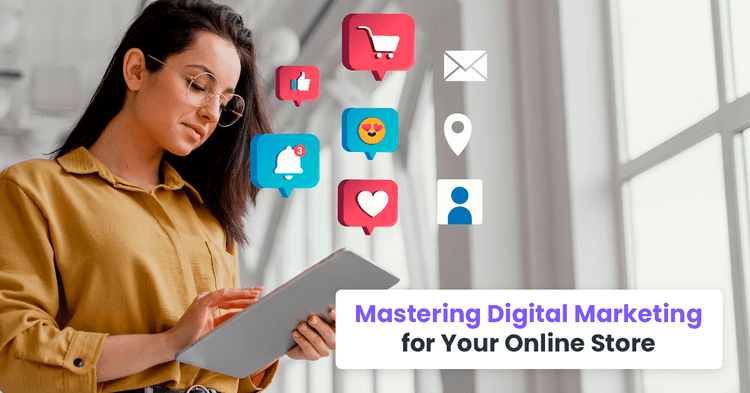
Developing a solid brand presence, boosting revenue, and increasing traffic all depend on mastering digital marketing. Building a strong digital marketing strategy is the foundation for ecommerce success.
Building a Brand Presence
It is crucial to comprehend your audience, create thorough buyer personas, and use tools like Google Analytics to collect data and comprehend consumer preferences if you want to successfully traverse the world of digital marketing.
SEO Strategies
Utilize SEO to optimize your website, paying attention to user experience, on-page components, and keyword research.
Content Marketing
Content marketing is producing informative content that demonstrates knowledge, responds to client wants, and follows search engine optimization best practices. Inbound marketing is a key approach here, focusing on creating valuable content to attract, engage, and retain customers.
Email Marketing
Create customised, email marketing campaigns with relevant offers, recommendations, and content by segmenting your email list according to its demographics, past purchases, and degree of involvement.
Social Media Marketing
Selecting the social media marketing channels on which to advertise requires you to choose platforms where your target audience is active and developing a content calendar with a mix of promotional, educational, and interactive posts. Developing an effective social media strategy is essential for ecommerce businesses to grow their presence and engage customers. Engage with community engagement and respond promptly to comments, messages, and reviews to build relationships and trust.
Paid Advertising and Influencer Marketing
Paid advertising, such as PPC (Pay-Per-Click) advertising on search engines and social media platforms, is another effective marketing strategy. Online marketing encompasses these digital channels, including Google Ads, SEO, SEM, email marketing, and programmatic advertising, all of which are essential skills for ecommerce success. Identify influencers whose audience aligns with your target market and collaborate with them to promote your products through sponsored posts, reviews, or giveaways.
Analyzing and Optimizing Campaigns
Analyze key metrics, such as website traffic, conversion rates, click-through rates, and ROI, and use analytics tools like Google Analytics to gain insights into customer behavior and campaign performance. Stay updated and experiment with different strategies, tactics, and channels to identify what works best for your audience and business goals.
Transition: After mastering digital marketing, focusing on customer experience and retention will help ensure long-term growth and loyalty for your online store.
Enhancing Customer Experience and Retention
To ensure long-term success and growth of your online store, focus on providing a seamless user experience, personalized recommendations, excellent customer support, clear policies, and security measures.
Delivering a Seamless User Experience
Engage with customers on social media platforms, send informative email newsletters, and implement loyalty programs to reward repeat customers. Continuously gather customer feedback through surveys and feedback forms, act on it, and monitor customer sentiment.
Consistent Brand Experience
Ensure a consistent brand experience across all channels, including your website, social media, email, and physical stores. Brand development is a key part of delivering this consistent experience, helping to establish a strong identity and build trust with your audience. Cross-channel integration allows customers to seamlessly transition between online and offline channels.
Educational Content and Value-Added Services
Provide educational content related to your products or industry through blogs, videos, or webinars to establish authority and help customers make informed decisions. Offer value-added services such as free shipping on orders over a certain amount, gift wrapping options, or extended warranties to enhance the overall shopping experience.
Rewarding Customer Loyalty
Monitor and reward customer loyalty by identifying and rewarding high-value customers who contribute significantly to your business’s revenue over time. Provide exclusive access to sales, new products, or special events as a way of showing appreciation.
Data-Driven Insights and Optimization
Utilize analytics tools to track customer behavior, engagement metrics, and sales performance. Experiment with different strategies, such as pricing, promotions, or website layout, to optimize for higher conversion rates and customer retention.
Transition: With a strong focus on customer experience, the next step is to choose the right ecommerce course to align with your business goals and maximize your learning.
Choosing the Right Ecommerce Course for Your Business Goals
Choosing the right ecommerce course for your business goals involves several key considerations. Defining your business goals, assessing the course content and curriculum, and ensuring relevance and depth are crucial. Look for comprehensive ecommerce courses that cover all aspects of running an online business, including logistics, fulfillment, and financial management, to ensure you gain a well-rounded understanding.
Assessing the instructor’s expertise, reviews, and testimonials from past students can provide insights into the course’s effectiveness. Engaging learning experiences, supplementary materials, and community access can enhance learning. Cost and ROI should be evaluated against the potential return on investment (ROI).
Continuous learning and updates are essential, as ecommerce trends evolve rapidly. Access to updated materials and resources beyond the initial enrollment period is also important. Trial or preview options can help gauge the course’s alignment with your learning style and business needs. Certification and accreditation are important if certification aligns with industry standards. Consider pursuing a commerce professional certificate or Google Career Certificates, as these industry-recognized credentials can boost your credibility and job readiness in digital marketing and ecommerce.
Seeking peer recommendations and network feedback can provide trustworthy insights into the quality and effectiveness of a course. By considering these factors, you can make an informed decision that aligns with your business goals and maximizes the value of your ecommerce course investment.
Transition: Once you've selected your course, it's important to maximize your learning experience for the best results.
Tips for Maximizing Your Learning Experience
Set Clear Goals
- Define what you want to achieve from the course (e.g., launching a store, improving marketing skills).
Create a Learning Schedule
- Allocate regular study time and stick to it for consistent progress.
Assess Your Prior Knowledge
- Identify your strengths and areas for improvement before starting.
Participate Actively
- Engage in discussions, complete assignments, and ask questions.
Take Notes and Summarize
- Write down key points and summarize lessons to reinforce learning.
Apply What You Learn
- Implement new knowledge in real-world scenarios, such as starting or scaling an Amazon FBA business.
Use Multiple Resources
- Supplement your learning with articles, videos, and forums.
Seek Feedback
- Request feedback from instructors or peers to improve your understanding.
Organize Study Materials
- Keep your notes and resources well-organized for easy reference.
Review and Reflect
- Regularly review course content and reflect on your progress.
Network and Connect
- Join course communities, connect with alumni, and engage with industry professionals.
Stay Motivated
- Set milestones, celebrate achievements, and remind yourself of your goals.
Practice Continuous Learning
- Attend webinars, follow industry news, and keep updating your skills.
Transition: By following these tips, you’ll be well-equipped to get the most out of your ecommerce education and stay ahead in the evolving digital landscape.
Future Trends in Ecommerce Education and Online Business Development
The future of ecommerce education and online business development is expected to be shaped by several significant trends. As the demand for digital business skills grows, learning how to start and manage a digital business will be crucial for future success.
AI and Machine Learning Integration
AI and machine learning will optimize content delivery and engagement, making learning more personalized and effective.
Virtual and Augmented Reality (VR/AR)
The integration of VR/AR technologies will simulate real-world ecommerce environments for hands-on learning.
Blockchain and Secure Transactions
Blockchain technology will be integrated into ecommerce education to teach about secure transactions, supply chain traceability, and counterfeit prevention.
Sustainable Business Practices
Sustainable, ecommerce business practices will be emphasized, with a focus on green supply chains, eco-friendly packaging, and reducing carbon footprints.
Globalization and Cross-Border Ecommerce
Training will address international market strategies, localization, data analytics, predictive analytics, cybersecurity, and compliance.
Remote Work and Digital Collaboration
Remote work and digital collaboration will be addressed, with virtual teams and flexible work policies.
Continuous Learning and Upskilling
Continuous learning and upskilling will be offered through online courses, certifications, and microcredentials, while professional development will be emphasized.
Ethical Business Practices
Ethical business practices will be promoted through Corporate Social Responsibility (CSR) education, promoting fair trade, responsible advertising, and community engagement initiatives.
By investing in these areas, businesses and individuals will be better positioned to succeed in the evolving digital economy.
Stay Ahead of the Curve: Enroll in These Game-Changing Ecommerce Courses Today!
Due to shifting consumer behaviors, global market realities, and technology improvements, ecommerce education is expected to experience a considerable transformation. Application of AI, blockchain technology for safe transactions, applications of virtual and augmented reality, and sustainable practices are some of the major themes.
The main focuses of e-commerce education will be on individualized instruction, practical use of cutting-edge technologies including big data analytics and predictive modeling, and practical training. To build trust, a focus on cybersecurity protocols, ethical business practices, and worldwide expansion plans will be implemented.
Digital collaboration and remote work will demand the ability to manage virtual teams and use digital tools to run effective e-commerce operations. Upskilling and constant learning are necessary to maintain competitiveness in a market that is changing quickly.

Author
Diane Eunice Narciso
Diane Eunice Narciso is a content marketer, strategist, and writer who's skilled and passionate about marketing, social media, eCommerce, etc. And is also an expert in sales and business development nurturing strategic partnerships and collaborations.