Quick Commerce in 2026: The Instant-Delivery Market and What It Means for DTC
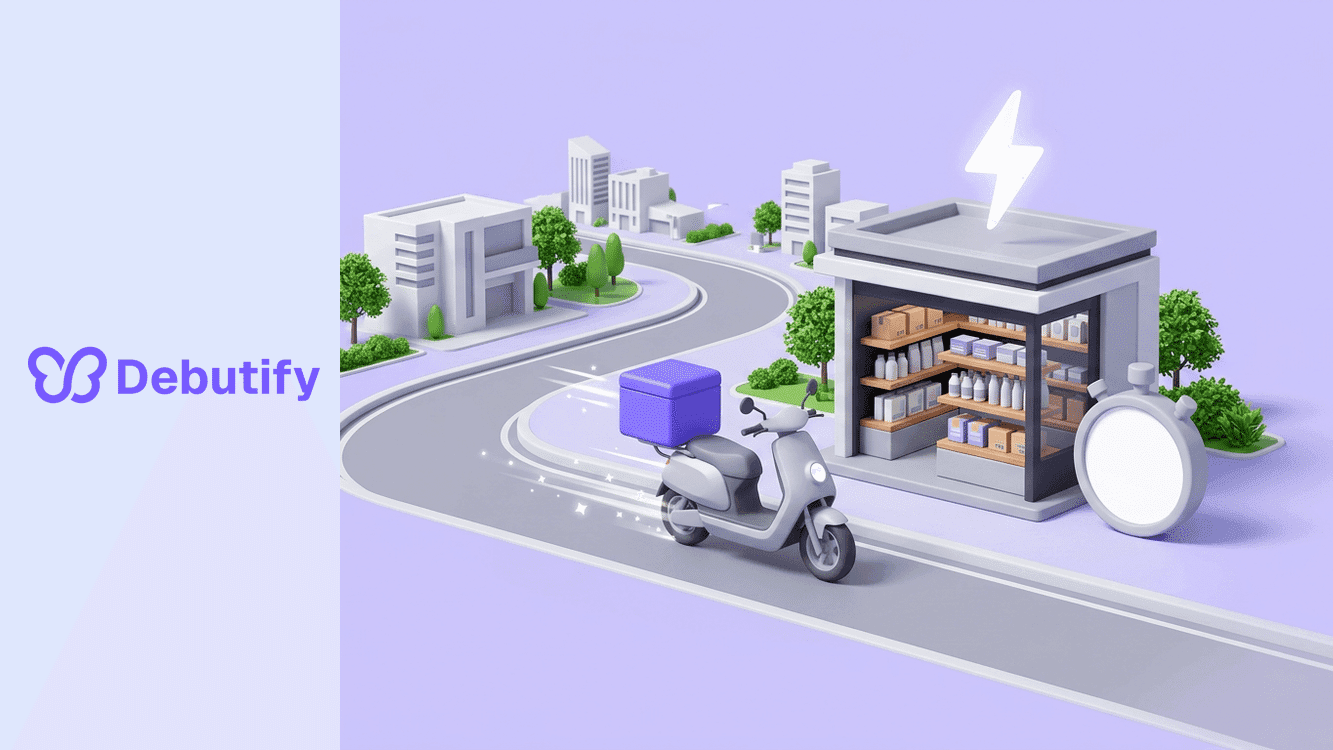
Quick commerce, the delivery of everyday goods in ten to thirty minutes from hyperlocal dark stores, has survived its first hype-and-crash cycle and come out the other side as real infrastructure. The market was worth roughly $129.7 billion in 2025 and is forecast near $161.9 billion in 2026, growing at a 24.8% compound annual rate toward about $358 billion by 2030, with instant delivery capturing 64% of the segment and grocery-plus-staples still the largest category at roughly 36% of the market. Broader definitions of the category put 2026 anywhere from $297 billion to $527 billion depending on what gets counted, but every serious forecast agrees on the direction: twenty-plus percent annual growth, driven by dense urban demand, dark-store networks, and a consumer habit that now treats thirty minutes as a reasonable expectation for a forgotten ingredient, a phone charger, or a last-minute gift. The expansion is visibly accelerating where it matters: India's quick-commerce players alone are expected to add 2,000 to 2,500 dark stores in 2026, and roughly 70% of urban consumers now say they prioritize speed in shopping decisions. For a DTC or Shopify brand, quick commerce is not a channel you can ignore just because you do not sell groceries: it is changing delivery expectations, opening a marketplace-listing path into instant retail, and creating a last-minute gifting lane that peaks exactly when your shipping cutoffs expire. This guide covers the market's real numbers, how the model works, what sells, and the four practical ways an independent brand plugs in, with the unit economics that decide whether it is worth it.
It connects to the fulfillment stack on the blog: the 3PL guide, the shipping options guide, the fulfillment cost strategies, the shipping cutoffs guide for the seasonal last-minute lane, and the shipping times guide for communicating delivery promises honestly.
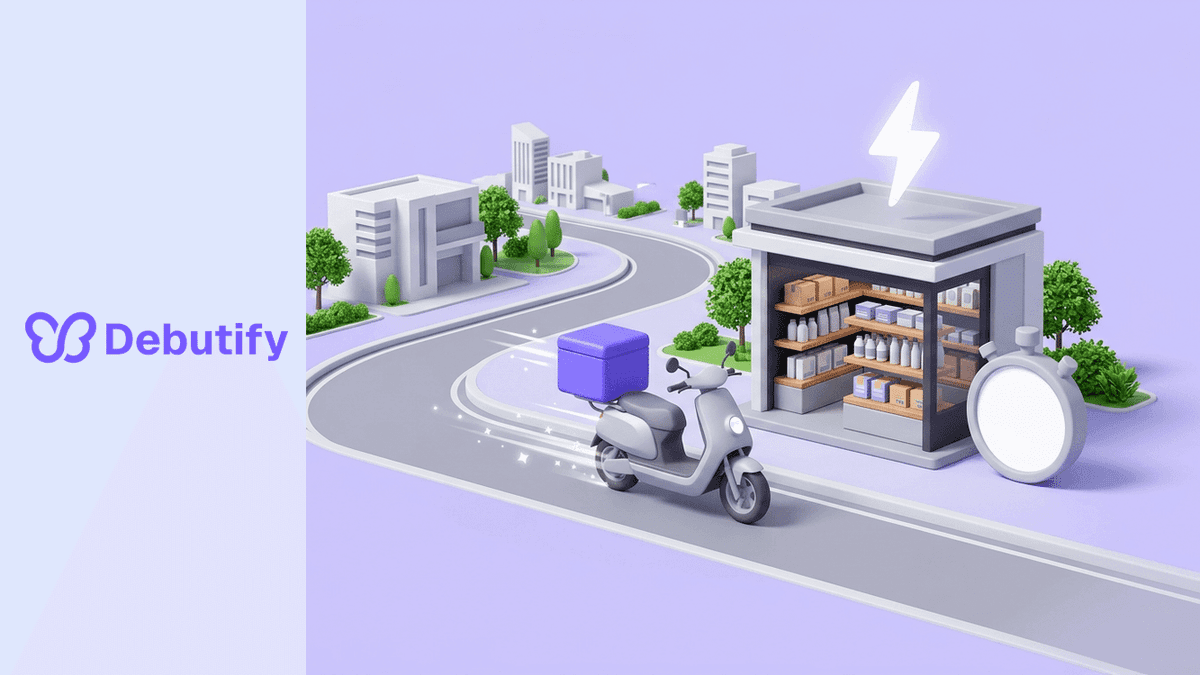
The market: honest numbers in a definition fog
Quick commerce market sizing varies wildly because analysts draw the category boundary differently: some count only dedicated ten-to-thirty-minute platforms, others include same-day retail delivery and marketplace instant options.
| Forecast | 2026 value | Growth | 2030+ projection |
|---|---|---|---|
| The Business Research Company (dedicated platforms) | $161.9B | 24.8% from 2025's $129.7B | $358.2B by 2030 (22% CAGR) |
| Fundamental Business Insights (broader scope) | $297.5B | 22.33% CAGR forecast | $2.23T by 2036 |
| Research and Markets (broadest, incl. micro-fulfillment) | $526.9B | 21.9% CAGR | $1.73T by 2032 |
Three structural facts hold across every version. Instant delivery is the dominant mode at about 64% of the market, and it is the fastest-growing segment. Grocery and staples remain the largest category near 36%, because replenishment is the habit that trains consumers, but personal care and beauty is the fastest-growing category as shoppers extend instant expectations to self-care and lifestyle products, which is the door non-grocery brands walk through. And the geography is urban by physics: the model only works where dark-store density meets population density, with North America the largest regional share in several analyses and Asia-Pacific the fastest-expanding network build-out.
How the model works
A quick-commerce platform runs micro-fulfillment centers (dark stores: 2,000 to 5,000 square feet of shelving, no storefront) positioned three to five kilometers apart across a city, stocking 2,000 to 8,000 SKUs chosen by neighborhood demand data. An order routes to the nearest dark store, a picker assembles it in minutes, and a gig or employed rider delivers inside a ten-to-thirty-minute window. The economics are brutal and improving: small baskets against fixed picking-and-rider costs meant the 2021-2022 cohort (Getir's retreats, Gorillas' collapse into Getir, dozens of shutdowns) burned through capital, and the survivors responded with the levers you would expect: minimum order values, delivery fees and subscriptions, private-label margins, ad revenue on the app (retail media inside the dark-store catalog), and category expansion into higher-margin non-grocery goods. The consolidation is why 2026's growth is credible rather than subsidized: the remaining players, Meituan and the Chinese cohort at scale, DoorDash and Instacart in the US, Swiggy, Zepto, and Blinkit in India, Grab and Gojek in Southeast Asia, Rappi in Latin America, Gopuff in convenience, are running the model toward profitability city by city, and India's 2,000-to-2,500 new dark stores this year are being placed in high-income micro-markets first, where basket sizes justify the cost.
What sells, and what that says about assortment
The replenishment core (produce, dairy, snacks, household basics) built the habit, but the growth categories tell a DTC brand where the openings are: personal care and beauty for immediate replenishment of self-care routines; pet supplies for the out-of-food emergency; OTC health for the midnight pharmacy run; electronics accessories for the forgotten charger; alcohol and gifting items for the occasion purchase; and, seasonally, the last-minute gift. The common thread is immediacy with willingness to pay a convenience premium: a shopper accepts a higher unit price and a delivery fee when the alternative is a trip they cannot make in the next thirty minutes. That is a different value proposition from DTC's usual price-plus-brand story, which is why quick commerce skews toward consumables, emergencies, and occasions rather than considered purchases.
Four ways a DTC brand plugs in
- Marketplace listing on instant platforms. Instacart, DoorDash, and Uber-type apps now list packaged goods from national and regional brands, and the Indian platforms run brand storefronts inside their apps. If you sell a consumable, beauty, pet, snack, or beverage product with retail-ready packaging, getting listed turns your brand searchable in the thirty-minute lane. Expect marketplace economics: commissions, listing fees, and a pay-to-play placement layer, because sponsored slots inside these apps are where their margin comes from, the same model our holiday Google Ads strategy covers on the search side.
- Retail distribution that includes quick-commerce shelves. The indirect path: sell into a retailer (grocery chain, convenience, pharmacy) whose assortment flows onto instant platforms. Your brand rides their dark-store inventory without operating anything, at wholesale margin. Our B2B ecommerce guide covers the wholesale mechanics, including the Shopify B2B tooling that now runs on every paid plan.
- Local fulfillment for your own store. The DIY approximation: position inventory in one or two urban 3PL hubs and offer same-day or three-hour courier delivery in those metros through courier APIs. This is quick commerce as a premium tier of your own store rather than a marketplace listing, viable for high-AOV consumables (specialty food, premium beauty, flowers, gifting) where the delivery fee is absorbed by the basket. The 3PL guide covers hub selection.
- Occasion and emergency merchandising on your own site. The zero-infrastructure play: build "need it today" collections (local pickup, courier partners, gift cards for instant delivery) and surface them when shipping cutoffs pass. The cutoffs guide shows the seasonal calendar: between the ground cutoff and December 25, last-minute demand does not disappear, it migrates to instant options and digital gifts, and stores with a visible last-minute lane capture it.
The unit economics before you commit
Quick-commerce participation fails on arithmetic, not demand. Run these numbers first: your landed cost plus platform commission plus any delivery subsidy must leave contribution margin at the platform's realistic basket size for your category (often $15 to $35 in consumables). Compare that against your DTC contribution margin including shipping, and ask what the channel is actually for. The honest answers are usually: distribution and trial (consumers discover your product in the app before they ever search your brand), replenishment convenience that raises lifetime frequency, and defense, because if your category is on instant platforms and you are not, a competitor's substitute is one tap away. The wrong answer is margin. Brands that treat quick commerce as a profit channel price themselves out or subsidize themselves broke; brands that treat it as paid distribution with measurable trial lift budget it like marketing and hold it to that standard. Whichever path you choose, keep your own store's promise honest: if your site says two-day shipping and the app says twenty-five minutes, your shipping options page needs to explain the lanes rather than let the comparison look like neglect.
Frequently asked questions
How big is the quick commerce market in 2026?
Between roughly $162 billion (dedicated ten-to-thirty-minute platforms, The Business Research Company) and $527 billion (broadest definitions including micro-fulfillment), with every major forecast projecting 21% to 25% annual growth and instant delivery at about 64% of the segment.
What sells best on quick commerce?
Grocery and staples lead at about 36% of the market, but personal care and beauty is the fastest-growing category. The pattern across categories is immediacy: replenishment, emergencies, occasions, and last-minute gifts, where shoppers accept a convenience premium.
Can a small DTC brand join quick commerce?
Yes, through four paths: marketplace listings on instant apps (for retail-ready consumables), wholesale distribution into retailers whose stock flows onto the platforms, urban 3PL hubs powering your own same-day courier tier, or zero-infrastructure last-minute merchandising (pickup, gift cards) on your own store.
Is quick commerce profitable for brands?
Rarely as a direct margin channel: commissions plus small baskets usually leave thinner contribution than DTC. Treat it as paid distribution and measure trial lift, replenishment frequency, and defensive shelf presence, the way you would measure a marketing spend, not a store.
Proximity is the new aisle
Quick commerce is what happens when the last mile gets rebuilt around minutes instead of days, and in 2026 the rebuild is past the point of reversal: a market growing faster than 20% a year on every definition, thousands of dark stores going up this year alone, instant delivery already two-thirds of the segment, and a consumer habit, 70% of urban shoppers prioritizing speed, that no consolidation will un-teach. For an independent brand the strategic question is not whether to become a quick-commerce company but which of the four doors fits your product: the marketplace listing if you ship retail-ready consumables, the wholesale path if you would rather ride someone else's shelves, the urban hub if your AOV can carry a courier, or the last-minute lane on your own store if the first three do not apply yet. Whichever door you choose, run it as distribution economics rather than store economics, keep your own site's delivery promises coherent next to the app's twenty-five minutes, and watch the fastest-growing category signal, personal care and beauty, because it marks the moment instant delivery stopped being about milk and started being about everything a shopper wants now.

Author
Debutify
Debutify is the easiest way to launch and scale your eCommerce brand.