Third-Party Logistics (3PL) for Ecommerce in 2026: Costs, Providers, and When to Switch
A third-party logistics provider stores your inventory, picks and packs orders, and ships them under your brand name, and in 2026 the honest per-order math looks like this: roughly $2.50 to $5.00 to pick and pack the first item, $0.50 to $1.00 for each additional item, $5 to $40 per pallet per month for storage, plus receiving fees, returns fees, and a monthly minimum that quietly decides whether outsourcing saves you money or costs you a tax on being small. The providers are not interchangeable: ShipBob runs 40-plus fulfillment centers for fast multi-zone coverage, ShipMonk undercuts it on storage and waives setup, Red Stag guarantees 100% order accuracy for heavy and high-value goods, Amazon FBA is cheapest per order but strategically expensive, and Flexport now requires $5,000 a month in fulfillment spend before it takes your call. This guide prices the major 3PLs with their current published and reported rates, exposes the five hidden costs that never appear in a headline quote, and gives you the decision framework for when outsourcing beats packing boxes yourself.
We have covered the operational side before: our complete 3PL guide and third-party logistics primer explain how the model works, and our fulfilment guide for 2026 covers building customer-centric operations. This is the pricing and provider-selection layer, updated for 2026 rate cards, because the numbers moved and most comparison content still quotes 2023.
What a 3PL actually takes off your plate
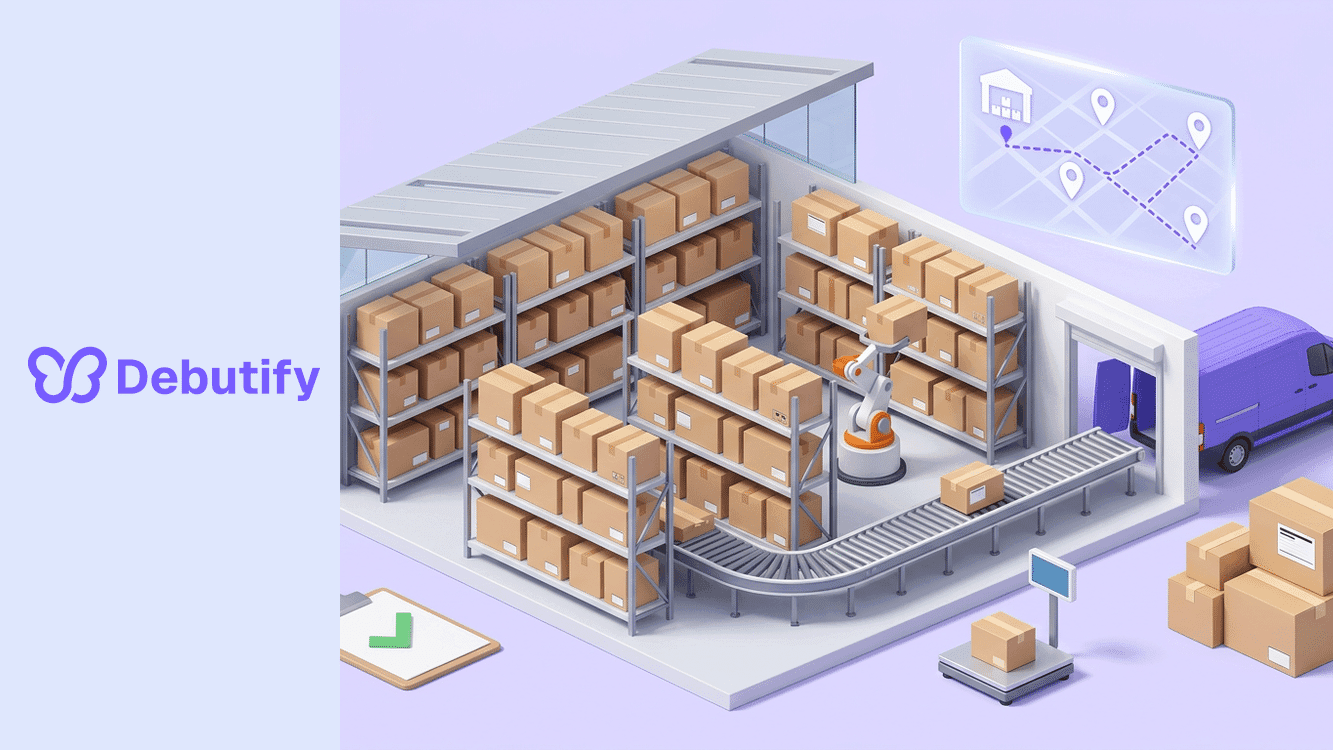
Outsourcing fulfillment means handing over receiving (your manufacturer's pallets arrive at their warehouse, get counted and shelved), storage (your inventory lives in their bins, shelves, and pallets), pick and pack (their operators pull items per order, pack them in your branded packaging), shipping (they buy postage at negotiated carrier rates and hand off to UPS, USPS, or FedEx), and returns processing (inspection, restocking, inventory adjustment). Most modern 3PLs sync directly with Shopify, so orders flow automatically, tracking numbers flow back automatically, and inventory levels update in real time; if you run custom fulfillment routing, our six-step Shopify custom fulfillment guide shows how the store side of that connection works. What you keep is the part that actually differentiates your business: product, brand, pricing, and the customer relationship, which is why inventory management discipline matters more after outsourcing, not less. Your 3PL's stock counts become the source of truth for everything from ad spend to reorder points.
When to switch, and when not to
The most quoted advice in this category is wrong for small brands. If you ship 80 orders a month, packing them yourself takes a few hours a week and costs nothing in fees, while a 3PL's monthly minimums are a tax on being small: $275 reported at ShipBob, $250 at ShipMonk (their published formula is monthly order volume times the first-item pick fee, minus 20%), and $5,000 in fulfillment spend at Flexport as of January 2026. At low volume the argument for outsourcing is never cost; it is what those packing hours are worth if spent on marketing, product, or customer experience instead.
The switch usually pays when three signals stack:
- Fulfillment is eating your week. You spend more than a day a week picking, packing, and driving to the carrier, and the hours compound during launches and holidays.
- Storage is your bottleneck. Your garage, spare room, or self-storage unit costs more per cubic foot than a 3PL's $1 to $3, or you are turning down inventory because you cannot house it.
- Shipping speed is costing you conversions. Customers expect two-day delivery, and a single warehouse on one coast means five-day transit for half the country. A 3PL's distributed network fixes this with inventory placement; one $12M home fragrance brand reported saving roughly $18,000 in zone charges during peak just by rebalancing stock between Chicago and Los Angeles nodes after its provider's dashboard flagged the imbalance.
Before you sign anything, run the same calculation your 3PL will: landed cost per order (pick and pack plus postage plus packaging plus storage amortized plus returns allowance) versus your current in-house cost per order including your hourly worth. If the gap is under $1 per order at your volume, the real benefits are speed and scalability, not savings, and you should choose on network fit instead of price.
2026 provider pricing, side by side
| Provider | Pick and pack (first item) | Additional items | Storage | Receiving | Minimums | Best for |
|---|---|---|---|---|---|---|
| ShipBob | ~$5.00 (custom plans vary) | $0.75 to $1.00 | $5/bin, $10/shelf, $40/pallet per month, prorated daily | ~$25/hour or $0.20 to $0.35/unit | Reported $275/month plus implementation from $975 | Lightweight DTC, Shopify-first brands, 40-plus US centers, international |
| ShipMonk | $2.50 to $3.00 | $0.50 to $0.75 (volume discounts to ~$1.80 first item) | ~$2.00/cu ft per month | Free at some tiers; published rates $25/hour or $0.20/unit | ~$250/month, no setup fee | Mid-size brands, fastest onboarding (5 to 10 business days) |
| Red Stag | ~$3.25 | Bundled into order pricing | $2.50 to $3.50/cu ft; first 30 days free | $0.40 to $0.60/unit | Flexible (~100 orders/month), none published | Heavy, bulky, fragile, high-AOV ($100+); 100% accuracy guarantee, $50 credit per error |
| Amazon FBA | Amazon fee schedule (cheapest per order) | Included | $0.87 to $2.40/cu ft per month | Amazon receiving flow | Volume requirements via Amazon | Amazon-channel sellers wanting Prime; ShipBob runs 10 to 20% more per order but buys independence |
| Flexport | ~$5.00 | Per quote | Per quote | Per quote | $5,000/month fulfillment spend (since Jan 2026) | Larger brands (~1,000+ orders/month) wanting freight and fulfillment under one roof |
Two reading notes. First, per-order fees are the visible half: ShipBob's US B2C rate card (revised June 23, 2026) shows what sits on top, including $0.35 per pick beyond your plan, $0.45 per fragile unit, $0.25 per dangerous-goods order, and returns at $1.70 per order plus $0.90 per unit. Second, ShipBob partly operates as a 4PL, coordinating through partner warehouses alongside its own, which can mean less direct control over day-to-day operations; if operational visibility is your top requirement, ask any provider exactly which warehouses will hold your stock. Our older order fulfillment companies roundup covers more regional players if none of the five fits.
How to choose: the product-first framework
Your product decides your 3PL, not the reverse. A provider excellent for lightweight supplements is wrong for furniture: weight, fragility, dimensions, AOV, and return rate determine which network, guarantee, and price sheet fits. Work through the profile in order:
- Match the specialty. Heavy, fragile, or $100+ AOV items point to Red Stag's accuracy guarantee; at 2,000 orders a month its roughly $1 per-order premium costs $2,000 monthly, which the $50-per-error SLA often justifies on its own. Lightweight, fast-moving DTC points to ShipBob's 40-plus centers or ShipMonk's lower storage rates. Amazon-channel-first points to FBA despite the lock-in.
- Quote the same order profile everywhere. Send each provider your monthly order count, average items per order, weight and dimensions, storage footprint, and return rate, then compare all-in landed cost, not headline pick fees.
- Check the network against your customers. Pull your order map from the last 90 days and see which provider's warehouses put your median customer inside two-day ground. Distributed inventory is the whole speed argument; a single-warehouse provider at a lower rate can lose you more in conversion than it saves in fees.
- Test the tech stack. You will live in their dashboard: order visibility, inventory counts, damage claims, and demand forecasting. ShipMonk's UI is built for high-SKU DTC velocity; Red Stag's for lower-volume, higher-stakes orders; ShipBob's for multi-node inventory balancing. Ask for a live demo with your catalog, not a sandbox.
- Plan the exit before you enter. Confirm data export formats, inventory removal fees, and notice periods in the contract. The fulfillment cost reduction strategies in our operations guide apply inside a 3PL relationship too: packaging right-sizing, kitting, and inventory distribution decisions remain yours even when the labor is not.
Whichever provider you pick, wire the numbers back into your store's reporting: fulfillment cost per order, transit time by zone, and return cost per unit belong on the same dashboard as your core ecommerce metrics, because the point of outsourcing is buying back time to grow, and you can only prove it did if you measure both sides. If you are still early enough that this decision sits next to choosing a platform and a theme, our online store creation guide sequences the whole first-year operations stack, and our customer-centric fulfillment operations guide covers the process design a 3PL should slot into.
Frequently asked questions
How much does a 3PL cost per order in 2026?
For a typical single-item DTC order: $2.50 to $5.00 pick and pack at ShipMonk or ShipBob, plus postage at negotiated carrier rates (roughly $6.80 to $7.40 for a 1 lb package to zone 5), plus amortized storage of $5 to $40 per pallet per month. All-in landed cost commonly falls between $8 and $12 per order before returns, which is why the in-house-versus-3PL break-even usually sits somewhere between 200 and 500 orders a month depending on your hourly worth and storage situation.
Is a 3PL cheaper than Amazon FBA?
Per order, usually not: FBA runs 10% to 20% cheaper than ShipBob for Amazon-only sellers, with storage from $0.87 to $2.40 per cubic foot. But FBA prices you into Amazon's ecosystem: inventory performance limits, commingled stock options, and packaging rules you do not control. A 3PL costs a premium and buys branding control, multichannel capability, and independence, which matters the moment you sell on Shopify, TikTok Shop, and wholesale at once.
What is the difference between a 3PL and a 4PL?
A 3PL owns or leases warehouses and runs your fulfillment directly. A 4PL coordinates the whole supply chain through a network, sometimes including partner warehouses it does not own. ShipBob operates partly as a 4PL, which extends its footprint but can put a layer between you and the floor handling your product; ask any provider which facilities will actually hold your inventory and who staffs them.
When should I outsource fulfillment for my Shopify store?
When a day or more of your week goes to picking and packing, when storage costs or space caps are throttling inventory, or when single-warehouse transit times are measurably hurting conversion. Below roughly 100 orders a month, minimums usually make outsourcing a net loss unless the reclaimed hours have a clearly higher-value use.
Do 3PLs handle returns and international shipping?
Yes, at a price: returns run $1.70 to $6.00 per unit depending on provider and inspection depth, so model them at your category's real return rate (20% to 30% in apparel). International coverage varies widely; ShipBob and Flexport build it into their networks, while Red Stag was US-only as of mid-2026, which forces a second provider relationship if more than about 20% of your revenue ships abroad.
Outsource the boxes, keep the math
A 3PL is a rate card wrapped in a promise: the rate card says $2.50 to $5.00 an order, and the promise says your customers will never know you are not in the building. Whether the deal is good depends entirely on numbers the headline quote omits: receiving hours, returns at your category's real rate, postage spread, minimums at your actual volume, and the zone-skipping value of where their warehouses sit against your customer map. Get those five numbers from every provider for the same order profile, and the choice usually makes itself: lightweight and multichannel points one way, heavy and high-AOV another, Amazon-first a third. Then keep the part that compounds: your inventory discipline, your unboxing experience, and your fulfillment-cost-per-order line on the dashboard next to conversion rate, because the brands that win with 3PLs are not the ones that outsourced the most; they are the ones that outsourced the boxes and kept the math.

Author
Debutify
Debutify is the easiest way to launch and scale your eCommerce brand.