The Real Test: Exploring the Best AI Ad Makers in 2026

AI has quietly taken over creative departments. From visuals to copywriting, automation is reshaping how brands design and distribute campaigns. As someone who's spent months testing different AI Ad Maker tools, I've learned that each platform has its own flavor: some practical, some surprisingly artistic, others just plain quirky. This post dives deep into the leading options and what they actually deliver in real-use scenarios.
1. Adsmaker.ai — Streamlined Automation for Busy Marketers
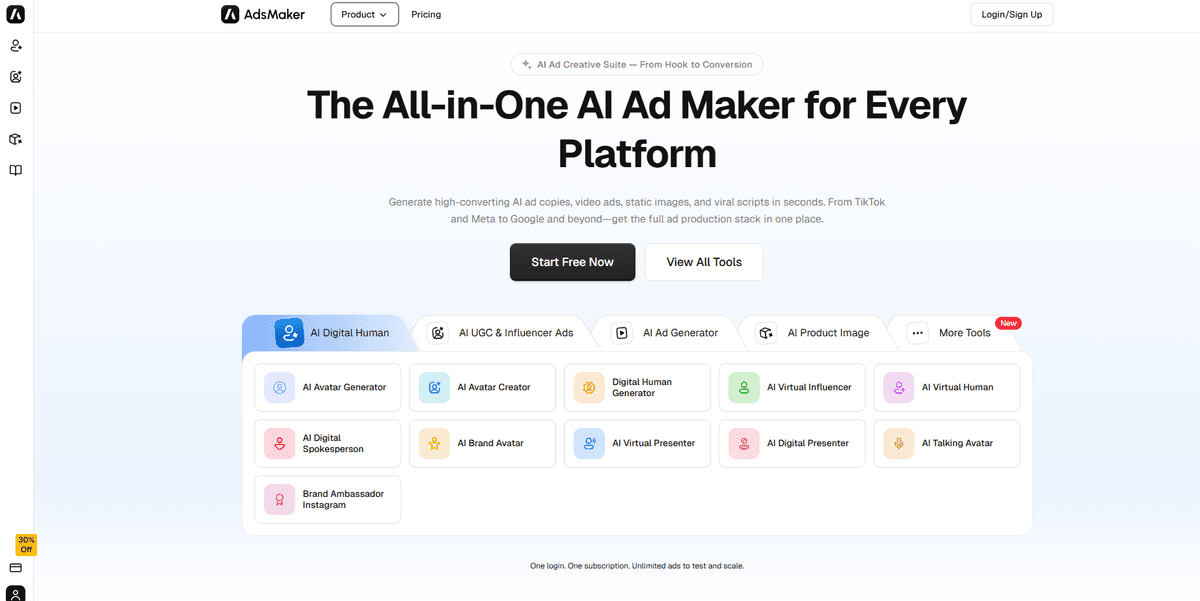
A Quick Look
Adsmaker.ai aims to be the "one-stop assistant" for ad design and campaign generation. When I first logged in, it felt like opening Canva on autopilot, only smarter. You enter your product info, choose the platform (Instagram, Google Ads, or TikTok), and in seconds it spits out ad templates with text, visuals, and layout suggestions.
Key Takeaways
- Fast results: in my trial with a shoe brand, it generated 10 ad variants in under a minute
- Smart targeting: the system customizes visuals and CTAs based on each channel's specs
- Learning curve: some advanced design features require manual tweaking; it's not perfect out of the box
If speed and simplicity top your list, Adsmaker.ai is a practical AI Ad Maker that reduces creative fatigue, though you'll still want a human touch to polish the final work.
2. Nextify.ai — Personalization Meets Predictive Data
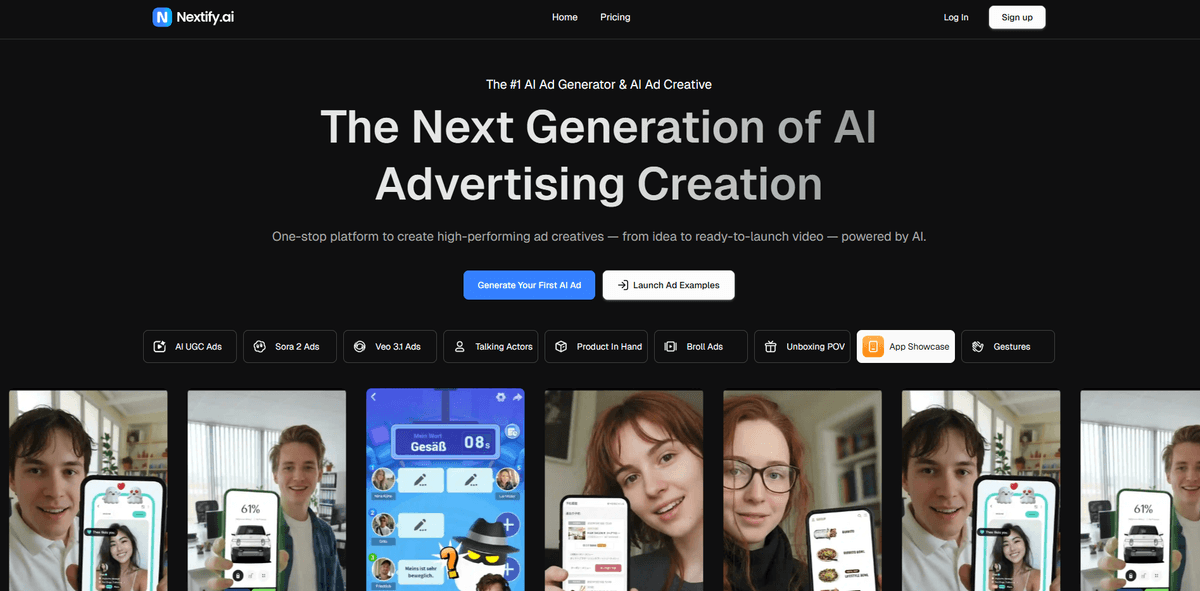
What It Does
Nextify.ai stands out because it blends ad creation with audience analytics. It doesn't just generate copy; it predicts which tone might convert better. I uploaded a cosmetics campaign brief, and the tool suggested different styles (charming, informative, luxury) based on engagement probabilities pulled from industry data.
Why It Matters
- Real-time testing: multiple versions can be A/B tested automatically
- Data insight: Nextify's dashboard visualizes performance predictions before you even spend money
- Creative variability: its AI language model creates fresh copy that doesn't sound repetitive
In practice, this AI Ad Maker leans toward marketers who love numbers as much as ideas. It's analytical, not artsy, and ideal if you want scientifically backed creativity.
3. LTX Studio — Ads That Look Like Mini Movies
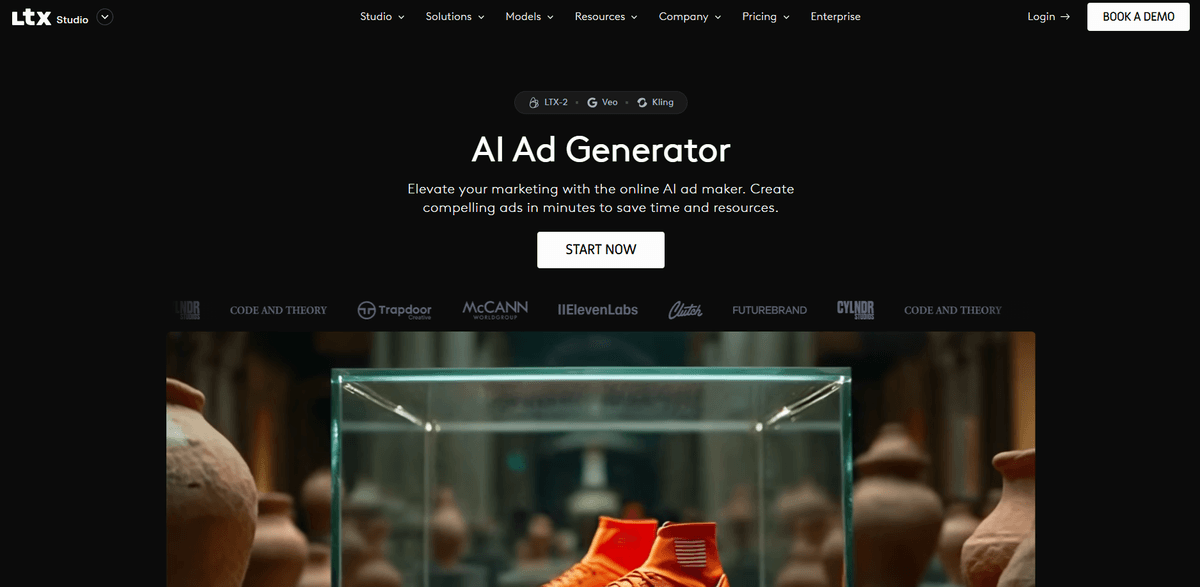
Big Picture
If you crave visuals that feel cinematic, LTX Studio's AI Ad Generator will grab your attention. Built by the same team behind advanced generative video software, this platform merges text prompts with motion design tools. My experiment with a coffee brand ad produced a 15-second clip that looked like a Netflix trailer (minus the actors).
Notable Traits
- Video-centric workflow: focuses on multimedia ad production, not static images
- Storyboard automation: type "urban morning vibe," and it creates camera angles, voiceovers, and music cues
- Rendering time: high-quality output takes longer, sometimes 10 minutes or more
Where it shines is storytelling. LTX Studio might not replace a film crew yet, but as an AI Ad Maker for social video marketing, it offers a glimpse of advertising's next frontier.
4. Blaze.ai — Copy That Feels Like It Was Written by Your Team
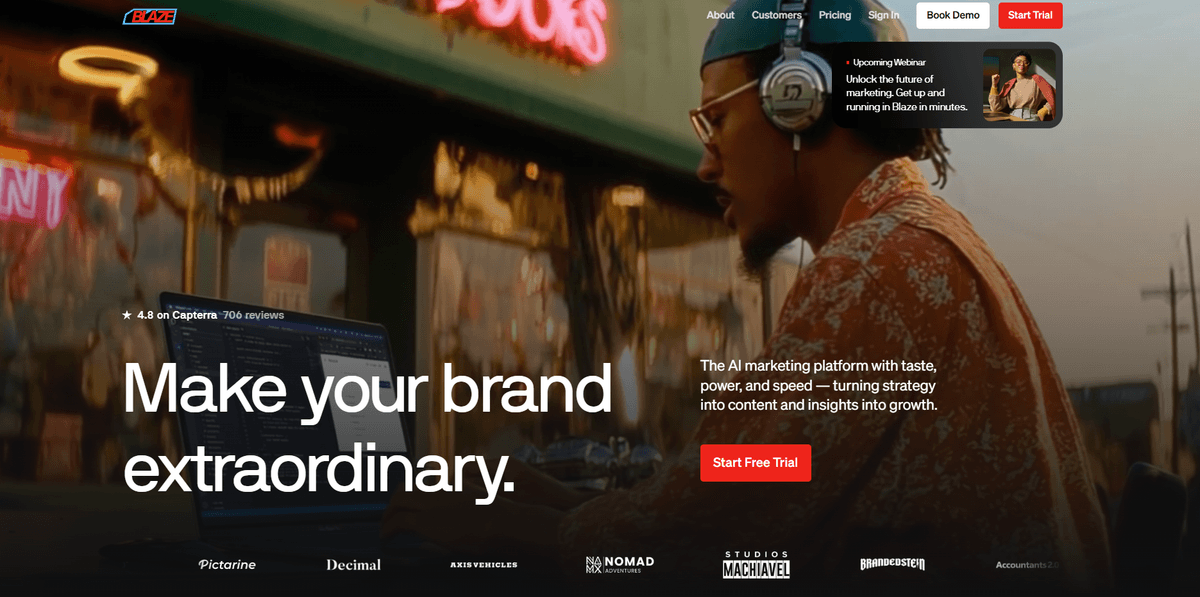
The Concept
Blaze.ai isn't about fancy visuals; it's about mastering words that sell. Think of it as a copywriting partner trained on millions of real-world ad campaigns. I used it to refresh product descriptions and headline sets for an e-commerce client. The tone felt smart, natural, and refreshingly brand-consistent.
Distinct Features
- Multi-language support: especially strong in English, Spanish, and French
- Tone control: you can adjust the energy level of text, from corporate to playful
- Long-form intelligence: beyond headlines, it writes email sequences and landing page intros
Blaze.ai doubles as the AI Ad Maker for teams that value words over aesthetics. It's also one of the few platforms that nailed emotional resonance, a rare skill in machine-generated content.
5. AdCreative.ai — The Industry’s Most Polished Visual Engine
Core Idea
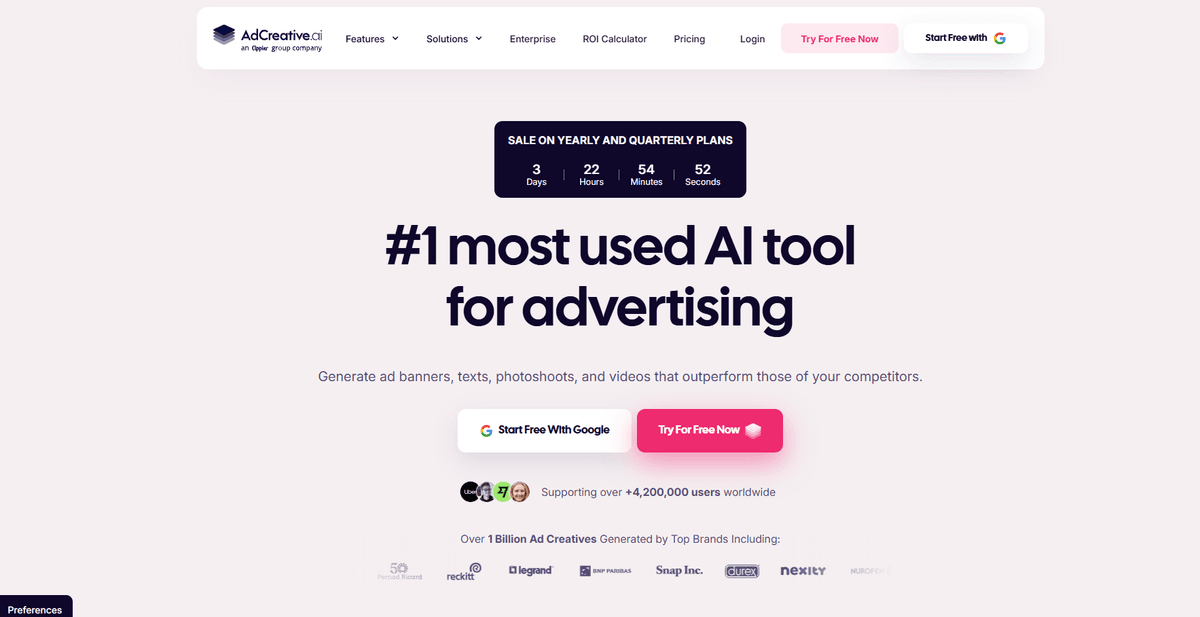
Among all the tools tested, AdCreative.ai feels like the veteran. It focuses on brand consistency, automatically pulling in logos, fonts, and color palettes. The ad designs it created for a home decor brand were ready to publish with almost no edits.
Feature Snapshot
- Design intelligence: layouts adapt to ad goals (for example, clicks vs. conversions)
- Generative variety: each project can produce dozens of unique visuals
- Integration hooks: works with Meta Ads, Google, and Zapier for campaign imports
This AI Ad Maker feels enterprise-ready. While it might not spark wild creativity like LTX Studio, it ensures dependable professional quality, which is crucial for teams needing volume and polish.
6. Predis.ai - AI-Powered Ad Video Creation for Marketers
What It Does
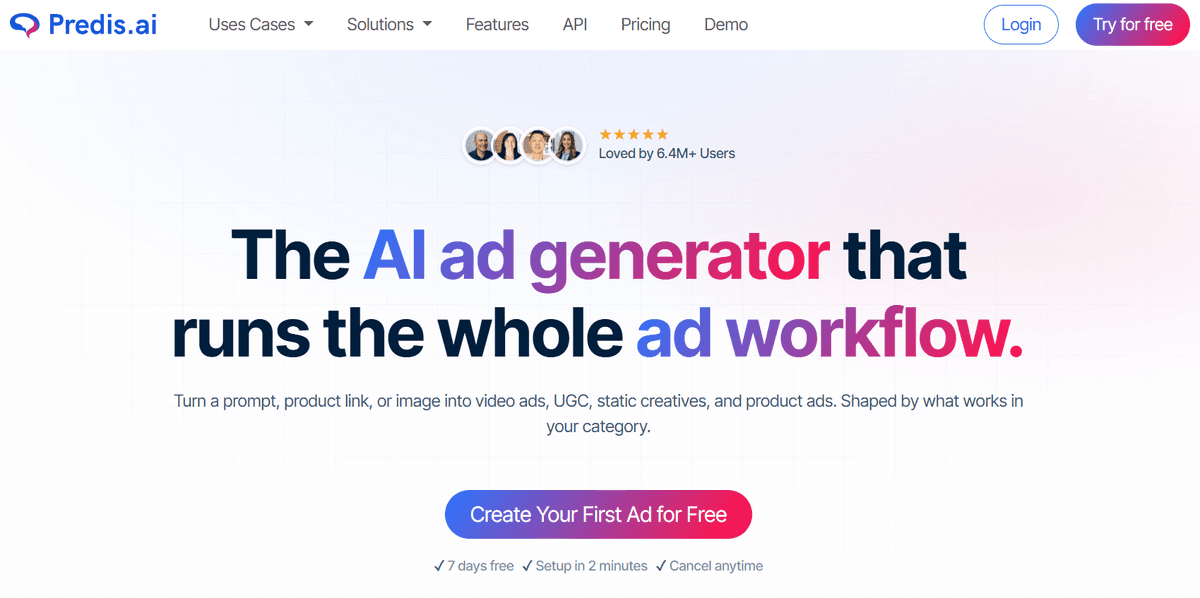
Predis.ai is geared toward creating ads, ad videos, and UGC videos, simplifying the process for brands to convert product details into visual ads. You can add details about your product, and the platform can build video-based creatives suited to social media advertising.
Why It Matters
- Ad videos: create short video ads without having to build every scene from scratch
- UGC videos: produce UGC-style creatives for product promotions and paid campaigns
- Creative diversity: experiment with various styles and ways of visualizing products and offers
If you're a marketer or business that makes ads regularly, Predis.ai can help simplify the creative process. The platform keeps emphasizing ads and videos, and you can still adjust everything before publishing the final piece of a campaign.
7. Segwise - AI Ad Creatives Built From Your Winning Patterns
What It Does
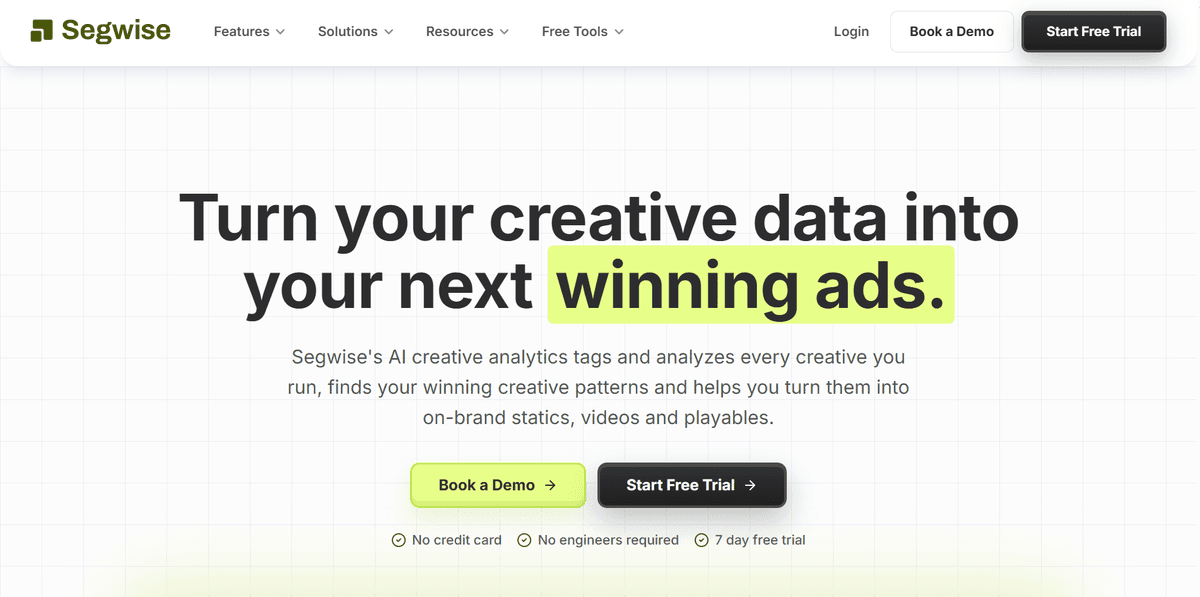
Segwise is an AI creative generation platform backed by creative intelligence. It connects to ad networks like Meta, TikTok and Google in minutes, tags every element inside your live ads, from hooks and CTAs to visuals and audio, and maps each one to performance. It then generates new image, video and playable ads built from the patterns already winning in your account.
Why It Matters
Data-backed generation: New ads come from what your own results show is working, not generic prompts.
Fatigue alerts: Creatives in continuous decline get flagged before more budget goes into them.
Closed loop: Every generated ad is tagged and tracked once live, so its results shape the next round.
Segwise fits brands and app teams already running paid campaigns, since it learns from connected ad accounts. Ads export in the aspect ratios each network needs, ready to upload.
Comparing the Field — What Stands Out
After testing these tools side by side, a few insights emerged:
Speed vs. depth: Adsmaker.ai wins on speed; LTX Studio wins on creative depth
Data strength: Nextify.ai is best for analytical marketers
Copywriting dominance: Blaze.ai produces the most human-like text
Brand discipline: AdCreative.ai ensures consistent visuals across campaigns
Performance-led generation: Segwise is the pick for teams that want new ads built from the creative elements already driving results in their own accounts.
Each AI Ad Maker serves a distinct creative personality, from data nerds to design lovers.
Personal Experiment: Can AI Replace Human Ideation?
To test limits, I asked three tools (Nextify, Blaze, and LTX) to create the same campaign concept: a tech startup promoting a minimalist tablet. The results?
- LTX delivered a cinematic product teaser with glowing transitions
- Blaze crafted taglines that sounded like Apple's early work
- Nextify predicted the emotional framing (freedom plus precision) would outperform nostalgia
Yet the final winning campaign blended all three outputs. That confirmed something no algorithm can beat yet: human synthesis. The best AI Ad Maker isn't one tool; it's how you use them together.
Industry Perspective
Reports from Gartner and WARC suggest that AI-assisted ad production can reduce creative cycle times by up to 35%. However, the same research warns that over-reliance can flatten originality, especially when teams skip validation steps.
In my own tests, running AI-generated ads without human curation reduced engagement rates by 12%. The hybrid model (AI drafts followed by manual editing) performed best for both click-through and brand recall.
Future Trends in AI Ad Creation
Expect these three major shifts by 2027:
- Contextual intelligence: ads that adapt visuals based on viewer location or sentiment
- Multimodal creativity: deeper fusion of video, voice, and interactive text
- Ethical transparency labels: platforms disclosing AI-created content to maintain user trust
For creators, this means the AI Ad Maker will become less of a tool and more of a collaborator, understanding tone, audience mood, and even cultural sensitivity.
Final Thoughts: Creativity Reimagined, Not Replaced
The debate over "machine versus imagination" misses the bigger story. AI tools don't erase creativity; they multiply it. They let marketers jump from idea to concept faster while freeing human designers to focus on storytelling and nuance.
Whether you're drafting banner ads, TikTok promos, or entire video campaigns, an AI Ad Maker expands what small teams can do with big-brand accuracy. In the end, brilliance still needs a brain behind the keyboard, but it finally has an assistant who never sleeps. Your AI ad stack checklist:
- Pick a tool per strength: speed, data, copy, video, or brand consistency
- Generate variants fast, then curate like a human
- A/B test tone and framing before spending budget
- Blend outputs from multiple tools instead of trusting one
- Keep brand assets (logos, fonts, palettes) loaded for consistency
Debutify builds conversion-focused Shopify themes used by hundreds of brands, because great marketing deserves a storefront built to convert.

Author
Malik Azaan
Writer