Shopify Hydrogen vs Liquid Storefronts: How Each Is Used and Where Each Breaks
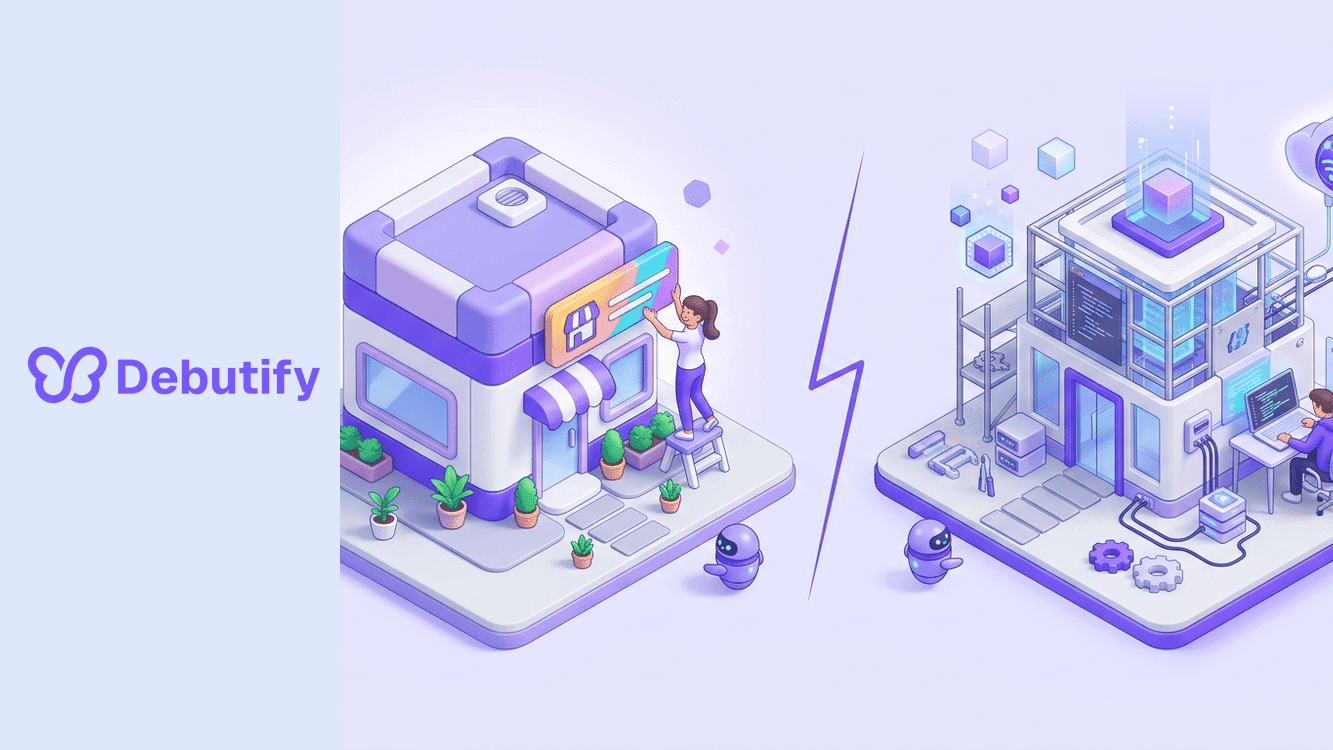
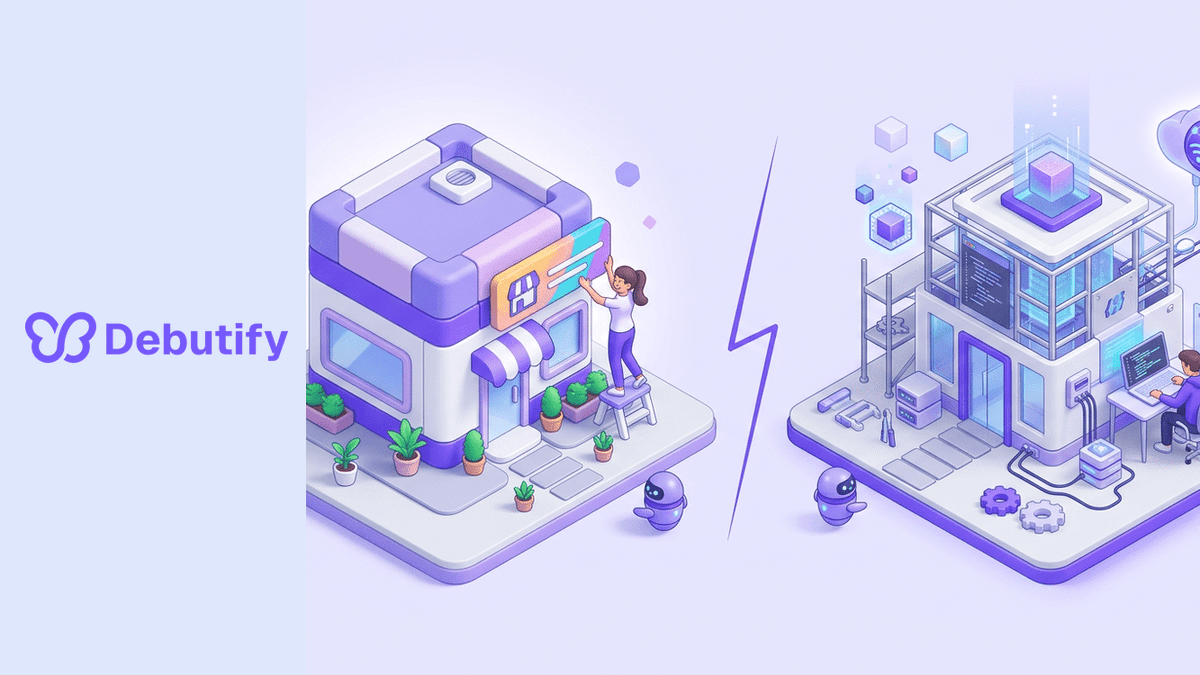
Shopify storefronts are built two ways. Liquid is the native theme system: hosted by Shopify, edited visually by marketers, and supported by nearly the whole app ecosystem, which is why it remains the right default for the large majority of stores. Hydrogen is Shopify's headless framework, rebuilt and now generally available as of the Fall '26 Edition on October 28, with customer accounts, predictive search, built-in agent skills, and one-click Vercel deploys. The limitations are symmetrical and honest: Liquid caps how custom your UX can get, while Hydrogen costs an engineering team, breaks roughly 40% of app integrations, and quietly removes your marketers' ability to edit pages.
The Fall '26 Edition changed this comparison in a specific way: Hydrogen stopped being a preview with asterisks and became a supported production path, while WebMCP gave Liquid and Hydrogen storefronts the same contract for AI agents. If you have been waiting for headless to grow up, this is the release that grew it up. If you have been assuming headless is automatically faster or better, the data below will disappoint you in a useful way. Our Exponential edition guide covers the whole release; this post is the storefront decision inside it.
What actually changed for Hydrogen in Fall '26
The rebuild was previewed on June 17, 2026: commerce logic moved out of React Router into a framework-agnostic core, runnable anywhere that can call fetch (Oxygen, Vercel, Cloudflare Workers, Node, Deno). The preview carried real gaps, and Shopify said so plainly: APIs would change, customer accounts and predictive search were roadmap items, and Oxygen deploys through the CLI were not wired up yet. Fall '26 closed the gaps. Hydrogen is now generally available, works with any framework and runtime, and ships with customer accounts, predictive search, Vue bindings, edge caching, and agent skills that get copied into your project at setup and versioned with the package. Shopify maintains the commerce layer underneath: money formatting, markets, Shop Pay, accounts, and consent-aware analytics. Vercel Shop, an open-source Next.js template built on the Hydrogen SDK, also reached general availability, and deploys to Vercel are one-click. Meanwhile Rollouts (scheduled changes and A/B tests) now extend to headless builds, POS, Google Shopping, and the Shop app, and WebMCP tools landed on every Liquid and Hydrogen storefront and checkout, letting browser agents search products, update carts, and complete checkout with the buyer's approval and the same validation as the checkout page.
How Liquid storefronts are used
A Liquid storefront is a theme: sections and blocks under Online Store 2.0, edited in the theme customizer, now extended by the Canvas whole-store editor and Sidekick applying batched changes after a single approval. Hosting, security, CDN, and platform updates are Shopify's job. Apps plug into the storefront through theme app extensions, so the ecosystem's storefront features work out of the box, and the free Horizon theme family brought block-based architecture to every budget. The daily-life superpower is who can make changes: a marketing manager swaps a hero banner, launches a collection page, or schedules a BFCM theme in Rollouts without a developer ticket. Performance is solid by default, with surveys finding roughly 78% of Shopify domains already serving good TTFB, and the practical ceiling for most stores is set by apps and images rather than the templating language.
How Hydrogen storefronts are used
Hydrogen is a codebase, not a theme. Developers scaffold a project (the CLI checks tooling, installs packages, prompts for a store domain, runs setup, and opens the code), build routes and components in React or another supported framework against the GraphQL Storefront API, and deploy to Oxygen (Shopify's hosting, included on paid plans), Vercel, or another runtime. Checkout stays native Shopify through the cart checkout URL, so payments and Shop Pay do not fork. What you gain is total frontend control: any interaction your product team can specify, your engineers can ship, from 3D configurators to real-time personalization to multi-brand storefronts on one backend. Since June the setup also wires in agent skills, so coding assistants get guided, versioned instructions for storefront work, which is Shopify's clearest signal yet that headless builds are expected to be maintained alongside AI tooling. Plan limits apply: one public headless storefront environment on Basic through Advanced plans, twenty-five on Plus.
Where Liquid hits its limits
- Custom UX complexity. App-like interactions (configurators, room visualizers, deep client-side state, multi-step flows) fight the theme architecture. Liquid can do a lot, but "everything" is not on the list.
- The performance ceiling for genuinely complex experiences. A tuned Liquid theme is fast; a highly interactive experience inside theme constraints will not match a properly engineered headless build.
- Design boundaries. You work within sections, blocks, and the theme's structure; pixel-arbitrary layouts mean custom development inside those constraints.
- Platform tightening. Apps can no longer create or update script tags, which pushes storefront customization toward sanctioned extension points. Good for security, occasionally annoying for legacy hacks.
Where Hydrogen hits its limits
- Cost and team, the real price. The framework and Oxygen hosting are effectively free; the build is not. Published 2026 estimates range from roughly EUR 15,000 to 50,000 for mid-size storefronts, $50,000 to $260,000+ in the US depending on scope, and $120,000 to $300,000 for full new-store builds at agencies, with ongoing engineering ownership of $15,000 to $40,000 a month at the top end. Treat every number as a range, but treat the shape as constant: five to six figures plus a permanent engineering line item.
- The app gap. Theme app extensions do not exist headless, and practitioners estimate around 40% of apps need custom API-level integration. The retrofit can exceed the build.
- Merch velocity. Without a visual editor or a headless CMS bolt-on ($500 to $2,000 a month plus weeks of integration), every content change is a developer deploy. Agencies report this as the single most common headless regret at month twelve.
- Speed is earned, not included. Hydrogen is not faster by default. An optimized build reaches roughly 1.2 to 1.6 second mobile LCP versus 1.8 to 2.2 for a well-built theme, but "optimized" means dedicated developers configuring full-page caching, sub-request caching, and streaming SSR. Untuned, headless can be slower than a good theme.
- Rebuilds beyond the storefront. Support widgets, order lookup, and anything riding on theme code has to be re-implemented against APIs.
Agents leveled a field nobody expected
The interesting Fall '26 footnote for this decision: WebMCP ships on Liquid and Hydrogen storefronts alike, and the Catalog eligibility and knowledge-base controls live at the store level, not the framework level. AI readiness is a data-quality property, not a rendering-architecture property. As one Plus agency put it this week, a theme store with complete, accurate product data is better prepared for AI shopping than a headless build with gaps in it. If "agent-ready" is your reason to consider Hydrogen, the cheaper path is publishing your knowledge-base facts and cleaning your catalog on the theme you already run.
Which one should you use
Stay on Liquid when marketers edit pages weekly, your stack leans on storefront apps, your speed problems trace to apps and images (fixable, see our technical SEO checklist), and your conversion rate is healthy on a well-built theme, which our conversion themes roundup helps you verify. Consider Hydrogen when a specific requirement justifies it: UX a theme genuinely cannot express, multi-brand storefronts on one backend, an existing React team, or a custom agent-facing surface. That "and" matters: requirement plus team plus budget. Missing any leg and the honest answer is a theme, because going headless as a general performance upgrade does not repay its costs at typical store sizes. We build Liquid themes at Debutify, so weigh our bias accordingly, and note that the bias runs both ways: the stores we talk out of headless are the same stores we would rather keep as happy theme customers than lose to a rebuild they will regret.
Frequently asked questions
Is Shopify Hydrogen free?
The framework is free and open source, and Oxygen hosting is included on paid Shopify plans. What costs money is the custom storefront: five to six figures to build in most published estimates, plus ongoing React engineering and, usually, a headless CMS for marketers.
Will my Shopify apps work on Hydrogen?
Many will not out of the box. Apps that hook into Liquid through theme app extensions need API-level rebuilds headless; practitioners estimate roughly 40% of a typical stack needs custom integration. Audit your app list before deciding, including support and tracking tools.
Is Hydrogen faster than a Liquid theme?
Not by default. Optimized Hydrogen builds measure around 1.2 to 1.6 second mobile LCP versus 1.8 to 2.2 for well-built themes, but the optimization is manual caching and SSR work. A neglected Hydrogen store loses to a tuned theme.
Can marketers edit a Hydrogen storefront?
Only if you build or buy the editing layer. Without a visual editor or headless CMS integration, content changes are developer deployments, which is the most commonly reported regret after a year headless.
What did the Fall '26 Edition add to Hydrogen?
General availability of the rebuilt framework: customer accounts, predictive search, Vue bindings, edge caching, built-in agent skills, one-click Vercel deploys, the GA Vercel Shop Next.js template, Rollouts support for headless builds, and WebMCP agent tooling shared with Liquid storefronts.
Boring storefronts win, unless yours cannot be
The gap between Liquid and Hydrogen narrowed this week in the only way that matters: headless grew up, gaining accounts, search, agent skills, and real deployment options, while Liquid gained the same agent contract through WebMCP plus editors like Canvas that keep closing the flexibility gap. What did not change is the arithmetic. Hydrogen buys you a frontend with no ceiling, and bills you a team, an app-rebuild project, and your marketers' autonomy. Liquid buys you speed to market, ecosystem fluency, and edits without tickets, and bills you only when your product genuinely outgrows a theme. Decide on that arithmetic, not on the word "headless" in a conference talk, and whichever you pick, ship the storefront your catalog deserves before Black Friday, not after it.

Author
Debutify
Debutify is the easiest way to launch and scale your eCommerce brand.