Why Workforce Visibility Matters for Growing Online Brands

Have you ever wondered how a fast-growing company begins to crumble from the inside out, just as the sales figures appear to be at their peak?
It usually starts small. Orders pick up, the team grows, and work spreads across time zones and tools, sometimes across several countries at once. The founder, who once knew every order by name, suddenly can't see it all anymore.
The true threat isn't a poor marketing campaign or a weak sales month. It's losing sight of how work is completed on a daily basis until the fractures appear in the numbers, and no one can determine when they began.
That's the gap workforce visibility fills. Done well, it gives leaders a straight read on where time goes and where the business is quietly bleeding out, before it becomes a crisis.
For a brand scaling fast, this isn't some optional dashboard upgrade you get around to eventually. It frequently makes the difference between development that remains intact and growth that crumbles under its own weight.
How to Define Workforce Visibility Before You Scale
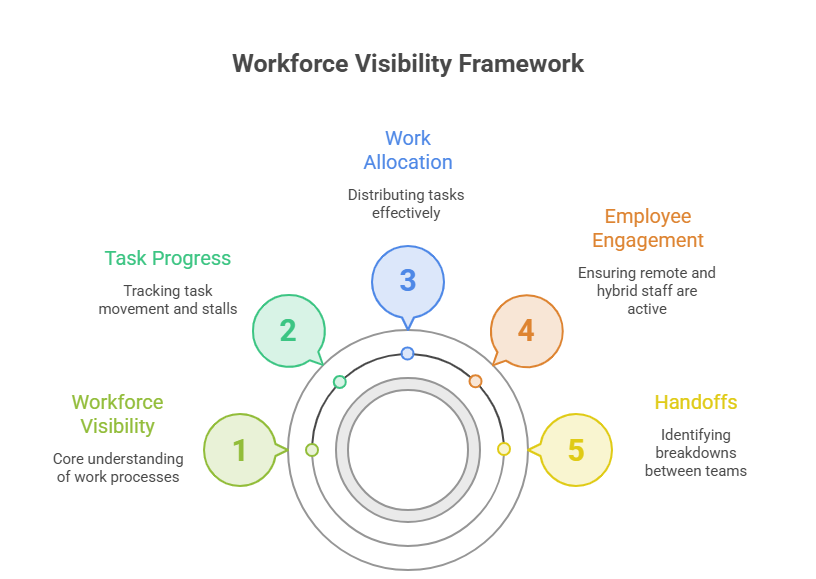
At its core, workforce visibility is the ability to see how work happens across a team without relying on memory or a gut feeling. Before scaling further, it's worth getting specific about what that covers.
4 Questions That Define Real Workforce Visibility
- Which tasks are moving, and which ones have stalled?
- How much of the day goes to real, revenue-driving work versus admin and busywork that just fills the hours?
- Are remote and hybrid staff genuinely engaged, or just logging time?
- Where do handoffs break down between teams?
How Real-Time Data Changes the Picture
Guesswork can only carry a founder so far. Memory ceases to be a dependable system as a team disperses across time zones and tools. This is typically when real-time visibility into employee activities becomes important.
Leaders can observe workload, activities, and bottlenecks as they occur rather than putting together what happened at the end of a week. This enables them to identify a delayed assignment or an overworked employee days before it becomes a missed deadline.
None of this means watching every click someone makes. Good visibility tracks patterns over weeks and months. It depicts the shape of a task, not a play-by-play of the person doing it, and that difference matters more than most founders realize.
5 Warning Signs Your Brand Has a Visibility Gap
Most online brands run on instinct early on. The founders know everyone by name, see every order come through, and catch trouble the moment it shows up. Fine, until the team crosses 10 or 15 people.
Once work spreads across remote hires, freelancers, and a handful of time zones, instinct just isn't enough anymore, no matter how sharp a founder is.
Here's what that gap tends to look like once it's already opened up.
Warning Sign | What It Usually Signals |
| Deadlines slip without warning | No early view into workload or blockers |
| Some employees seem constantly busy, while others are idle | Uneven task distribution, no shared view of capacity |
| Leadership relies on gut feeling for performance reviews | No consistent and fair data behind decisions |
| Support tickets or orders pile up unexpectedly | No visibility into where handoffs are breaking down |
| Remote hires feel disconnected from outcomes | No shared reporting or feedback loop |
Research from Yomly found that around 60% of managers say evaluating remote employees is harder than judging people who work on-site. That struggle to evaluate fairly, more than almost anything else, tends to be the first real clue a brand has outgrown what one founder can track from memory.
How to Protect Margins and Customer Experience With Visibility Data
Physical retail has a kind of visibility built in for free. A store manager can walk the floor. Similarly, a warehouse lead can watch the loading dock and know within seconds if something's off.
Internet companies don't understand that. Screens are used for customer support, content, fulfillment, and marketing, and they are distributed among independent contractors, internal employees, and outside suppliers. Nobody's walking the floor to catch a problem by eye.
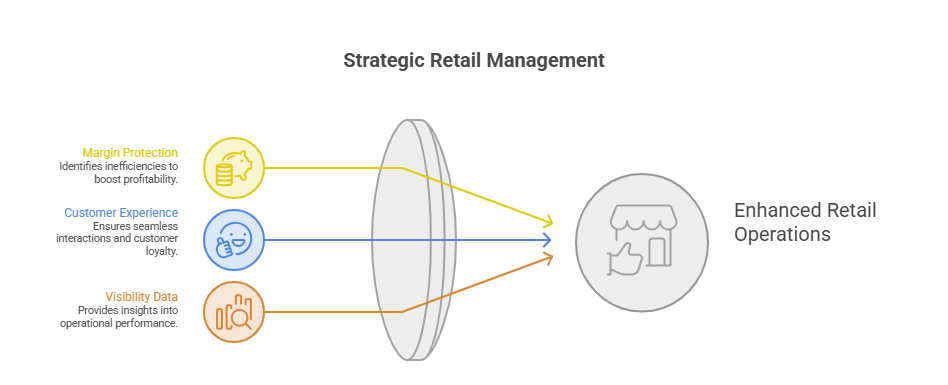
So, this is where visibility data earns its keep. In any case, margins are thin during a growth phase, and executives may address waste before it reduces earnings by understanding where paid hours truly go and which jobs covertly take more time than they should. To gain broader operational context and benchmark staffing needs against market trends, organizations can leverage a jobs data API to analyze real-time hiring activity and workforce demand across millions of records.
That reclaimed time often ends up funding the parts of a business that drive growth, things like writing great blog posts that build organic traffic.
Additionally, visibility data safeguards the consumer experience. It indicates areas where team handoffs are impeded frequently long before a consumer raises an issue.
How to Build Trust With Remote and Hybrid Teams
Visibility isn't only about catching operational problems. It also serves to close the trust gap that often costs growing brands their best people, one resignation at a time.
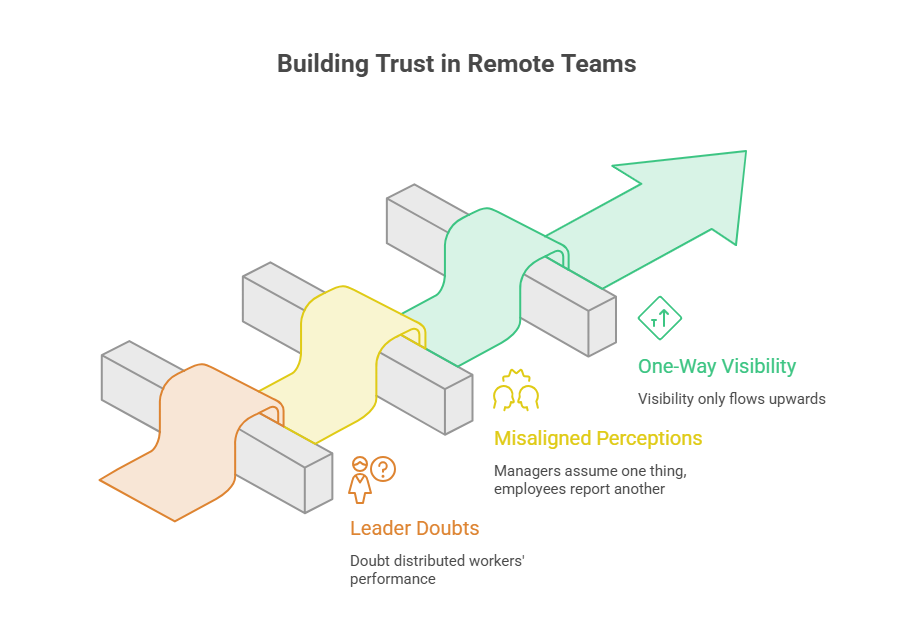
- 85% of leaders doubt distributed workers are performing well, despite research showing stable or increased output
- 70% of remote workers say focused work is easier from home
- 77% of employees accept monitoring when their employer is upfront about it and shares the data back with them
Managers believe one thing about remote work. Employees describe an entirely different experience.
People don't resist visibility itself. They resist visibility that only flows in one direction, from them up to leadership, and never back down.
A randomized control trial run by Stanford economist Nicholas Bloom at Trip.com showed that employees working from home two days a week matched their in-office peers on productivity, were just as likely to get promoted, and were 33% less likely to quit.
Trust, it turns out, shows up directly in who sticks around.
How to Track Visibility Without Micromanaging Your Team
There's a real line between healthy visibility and surveillance dressed up as management. Cross it, and employees who feel watched instead of supported start checking out fast. This defeats the entire point of tracking anything in the first place.
Healthy Visibility Practice | Practice to Avoid |
| Share reporting dashboards with your team, not just leadership | Keeping all tracking data hidden from employees |
| Track patterns and outcomes over time | Monitoring every keystroke or screenshot in real time |
| Use data to support coaching conversations | Using data only to catch mistakes or justify penalties |
| Set clear expectations about what is tracked and why | Rolling out monitoring surreptitiously or without explanation |
| Pair visibility tools with regular check-ins | Letting software replace direct communication |
Brands that treat visibility as something useful to employees, too, not just to leadership watching from above, tend to come out ahead over time.
4 Steps to Build Workforce Visibility This Month
None of this requires ripping up how your business runs. Most brands start small. Here's how to go about it.
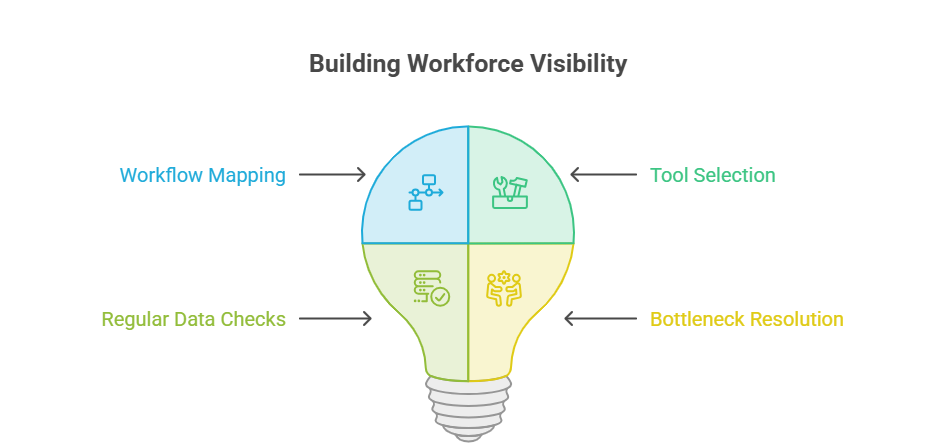
Pick one or two key workflows, like order fulfillment or support response times, and map how they run today, not how you assume they run.
Choose tools that are upfront by design, and tell your team plainly what's being tracked and why before switching anything on.
Check the data on a regular schedule, not only after something's already broken.
Use what the data shows to fix specific bottlenecks, then redirect the time saved toward growth, whether that's a broader marketing and content strategy or the workflow that's been stuck at the bottom of the priority list for months.
Start Managing What You Can Really See
Growth has a way of exposing every crack in how a business runs. The brands that scale well catch those cracks early. The ones that don't find out about them from an angry email in the support inbox, usually at the worst possible time.
Quick recap, if you're skimming:
Define visibility around patterns, not surveillance, before your team outgrows what you can track from memory
Watch for early signs like slipping deadlines and uneven workloads. They show up well before the bigger problems do
Protect margins and the customer experience by tracking where paid hours go
Build trust with remote teams through transparency instead of suspicion
Start with one workflow, be honest about what you're tracking, and act on what the data shows
Start managing what you can measure. Stop letting growth outrun your ability to see it. And once the operational side is under control, put that same visibility to work on the storefront itself, because a smoother back end means nothing if the front end isn't converting.
That's where Debutify comes in to help growing brands turn a well-run operation into a store that sells.

Author
Charu
Charu is an outreach specialist with over 4 years of experience in digital marketing. Her expertise lies in developing and executing outreach campaigns that drive engagement and build brand awareness. When she's not brainstorming outreach ideas, you can find Charu exploring the outdoors or practicing yoga.