Marketing and Content: The Complete Guide for 2026
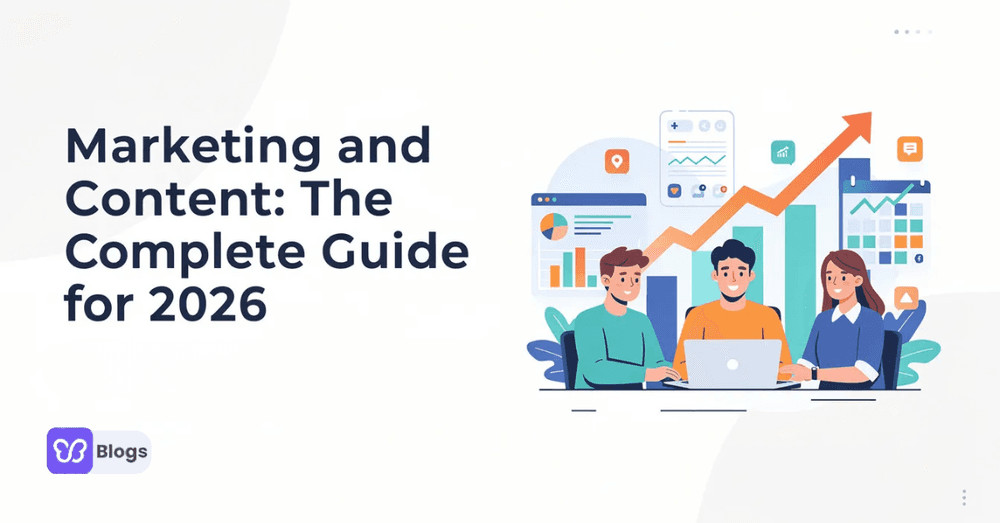
Between 2015 and 2026, content in marketing has transformed from static print ads and banner interruptions into dynamic, always-on digital experiences that engage users across devices and lifecycles. By 2024, 91% of B2B marketers reported using content marketing as a core tactic, and projections for 2026 indicate 70% of brands will increase content and marketing budgets by at least 20%.
Law firms are a strong example of this B2B content shift — consistent content marketing for a law firm, built around practice area questions and client FAQs, builds the kind of compounding organic authority that outperforms paid ads over time and keeps qualified prospects finding the firm before they ever pick up the phone.
This guide focuses on the intersection of marketing and content—how content marketing, content strategy, content operations, and content management work together to drive business growth.
What you will learn:
How to define and differentiate content in marketing from broader marketing strategies
The core elements that make content marketing efforts effective
A 2025 playbook of content formats from blog posts to interactive tools
How to build a content marketing strategy aligned with business objectives
Practical approaches to overcoming common content mar challenges
What Is Content in Marketing?
Content in marketing encompasses every planned piece of text, image, audio, and video created to attract, educate, or convert your target audience. This includes blog posts, TikTok videos, LinkedIn carousels, email sequences, podcasts, and product pages.
The distinction matters: marketing and content refers to the broader discipline where content assets fuel all channels, while content marketing specifically describes the strategy of pulling potential customers in with valuable content rather than pushing interruptive ads.
2026 examples of content and marketing working together:
- Spotify Wrapped: Data-personalized summaries blending emotional storytelling with shareable visuals, boosting retention by 30%
- Notion’s templates gallery: Free customizable resources converting 25% of visitors into active users
- HubSpot’s free tools: Calculators and CRM tools capturing leads while educating on inbound principles
How content in marketing supports the full funnel:
| Funnel Stage | Content Types | Goal |
|---|---|---|
| Awareness | SEO articles, YouTube content, social media posts | Drive organic traffic |
| Consideration | Case studies, webinars, comparison guides | Nurture prospective customers |
| Decision | Product pages, demos, customer testimonials | Convert to sale |
| Retention | Onboarding guides, newsletters, community content | Build brand loyalty |
Content marketing is a long-term strategic methodology that uses valuable, relevant, and consistent content to attract and retain a clearly defined audience, ultimately driving profitable customer actions. Unlike traditional advertising that interrupts, content marketing aims to pull users in with helpful storytelling and utility.
The numbers confirm its importance: 82% of B2B and 76% of B2C firms used content marketing in 2024, with ROI averaging $13-36 per $1 invested depending on channel. Content marketing is a subset of digital marketing but must align with broader content operations and marketing strategies for maximum impact.

3–4 Key Elements of Effective Content Marketing
An effective content marketing program connects four core elements into a single engine:
- Audience insight: Build personas from CRM data, surveys, and social listening to identify pain points and content preferences
- Content creation: Develop high quality content with originality—2,000+ word guides outperform short posts by 4x in backlinks
- Distribution and promotion: Push content across organic search engine optimization (54% of traffic), social media platforms (24%), and paid amplification
- Measurement and optimization: Track key performance indicators beyond vanity metrics to revenue-attributed KPIs
Example campaign: A SaaS brand launching an AI feature creates a blog series (awareness), LinkedIn threads (consideration), and webinars (decision), yielding 40% pipeline uplift through coordinated content marketing initiatives.
Why Marketing Needs Content (and Vice Versa)
Modern marketing and content are inseparable. Paid campaigns require rich creatives, search engine optimization demands optimized digital assets, social media thrives on native formats, and even offline events leverage digital content recaps.
Benefits of content in marketing over pure digital advertising:
- Reduces customer acquisition cost by 62%
- Improves lead quality by 20%
- Builds brand reputation and authority signals
- Drives long-term website traffic vs. ad decay
Specific ROI benchmarks:
- Blog content delivers $4.84 ROI per $1 spent
- Email marketing yields $36-42 per $1
- Consistent content mar execution lifts organic traffic 6x after 12 months
B2B brands thrive on white papers nurturing 27% more leads to close. B2C leverages user-generated content and short-form video content for 28% higher engagement, with DTC brands pairing TikTok challenges with email flows to spike repeat purchases 35%.
The Business Impact of Content and Marketing Alignment
Aligning your marketing team and content teams around shared KPIs—pipeline, MQLs, revenue multiplies outcomes from content marketing programs.
Case example: A DTC skincare brand paired a 2023 TikTok series with email marketing flows, driving 2x customer lifetime value through integrated funnels that compounded to 3x revenue over 18 months.
Evergreen content compounds: articles or videos published in 2022-2023 can still contribute 40-50% of 2026 leads through sustained search engine rankings.
Measurable outcomes from alignment:
- Content marketing efforts drive 3x more leads per dollar than outbound
- Marketing funnel velocity improves as content addresses objections early
- Sales team receives warmer leads educated by blog content and case studies
Types of Content Marketing (2026 Playbook)
This section catalogs key content marketing formats used across industries in 2025-2026. No brand needs every format—the goal is to pick the best mix for your target audience, resources, and social media platforms.
Main content families:
- Written (blogs, ebooks, white papers)
- Video (Reels, YouTube, demos)
- Audio (podcasts, audiograms)
- Visual (infographics, data stories)
- Interactive (quizzes, calculators)
- Experiential (AR events, webinars)
Blogs, Articles, and Long-Form Written Content
Blog posts and long form content remain the backbone of content marketing and SEO strategies, especially for B2B and knowledge-driven B2C brands looking to generate leads through organic traffic.
As content discovery increasingly expands beyond traditional search engines, partnering with a top GEO agency such as Skale can help ensure long-form content is optimized for visibility across AI-driven and generative search experiences.
Best practices for 2026:
- Conduct keyword research targeting long-tails like “marketing and content examples” or “content mar strategy”
- Create 2,000+ word guides with original research (boosts shares 20%)
- Implement internal linking (improves rankings 15%)
- Update quarterly to combat ranking decay.
HubSpot’s “Complete Guide to Inbound” from 2020 still generates 10k+ monthly leads into 2026—proving consistent content delivers compounding returns.
Video Content and Short-Form Clips
Video content dominates with 90%+ of marketing teams using it across YouTube, TikTok, Instagram Reels, and LinkedIn. Vertical formats have surged 5x since 2020, making short-form video essential for engaging audiences on mobile devices.
Practical video suggestions:
- Product demos for solution aware prospects
- Founder stories on LinkedIn (yield 6x views)
- Customer stories and testimonials (convert 4x better)
- Repurpose one long video into 50+ clips for ongoing content and marketing pipelines

Social Media Content and Community Posts
Social media content in marketing supports awareness and community building across LinkedIn, X, Instagram, TikTok, and niche communities like Reddit and Discord.
Platform-native formats for 2026:
- LinkedIn carousels (3x engagement vs. text posts)
- X threads (2x replies)
- Instagram Reels (24-hour virality window)
Frequency guidance:
- Daily short-form social media posts for visibility
- Weekly deeper pieces for authority
- Use analytics to refine topics (15-30% CTR variance by topic)
Social media marketing amplifies other assets—blogs, reports, webinars—rather than existing in isolation.
Podcasts and Audio Content
Podcasts build deep, niche relationships with ideal customers who listen while commuting, exercising, or multitasking. 2024 listenership grew 12% to 464M US monthly listeners.
B2B podcast uses:
- Industry interviews driving 22% demo requests
- Expert panels addressing complex ideas
- Founder diaries building brand visibility
Repurposing workflow: Each episode generates show notes (boosting SEO 25%), quote graphics, and audio content snippets for social media presence.
Realistic cadence: weekly 30-45 minute episodes with manageable editing skills requirements.
Infographics, Visuals, and Data Stories
Infographics turn complex topics—like 2024 marketing benchmarks—into digestible, shareable digital content that earns 3x more shares than text alone.
Visual content ideas:
- Comparison charts for tools (communicating complex ideas simply)
- Step-by-step marketing funnel diagrams
- Timelines showing content mar ROI over 12 months
- Benchmark data like “2024 marketing CAC averages $205”
Keep visuals mobile-friendly and slice them into multiple single-image social media posts.
Email Marketing and Newsletters
Email marketing remains a critical owned channel where content strategy converges with nurturing—delivering $36 ROI per $1 spent in 2025-2026.
Best practices:
- Segmentation lifts open rates 14%
- Welcome series convert 10x cold traffic
- Value-heavy newsletters (e.g., “weekly content marketing tips”)
Lead magnets that work:
- Content marketing checklists
- Templates and mini-courses
- ROI calculators
Structure your sequences:
| Sequence Type | Purpose | Timing |
|---|---|---|
| Welcome series | Onboard and educate | Days 1-7 |
| Nurture flows | Build trust, address objections | Weeks 2-8 |
| Promotional campaigns | Drive conversions | As needed |
White Papers, Ebooks, and Research Reports
Long-form gated assets serve as cornerstone content for B2B brands seeking lead generation and thought leadership positioning as an industry leader.
Examples:
- “2025 State of Content and Marketing” annual report
- Industry benchmark studies with original data
- Comprehensive guides on business goals achievement
These assets feed many other content mar formats: blog summaries, LinkedIn posts, conference talks, and media pitches. Ensure strong design and clear follow-up sequences after download.
Interactive Content: Quizzes, Calculators, and Tools
Interactive content in marketing—ROI calculators, assessments, style quizzes—increases engagement 2-5x and captures zero-party data for personalized content delivery.
Example tools:
- “Content marketing maturity quiz” for savvy content marketers
- “Blog ROI calculator” showing business growth potential
- “Campaign budget planner” for content marketing budgets planning
Placement strategies:
- Landing pages for lead capture
- Blog sidebars to convert readers
- Post-purchase flows to upsell
Interactive tools connect marketing and sales team by surfacing high-intent leads with specific needs.
How Does Content Marketing Work in Practice?
Content marketing follows the customer journey: awareness → consideration → decision → retention. Each stage requires different content types working together in a flywheel effect.
2026 scenario: A mid-market SaaS company drives 50k monthly visitors through SEO blog posts. Blog content converts to email subscribers via lead magnets. Email sequences nurture with case studies and webinars. Product demos close deals, while onboarding content reduces churn 15%.
The flywheel effect: High-performing older content keeps attracting traffic that feeds email lists and remarketing audiences indefinitely.
Mapping Content to the Marketing Funnel
Awareness stage:
- SEO blog posts targeting broad keywords like “what is content marketing”
- Short-form video content for discovery
- Top-of-funnel social media campaigns
Consideration stage:
- Comparison guides addressing “solution aware” prospects
- Webinars with valuable insights
- Case studies proving 4x ROI on nurtured leads (27% conversion lift)
Decision stage:
- Product demos and pricing breakdowns
- Customer testimonials (reduce sales process cycles 20-30%)
- FAQ pages and product pages tailored to bottom-funnel needs
Retention and advocacy:
- Onboarding educational content
- Knowledge-base articles
- Community events keeping customers engaged with personalized content
Building a Content and Marketing Strategy
A content marketing strategy in 2026 must connect audience research, brand positioning, content mix, channels, and measurement in one documented plan. Teams with documented strategies succeed at 73% vs. 13% without.

Define Your Ideal Audience and Personas
Build 2-3 buyer personas using realistic roles, behavior data, and 2025-2026 industry research.
Persona documentation template:
- Role: B2B marketing director, 35-50 years old
- Goals: Scale content marketing without burnout
- Pain points: Limited resources, proving ROI
- Preferred channels: LinkedIn, email (70% preference)
- Content formats: Video content, long form content guides
- Decision criteria: Proven ROI, ease of implementation
Use analytics, CRM data, social listening, and customer interviews to refine audience insights for your target audience.
Set Goals, KPIs, and Budget for Content Mar
Translate business objectives into marketing and content goals.
Example translation:
- Business goal: +30% qualified pipeline in 2026
- Content goal: 50k organic sessions, specific MQL targets
Common KPIs for content in marketing:
| Metric Type | KPIs |
|---|---|
| Traffic | Organic sessions, ranking keywords |
| Engagement | Time on page, social shares |
| Conversion | Email subscribers, demo requests, MQLs |
| Revenue | Pipeline influenced, customer retention |
Realistic timelines:
- 3-6 months for early SEO impact
- 6-12 months for strong compounding gains
Allocate 10-20% of marketing spend for content production, paid distribution, and tools.
Choose Your Content Mix and Channels
Pick 2-3 primary channels instead of trying to be everywhere, especially for small teams.
B2B effective mix: Blog + LinkedIn + email marketing (80% efficacy) Gen Z targeting: TikTok + Instagram Reels + YouTube channel
Map each content type to specific sales funnel stages and key performance indicators for clarity. Match channel choices to audience behavior based on persona research.
Create a Content Calendar and Workflow
Build a 3-6 month content calendar with topics, formats, owners, and due dates using tools like Asana, Notion, or Trello.
Production efficiency tips:
- Batch recording (multiple videos in one day)
- Sprint writing (several blog drafts per week)
- Regular series (“Monday marketing and content tips,” “Friday founder’s note”)
Clear role definitions:
| Role | Responsibility |
|---|---|
| Writer | First drafts, research |
| Editor | Quality control, editing skills application |
| Designer | Visuals, infographics |
| Publisher | Scheduling, distribution |
Realistic cadence: 1-2 high-quality blog posts per week beats 7 thin ones.
Plan Distribution, Promotion, and Repurposing
Creation is only half the work. Plan how each content asset will be distributed to drive traffic across organic, paid, and partner channels.
Repurposing flow example: Long-form guide → multiple social media posts → newsletter feature → webinar → YouTube video (yields 4x assets from one piece)
Promotion checklist:
- Publish to CMS
- Share across social media platforms
- Feature in next email newsletter
- Boost top performers with paid social (LinkedIn, Meta)
- Add to relevant YouTube channel playlist
- Update internal links from related blog content
Use paid social to amplify top-performing content mar pieces and retarget engaged audiences.
Content Management vs Content Marketing
Content management encompasses the processes and systems used to store, organize, and deliver content—CMS, DAM, and workflows. Content marketing focuses on planning and distributing valuable content for business growth.
Key distinction:
| Function | Focus | Outcome |
|---|---|---|
| Content management | Storage, organization, delivery | Operational efficiency |
| Content marketing | Planning, creation, distribution | Audience growth, revenue |
Effective marketing and content operations require both. Without content management, campaigns become chaotic. Without content marketing, digital assets stay unused.
Content Platforms: CMS, CMP, DAM, and Beyond
Platform types:
- CMS (Content Management System): WordPress, headless CMSs for publishing SEO blogs and product pages
- CMP (Content Marketing Platform): Calendar management, briefs, workflow for content marketers
- DAM (Digital Asset Management): Storing brand-safe images, video content, audio content
In 2026, many teams use integrated platforms or connected stacks reducing tool fragmentation by 40%. Focus on capabilities that support marketing and content collaboration rather than specific vendor names.
Personalization, AI, and the Future of Content Marketing
Personalization in 2025-2026 uses behavior, segments, and firmographics to tailor content in marketing across email, websites, and ads—delivering 80% relevance lift in personalized content.
AI’s impact on content mar workflows:
- Handles 50% of ideation and drafts
- Enables personalization at scale
- Accelerates performance analysis
- Saves 30% time on outlines and meta descriptions
Risks and safeguards:
- Preserve brand voice (AI risks generic output), especially as AI tools become more integrated into modern marketing workflows.
- Validate all data and claims
- Human oversight on strategy and quality control
Future trends to watch:
- Interactive content (quizzes up 300%)
- Privacy-friendly personalization (cookieless)
- Creator-led brands and user-generated content
Using AI Responsibly in Marketing and Content Production
Use AI for research, outlines, variants, and conversion rate optimization while keeping humans in charge of strategy, tone, and final quality.
AI-assisted workflow examples:
- Summarizing webinars into blog articles
- Generating SEO meta descriptions
- Creating content ideas from customer feedback
- Drafting social media content variations
Guidelines:
- Fact-check every AI output
- Check for bias and generic phrasing
- Maintain distinct brand voice so AI doesn’t dilute your value proposition
- Never publish without human review (risks like AI hallucinations demand 100% oversight)
Overcoming Common Content Marketing Challenges
Most businesses face recurring obstacles: generating engaging content ideas, maintaining consistency, getting stakeholder buy-in, and measuring ROI. Many teams in 2023-2026 struggle with limited resources and content mar fatigue in saturated niches.
Creating Engaging, Differentiated Content
Ground content in unique expertise, original research, or strong points of view so it stands out from generic AI-generated posts.
Differentiation techniques:
- Personal stories and behind-the-scenes narratives
- Real customer examples and customer stories
- “Build in public” updates showing authentic progress
- Data-driven perspectives competitors lack
Unlike ad space that anyone can buy, relevant content built on genuine expertise creates defensible brand reputation.
Maintaining Consistency and Quality Over Time
A realistic publishing cadence matters more than volume. Quality content published consistently beats sporadic bursts.
Sustainability practices:
- 1-2 high-quality blog posts per week (not 7 thin ones)
- Editorial guidelines and checklists for multiple creators
- Quarterly content audits to update, consolidate, or prune under performers
- Documented workflows preventing knowledge loss
70% bounce rates on thin content damage brand reputation—prioritize quality over quantity.
Measuring ROI and Proving Impact
Connect content metrics (traffic, engagement) to business metrics (leads, pipeline, revenue) using analytics and attribution models.
Tracking setup:
- UTM parameters on all distributing valuable content links
- Conversion events in analytics
- CRM fields linking content touchpoints to closed deals
Simple tracking example: A “what is content marketing” guide drives 5,000 monthly visitors → 200 email subscribers → 40 demo requests → 8 customers annually, demonstrating clear revenue attribution to organic traffic.
Set up tracking from day one so 2026 reports clearly show content’s role in achieving business goals.
Conclusion: Making Marketing and Content Work Together
Content in marketing is no longer optional it’s the engine powering discovery, trust, and revenue in 2026. Every channel depends on engaging content: paid campaigns need creatives, SEO needs optimized blog posts, and social media presence requires consistent social media content.
Success requires three foundations: a documented content marketing strategy, strong content management systems, and continuous optimization based on key performance indicators. The compounding nature of evergreen content means investments made today deliver returns for years.
Start with a focused 90-day content mar experiment: define one persona, pick 2-3 formats, create a calendar, and measure what matters. Marketing and content excellence compounds over time—the best day to start was yesterday, but the second-best day is today.

Author
Debutify
Debutify is the easiest way to launch and scale your eCommerce brand.