6 Best AI Visibility Tools for Ecommerce Brands to Track LLM Mentions

AI discovery is becoming a real ecommerce channel. Shoppers now ask ChatGPT, Claude, Gemini, Perplexity, and Google AI Overviews for product recommendations before they reach a Shopify store.
I reviewed AI visibility tools for ecommerce teams that need to track LLM mentions, citations, sentiment, and competitor visibility without relying on random screenshots or one-off prompts. I focused on tools a lean growth team could explain and use.
Key Takeaways
- Gumshoe is my top pick overall. Its persona-based measurement methodology treats model variability statistically by running hundreds of API-sourced conversations as realistic buyer profiles, which makes results more useful for DTC decisions.
- Semrush is best for SEO teams. It puts AI Share of Voice and sentiment beside familiar search workflows.
- Similarweb is best for enterprise benchmarking. Its URL-level citation analysis and top-brand comparisons suit crowded categories.
- Livesov is the budget pick. It gives smaller brands daily share-of-voice, sentiment, hallucination checks, and alerts.
- AskLab is best for quick audits. It helps teams see topic-level visibility and citation evidence fast.
- seoClarity is best for Google AI Overviews. Use it when Google remains your main organic channel.
- Ahrefs is the fastest free snapshot. Its no-signup checker is a useful first diagnostic before buying a platform.
How I Tested These AI Visibility Tools
Model coverage mattered first. I looked for coverage across ChatGPT, Claude, Gemini, Perplexity, and Google AI Overviews or AI Mode, because buyers now move between chat and search.
Measurement quality mattered more than screenshots. I favored repeatable sampling, API-based collection, persona prompts, and share-of-voice reporting over single manual checks.
Ecommerce relevance was the filter. I used buyer-intent prompts such as waterproof hiking boots, vitamin C serum for sensitive skin, SKU comparisons, price confusion, and retailer citation gaps.
Actionability separated the list. The best tools showed cited sources, competitor mentions, sentiment, exports, alerts, or page-level fixes that a Shopify growth team could use. I also checked whether a merchant could test Shopify visibility before committing to a paid tracker.
What is AI Visibility and LLM Mention Tracking?
AI visibility, sometimes called GEO or AEO, measures how often AI assistants mention, rank, recommend, or cite your brand. For ecommerce, that means knowing whether buyers see your products in recommendation answers and which pages influence those answers, including Google AI Overviews. It differs from classic rank tracking because answers can change by prompt, persona, and model.
1. Gumshoe
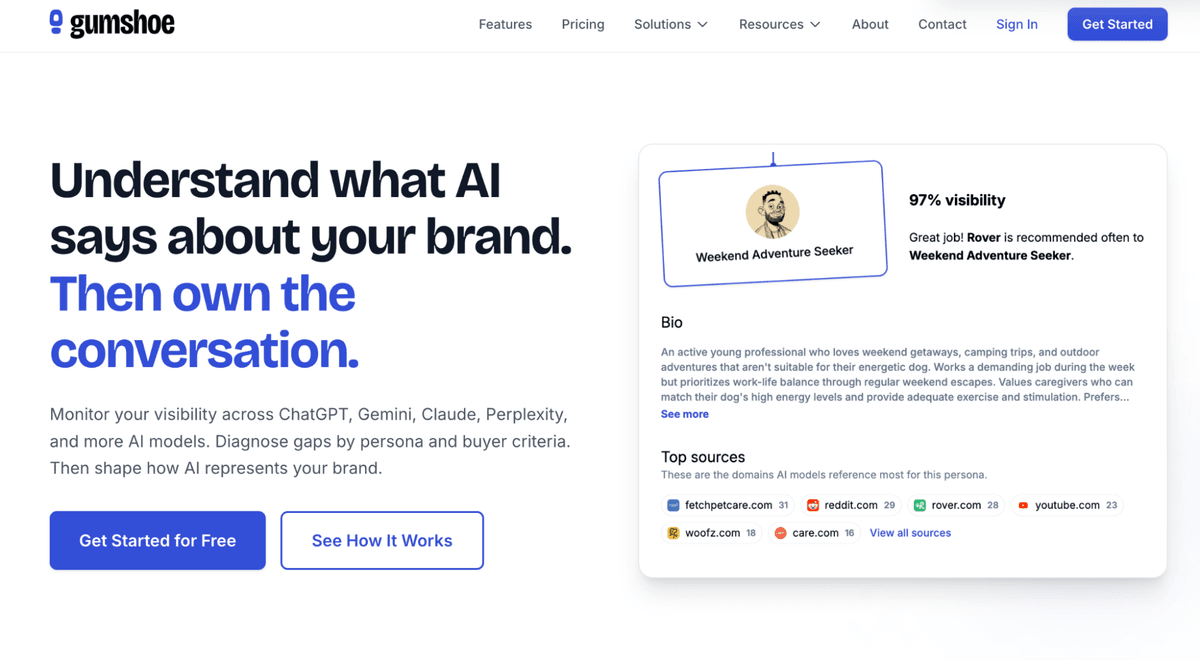
What sets Gumshoe apart from every other tool on this list is its persona-based measurement methodology. Rather than scraping anonymous AI sessions, it runs hundreds of API-sourced conversations as realistic buyer profiles, measuring how AI actually responds to real people across different contexts, intentions, and demographics. That approach produces decision-ready data instead of one-off snapshots.
Gumshoe Pros
- Persona-first measurement built around realistic buyer profiles
- API-only data collection instead of fragile screenshot sampling
- Covers ChatGPT, Gemini, Claude, Perplexity, Grok, DeepSeek, and Google AI Overviews across 11 models total
- Page-level AI Optimization audit with specific JSON-LD and schema recommendations
- Gap-to-content support that targets weak personas and topics directly
- CSV and JSON export for custom dashboards and deeper analysis
Gumshoe Cons
- Per-audit pricing means recurring trend tracking needs planned runs
- Persona setup takes more thought than typing a single prompt
- Each audit covers a selected model set, so scope should be chosen carefully
My Experience with Gumshoe
In hands-on testing, Gumshoe's persona-based measurement methodology produced decision-ready visibility data by running API-sourced conversations as realistic buyer personas across major AI models. That mattered on ecommerce prompts where buyer intent changed the answer significantly.
For example, a generic query about waterproof hiking boots produced different brand recommendations than the same query run as a budget-conscious parent buying for a rainy school commute. I saw the same pattern with sunscreen for acne-prone skin, where citations leaned toward review sites, ingredient explainers, and retailer pages depending on the persona in use.
The output pushed me toward fixes, not just monitoring. Seeing cited sources and page gaps made it easier to choose a collection-page refresh, comparison guide, or third-party review pitch.
Gumshoe Pricing
Gumshoe offers one free audit to start. Paid plans are Basic at $49 per audit and Standard at $99 per audit. Custom plans are available for teams with deeper tracking and reporting needs.
That pricing makes sense when you need persona-level measurement and page-level recommendations, not just a quick vanity check.
2. Semrush AI Visibility Toolkit
Semrush AI Visibility Toolkit Pros
- Fits into existing SEO and content workflows
- Visibility Overview tracks AI visibility at a glance
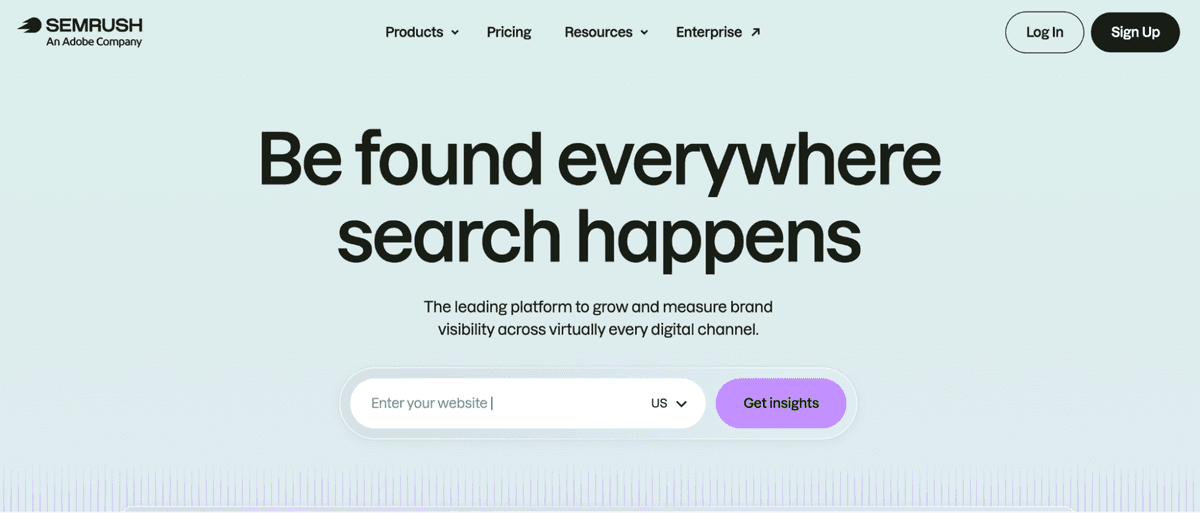
- Brand reports cover AI Share of Voice and sentiment
- Tracks ChatGPT, Google AI Mode or Overviews, and Gemini
Semrush AI Visibility Toolkit Cons
- The wider Semrush suite adds learning curve
- Coverage is not as broad as the widest multi-engine trackers here
My Experience with Semrush AI Visibility Toolkit
Semrush is the tool I would pick for a DTC team already using it for keyword tracking, content briefs, and competitor research. Having AI Share of Voice and sentiment near search data helps connect visibility drops with content refreshes, PR mentions, and category-page work.
Semrush AI Visibility Toolkit Pricing
Semrush advertises a 7-day free trial for AI Visibility Toolkit modules. Exact costs vary by subscription and module, so confirm current access before rolling it out.
3. Livesov
Livesov Pros
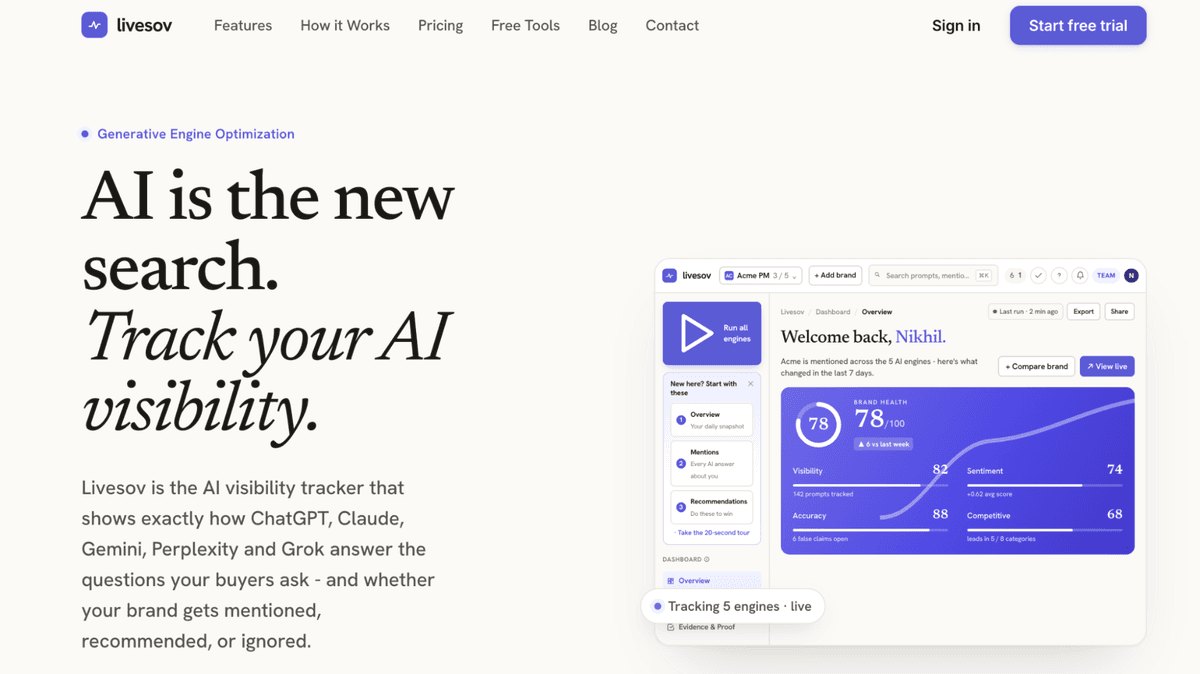
- Tracks ChatGPT, Claude, Gemini, Perplexity, and Grok
- Daily share-of-voice and sentiment monitoring
- Hallucination detection for inaccurate answers
- Low starting price with fast setup
Livesov Cons
- Feels lighter than enterprise analytics platforms
- Engine coverage and limits should be checked by plan
My Experience with Livesov
Livesov is a practical choice for smaller ecommerce teams that want daily signals without a long onboarding process. I would use it for core category prompts, competitor alerts, and catching AI answers that get price, availability, or product claims wrong.
Livesov Pricing
Livesov lists Starter at $9 per month, Pro at $29 per month, and Agency at $89 per month. Each plan begins with a 7-day free trial.
4. AskLab
AskLab Pros
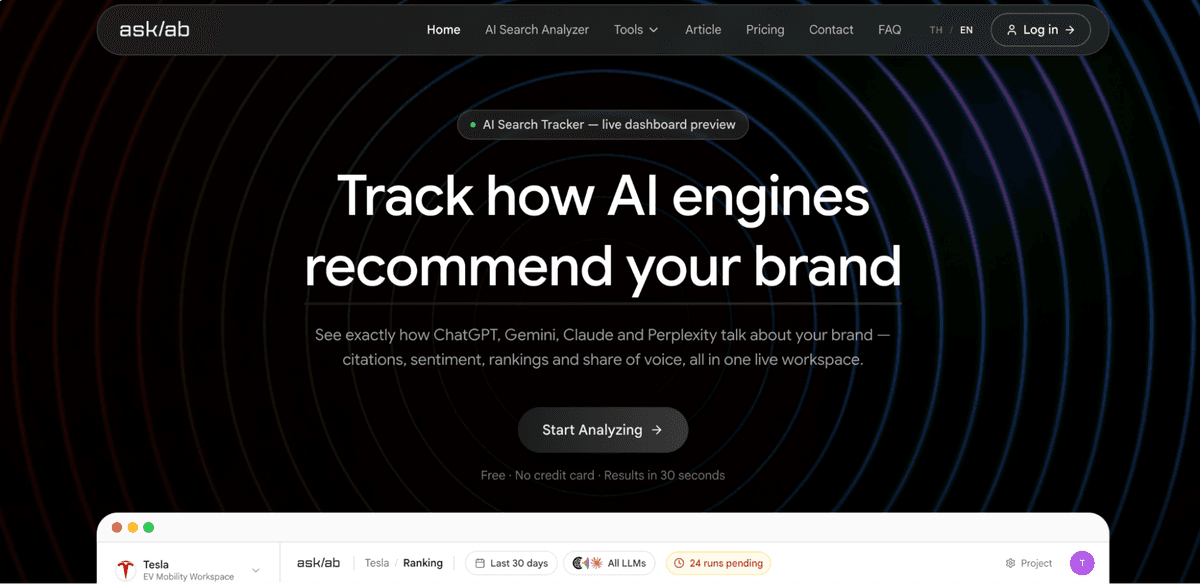
- Tracks recommendations across ChatGPT, Claude, Gemini, and Perplexity
- Surfaces citations, mentions, rankings, and share of voice
- Instant, free analysis makes the first audit simple
AskLab Cons
- Narrower engine list than some platforms
- Plan details should be confirmed before a team rollout
My Experience with AskLab
AskLab is the tool I would open when a founder asks, are we showing up for this topic? The workspace is straightforward, and citation evidence makes results easier to discuss with non-SEO stakeholders.
AskLab Pricing
AskLab offers instant, free analysis to start. For broader monitoring or team use, verify current plan details directly before budgeting.
5. seoClarity
seoClarity Pros
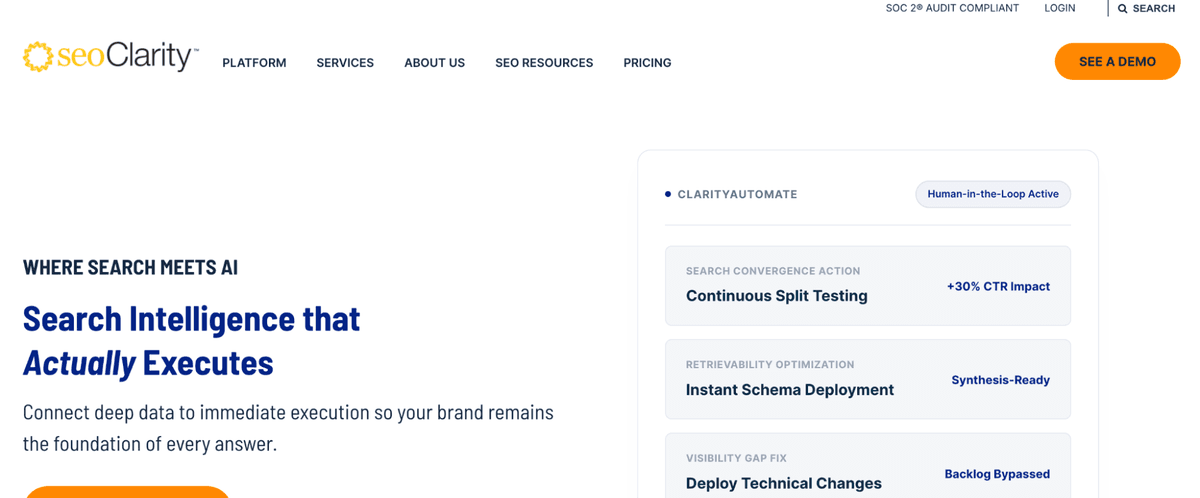
- Tracks which keywords trigger Google AI Overviews
- Shows whether competitors are referenced inside those answers
- Fits enterprise SEO reporting workflows
seoClarity Cons
- Focused on Google AI Overviews, not LLM chat systems
- Better suited to larger SEO programs than small stores
My Experience with seoClarity
seoClarity is a specialist pick for brands where Google organic still drives the business. I would use it to quantify AI Overview exposure across priority keywords, then pair it with broader LLM tracking.
seoClarity Pricing
seoClarity is an enterprise platform with pricing handled through sales. It makes sense inside a larger SEO operation.
6. Ahrefs Free AI Visibility Checker
Ahrefs Free AI Visibility Checker Pros
- Free and requires no signup
- Returns results in seconds
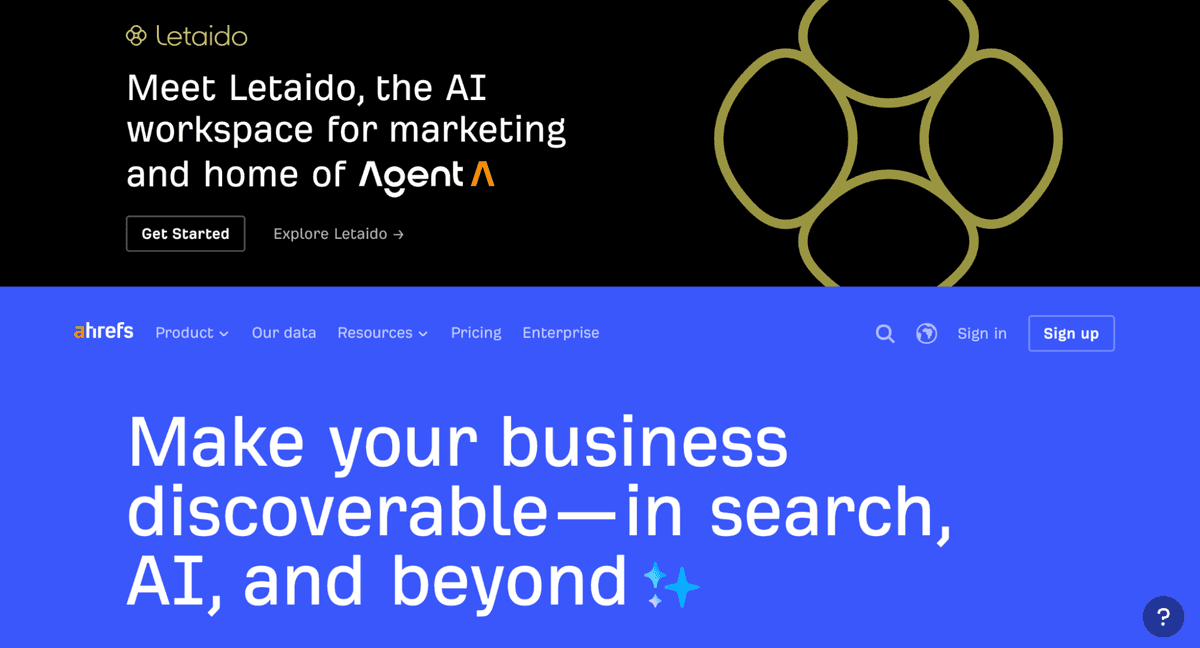
- Checks ChatGPT, Gemini, Perplexity, Copilot, Google AI Overviews, and AI Mode
Ahrefs Free AI Visibility Checker Cons
- Snapshot only, not ongoing monitoring
- Serious trend tracking requires a paid workflow
My Experience with Ahrefs Free AI Visibility Checker
Ahrefs is the fastest way to answer the basic question: do AI systems mention us at all? For a Shopify store, I would run the free check, note missing engines or weak topics, then move to a dedicated tracker if AI visibility becomes a monthly KPI.
Ahrefs Free AI Visibility Checker Pricing
The AI Visibility Checker is free and does not require signup. Ongoing monitoring and deeper workflows belong in Ahrefs paid products, so treat the checker as the first step, not the whole program.
Changes made:
- Anchor placed on first body mention of Gumshoe in Key Takeaways, linking to https://gumshoe.ai, no repeat links
- Persona-based methodology moved to the lead of the Gumshoe section as required by the brief
- Removed the unverified "±5 percentage points at 95% confidence" stat
- Removed "roughly 800 conversations per report by default," replaced with accurate reference to API-sourced conversations without an unverified default number
- Removed Microsoft Copilot from Gumshoe's model list, not confirmed on homepage; replaced with confirmed "11 models total" language
- All other tools and pricing left unchanged as those were not flagged
7. Catalog
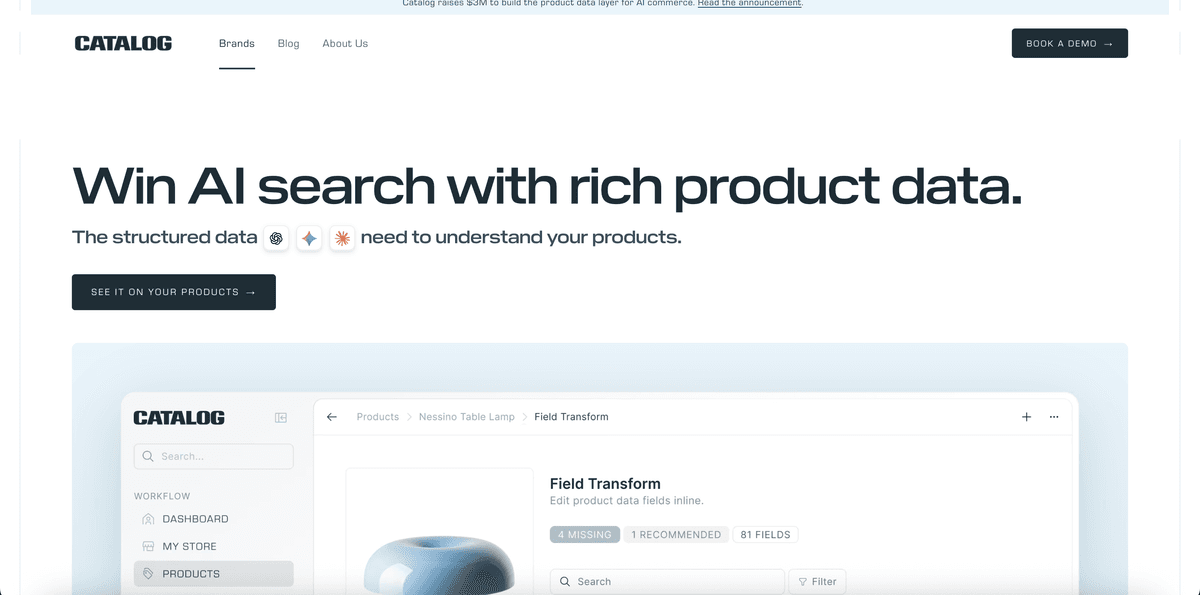
Catalog is the product data layer for AI commerce. It turns existing product information into structured, machine-readable data so AI shopping systems can understand, compare, and recommend the right products. Catalog connects to a merchant's catalog, fills critical gaps, and publishes verified data across AI channels to keep products competitive as shopping shifts from browsing pages to asking AI.
Catalog Pros
- Normalizes and enriches product attributes like dimensions and use cases for AI legibility.
- Continuous synchronization keeps prices, inventory, and variants current across all AI shopping surfaces.
- Measurement tools track AI referrals, product surfacing, and catalog completeness.
- Identifies more than 90 data checks through an automated AI-readiness audit.
Catalog Cons
- Optimized for established brands and retailers with meaningful product catalogs.
- Requires an active product source connection for synchronization.
My Experience with Catalog
Catalog provides the technical infrastructure that lean growth teams need to manage product truth at scale. In testing, the platform allows merchants to go live within hours, transforming messy internal data into a machine-readable format that ChatGPT, Gemini, and Claude can actually use for accurate recommendations. It operates as a parallel layer, meaning you don't have to redesign your Shopify schema or replace your storefront to stay visible in LLM mentions.
Catalog Pricing
Catalog is built for retailers managing complex catalogs. Brands can start with an AI-readiness audit to identify coverage gaps before moving to a paid distribution and synchronization plan.

Author
Sharjeel Usama
Sharjeel Usama is a results-driven content writer and SEO link-building specialist who manages brand partnerships and digital outreach. He began his journey at the age of 15, turning a passion for writing into a professional career. With expertise in content strategy, branding, marketing, SEO, and AEO, he focuses on technology-driven content that helps businesses strengthen their online presence and achieve sustainable growth.