Adobe Commerce: Enterprise-Grade Ecommerce Platform Built on Magento
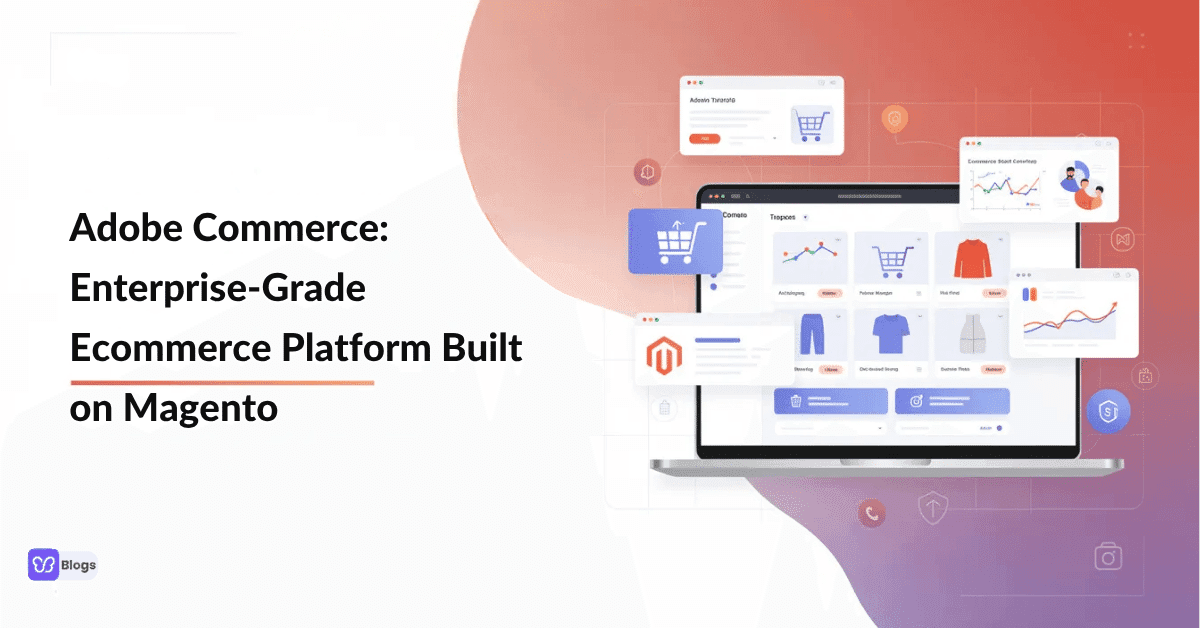
Adobe Commerce is one of the most powerful ecommerce platforms available for mid-market and enterprise brands in 2026. Whether you are scaling globally, running hybrid B2B and B2C operations, or integrating complex backend systems, this guide breaks down what you need to know before investing.
Quick Overview of Adobe Commerce for Ecommerce Enterprise
Adobe Commerce (formerly Adobe Magento) is Adobe's enterprise commerce platform, purpose-built for brands that have outgrown simpler storefronts. Adobe acquired Magento on August 21, 2018, and has since positioned the platform within its Adobe Commerce Cloud ecosystem alongside Magento Open Source.
Today, over 200,000 websites are built on Adobe Commerce, and leading B2B and B2C brands rely on it for complex catalogs, multi-region operations, and deep integrations.
- Best for: enterprise and mid-market brands with complex requirements
- Deployment: cloud-managed or on-premises
- Pricing: quote-based, scaling with gross sales revenue
- Overkill for: simple single-store businesses on a lean budget
- Requires: real development expertise in-house or via an agency
- Rewards: customization depth that hosted platforms cannot match
Adobe Commerce vs Magento Open Source (and Magento vs Shopify)
Adobe Commerce and Magento Open Source share the same core codebase. The difference is what Adobe layers on top: enterprise-grade security features, advanced B2B capabilities, content staging, business intelligence dashboards, and managed cloud hosting. This makes Adobe Commerce a full commerce solution for brands with complex requirements, while Magento Open Source remains a solid free foundation for simpler stores.
When it comes to magento vs shopify, the distinction is straightforward. Shopify is user-friendly for new entrepreneurs and fast to launch, while Adobe Commerce serves multi-language support and integration-heavy workflows.
A fast-growing DTC brand might launch on Shopify, but once it needs multi-region pricing, custom checkout flows, or B2B portals, Adobe Commerce becomes the stronger long-term fit.
What Adobe Commerce Is Used For (Real-World Use Cases)
Adobe Commerce is used to create secure, scalable ecommerce sites that serve B2C, B2B, and hybrid models from a single backend. It allows managing multiple brands and global sites from a centralized platform, supporting multiple languages, currencies, and tax rules.
Concrete use cases include:
Global multi-brand catalogs: separate storefronts for different regions or product lines, all managed from one admin
Dealer and distributor networks with tiered pricing and company accounts
Complex pricing: contract pricing, volume discounts, and negotiated quotes
Omnichannel orchestration: web, mobile, marketplaces, BOPIS, and real-time shipping status tracking
Subscription and reorder businesses built on native recurring-payment support via extensions or custom modules
Brands use the platform to manage inventory, process diverse payment methods, run promotions, and orchestrate shopping journeys across every touchpoint.
Adobe Commerce integrates with ERPs, PIMs, and CRMs, turning every ecommerce store into the central hub of an online business. Industries actively using it span fashion, automotive parts, beauty, electronics, and industrial manufacturing.
When product information also needs to move between ecommerce platforms and distributor channels, product data syndication across ecommerce channels can help keep approved product details consistent across each destination.
Key Features of Adobe Commerce
Think of this as a high-level feature tour rather than exhaustive documentation. Adobe Commerce offers a rich feature set that separates it from lighter ecommerce platforms.
Catalog and commerce engine
- Supports simple, configurable, bundled, grouped, and virtual products across multiple sites
- Native catalog service handles tens or hundreds of thousands of SKUs
- Advanced pricing rules including customer segmentation, tiered pricing, and scheduled updates
B2B suite
- Company accounts with roles, requisition lists, and negotiated quotes
- Credit terms, purchase orders, and quick-order forms
Marketing and merchandising
- Content staging and preview for campaigns
- Targeted promotions, related-product rules, and visual merchandising
Ecosystem and extensibility
Adobe Commerce supports over 3,255 extensions via the Adobe Commerce marketplace for various functionalities, plus App Builder for custom integrations that survive core upgrades.
Intelligence
- Live search with typeahead and searchandising
- Product recommendations powered by Adobe Sensei
- Business intelligence dashboards for commerce analytics
Adobe Commerce Cloud and Hosting Options
Adobe Commerce Cloud is the managed cloud deployment of Adobe Commerce, bundled with hosting, security tooling, and DevOps infrastructure. It simplifies operations dramatically and helps teams deliver fast page loads under heavy traffic.
Key operational benefits include:
- Automated backups, CI/CD pipelines, and staging environments
- 24/7 monitoring, managed security patches, and compliance tooling
- Integrated CDN and performance optimization for global storefronts
- On-premises remains an option for brands with strict hosting requirements, at the cost of owning all operations
Adobe Commerce Pricing, Licensing, and Total Cost
Adobe Commerce is not free and requires a custom pricing plan. Pricing is quote-based and scales primarily with average gross sales revenue and business size. Realistic ranges based on public benchmarks:
- Annual online revenue of $1M to $5M: approximately $32,000 per year license
- $5M to $25M: approximately $50,000 to $75,000 per year
- $25M and above: approximately $125,000 per year
- Maximum reported range: up to $190,000 per year
- Cloud deployments typically cost 1.8 to 2.2 times the on-premises license to cover managed infrastructure and SLAs
Main cost components beyond the license:
- Implementation and agency fees, often exceeding the first-year license
- Hosting and infrastructure for on-premises deployments
- Extensions and custom module development
- An in-house or retained development team
- Ongoing maintenance, patches, and version upgrades
Working with an Adobe Commerce Development Agency
Setting up Adobe Commerce can be complex for non-developers. Most enterprises partner with a specialized Adobe Commerce development agency rather than building everything in-house. The platform's depth demands expertise in solution architecture, integration strategy, and performance optimization.
What a strong partner should provide:
- Discovery, requirements gathering, and solution architecture
- UX design and storefront theming
- Integration development for ERPs, PIMs, and payment systems
- Performance optimization and launch support
- Training, documentation, and ongoing managed services
Design, UX, and Branding (Including the Adobe Commerce Logo)
Even the most powerful backend means nothing if the storefront delivers poor shopping experiences. In 2026, customer experience expectations are sky-high: mobile-first layouts, sub-second load times, accessible interfaces, and exceptional commerce experiences that drive conversions.
Practical UX priorities:
- Streamlined checkout flows with guest checkout and B2B options
- Faceted search powered by live search for fast product discovery
- Mobile-first design with Core Web Vitals budgets enforced in QA
- Brand-led storytelling pages built with Page Builder
- Accessibility compliance for interfaces and content
B2B and B2C Commerce Solutions in One Platform
Adobe Commerce features robust B2B functionality alongside its full B2C capabilities, making it ideal for hybrid business models. Both commerce models run from a single backend.
B2C strengths
- Promotions engine with catalog and cart rules to drive customer engagement
- Wishlists, gift cards, store credit, and loyalty integrations
- Content-rich storytelling pages for brand-led merchandising
B2B strengths
- Company accounts, roles, and approval workflows
- Quotes, negotiated pricing, and credit lines
- Requisition lists and quick ordering for repeat buyers
- Hybrid storefronts where B2B and B2C coexist under one admin
Adobe Commerce in the Wider Adobe Products Ecosystem
Part of Adobe Commerce's power comes from its position within the broader Adobe ecosystem. Adobe Commerce integrates deeply with the Adobe Experience Cloud, and merchants can progressively add tools as their needs evolve.
Key integrations:
- Experience Manager (AEM): powers content-led shopping experiences, with asset management and CMS-driven storefronts
- Adobe Analytics: commerce-aware reporting across the journey
- Marketo Engage: lifecycle marketing automation
- Adobe Target: personalization and experimentation at scale
- Adobe Sensei: AI features like product recommendations and live search
Is Adobe Commerce Right for You? Alternatives and Decision Factors
Adobe Commerce is suitable for businesses needing deep customization, multi-region operations, or complex B2B and B2C workflows. It is not the right fit for every online business.
Key decision criteria:
- Catalog and pricing complexity: custom catalogs, contracts, tiered pricing
- Number of regions, brands, or languages you must support
- Integration depth with ERPs, PIMs, and marketing tools
- Internal technical maturity and DevOps capability
- Budget for license plus implementation and ongoing development
How the main alternatives compare:
- Shopify Plus: best for simpler B2C, fast launch, and lower overhead
- BigCommerce: mid-market B2C with over 170 themes for customization
- WooCommerce: budget-friendly free plugin for WordPress websites
- Salesforce Commerce Cloud: enterprise B2C with great post-purchase support
- OpenCart: smaller operations that need to manage multiple stores from a single dashboard
Next Steps: Planning an Adobe Commerce Implementation
Moving from research to action requires a structured approach. Here is a high-level roadmap:
- Discovery and requirements: define catalog complexity, B2B vs B2C needs, number of sites, integration requirements, and content strategy
- Platform selection: confirm whether Adobe Commerce or Magento Open Source fits your budget and feature needs
- Partner selection: vet agencies for enterprise experience, certifications, and long-term support models
- Build and integrate: architecture first, then storefront, then ERP, PIM, and payment integrations
- Launch and iterate: performance testing, staged rollout, and continuous UX improvements
Plan for regular security patches, version upgrades, and average order value optimization. Adobe Commerce Cloud is a future-proof commerce investment when it matches your complexity, and a costly mistake when it does not.
Before you commit, run this checklist:
- Confirm your revenue band and get a real license quote
- Total the cost: license, implementation, extensions, and team
- Match platform complexity against your catalog and integration needs
- Vet at least three certified development partners
- Benchmark against Shopify Plus and BigCommerce before signing
Debutify is a Shopify theme maker. We build high-converting themes and store tools trusted by hundreds of brands, so merchants can launch faster and sell more.

Author
Debutify
Debutify is the easiest way to launch and scale your eCommerce brand.