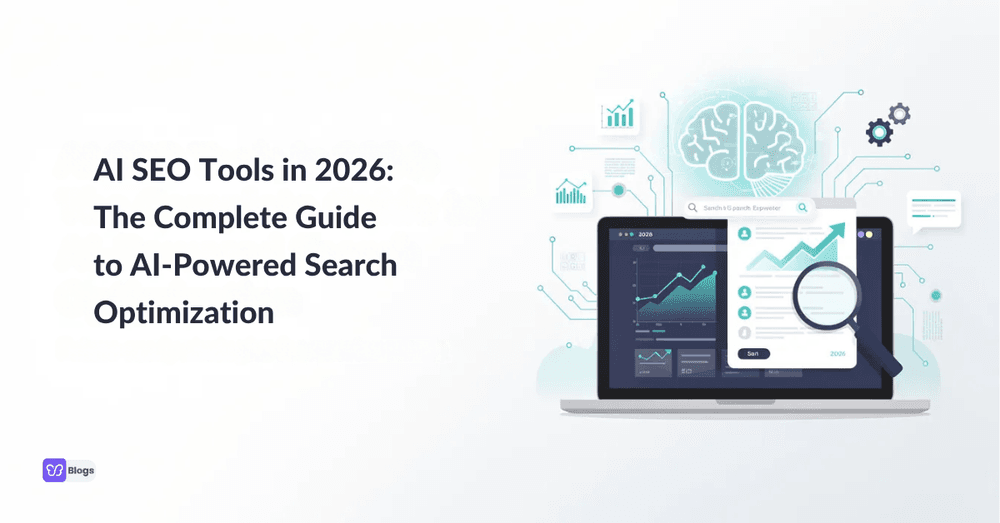
AI SEO Tools in 2026: The Complete Guide to AI‑Powered Search Optimization
Introduction to AI SEO Tools
In 2026, the search landscape splits into two distinct channels: the traditional ten blue links and a growing layer of AI-generated answers served by Google AI Overviews, ChatGPT and Perplexity, Gemini, and Microsoft Copilot. Modern search experiences may summarize information or cite websites directly, bypassing the click-through entirely. AI SEO tools are built for this reality. They combine large language models, natural language processing, and machine learning over SERP, clickstream, and user behavior data to help marketers appear in both channels at once.
Classic plugins and keyword checkers still have a role, but they were designed for a world where ranking meant placing in positions one through ten. AI-powered SEO tools go further: they track whether your content is cited inside AI answers, measure brand sentiment across AI platforms, and automate research, auditing, and content structuring at a speed manual workflows cannot match. If you run an SEO campaign in 2026 without understanding how ai seo software and ai seo optimization tools work, you are optimizing for half the search ecosystem.
A few milestones explain the urgency. Google expanded AI Overviews globally by mid-2025 and upgraded them to the Gemini 3 model in January 2026. Google AI Mode now allows conversational follow-ups inside Overviews. Semrush launched its AI Visibility Toolkit in 2025 to track brand presence inside LLM-driven results. Research published in 2026 found that AI Overviews activate on roughly 13.7% of all queries and 64.7% of question-form queries, and about 30% of sources cited by those Overviews do not appear in the traditional first-page results. The gap between ranking and being cited is real, measurable, and growing.
This guide covers the full spectrum: from premium all-in-one ai seo platforms like Semrush One and SE Ranking to free ai seo tools for titles, meta descriptions, and basic audits. It walks through generative engine optimization (also called GEO), content editors, ai search visibility tracking, technical automation, link building, and how to build a practical stack for your team. Whether you are a solo blogger or lead an agency, the sections ahead give you a buying framework, workflows, and a checklist for evaluating tools before committing budget.
What Are AI SEO Tools? (Core Definitions)
AI SEO tools are software platforms that use machine learning, NLP, and large language models to automate or enhance seo tasks that traditionally required hours of manual work. Effective AI SEO tools use machine learning and natural language processing to process SERP data, log files, and user behavior signals, then recommend actions across keyword research, content optimization, technical audits, and brand visibility tracking. AI tools analyze search engine patterns and user intent much faster than manual workflows, compressing research that once took a full afternoon into a few minutes.
These seo ai tools ingest data from Google Search Console, GA4, SERP scraping, and clickstream partners to model what content ranks in blue links and what content gets cited in ai search results. They output recommendations for headings, entities, internal linking, and semantic gaps. AI-powered SEO tools help improve content quality by identifying gaps and enhancing structure, so your pages cover the topics that AI answer engines pull from when composing summaries.
A key distinction: generic AI writing apps generate text, but they do not verify whether that text is discoverable by search engines or likely to be cited by LLMs. True ai seo software integrates with Google Search Console, GA4, and platforms like Semrush or Ahrefs to cross-validate recommendations against real traffic and ranking data. Without that integration, you are writing in the dark.
Core categories of ai seo tools in 2026:
- Keyword and topic research: discovering prompts, entities, and intent clusters that AI engines surface.
- On-page content optimization: NLP-driven editors that score your content against top ranking pages and AI-cited sources.
- GEO and ai visibility tracking: dashboards that measure brand citations, share of voice, and sentiment inside AI-generated search results.
- Technical automation and audits: crawl checks, indexing automation, alt-text generation, and bot accessibility analysis.
- Reporting and business intelligence: dashboards combining organic SEO metrics with AI visibility data for stakeholder reporting.
The best ai-powered seo tools in 2026 help you create non-commodity content that meets E-E-A-T standards. LLMs prefer to cite sources that demonstrate expertise and originality. Tools that only produce keyword-stuffed templates tend to underperform once Google's Helpful Content signals and AI citation logic overlap.
AI SEO vs Traditional SEO: What Actually Changed?
Traditional SEO followed a predictable sequence: build a keyword list using a research tool, write content guided by competitor analysis, track positions for blue-link search engine results, and adjust based on clicks and impressions. The researcher pulled data from Ahrefs or a traditional seo toolkit, dropped it into a spreadsheet, and handed it to a writer. AI SEO tools automate tasks that traditionally took hours, from clustering thousands of keywords by search intent to generating outlines with entity coverage maps.
The fundamentals have not disappeared. Crawlability, mobile performance, page speed, relevance, and backlinks remain ranking factors. Google's 2024 and 2025 Helpful Content and Spam updates continue to punish thin or auto-generated content, even when produced by ai seo optimization tools. What changed is the surface area of optimization: your content now needs to satisfy both Google's ranking algorithm and the citation logic of multiple AI engines.
Here is how the old stack and the modern stack compare in practice:
The old SEO stack relied on Ahrefs or Semrush classic for keyword volume, a spreadsheet for content briefs, manual rank tracking for blue links, and periodic site audits with Screaming Frog. The modern AI SEO stack layers on prompt-level research (discovering what users ask ChatGPT and Gemini), ai search visibility tracking across LLMs, content editors that score for AI answer engine coverage, and technical audits that check whether AI bots can access and cite your pages. A platform like Semrush One combines traditional seo and ai visibility in one interface, replacing the patchwork of tools many teams still use.
AI search optimization tools now measure both organic rankings and presence in Google AI Overviews, ChatGPT, Perplexity, and Copilot answers. This dual measurement is the clearest break from the old model. A page can rank fifth in blue links and never appear in an AI Overview; another page might not crack the top ten yet get cited in every AI-generated answer for its topic.
Key differences at a glance:
- Classic keyword lists vs. prompt-driven keyword and topic clusters
- Static rank tracking vs. daily prompt and ai visibility tracking
- Human-written content only vs. AI-assisted and human-validated content
- Focus on blue links alone vs. focus on both blue links and ai answers
- Static audits vs. audits that include AI crawlability, bot accessibility, and entity coverage
When to rely on AI vs. human expertise: AI excels at scale, speed, entity identification, and prompt research. Human review is non-negotiable in YMYL domains (health, legal, finance), when accuracy carries liability, when brand voice requires nuance, and when original reporting or proprietary data forms the backbone of the content.
Key Benefits of AI-Powered SEO Tools in 2026
AI can streamline research and drafting tasks, improving efficiency across content teams of any size. AI SEO tools improve efficiency by automating repetitive analysis, from clustering keywords to flagging cannibalized pages. The practical benefits break down into six categories.
First, speed. AI tools can handle keyword research in minutes. A prompt research report in Semrush or Keyword Insights can surface 20 to 50 prompts tied to a topic in under 30 minutes. AI SEO tools can generate content drafts in minutes, cutting the gap between strategy and first draft.
Second, scale. Agencies that previously refreshed 10 to 15 articles per month can now update 100-plus posts in a single cycle by running content audit tools to find entity gaps, generating update briefs, and applying AI-assisted rewrites.
Third, better intent matching. Ai search optimization tools analyze what users ask LLMs, not just what they type into Google. This surfaces prompts and question patterns that traditional keyword tools miss.
Fourth, brand visibility inside LLMs. AI tools help track brand visibility across AI search engines, including ChatGPT, Gemini, Perplexity, and Copilot. You can measure how often your brand is cited, how it is described, and where sentiment is positive or negative.
Fifth, more accurate content gap analysis. AI visibility tools help restructure content for featured snippets and AI citations by comparing your pages against what AI engines actually pull from. Sources that AI Overviews cite often do not appear in the traditional top ten, so these tools reveal opportunities that rank tracking alone cannot.
Sixth, cheaper experimentation. Testing new content formats, prompt-optimized headings, or AI-friendly structures costs less when you can prototype with free or modular paid tools before scaling.
Example scenario: an agency uses Semrush's AI Visibility Toolkit and a content optimization editor to refresh 150 older blog posts. It adds missing entity mentions, inserts internal links, and re-optimizes headings. Over three months, the brand's AI Visibility Score climbs 30 points and organic traffic for those posts rises 25%. Some ai search optimization tools link ai visibility data directly to GA4 sessions and revenue metrics, turning what used to be vanity KPIs into business outcomes.
Core Features to Look For in AI SEO Software
When evaluating ai seo software, not every tool offers the same depth. Here is a buying checklist of features that separate useful platforms from noise:
- Accurate keyword data and prompt data: the tool should reflect what users enter into AI systems (prompts), not just traditional Google queries. Volume, difficulty, and intent classification for each.
- SERP scraping plus AI answer engine source tracking: visibility into both blue-link top ten and what content LLMs cite. Effective AI tools assist with keyword research and competitor analysis across both layers.
- AI visibility tracking: a dashboard or metric showing brand citations, share of voice, and sentiment inside ai generated answers.
- Integration with Google Search Console and GA4: ability to verify traffic, clicks, impressions, and sessions against tool recommendations. Without this, you are guessing.
- NLP content scoring: the tool should evaluate competitor pages for topical depth and semantic coverage, then quantify what your page is missing.
- Semantic and intent-based keyword clustering: this helps identify contextual meaning and user intent so you build content around topics, not isolated phrases.
- Automated technical and on-page diagnostics: these identify critical site issues at scale, from broken links to missing schema to AI bot access problems. AI tools can quickly spot technical issues that may affect visibility.
- Support for multiple AI models (GPT-4.x, Claude, Gemini): what gets cited in ChatGPT may differ from what Gemini surfaces. Broader model coverage equals broader visibility insights.
- Collaboration and export features: team support, version control, white-label reporting, CSV/XML/PDF exports, and integrations with BI platforms.
- Transparent data sources and update frequency: tools should declare where their prompt and visibility data comes from (clickstream, partner data, public prompts) and how often it refreshes (daily, weekly, monthly). Black-box seo ai tools with stale data waste budget.
On security and governance: cloud-based ai seo optimization tools handle client data, unreleased content, and sometimes PII. Look for SOC2 or ISO certifications, SSO/SAML support, granular permissions, and clear data-retention policies. If you work in regulated industries, ask whether on-prem or private cloud deployments are available.
Free AI SEO Tools vs Paid Platforms: Where to Start?
The landscape of free ai seo tools includes browser extensions for keyword suggestions, freemium content editors with limited word count or credit caps, title and meta description generators, and basic AI search monitoring dashboards with low query limits. These tools let you test concepts and generate ideas without spending anything.
Paid ai-powered seo tools unlock higher prompt tracking limits, more domains, content agents, enterprise reporting, and BI integrations. A platform like Semrush One starts at $199 per month and covers keyword research, rank tracking, site audits, content optimization, and AI visibility in a single interface. SE Ranking pricing starts at $99 per month for basic features and scales from there.
Realistic usage: free tools work well for brainstorming content ideas (title generators, FAQ prompt tools, basic keyword suggestions) and getting meta descriptions or schema markup suggestions. Paid tools become necessary when you operate at scale: refreshing dozens of posts per month, tracking AI visibility across multiple domains, running competitor analysis against AI citations, or generating white-label reports for clients.
Pros of free tools:
- Low barrier; risk-free trial of concepts
- Useful for small sites, personal blogs, or testing a new niche
- Good for one-off tasks like generating a title or checking a target keyword
Cons of free tools:
- Limited data accuracy and freshness
- Fewer prompts, restricted domains, and capped features
- Lack of team features, support, or export options
- Sometimes weaker data sources that under-represent niche topics
A practical if/then guide: if you are a freelancer or run a small blog, begin with free tools and a low-cost tier of one all-in-one platform. Expand when your content volume justifies the cost. If you run an agency, SaaS marketing team, or ecommerce operation at scale, you need at least one paid ai seo tool for visibility tracking, content optimization, and governance. In house seo teams at mid-size companies typically fall in between, starting with one paid platform and adding specialized tools as needs become clear.
Types of AI SEO Tools (Categorized Overview)
AI seo tools in 2026 fall into six broad categories. Each serves a different function in the optimization stack. Here is the taxonomy:
- All-in-one suites: platforms like Semrush One and SE Ranking that bundle keyword research, rank tracking, site audits, content optimization, and ai visibility tracking into a single interface. Scope: full-cycle SEO and AI search visibility. Strengths: unified data, fewer context switches, consistent reporting. Best for: agencies, enterprise in house seo teams, and seo specialists managing multiple domains.
- AI visibility and GEO trackers: tools like Rankscale.ai, Ubersuggest's AI Search Visibility module, KIME, Indexly, Otterly AI, AIclicks, and Wellows. Scope: tracking brand mentions, citations, and sentiment inside ai search engines. Generative engine optimization tracks brand visibility across ai answer engines, and these tools make that measurable. Best for: brands wanting to understand and grow visibility in ai generated search results.
- Content optimization editors: Surfer SEO, Clearscope, Frase, MarketMuse, NEURONwriter, SEOwind. Scope: NLP-driven editing that scores content against top-ranking and AI-cited sources. Strengths: deep content quality improvement. Best for: content leads, editorial teams, and solo writers scaling output.
- Keyword and topic clustering platforms: Keyword Insights, AlsoAsked, DataforSEO, Keywordly. Scope: grouping keywords by intent, mapping question trees, surfacing entity clusters. Best for: content strategists building topic hubs and pillar-page architectures.
- Technical audit and automation tools: Screaming Frog (with AI modules), Indexly (auto-indexing), Letaido, Gumloop, Search Atlas OTTO. Scope: crawl health, indexing, bot accessibility, automated fixes. Best for: technical SEO professionals and site reliability teams.
- Reporting and BI layers: Whatagraph, SparkToro (audience insights feeding GEO), Looker Studio and Power BI dashboards connected to AI visibility data. Scope: dashboards blending organic SEO metrics with AI visibility. Best for: SEO leads and CMOs who need to communicate ROI.
All-in-one tools give breadth; content editors give depth of content quality; visibility trackers catch brand gaps in AI; technical tools fix barriers; BI tools translate data into strategy. The strongest stacks combine at least one tool from three of these categories.
All-in-One AI SEO Platforms
All-in-one ai seo software platforms combine keyword research, rank tracking, site audits, content optimization, and ai visibility in one interface. They reduce the number of logins, unify data sources, and simplify reporting for teams managing multiple clients or domains.
Semrush One
Semrush One is the flagship ai seo platform from Semrush, and its semrush ai seo capabilities set the benchmark for integrated AI visibility. The AI Visibility Toolkit, launched in 2025, tracks how brands are mentioned in AI search engines including ChatGPT, Gemini, Perplexity, and Google AI Mode. Semrush One tracks over 100 million prompts across AI platforms, giving users a Visibility Overview score (0 to 100), Competitor Research reports, and Prompt Research that shows which questions drive visibility.
Key reports include: Visibility Overview, Competitor Research, Prompt Research, Questions Report, and an AI-centric Site Audit that checks technical readiness (llms.txt configuration, "last-modified" headers, pages blocking AI bots). Semrush One pricing starts at $199 per month. Plans scale from 50 prompts on Starter to 200 prompts on Advanced. Semrush One tracks brand visibility across 100 million prompts, making it the broadest prompt dataset among all-in-one tools at the time of writing.
Best for: agencies managing 5-plus client domains, enterprise seo specialists, and marketing teams that need both traditional seo and AI visibility in a single dashboard.
SE Ranking
SE Ranking is an established seo software platform that has added AI Overview tracking to its position monitoring suite. SE Ranking's AI Overview Tracker monitors AI-generated answers, giving users insight into which queries trigger Google AI Overviews and whether their content is cited. SE Ranking offers AI visibility tracking across multiple AI search systems, and SE Ranking monitors brand mentions in AI-generated answers across Google's AI outputs. SE Ranking pricing starts at $99 per month for basic features, making it a practical entry point for SMBs and lean agencies that need ai powered seo without the price tag of enterprise platforms.
Best for: small-to-mid-size agencies, freelance seo specialists, and businesses that want rank tracking plus AI visibility at a lower cost.
Ahrefs Brand Radar
Ahrefs, traditionally a backlink and keyword research powerhouse, entered the AI visibility space with Brand Radar. Ahrefs' Brand Radar add-on costs $199 per month. Ahrefs' Brand Radar tracks visibility across 271 million organic prompts, making it a strong option for brands that already use Ahrefs for backlink analysis and want to layer on ai search tracking without switching platforms.
Other Competitors
Search Atlas offers OTTO SEO, an on-page automation engine that handles technical fixes and content suggestions. Conductor provides AI-assisted content intelligence for enterprise teams. Both fit the all-in-one category, though their AI visibility features are less mature than Semrush One or Ahrefs Brand Radar as of mid-2026.
Pros of all-in-one platforms: unified data, fewer logins, better cross-functional reporting, and a single vendor for support. Cons: steeper learning curves, cost may be overkill for very small projects, and some narrower tools may outperform individual modules (a dedicated content editor may score content more precisely than the content module inside an all-in-one suite).
Content Optimization Editors
Content-first ai seo tools focus on on-page content optimization: analyzing top-ranking and AI-cited pages, then guiding your writing to close semantic gaps, improve structure, and match search intent. These editors sit between your research phase and your publishing workflow.
Surfer SEO
Surfer SEO optimizes content based on real-time SERP data, analyzing the top results for a target keyword and extracting entities, headings, word count ranges, and semantic patterns. Surfer SEO's Content Editor provides real-time optimization suggestions as you write, scoring your draft against what currently ranks. Surfer SEO provides real-time content optimization suggestions covering keyword density, entity coverage, heading structure, and content score.
Surfer SEO optimizes content for both Google and AI search results, bridging the gap between traditional rank tracking and ai search visibility. According to reported user data, Surfer SEO can increase AI citations by up to 25% when content is restructured around the entities and question patterns that AI engines pull from. Surfer also offers an ai writer add-on and integrates with Google Docs, making it easy to embed into existing editorial workflows.
Best for: content teams, newsrooms, and solo writers who need a guardrail for quality without leaving their drafting environment. Pricing is tiered by number of articles and features.
Clearscope
Clearscope targets editorial teams that prioritize topical depth over volume. It grades content on a letter scale (A++ to F) based on how well it covers the semantic field of a topic. Content optimized with Clearscope ranks faster and higher, according to case studies from mid-market publishers. Clearscope integrates with Google Docs and WordPress, fitting into content creation workflows without friction.
Best for: publishers, B2B content teams, and brands where content quality directly impacts lead generation.
Frase
Frase combines brief generation, content writing, and optimization in one workflow. It pulls SERP data, extracts headings and questions, and generates outlines that writers can expand. Its pricing makes it accessible to freelancers and small teams, though its NLP scoring is less granular than Clearscope or Surfer for highly competitive topics.
Best for: freelancers, small content teams, and anyone who needs a budget-friendly content optimization editor with built-in ai writing assistant capabilities.
MarketMuse
MarketMuse focuses on topical authority modeling: it maps your entire site against a topic and identifies where coverage gaps exist. It recommends not just what to write on a single page but what pages to create next. Its content score reflects topical depth, and its internal linking suggestions help distribute authority across a site.
Best for: content strategists building pillar-cluster architectures and sites with hundreds of pages that need a coherent topic map.
NEURONwriter and SEOwind
NEURONwriter offers NLP-driven content optimization at a lower price point, including semantic suggestions and competitor content analysis. SEOwind focuses on AI-generated outlines and briefs, pulling data from SERPs and feeding it into structured drafts. Both serve as budget alternatives to Clearscope or MarketMuse.
Practical advice: use these ai seo optimization tools as guardrails, not as templates to clone competitors. A content score of 90 or 100 means you covered the semantic field; it does not mean the content is original. Always add original research, proprietary data, and firsthand experience to differentiate your pages from every other piece chasing the same score.
AI Search Visibility and GEO Tools
Dedicated AI visibility platforms such as Llumo, Rankscale.ai, Otterly AI and AIclicks help brands monitor prompts, citations, sources, competitors and share of voice across AI-generated search results.
Tracking brand mentions inside ai search results now matters as much as tracking blue-link positions. When ChatGPT, Perplexity, Google AI Overviews, Gemini, or Copilot answer a user's question, the brand or source they cite gets discovery and trust. Generative engine optimization, sometimes called LLM SEO, is the practice of optimizing content so that these AI engines cite your pages. Dedicated ai visibility tools make this measurable.
Rankscale.ai
Rankscale.ai tracks brand visibility across multiple AI search engines, monitoring rankings and sentiment for specific AI models and geographic regions. Rankscale.ai tracks brand visibility across AI search engines at the prompt level, letting you see exactly which prompts your brand appears in and where competitors hold the citation. It supports tracking across ChatGPT, Gemini, Perplexity, and Copilot.
Best for: SaaS companies and ecommerce brands that sell in multiple countries and need per-model, per-geo ai search visibility tracking.
Ubersuggest AI Search Visibility
Ubersuggest added AI Search Visibility and AI Keyword Overview reports to its platform, giving SMBs basic ai seo insights at a lower price than enterprise tools. Its interface is straightforward, and it serves as a first step for businesses that want to understand visibility in ai search without committing to a full GEO platform.
Best for: small businesses, solo marketers, and bloggers testing ai search optimization.
KIME
KIME focuses on ongoing AI visibility and perception tracking. KIME's Core plan is priced at €149 per month, positioning it as a mid-tier option for brands that want dedicated GEO analytics. It tracks citation counts, source mapping, and competitive benchmarks across ai platforms.
Best for: mid-market brands and agencies with 3 to 10 client domains.
Indexly
Indexly combines auto-indexing with AI-powered agents that monitor crawlability, indexing status, and performance across search engines. It bridges technical SEO and AI visibility by ensuring that content is accessible to both Google's crawler and AI model scrapers.
Best for: technical seo teams and content operations that publish at high volume.
Otterly AI
Otterly AI monitors how your brand and URLs appear inside ai generated answers from Google AI, ChatGPT, and Perplexity. It provides historical tracking so you can see trends in citation frequency over time. AI visibility tracking tools monitor brand mentions across AI platforms, and Otterly specializes in making that data accessible through simple dashboards.
AIclicks
AIclicks provides a prioritized action list for improving visibility inside AI answers. Rather than just showing where you are cited, it recommends specific content changes to increase citation probability. This makes it more prescriptive than pure monitoring tools.
Llumo
Llumo is an AI search visibility and AEO tracking platform that monitors how brands appear across AI-powered search and answer engines. It provides prompt-level visibility tracking, citation and source analysis, competitor benchmarking, share of voice, historical performance and access to the actual AI responses behind the data.
Unlike many platforms that require a fixed subscription for AI usage, Llumo also supports a flexible Bring Your Own Key (BYOK) model, allowing users to connect their own AI provider API keys, as well as use included AI usage where preferred.
Best for: SEO professionals, agencies, SaaS companies and brands that want transparent, prompt-level AI visibility tracking with flexible AI usage options.
Wellows
Wellows benchmarks brand visibility against competitors in AI responses, providing share-of-voice analysis at the prompt level. It helps marketing teams see how their brand is positioned relative to direct competitors in the ai answers users receive.
When to invest in a dedicated GEO tool vs. relying on GEO features inside broader seo software like Semrush's ai visibility toolkit or Surfer SEO's AI tracking: if AI search is a primary discovery channel for your audience (SaaS, tech, consumer electronics, travel), a standalone GEO tool gives deeper granularity. If AI visibility is supplemental to organic traffic, the GEO modules inside all-in-one platforms may be sufficient.
AI-Powered Content Generators
AI writers and ai seo content generators occupy a specific role in the seo stack: they produce first drafts, rewrite sections, and generate variations at speed. They are not replacements for content optimization editors or ai visibility tools. They are a production layer.
Writesonic
Writesonic's Professional plan costs $249 per month. Writesonic generates articles in about 10 minutes, taking a topic and target keyword through a structured pipeline. Writesonic offers a 10-step AI content generation process that includes keyword input, outline generation, section drafting, and final optimization checks. Writesonic provides a detailed 10-step content creation workflow, making it one of the more systematic ai article writer options on the market.
Best for: agencies and content teams that need volume with a repeatable process.
Koala Writer
Koala Writer emphasizes ease of use and built-in optimization. You enter a keyword, and the tool generates a structured article with headings, FAQs, and entity coverage. It is less configurable than Writesonic but faster for simple informational content.
Best for: bloggers and niche site operators who need content at low cost.
Jasper
Jasper offers strong brand-voice controls, allowing teams to upload style guides and past content so the AI mirrors tone, terminology, and formatting. Its SEO templates include blog posts, product descriptions, and ad copy. Jasper fits best in teams where brand consistency across dozens of writers matters.
Best for: marketing teams at consumer brands and SaaS companies with strict brand guidelines.
ChatGPT and Claude
General LLMs like ChatGPT and Claude are not full ai seo tools. They lack SERP data integration, rank tracking, ai visibility tracking, and the technical audit features that dedicated seo software provides. But they are powerful assistants for drafting, rewriting, brainstorming outlines, and generating meta descriptions or FAQ sections. Feed them outlines from SERP-driven tools, and they produce first drafts that content editors can then score and refine.
Best practices for using AI writers in SEO:
- Feed them structured outlines built from SERP research, not generic prompts
- Avoid publishing thin content; always inject original examples, data, or experience
- Run every draft through a content optimization editor (Surfer SEO, Clearscope, Frase) before publishing
- Validate facts; AI writers hallucinate statistics and citations
- Add an ai writing assistant as a speed layer, not a replacement for editorial judgment
Over-reliance on generators without content optimization checks from seo ai tools or human editors leads to content that reads identically to every other AI-generated piece on the same topic. That uniformity is a ranking liability under Google's Helpful Content updates.
Keyword Research and Topic Clustering with AI
Modern ai powered seo platforms handle keyword discovery and clustering differently from traditional tools. Instead of listing keywords by volume and difficulty alone, they group terms by search intent, map entity relationships, and surface the question trees that mirror how AI engines expand queries.
Keyword Insights
Keyword Insights clusters thousands of keywords into intent-grouped topics and generates content briefs from those clusters. It also pulls data from Reddit, YouTube, and other social sources that AI answer engines frequently cite. This makes it useful for identifying content opportunities that pure Google keyword data misses.
Best for: content strategists building large topic clusters and agencies managing keyword data across dozens of clients.
AlsoAsked
AlsoAsked maps People Also Ask question trees, showing how Google expands a query into related questions. These question trees mirror how AI engines explore topics when composing ai generated answers, making AlsoAsked a practical tool for building topical coverage.
Best for: writers and seo specialists who want to ensure their content answers the full breadth of questions around a topic.
DataforSEO
DataforSEO operates as an API-first data source, providing raw keyword, SERP, and AI search data that teams can use to build custom dashboards or internal tools. It is not an end-user platform; it is the data layer that powers other ai seo tools and custom reporting stacks.
Best for: technical SEO teams and agencies building proprietary tooling.
Keywordly
Keywordly offers keyword suggestions and clustering at a lower price point, suitable for solo operators and small teams that need basic clustering without the cost of Keyword Insights.
Example workflow for keyword research to published content:
- Export queries from Google Search Console for a target topic area.
- Upload the list to Keyword Insights or a clustering tool; group by intent (informational, transactional, navigational).
- For each cluster, identify the primary target keyword and supporting long-tails.
- Generate an outline using an LLM (ChatGPT or Claude), feeding it the cluster data and top-ranking page structures.
- Refine the outline in a content optimization editor (Surfer SEO or Frase), ensuring entity coverage and heading structure match the SERP.
- Draft, edit, and publish.
This sequence compresses what used to take a week of manual work into one to two days.
Technical SEO Automation with AI
Technical SEO in 2026 uses AI for auto-generated alt text, log analysis summaries, AI-guided audits, automatic indexing requests, and issue classification. The goal: catch problems faster and fix them without requiring a developer for every ticket.
Screaming Frog with AI Modules
Screaming Frog integrates OpenAI and Gemini APIs for tasks like generating alt text during crawls, detecting content patterns, and classifying pages by type or intent. This turns a crawl from a data export into an annotated audit with actionable tags.
Indexly
Indexly automates indexing and uses prompt-powered AI agents to monitor crawlability, indexing status, and performance. It submits URLs for indexing, tracks their status, and alerts you when pages drop from the index.
AirOps
AirOps automates SEO workflows with customizable templates. AirOps automates SEO workflows using customizable templates that chain together data sources, LLM calls, and output destinations. It is less of a single tool and more of a workflow engine for teams that want to build custom technical and content automations.
Letaido and Gumloop
Letaido connects to Ahrefs data and uses AI agents to surface link opportunities, content gaps, and technical issues. Gumloop lets teams build custom technical workflows and alerts, chaining crawl data, SERP monitoring, and AI analysis into automated pipelines.
Search Atlas OTTO SEO
Search Atlas's OTTO SEO acts as an on-page automation engine, generating title tags, meta descriptions, schema markup, and internal linking suggestions. It is fast but should be manually verified before deployment; automated changes to titles and schema can have unintended effects on rankings.
Safeguards for technical automation:
- Test changes in a staging environment before pushing to production.
- Version content so you can roll back if metrics decline.
- Track core metrics (crawl errors, indexed pages, click-through rate) for 14 to 30 days after any automated change.
- Treat AI-generated suggestions as drafts, not final outputs.
AI SEO Reporting and BI Tools
Reporting is a core use case for ai-powered seo tools because seo specialists and marketing leads need to translate raw data into narratives for stakeholders. Blending organic SEO metrics with AI visibility data into a single report is what separates modern reporting from traditional analytics exports.
Whatagraph
Whatagraph is a marketing intelligence layer that pulls data from GA4, Google Search Console, Semrush, Ahrefs, and other sources, then uses AI to build dashboards and summaries. It automates report generation, reducing the time teams spend copying data between tools and formatting slide decks.
SparkToro
SparkToro provides audience research that indirectly supports GEO by identifying the platforms, publications, and content formats your audience engages with. If SparkToro shows that your audience reads Reddit and YouTube tutorials, you know which sources AI engines are likely pulling from when they compose answers.
Custom BI Stacks
Teams can connect ai search optimization tools data (AI visibility, prompt reports, citation metrics) into Looker Studio or Power BI via APIs and data connectors. This enables custom dashboards that combine:
- Organic traffic by keyword bucket
- AI visibility score and trend line
- Citation share vs. competitors
- Conversion metrics tied to AI-driven sessions (mapped through GA4 UTM parameters or referral data)
- Content performance by content score and publish date
Recommended KPIs for 2026 reporting: organic traffic, keyword position distribution, AI visibility score (from Semrush, Rankscale, or equivalent), citation share of voice, and conversion metrics tied to AI-driven sessions. The digital marketing tool market now expects AI visibility to sit alongside organic traffic in every monthly report.
Free AI SEO Tools You Can Start Using Today
A curated list of free ai seo tools that deliver real value:
- Free title generators: tools that produce SEO-friendly H1 and title tag variations from a seed keyword. Useful for brainstorming, but always tweak for brand voice and accuracy.
- Free meta description generators: produce keyword suggestions and draft meta descriptions based on page content. Save time on bulk meta tag creation across large sites.
- Free content editors with limited credits: several platforms offer free tiers with restricted word count or monthly credits. Use these for one-off articles or to test whether NLP scoring fits your workflow.
- Screaming Frog free crawl: the free version crawls up to 500 URLs, making it practical for small sites or targeted audits.
- Semrush free tier: limited semrush ai seo functionality is available without a paid subscription, including a handful of keyword queries and a basic site audit.
- Google Search Console: still the best free source of keyword data, click-through rates, and indexing status. Every ai seo stack should start here.
- Free AI Overviews trackers with caps: some tools offer free monitoring of a limited number of prompts to check whether your content appears in AI Overviews.
- Free URL optimizers and schema suggestion tools: generate clean URL structures and basic structured data markup.
A "30-day free stack" suggestion: combine Google Search Console (keyword data and indexing), a free content editor (limited credits for NLP scoring), a free title/meta generator, and a free AI Overviews tracker. This covers ideation, on-page content optimization, and basic ai search monitoring without any cost. Upgrade to paid tools once content volume or reporting needs justify the investment.
Limitations of free tools: daily credit caps, restricted keyword volumes, lack of team features, potential branding or export constraints, and sometimes weaker data accuracy. Free tools work as a learning layer; production-scale SEO requires paid platforms.
How to Build a Practical AI SEO Stack (By Business Type)
Tool bloat is common. Teams sign up for 15 platforms, master none, and spend more time switching contexts than optimizing content. A better approach: pick three to five seo ai tools that cover research, content, and visibility, and learn them well.
Solo Blogger
- Research: Google Search Console (free) + AlsoAsked (free tier)
- Content optimization editor: Frase or NEURONwriter (low-cost tiers)
- AI writer: ChatGPT or Koala Writer for drafting
- Reporting: Google Search Console + manual tracking in a spreadsheet
This stack costs under $50 per month and handles keyword research, content creation, and basic performance tracking.
Small Ecommerce Store
- Research: SE Ranking ($99/month, includes rank tracking and keyword data)
- Content optimization: Surfer SEO (covers product pages and blog content)
- AI visibility: Ubersuggest AI Search Visibility (low-cost add-on)
- Technical: Screaming Frog free tier for crawl audits
This stack gives you rank tracking, content scoring, and basic ai search visibility for under $200 per month.
B2B SaaS
- Research and visibility: Semrush One ($199/month, combines traditional seo toolkit, ai visibility toolkit, and competitor analysis)
- Content optimization: Clearscope or Surfer SEO
- AI writer: Jasper (brand-voice controls matter for B2B)
- GEO tracking: Rankscale.ai or rely on Semrush's built-in ai search visibility tracking
- Reporting: Whatagraph or Looker Studio connected to Semrush and GA4
B2B SaaS teams typically spend $400 to $700 per month on this stack, depending on plan tiers and add-ons.
SEO Agency
- All-in-one: Semrush One (Advanced plan for 200 prompts and multi-domain management)
- Content optimization: Surfer SEO (integrates with Google Docs for client collaboration)
- AI writer: Writesonic ($249/month Professional plan for volume)
- GEO: Rankscale.ai or KIME (€149/month) for dedicated ai visibility tracking
- Technical: Screaming Frog + Indexly for indexing automation
- Reporting: Whatagraph for white-label client reports
- Outreach: Pitchbox or BuzzStream for link building
Agencies managing 10-plus clients should budget $800 to $1,500 per month across tools. The investment pays for itself when you can show clients both organic ranking gains and visibility in ai search results.
Step-by-Step Workflow: Using AI SEO Tools on a New Article
Here is a concrete, end-to-end example of creating a new article using ai seo tools, from keyword selection to post-publish tracking.
Step 1: Choose a target keyword and companion long-tails. Use Semrush, Keyword Insights, or SE Ranking to find a primary phrase and 5 to 10 supporting terms. Example: primary keyword "ai seo tools," supporting terms "seo ai tools," "ai-powered seo tools," "best ai seo tool." Check search intent for each: informational, commercial, transactional.
Step 2: Analyze the SERP and AI answers. Look at the top ranking pages for your target keyword in Google. Then check what AI engines surface for the same query: does Google AI Mode cite specific sources? Does ChatGPT mention any brands? Use your ai visibility tools to identify which sources are cited and what entities they cover.
Step 3: Build an outline. Open Frase, Clearscope, or MarketMuse and generate a content brief. The brief should include recommended headings, entities to cover, questions to answer, and a word count range. Cross-reference with the AI-cited sources from Step 2 to make sure your outline includes topics those sources cover.
Step 4: Draft content. Use an ai article writer like Writesonic, ChatGPT, or Koala Writer. Feed the tool your outline and instructions for brand voice and E-E-A-T principles: cite sources, include original examples, avoid generic claims. Generate a first draft.
Step 5: Optimize with a content editor. Open the draft in Surfer SEO or NEURONwriter. Check the content score against top ranking pages. Fill semantic gaps: add missing entities, refine headings, adjust word count if needed. Make sure the content optimization aligns with both blue-link SERPs and the entities AI engines cite.
Step 6: Human review. Read the draft aloud. Fact-check every statistic and claim. Add original reporting, screenshots, or data that no AI model has in its training set. This is where E-E-A-T happens; no tool can automate experience.
Step 7: Publish and set up tracking. Publish the article. Submit the URL for indexing via Google Search Console and Indexly. Set up rank tracking in SE Ranking or Semrush for the target keyword and long-tails. Configure ai search tracking in your GEO tool (Rankscale, Semrush AI Toolkit, or Otterly) to monitor whether the article appears in AI answers.
Step 8: Monitor and iterate. Check rank and AI visibility weekly for the first 60 days. If the article ranks but does not appear in AI answers, revisit entity coverage and add sections that address the prompts AI engines surface. If it appears in AI answers but does not rank in blue links, check technical health and backlinks.
Using AI SEO Tools for Existing Content Refreshes
Content refreshes are among the highest-ROI activities in SEO. A page that ranked on page one 18 months ago may have dropped due to fresher competitors, updated AI models, or shifting search intent. AI seo tools compress the refresh cycle from weeks to days.
Start by exporting pages from Google Search Console with declining clicks or impressions over the past 90 days. Filter for pages that still receive some traffic; these have existing authority worth preserving. Cross-reference with Semrush or Ahrefs data to check backlink profiles and content age.
Run those URLs through a content audit tool. Surfer SEO's Content Audit compares your page to current top ranking pages and identifies missing sections, entities, and heading gaps. SEOwind generates update briefs that specify what to add, remove, or restructure. RivalFlow AI compares your page to specific competitors and surfaces the exact content gaps that cost you citations.
Refresh workflow:
- Pull URLs with declining clicks from Google Search Console.
- Run each through a content audit tool to identify missing entities and semantic gaps.
- Generate an update brief using an ai seo tool (SEOwind, Frase, or MarketMuse).
- Rewrite or add sections using an AI writer, then optimize with a content editor.
- Add or fix internal linking; MarketMuse and SEOwind suggest relevant internal link targets.
- Add structured data enhancements (FAQ schema, HowTo schema) guided by ai-powered seo tools.
- Re-submit the URL for indexing via Indexly or Google Search Console.
- Monitor rank and AI visibility for 30 to 60 days.
Internal linking suggestions from seo ai tools are especially valuable during refreshes. A 2024 blog post may not link to 2025 or 2026 content. Tools like MarketMuse surface these gaps and recommend anchor text, distributing authority across newer pages.
Refreshes also provide a natural testing ground for ai seo optimization tools. Run the same refresh process on 10 pages, measure the impact on rankings and AI visibility, and use the results to decide whether to scale the process across the full content library.
Link Building and Digital PR with AI Tools
AI now supports outreach personalization, prospect filtering, and anchor-text recommendations for link building campaigns. These tools are not pure ai seo tools, but they feed the backlink signals that both traditional ranking algorithms and AI citation logic rely on.
Pitchbox integrates AI for email copy suggestions and prospect scoring. It crawls link prospect databases, filters by domain rating and topical relevance, and drafts personalized outreach emails. The AI layer adjusts tone and angle based on the prospect's content, reducing the time per outreach email from 10 minutes to under 2.
BuzzStream provides CRM-style management for link building campaigns. Its AI features suggest email sequences and follow-up timing based on response patterns. It tracks relationships across campaigns, preventing duplicate outreach.
Ranking Raccoon is a community-based link network where AI suggests relevant partners based on topical match and domain rating. It sits between manual outreach and automated link exchanges, with guardrails to maintain relevance.
Smartlead handles AI-powered cold outreach at scale, tying back to SEO objectives like earning editorial links, reviews, and citations that AI search results later surface. It manages inbox rotation, personalization tokens, and deliverability, making it a useful option for teams exploring Smartlead alternatives.
Warning: spammy automation violates Google's link spam guidelines and can result in manual actions. Use AI for personalization and prospect filtering, not for mass-blasting templated emails. Every link should come from a relevant, editorially chosen source. Relevance, personalization, and compliance remain non-negotiable.
Local SEO and AI: How AI SEO Tools Help Local Businesses
AI affects local search through AI Overviews for "near me" queries, summarized map listings, and answer cards powered by reviews and local content. When a user asks Google AI Mode "best plumber in Austin," the AI Overview pulls from Google Business Profile data, local review sites, and service pages. Appearing in that answer requires a different optimization approach than ranking in the local pack alone.
Tools like Semrush, SE Ranking, and Ubersuggest now incorporate local rank tracking and citation analysis that feed into ai powered seo strategies. SE Ranking's local tracking monitors positions in both the map pack and AI Overviews for geo-modified queries.
Local-specific use cases for ai seo content workflows:
- Generating localized service pages for each city or neighborhood, using AI writers to draft and content editors to optimize for local intent
- Creating Google Business Profile posts tied to seasonal promotions or service updates
- Drafting review responses using AI to maintain professional, on-brand tone at scale
Actionable tips for local businesses:
- Audit NAP (name, address, phone) consistency across all directories using seo ai tools that scan citation sources.
- Monitor local reviews on Google, Yelp, and industry-specific sites. AI tools can flag negative reviews and draft response templates.
- Build local links from community organizations, local news, and industry directories. Use AI-assisted prospecting to identify relevant targets.
- Track local queries in AI Overviews. If your business is absent from local AI answers, add structured data (LocalBusiness schema), expand review volume, and update service pages with location-specific entities.
Common Mistakes When Using AI SEO Tools (And How to Avoid Them)
- Over-optimized, robotic content: chasing a perfect content score leads to pages that read like competitor clones. Fix: use NLP scores as inputs, not as targets. Let human editors shape voice and structure.
- Chasing every keyword suggestion: ai seo optimization tools surface hundreds of terms. Targeting all of them dilutes topical authority. Fix: filter by search intent and business relevance. Prioritize clusters over individual keywords.
- Neglecting UX: AI tools optimize for content signals but do not measure page load speed, layout shifts, or mobile usability. Fix: pair content optimization with Core Web Vitals monitoring.
- Blindly following tool scores: hitting 100/100 in a content editor does not guarantee ranking or citation. Fix: validate every recommendation against Google Search Console data and actual SERP performance.
- Ignoring Google guidelines on ai generated content: Google penalizes content created primarily to manipulate rankings, regardless of whether a human or AI wrote it. Fix: every piece must add value, demonstrate expertise, and serve user intent.
- Relying on AI visibility metrics without tying them to traffic, leads, or revenue: an AI Visibility Score of 80 means nothing if it does not convert. Fix: connect ai search visibility data to GA4 sessions and revenue.
- Legal and ethical pitfalls: plagiarism from training data, hallucinated facts presented as truth, and undisclosed AI-written content in sensitive niches (health, finance, legal). Fix: fact-check every claim, disclose AI involvement where required, and review for copyright risk.
Security, Compliance, and Data Governance for AI SEO Stacks
Enterprise and regulated industries face specific risks when adopting cloud-based ai-powered seo tools. Uploading client data, unreleased content, or PII into public LLMs and third-party platforms exposes organizations to data leakage, compliance violations, and competitive risk.
Features to look for:
- SOC2 or ISO 27001 certifications from the tool vendor
- SSO/SAML integration for centralized access management
- Granular permissions: role-based access for writers, editors, and admins
- Data-retention controls: ability to set how long content and analytics data are stored
- On-prem or private cloud deployment options for sensitive industries (finance, healthcare, government)
Internal guidelines to establish:
- Define which content types can be processed by external ai seo tools (published content: yes; unreleased product information: no).
- Restrict PII from being uploaded to any external platform.
- Use local tools or private LLM instances for draft content that contains proprietary data.
- Review vendor data-processing agreements before onboarding any new seo software.
How to Evaluate and Test AI SEO Tools Before Committing
Not every tool fits every team. Before committing budget, run a structured pilot:
- Define goals: what do you need the tool to improve? Organic traffic? AI visibility? Content production speed? Cost per article?
- Shortlist 3 to 5 tools based on features, pricing, and reviews. Check that each covers your priority use case.
- Set up a 30 to 90 day pilot. Most platforms offer a free trial or demo period. Use it.
- Create a standard test set: pick 3 to 5 target pages, one content refresh, one new article, and one GEO tracking use case. Run the same test across each tool for consistent comparison.
- Measure accuracy: compare keyword volume and traffic estimates from each tool against Google Search Console actuals. Deviation above 20% is a red flag.
- Evaluate content quality: generate a draft or brief using each tool's ai seo content features. Have a human editor rate them on accuracy, depth, and readability.
- Test support responsiveness: file a support ticket during the trial. Note response time and resolution quality.
- Involve stakeholders: have writers test the content editor, seo specialists test the research module, and leadership review the reporting dashboard. Workflow fit matters more than feature count.
- Compare costs: factor in per-user fees, prompt limits, and add-on costs. A tool that seems cheap at its base price may scale poorly.
- Document findings in a comparison matrix and make the decision as a team.
AI SEO in 2026 and Beyond: Trends to Watch
Several trends are shaping where ai seo heads next.
First, deeper integration with analytics. AI seo platforms are moving toward real-time feedback loops: publish content, see rank and AI visibility shift within hours, receive automated suggestions for adjustments. The gap between publishing and measurable impact is shrinking.
Second, agentic workflows. An ai seo agent can execute tasks autonomously: refreshing content, updating internal links, scheduling social distribution, and adjusting meta descriptions based on performance data. Human guardrails remain essential, but the agent handles the repetitive execution.
Third, model diversity. As more LLMs enter mainstream use (Grok, Claude, Gemini, open-source models), optimizing for a single AI engine is insufficient. Other ai seo tools will need to track visibility across a broader set of models and surface per-model recommendations.
Fourth, regulatory pressure. Competition authorities in the UK and EU are examining whether AI Overviews harm publishers by summarizing their content without driving clicks. Possible outcomes include opt-out mechanisms or revenue-sharing models that change how AI engines cite sources.
Fifth, convergence of AI SEO and CRO. AI tools will tie search acquisition to on-site behavior, experimenting with content modules, dynamic headings, and personalized CTAs that improve both visibility in ai search and on-page conversion. The boundary between seo strategies and conversion optimization is dissolving.
Sixth, predictive content planning. Tools will suggest topics and content types before gaps appear in your AI visibility data, using trend detection across prompts, news, and competitor publishing patterns.
These trends will reshape the digital marketing tool market over the next 12 to 24 months.
FAQs About AI SEO Tools (2026 Edition)
1. Can ai seo content rank after Google's latest updates?
Yes. Google's Helpful Content updates target low-quality content created to manipulate rankings, not AI-written content per se. Content produced with ai seo tools that demonstrates expertise, originality, and genuine value to users ranks and gets cited. The key is human review, fact-checking, and adding experience that no LLM has in its training data.
2. Do I still need traditional seo software if I use ai-powered seo tools?
Traditional seo capabilities (rank tracking, backlink analysis, site audits) are baked into most modern ai seo software. If your ai seo platform includes these, you do not need a separate traditional tool. If it does not, keep a traditional toolkit like Ahrefs or Screaming Frog alongside your AI layer.
3. What are good free ai seo tools to start with?
Google Search Console for keyword data and indexing status. AlsoAsked free tier for question mapping. Screaming Frog (free, up to 500 URLs) for crawl audits. Several content editors offer free credits for limited NLP scoring. Combine these for a zero-cost baseline stack.
4. What is the best ai seo tool for beginners?
SE Ranking at $99 per month offers rank tracking, keyword research, site audits, and AI visibility tracking in a straightforward interface. For content-only needs, Frase and NEURONwriter have low-cost tiers with minimal learning curves. Beginners should prioritize tools with clear onboarding documentation and responsive support.
5. Which ai search optimization tools are most useful for agencies?
Semrush One ($199/month) provides the broadest coverage: keyword research, rank tracking, competitor analysis, site audits, and ai visibility toolkit across 100 million-plus prompts. For dedicated GEO tracking, Rankscale.ai or KIME (€149/month) add per-model, per-geo visibility data. Agencies also benefit from Whatagraph for white-label reporting.
6. How do I optimize content for both Google and ai engines at once?
Start with traditional keyword research and SERP analysis to ensure your content matches search intent and covers the entities top ranking pages include. Then check ai visibility data to see what sources AI engines cite for the same queries. Fill entity gaps, add structured data, and ensure AI bots can crawl your pages (check robots.txt and llms.txt). Surfer SEO optimizes for both channels in a single editor workflow.
7. Will AI search engines replace Google?
As of mid-2026, Google still dominates search volume. But chatgpt perplexity, Gemini, and Copilot are growing as discovery channels, especially for research and product comparison queries. Optimizing for multiple ai search engines is a hedge, not a replacement for Google SEO. Seo best practices that produce high-quality, well-structured content tend to perform well across all channels.
8. Is there a risk of Google penalizing AI-generated content?
Google penalizes content created to manipulate rankings, regardless of whether a human or AI wrote it. If your ai generated content adds value, cites sources, and serves user intent, it is treated the same as human-written content. The risk comes from publishing unreviewed, inaccurate, or mass-produced content that fails Google's quality thresholds.
9. How do I measure ROI from ai seo tools?
Connect your ai seo platform to GA4 and Google Search Console. Track organic sessions, conversions, and revenue alongside AI visibility score and citation share. Map ai search monitoring data to specific content pieces and measure whether increased AI visibility correlates with traffic and lead growth. Avoid treating AI visibility as a standalone KPI; it must tie to business outcomes.
10. What is generative engine optimization and how does it differ from regular SEO?
Generative engine optimization (GEO) is the practice of optimizing content so that AI answer engines (Google AI Overviews, ChatGPT, Perplexity, Gemini) cite your content when composing answers. Regular SEO focuses on ranking in blue-link search engine results. GEO focuses on appearing inside the AI-generated answer itself. The two overlap in fundamentals (quality content, authority, technical health) but diverge in measurement: GEO uses ai visibility tools and citation tracking, while traditional SEO uses position tracking and click-through rates.
11. How often should I check my AI visibility data?
Weekly checks are sufficient for most teams during the first 60 days after publishing or refreshing content. After that, bi-weekly or monthly reviews work unless you operate in a fast-moving niche (tech, news, finance) where AI answer sources rotate quickly. Set alerts in your ai search visibility tracking tool for citation drops or competitor gains.
12. Can I use ai seo tools for local seo?
Yes. Tools like SE Ranking and Semrush include local rank tracking and citation audits. AI-generated local service pages, Google Business Profile posts, and review responses are all use cases where ai seo content workflows save time. The same principles apply: optimize for both local blue-link results and local AI Overviews.
Conclusion: Choosing the Right AI SEO Tool Stack for Your Strategy
AI does not replace SEO fundamentals. Crawlability, relevance, links, and user experience remain the foundation. The best ai seo tools amplify good strategy, strong content, and technical health. They do not rescue a site with thin content and broken architecture.
The key decisions: pick tools that fit your workflow, measure impact on both organic and ai search results, and avoid chasing features you will never use. A solo blogger needs Google Search Console, a content editor, and maybe a free AI Overviews tracker. An agency needs Semrush One, a dedicated content optimization editor, an AI writer, and a GEO tracker with multi-domain support. Match the stack to the operation, not the other way around.
Start small. Pick one research tool, one content optimization editor, and one reporting or GEO layer. Add an ai writer if production volume justifies it. Run a 90-day experiment: define your KPIs (organic traffic, AI visibility score, citation share, conversions), measure against your baseline, and iterate based on data. The tools will keep changing. The principle stays the same: help real people find accurate, useful answers, whether those answers appear in blue links or AI summaries.
Set your KPIs this week. Pick your stack. Run the experiment. Let the data tell you what to keep.

Author
Debutify
Debutify is the easiest way to launch and scale your eCommerce brand.