SEO Automation: The Complete Guide to Auto SEO, AI-Powered Tools, and Automated Workflows
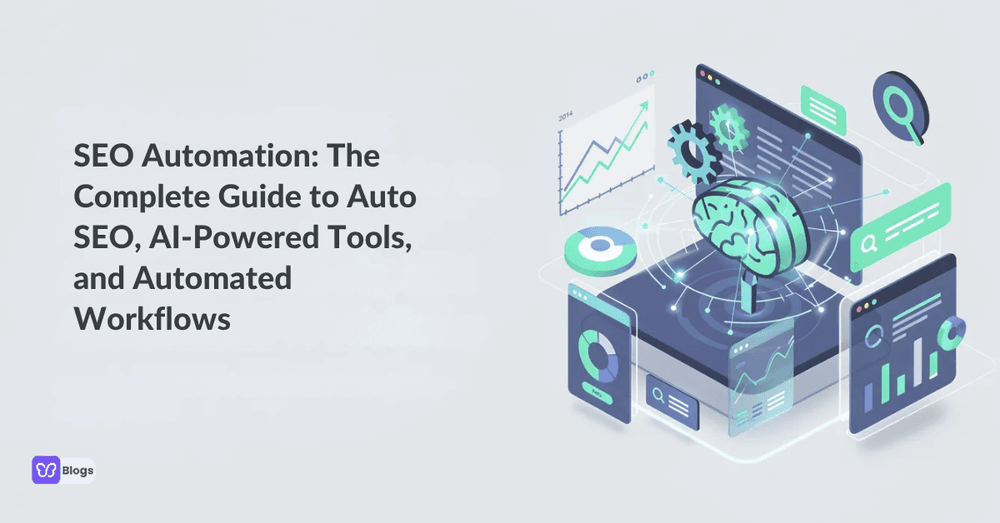
Search engine optimization has always been a time-intensive discipline. But in 2026, the smartest marketing teams aren't spending hours on manual audits, metadata updates, or rank tracking. They're using SEO automation to handle the grind and focusing their energy on strategy, creativity, and growth.
This guide breaks down everything you need to know: what auto SEO actually means, how artificial intelligence is transforming both SEO and broader marketing workflows, which tasks you can automate today, and how to measure whether your investment is paying off.
What is SEO automation (and what is auto SEO)?
SEO automation is the practice of using software, scripts, and automation tools to handle repeatable search engine optimization tasks-technical audits, rank tracking, reporting, internal linking, content briefs, and more. It doesn't replace strategy or creative thinking. It replaces the manual busywork that eats up your week.
So what is auto SEO? It's a subset of SEO automation where a platform handles certain optimizations automatically, with minimal human intervention. Think templated title and meta description generation, fixing missing alt text, inserting canonical tags, or adding internal links to specific content types. These are low-risk changes that don't require a strategist's judgment every single time.
Classic SEO software focused almost entirely on gathering data: rank reports, backlink profiles, crawl diagnostics. Useful, but you still had to do everything yourself. Modern automated SEO software goes further-it executes changes, runs automated SEO testing flows, and reacts to real-time performance signals.
What's made this leap possible is artificial intelligence. AI tools and ai agents now power everything from automated content ideation and rewriting to topic clustering and predictive impact forecasting. This convergence of AI and search engine optimization is what makes ai driven marketing automation a practical reality for SEO in 2026, not a buzzword.
How AI and Automation Are Reshaping SEO in 2026
Between 2024 and 2026, search itself changed dramatically. Google rolled out AI Overviews globally to over 200 countries, now covering roughly half of all search queries. AI Mode allows multi-turn conversational queries. Bing Copilot, Perplexity, and ChatGPT Browse all introduced new ai search engines that summarize content rather than simply linking to it. These shifts pushed marketing teams hard toward SEO automation and ai marketing, because the pace of change outstripped what manual workflows could handle.
Artificial intelligence marketing automation is also breaking down the walls between SEO, paid search, email marketing, and CRO. Instead of siloed marketing tools, teams are building a unified ai powered marketing stack. Performance data from organic search can now trigger paid bid adjustments; content surfaced in AI Overviews can feed email campaigns automatically. This is ai in marketing automation in action-not theory.
Practically, ai in marketing means real-time adaptation: content updates, title tests, schema changes, and internal links can be triggered automatically from log files and google search console data. Marketing teams that previously ran one metadata test per month now run ten per week. Execution is faster, ops costs drop, and alignment with constantly shifting SERPs improves.
One critical clarification: automation enhances human strategists. It doesn't fully replace technical SEOs, content leads, or editors. The judgment calls still belong to people.
Core benefits of SEO automation and AI‑powered marketing
The reasons to invest in SEO automation and ai-powered marketing automation are concrete and measurable.
- Time savings. SEO automation tools speed up SEO workflows significantly. Automating rank tracking, technical checks, and content briefs can save 10–20 hours per week for smaller teams. Automation tools can reduce landing page production time from 8 hours to 2–3 hours. Automating tasks can free SEO professionals to concentrate on strategy and content quality instead of spreadsheets.
- Scale. Ai powered marketing automation lets one SEO lead manage thousands of URLs across multiple locales with consistent on page seo hygiene. Automated tools allow marketers to manage hundreds of websites efficiently, maintaining quality across every page.
- Quality and consistency. Automation features like rules engines, QA checks, and templates reduce human error in title tags, canonicalization, robots directives, and internal linking. SEO automation tools improve efficiency in managing repetitive SEO tasks without sacrificing accuracy.
- Faster feedback loops. Automated SEO testing allows continuous micro-tests on headlines, schema types, or layouts, replacing slow manual A/B experiments. AI continuously tests campaign elements for optimal performance, so you learn what works faster.
- Cross-channel intelligence. Ai marketing automation connects SEO with email, paid, and social data. Performance data from multiple channels automatically informs organic content prioritization, enabling data driven decision making across marketing processes. Automation can improve website performance indirectly by making SEO work faster and easier to scale.
AI marketing automation continuously analyzes performance and behavioral signals, which means your optimization decisions are grounded in real data, not guesswork. AI marketing automation reduces manual intervention in decision-making, letting your team focus on the work that actually moves the needle.
Where SEO automation makes the biggest impact in your workflow
Not every SEO task should be automated. Some require nuance, judgment, and deep expertise. Here's where automation delivers the highest return.
- Keyword research. AI tools can cluster queries by topic and intent, surface long-tail opportunities at scale, and group them into internal taxonomies. AI-driven tools analyze vast datasets to identify content gaps and opportunities. A strategist still decides which clusters support business goals and align with marketing strategy. Automated SEO tools help identify technical issues such as broken links and slow page speeds during these research phases.
- On page seo optimization. Automation handles templated title and meta description generation, header hierarchy fixes, internal linking suggestions based on semantic similarity, and structured data insertion. SEO automation tools can help create SEO-focused content briefs and suggest improvements. Content optimization at scale becomes practical rather than aspirational.
- Technical SEO. Scheduled crawls automatically check for 404s, redirect chains, canonical mismatches, Core Web Vitals regressions, and JavaScript rendering issues. Alerts fire when thresholds are breached, and some platforms offer one-click auto-patch options.
- Content operations. Ai generated content assists with briefs, outlines, FAQ suggestions, and first drafts. Editors and subject-matter experts then refine for depth, brand voice, and E-E-A-T compliance. You create content faster without sacrificing quality.
- Analytics and reporting. Recurring dashboards combine google search console, google analytics, and server log data into actionable insights. These reports push automatically via email or Slack, eliminating manual exports and giving stakeholders performance data without anyone lifting a finger.
AI vs. Rule-Based Automation: What’s Actually Different?
Traditional automation uses "if-this, then-that" workflows. If broken links exceed 10, email the dev team. If a page is missing a meta description, apply a template. These rule-based flows are predictable and easy to audit, but they struggle with edge cases, context, and the complexity of large sites with thousands of pages.
Ai marketing automation introduces machine learning and ai algorithms that identify patterns without predefined rules. Machine learning models can spot anomalies-sudden traffic drops, crawl pattern shifts, keyword cannibalization-that no static rule would catch. Ai models trained on historical data can forecast the impact of a content refresh or an internal link restructuring before you commit resources.
Ai-powered marketing automation shines in predictive analytics: estimating which changes will move the needle, surfacing priorities a human might miss. But it also carries risk. AI can misinterpret noisy data, and opacity makes debugging harder than with simple rules.
The best practice is combining both. Use rule-based systems to enforce hard constraints (canonical rules, robots.txt directives, noindex defaults). Use AI to suggest or prioritize actions that need human review. Think of traditional automation as the guardrails and artificial intelligence as the navigator.
Key capabilities to look for in automated SEO software
Not all automated SEO software is equal. Here's a practical buying checklist for marketing automation platforms and marketing automation tools that support SEO.
- Data integrations. Insist on native connectors to google search console, google analytics, server logs, CMS platforms (WordPress, Shopify), and major CRMs. Without high-quality data sources, AI-driven analysis produces flawed insights. A content optimization platform is only as good as the data feeding it.
- Automation features. Look for scheduled crawls, auto-generated alerts, bulk actions (template-level tag changes), and continuous automated SEO testing tools for titles, metadata, and schema types. Advanced tools should support natural language processing for content analysis.
- AI capabilities. Built-in ai tools for clustering, content scoring, and draft generation are table stakes. Also look for support for custom prompts, ai features like predictive analytics, and ai agents that can orchestrate multi-step automated workflows across your stack.
- Governance and approvals. Granular permissions, staging versus production environments, and revert or change-log functionality keep auto changes safe. Without these guardrails, even well-intentioned automation can cause problems at scale.
- Pricing and scalability. Understand seat-based versus usage-based pricing, API overages, and feature limits (number of URLs, crawl depth, locales). Some tools are completely free for basic features but charge heavily at enterprise scale. Evaluate hidden costs like development time and content review overhead.
In a comparison of 25 automated SEO tools in 2026, only two platforms delivered full-spectrum automation suites covering signal-driven actions, social distribution, and backlink monitoring. Choice depends on where your bottleneck lies.
13 essential SEO tasks you can automate today
This section is your practical to-do list. Each task names what to automate and how, using generic automation tools and ai tools.
- Automated rank tracking. Monitor keyword rankings and SERP feature visibility (AI Overviews, People Also Ask) across priority terms. SEO automation enables real-time rank tracking and automated site audits. Automated tools can provide instantaneous monitoring of rankings across multiple devices.
- Scheduled site crawls. Run weekly or daily crawls for status codes, indexability, canonical mismatches, and hreflang validation. Common tasks suitable for automation include technical SEO audits and rank tracking.
- XML sitemap generation. Auto-generate and validate sitemaps for large, frequently updated sites so search engines always have a current map.
- Title and meta optimization. Use ai generated content to draft templated titles and descriptions, with human approval workflows for final quality checks. AI-driven SEO tools can optimize content for specific keywords automatically.
- Internal linking at scale. Deploy ai powered tools that suggest semantically relevant internal links for new and existing articles, improving content optimization and crawl efficiency.
- Content decay detection. Monitor combined Search Console and analytics trends to flag declining pages and trigger refresh suggestions before traffic craters.
- 404 handling and redirect proposals. SEO automation increases the speed of detecting broken links and indexing issues through continuous monitoring. Auto-generate smart redirect rule proposals with logs for human review before deploy.
- Schema markup generation. Auto-generate FAQ, HowTo, Product, and Article schema based on page type and content, then validate with testing APIs.
- Image optimization. Compress images and generate descriptive, keyword-aware alt attributes using ai tools, reducing page load times and improving accessibility.
- Backlink profile monitoring. Run automated backlink checks and toxic link alerts, feeding cleanup tasks into project management tools for the team.
- Competitor analysis. SEO automation tools help with competitor analysis and content strategy by tracking competitor rankings, new content, and backlink activity on a recurring schedule.
- Weekly performance summaries. Auto-generate and send traffic, conversion, and keyword movement reports to stakeholders. AI systems can produce campaign assets in minutes using generative AI. AI can automate repetitive SEO tasks like content creation and reporting.
- Subject line and title A/B testing. Test subject lines, headlines, and social media posts variations automatically, measuring CTR impact without manual experiment setup.
AI-Powered Marketing Automation and Its Impact on SEO
Marketing automation and ai are no longer separate conversations. The connection between organic search and broader marketing campaigns is now direct and measurable.
Marketing automation using ai can score leads and automatically surface which queries and pages generate the highest-value customers, not just the highest traffic. Lead scoring powered by ai algorithms helps your sales team prioritize prospects who arrived via organic search and demonstrated strong engagement patterns. AI continuously analyzes customer data for real-time customer segmentation, grouping visitors by behavior, preferences, and intent.
When lifecycle events occur-onboarding, churn risk, upsell signals-ai powered marketing automation platforms can trigger SEO actions: content updates, new landing pages, internal link restructuring. AI marketing automation continuously learns from customer behavior and adapts strategies accordingly. AI marketing automation enables real-time decision-making and personalization across the funnel.
Ai-powered marketing automation also personalizes on-site content blocks and CTAs by segment, improving engagement metrics that correlate with better rankings. Since 71% of consumers expect personalized interactions from brands, this kind of personalized messaging directly affects both conversion rates and organic performance. AI-driven automation improves relevance by tailoring content to individual behavior, and AI-driven automation improves customer engagement by tailoring content to what each visitor actually needs.
This fusion of SEO, CRM, and email marketing allows fully ai driven marketing automation across channels-from the first click on a search result to retention email campaigns. AI systems can automatically adjust marketing strategies based on performance data, and AI marketing automation enables hyper-personalization at scale across multi channel campaigns. AI reallocates budget to higher-performing audience combinations automatically, ensuring marketing efforts stay efficient. Customer interactions, customer journeys, transactional data, and customer preferences all feed into ai systems that deliver the right message at the right moment through customer facing processes.
To analyze customer data effectively, you need to connect your SEO stack with your broader marketing automation platforms-otherwise you're leaving conversational ai, customer data insights, and engagement pattern analysis on the table.
Building Your First SEO Automation Stack (Step-by-Step)
If you're starting from mostly manual SEO, this roadmap will help you build a practical stack without overcomplicating things.
Step 1 – Audit your current workflow. List every repetitive task: reporting, metadata updates, link audits, keyword tracking. Estimate the monthly time cost of each. This is where marketers define their priorities and identify which seo tasks consume the most hours.
Step 2 – Prioritize 2–3 quick wins. Start with automated reporting, scheduled crawls, and simple title tag suggestions via ai tools. These are low-risk, high-visibility wins that streamline workflows immediately and build organizational buy-in. You can even start with marketing tools that are completely free for basic tiers.
Step 3 – Choose a focused toolset. Pick a core analytics and crawling platform plus one or two automation tools (a workflow engine and a CMS plugin, for example). Resist the urge to add dozens of overlapping apps. Integrate with existing tools rather than replacing everything at once. A google docs shared tracker can coordinate your team during setup.
Step 4 – Implement guardrails. Set up staging environments, approval gates for code or content changes, and documentation on when humans must override AI. Automation workflows should have clear escalation paths.
Step 5 – Expand into auto SEO territory. Allow certain low-risk optimizations to ship automatically: fixing missing alt text, generating internal links for low-traffic blog posts, applying canonical tags to paginated content. Auto SEO works best in areas where mistakes are easy to catch and easy to reverse.
Step 6 – Connect SEO with broader ai marketing workflows. Link your SEO automations to CRM, email campaigns, and product analytics so SEO data can influence messaging, funnel design, and marketing strategy. Leveraging ai across channels turns isolated optimizations into compounding gains.
Using AI Agents to Orchestrate End-to-End SEO Workflows
Ai agents are autonomous or semi-autonomous systems that perceive data, make decisions, and act across tools. In SEO, they're moving from experimental to essential.
Example workflow 1: An AI agent pulls google search console data daily, flags pages with declining CTR, drafts new titles and meta descriptions using ai generated content, and opens tickets in your project management tool for human review. If the page is low-risk (e.g., a minor blog post), the agent may auto-deploy the change and monitor results. AI predicts customer behavior using real-time data analysis, and the same logic applies to predicting content performance.
Example workflow 2: An AI agent monitors server log files for crawl anomalies-sudden spikes or drops in Googlebot activity-cross-checks crawl budget against priority URLs, and recommends updates to internal linking or sitemaps. It interacts with your CMS, analytics platform, and communication tools through APIs or webhooks, turning ai powered marketing ideas into concrete actions.
By 2028, 33% of enterprise software will include agentic AI, according to Gartner. The trajectory is clear: agents will handle more of the routine orchestration, while humans focus on judgment, creativity, and strategy. Conversational ai interfaces will make these agents accessible even to non-technical team members.
Best practices for deploying ai agents: set clear objectives, define thresholds for auto-approval versus manual review, log every change, and conduct periodic performance reviews of each agent. Without these guardrails, agents can drift into counterproductive patterns.
Risks, Limits, and Ethical Considerations of AI-Driven SEO
Ai powered SEO brings real risks if deployed carelessly. Acknowledging them upfront is what separates effective automation from reckless experimentation.
Risk 1 – Over-automation. Letting auto SEO rewrite large volumes of content or metadata without QA leads to brand voice drift, thin ai generated content, and potential violations of search engine guidelines. Automation does not guarantee higher search rankings-and low-quality automated output can actively hurt them. Automation tools require human oversight for final content quality and strategic decisions.
Risk 2 – Data quality and bias. Poor analytics setups can mislead ai marketing automation systems, causing the wrong pages or keywords to be prioritized. If your google analytics is misconfigured or your Search Console data is incomplete, every downstream decision inherits that error. AI algorithms trained on biased data will produce biased recommendations-focusing only on high-volume terms while ignoring valuable long-tail opportunities.
Risk 3 – Compliance and transparency. Using customer data and behavioral signals in marketing automation requires strict adherence to privacy regulations (GDPR, CCPA). Disclose ai tools usage where required. In some jurisdictions, courts have already held platforms liable for inaccurate content in AI-generated summaries.
What should stay human-led: In-depth thought leadership, YMYL topics, complex migration planning, and nuanced link-building outreach all require judgment that AI cannot reliably provide. Content optimization for sensitive topics demands subject-matter expertise.
Practical safeguards include:
- Content review checklists before any auto-deployment
- Thresholds on automated rollouts (e.g., never auto-publish changes affecting more than 50 pages simultaneously)
- Routine audits of AI-driven rules, segments, and outputs to catch drift early
Measuring the ROI of SEO Automation and AI Marketing
Investing in SEO automation and ai marketing automation only makes sense if you can prove it's working. Here's a measurement framework.
Efficiency metrics. Track hours saved per week, volume of optimizations shipped versus your pre-automation baseline, and cost comparison versus outsourcing or hiring. AI marketing automation can reduce campaign creation time by 30%, and those savings compound across your team. AI-driven automation reduces manual intervention in campaign optimization, freeing resources for higher-value marketing efforts. Data driven decisions become possible when you have this baseline data.
Performance metrics. Monitor organic sessions, non-brand conversions, assisted revenue, and speed of recovery after content decay. Compare baseline windows (before automation) with post-automation periods. AI predicts campaign outcomes based on past performance data, helping you forecast which optimizations will deliver the greatest return. Continuous optimization leads to improved campaign efficiency over time.
Experiment velocity. Count the number of automated SEO testing experiments-titles, layouts, schema variations-run per month and the percentage showing positive uplift. Teams running more experiments learn faster and adapt to search platforms changes more effectively.
Connect SEO metrics with broader ai powered marketing KPIs: higher quality leads, better lifetime value, lower customer acquisition cost. When organic search becomes more efficient, your entire funnel benefits.
Report on a monthly and quarterly cadence. Structure each report as a simple before-and-after comparison that any stakeholder can understand: what changed, what improved, what needs adjustment. This makes it easy to justify scaling your automation stack.
Future of AI-Driven SEO and Marketing Automation
The trajectory is clear. SEO automation, artificial intelligence marketing automation, and broader ai powered marketing automation are converging into a single discipline rather than remaining separate functions.
Emerging directions include deeper integration of ai agents directly into CMSs, search engines relying more heavily on real-time behavioral data, and growing importance of entity-based optimization over keyword-only strategies. Gartner predicts 33% of enterprise software will use agentic AI by 2028, which means the tools available to marketing teams will become dramatically more capable within the next two years.
By 2028, most serious teams will treat SEO as one stream inside a unified ai marketing automation fabric-not as an isolated discipline run by a single specialist with a spreadsheet. Search platforms will reward sites that adapt quickly, maintain high content quality, and deliver personalized, relevant experiences across customer journeys.
Here's your next step: pick one workflow from this guide-reporting, title testing, content decay detection, whatever represents your biggest time sink-and automate it this quarter. Use the ROI framework above to measure the results. Then use those results to justify scaling your automation stack across the rest of your marketing processes. The teams that start now will compound their advantage over those still running everything by hand.

Author
Debutify
Debutify is the easiest way to launch and scale your eCommerce brand.