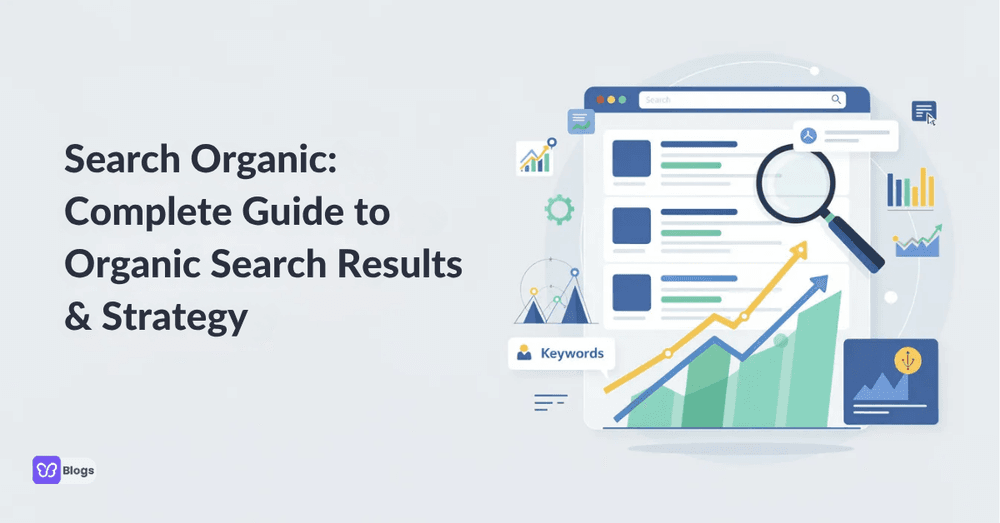
Search Organic: Complete Guide to Organic Search Results & Strategy
Organic search drives 53.3% of all website traffic. If your site does not show up in unpaid search engine results pages, you are invisible to more than half of your potential audience. This guide covers everything you need to know about search organic visibility: how it works, how it compares to paid search, and how to build a strategy that delivers results.
Quick Answer: What Is an Organic Search?
What is an organic search? It refers to a user typing a query into Google, Bing, or other search engines and clicking on one of the unpaid listings that appear. These unpaid listings are called organic search results, or simply organic results. Free placement cannot be bought for organic listings in search engines; they are earned through relevance, quality, and SEO merit.
To cover the terminology clearly:
- Organic search means traffic that arrives at your site through unpaid, algorithm-driven listings on a search results page.
- Define organic search: the process by which search engines rank webpages based on relevance and authority, not advertising spend.
- The definition of organic search and the organic search results definition both point to the same concept: unpaid webpage results displayed by search engine algorithms.
Organic-search results appear below sponsored listings on the SERP. They are ranked based on relevance to the user's query, content quality, and site authority.
Here is a quick example. A user searches "best running shoes 2026" on Google search. The top 1-4 results labeled "Sponsored" or "Ad" are paid search results. Everything below those labels consists of organic results. Organic search engine marketing is the practice of earning those free clicks through search engine optimization SEO, content strategy, and link building.
Organic Search vs Paid Search: Key Differences
Organic search vs paid search comes down to how visibility is acquired. With paid versus organic search, the distinction is straightforward: organic search traffic is earned through SEO, while paid search traffic is purchased through platforms like Google Ads or Microsoft Advertising. Both organic search and paid search appear on the same SERP, but they occupy different positions and carry different labels. The same logic applies when people compare natural search vs paid search; the terms are interchangeable.
Here is how a typical 2026 Google results page is structured:
- Paid search ads appear at the top of search results (1-4 slots), labeled "Sponsored" or "Ad." Paid search results are sponsored ads that provide immediate visibility as long as the budget lasts.
- Below those, the first organic listings appear, sometimes mixed with featured snippets, AI Overviews, or local pack results. Local pack results display a map and local business profiles for location-based searches.
- Shopping ads and video ads may also appear depending on query type.
A critical behavioral fact: 70-80% of users skip paid ads entirely and focus on organic results. Organic search results provide lasting, steady traffic over time, while paid campaigns stop sending visits the moment budget is paused. Paid search can provide instant results for ads, but it does not compound.
Smart digital marketing strategy combines both marketing channels. Use paid advertising for quick wins and organic search for sustainable growth.
Why Is Organic Search Important in 2026?
Why is organic search important? Because organic search drives 53.3% of all website traffic across industries. No other marketing channel, including social, email, or other marketing channels, comes close to that share for the vast majority of websites.
Organic search traffic tends to be high-intent. Users who actively search are closer to decision points, which is why organic search leads close at a 14.6% rate. Compare that to outbound leads, which typically close below 2%.
Over 70% of users skip paid ads and focus on organic results, perceiving organic listings as more credible. This trust translates into real business impact:
- Lower cost per acquisition over time (no per-click fees after ranking)
- Stronger brand authority among website visitors
- A stable lead pipeline that does not vanish when ad spend stops
For marketing teams evaluating where to invest, organic search delivers compounding returns that paid advertising cannot match on a per-dollar basis over 12+ months.
How Organic Search Works: From Query to Organic Results
Understanding how organic search work helps you reverse-engineer what to optimize. When a user searches for something on Google or other search engines, three steps occur:
Crawl. Search engine bots discover pages by following links across the web.
Index. Discovered pages are stored, categorized, and analyzed for content and context.
Rank. When a query is entered, search engine algorithms evaluate indexed pages and return the most relevant organic search results.
Your organic search ranking depends on how well your page matches the user's query in terms of relevance, authority, and usability. Search engines understand query intent, not just keywords relevant to a topic.
For example, when someone searches "what are organic results," the pages that rank tend to be SEO guides, marketing glossaries, and blog post content that directly answer that question. Pages that match the user's query with clear, structured answers outperform pages that mention the term without context.
Organic search optimization is about aligning your site with these search engine algorithms, not gaming them. Modern SEO focuses on creating useful content and improving site usability. You can work with an SEO agency to get them implemented, or you can also implement them on your own.
Definitions: What Are Organic Results & Organic Search Exactly?
- What is an organic search? A visit that originates from a user clicking an unpaid listing on a search engine results page.
- What are organic results? Unpaid listings on SERPs ranked by search engine algorithms based on relevance, quality, and authority.
- Organic search results definition: The non-sponsored webpage results returned by a search engine in response to a query.
- Definition of organic search: The process by which search engines evaluate and rank content without payment influencing position.
- Organic search means: Earning visibility through SEO merit, not ad spend.
- Organic search engine marketing covers all SEO and content strategies designed to improve visibility in unpaid listings. It is distinct from paid search campaigns, display ads, or social advertising.
In analytics tools like Google Analytics, traffic labeled "organic search" represents visits from these unpaid listings, separate from social, email, or referral sources. Organic search refers to this specific channel in every major analytics platform.
Organic Search Ranking Factors You Must Know
Over 200 ranking factors influence organic search results. Google's search engine algorithms weigh hundreds of signals, but most sites should focus on a handful of high-impact areas. Key ranking factors include content quality, technical performance, and backlinks.
On-page factors:
- Search intent alignment: does your page answer what the user actually wants?
- Keyword use in titles, headings, and body text for specific keywords
- Content depth and comprehensiveness for the topic
- Building internal links helps distribute authority across a website
- Optimizing on-page SEO includes crafting descriptive title tags and meta description tags
- Structured data that helps search engines understand page content
Off-page factors:
- Earning high-quality backlinks remains an important ranking signal for search engines
- Brand mentions and citations from authoritative sources
- User engagement signals: click through rate, dwell time, return visits
Technical factors:
- Technical SEO should improve site crawlability, speed, and mobile friendliness
- Page speed and Core Web Vitals (Google replaced FID with INP in 2024)
- HTTPS, clean URL structures, no broken links
User experience signals such as page speed and easy navigation affect SEO rankings. Search engines increasingly reward sites providing the best user experience. High rankings capture 91.5% of total organic traffic, so the difference between position 1 and position 10 is not incremental; it is binary for most queries.
AI advancements are influencing how search engines evaluate content. Google shows AI-generated summaries in about 13.7% of all queries, which can reduce clicks on organic listings below them. Ranking factors constantly evolve, so continuous monitoring of site performance is non-negotiable for maintaining organic rankings.
Core Strategies for Organic Search Optimization
Organic search optimization is the mix of SEO tactics aimed at improving unpaid visibility and traffic. Improving organic search rankings requires a multi-faceted approach built on three pillars:
- Technical SEO: Fix crawl errors, improve page speed, ensure mobile friendliness, and secure your site with HTTPS.
- On-page optimization: Align each page with a target audience query, use clear headings, and write quality content that answers the question better than competitors.
- Off-page authority: Earn links from trusted domains, build topical authority, and grow brand signals.
Sustainable gains in organic search results come over months, not days. Align optimization work with business goals like sales, leads, and sign-ups. Vanity metrics like impressions or average rank only matter if they connect to revenue. Your seo strategy should map every action to a measurable outcome.
Keyword Research: Fuel for Organic Search Success
Solid keyword research underpins every successful organic search campaign and shapes your broader digital marketing strategy.
The process at a high level:
- Brainstorm topics your target audience cares about.
- Use tools (Google Keyword Planner, Ahrefs, SEMrush) to discover search volume, keyword bidding costs, and difficulty.
- Prioritize terms by intent and conversion potential.
Effective keyword research involves finding relevant long-tail keywords (e.g., "what is an organic search in SEO") alongside broader terms (e.g., "organic search vs paid search"). Each priority keyword cluster should map to a dedicated landing page or section to avoid cannibalization and strengthen topical authority in organic results.
Paid search campaign data can inform keyword research. If a query converts well in Google Ads, it is worth targeting organically to reduce dependency on keyword bidding over time. Keywords relevant to your product or service provider category deserve the most attention.
Content Marketing & Link Building for Better Organic Rankings
Content marketing and organic search engine marketing are inseparable. High-quality content is what actually ranks and earns clicks from user searches.
Effective SEO content should:
- Answer specific user questions with depth and clarity
- Use clear structure with H2/H3 headings
- Include original data, examples, or user generated content where applicable
- Be comprehensive and authoritative on the topic
Demonstrating expertise and keeping information current helps build authority and trust. This is how you build organic visibility over time; not through tricks, but through optimizing content that genuinely serves the reader.
Link building remains critical. Earning editorial backlinks through digital PR, guest posts, and partnerships passes authority and helps pages climb in organic-search results. Avoid manipulative tactics. Keyword stuffing and link schemes risk Google penalties that can erase months of progress and destroy your website's position in search results.
Organic and Paid Search Together: Smart Search Engine Marketing
Most brands benefit from using both organic and paid search, not one or the other. In competitive markets, paid and organic search serve complementary roles within a digital marketing strategy.
Paid campaigns deliver instant results for new products, time-sensitive offers, or competitive queries where ranking organically is unrealistic in the short term. Meanwhile, organic search builds enduring visibility and lowers acquisition costs over months. Sponsored ads provide immediate visibility as long as the budget lasts; organic rankings keep working after the initial investment.
Cross-channel synergy works like this:
- Use PPC data to refine SEO keyword research and identify high-converting queries
- Test message angles in paid ads before rolling them into long-form content marketing
- Align landing pages for both channels so messaging stays consistent
When both an ad and an organic result appear for the same query, overall click share and brand trust tend to increase. Marketing efforts across both channels maximize your presence on the search results page.
Measuring & Improving Organic Search Performance
All organic search work should be measured, not just implemented. Without data, you cannot separate what is working from what is wasting resources.
Core metrics to track:
- Organic search traffic sessions and website traffic trends
- Keyword rankings for priority phrases
- Click through rate on organic search results
- Conversions and revenue attributed to organic
- Organic visibility trends over time
Google Search Console tracks keyword rankings and site performance; it is the primary free tool for organic-search results data. Google Analytics (GA4) handles behavior and conversion tracking. Analytical tools like Ahrefs, SEMrush, or Moz provide deeper analysis of keyword rankings, backlink profiles, and competitor benchmarks.
How to interpret trends: rising impressions but flat clicks often signals poor meta description snippets or SERP layout changes (AI Overviews, featured snippets). Falling organic rankings might coincide with algorithm updates or technical issues like slow page speed.
Continuous testing of titles, meta descriptions, content refreshes, and internal links is how you drive traffic growth and stay competitive through 2026 and beyond.
FAQ: Common Questions About Organic Search
1. What is an organic search in SEO?
An organic search is any visit to your website that comes from clicking an unpaid listing on a search engine results page. These organic listings are ranked by algorithms, not by ad spend.
2. What are organic results on Google?
Organic results are the unpaid listings that appear below paid ads on Google. They are ranked based on relevance, content quality, and authority signals across various ranking factors.
3. How long does organic search optimization take to show results?
Most sites see ranking improvements within three to six months. SEO improvements typically take several months to yield meaningful results because search engines need time to crawl, index, and re-evaluate updated pages.
4. Is organic search vs paid search better for small businesses?
It depends on timeline and budget. Paid search via Google Ads can provide instant visibility for ads and immediate website visitors. Organic search delivers higher ROI over 6-12 months. Organic search leads close at a 14.6% rate, which makes it one of the highest-converting marketing channels available. A balanced approach using both paid advertising and organic search strategy typically works best.
5. Can I rely only on natural search vs paid search?
You can, but going organic-only means accepting slower ramp-up and zero coverage for queries where you do not yet rank. Paid versus organic search is not an either/or decision for most service provider businesses.
Treat organic search as a long-term digital asset. It compounds over time when supported by strong content, solid technical foundations, and consistent marketing efforts.

Author
Debutify
Debutify is the easiest way to launch and scale your eCommerce brand.