Clickbait Marketing: How Brands Use It to Go Viral
If you've spent even a few minutes online, you’ve bumped into clickbait—probably more times than you realize. It slips into your feed disguised as a headline you have to open, or a thumbnail that makes you think, “Okay… what’s going on here?” Even though people joke about clickbait, brands rely on it more than ever because, frankly, it works.
The digital world is loud. Everyone is trying to be seen, and attention spans keep shrinking. That’s why brands lean on curiosity-driven hooks to make you stop scrolling for just a second. And once you pause, there’s a good chance you’ll click.
This article breaks down how clickbait really works, why brands use it, and how you can use the same tactics in a way that’s ethical and still insanely effective.
What Is Clickbait Marketing?
Clickbait marketing is essentially the art of crafting a headline, visual, or message that creates such a strong pull of curiosity or emotion that people feel compelled to click. It doesn’t have to be deceptive or exaggerated—though some creators definitely cross that line.
At its core, clickbait relies on:
- curiosity
- drama
- suspense
- emotional triggers
- “incomplete information” that your brain wants to finish
When done the right way, clickbait simply acts as a stronger magnet for attention.
Why Clickbait Works in Digital Marketing
Clickbait works because humans hate feeling like they’re missing something. That’s the entire foundation of the curiosity gap—the space between what you already know and what you want to know.
You see a headline like:
“Her reaction shocked everyone — here’s why.”
Your brain immediately starts filling in the blanks. You want closure. You want the missing piece. And that split-second emotional tug is exactly why clickbait performs so well across every social platform.
The Psychology Behind Clickbait Headlines
Clickbait taps into instinctive mental shortcuts:
- Fear: avoiding mistakes or missing out
- Reward: “there’s something valuable here”
- Novelty: the brain loves new or unusual things
- Social curiosity: “why is everyone talking about this?”
In simple terms, clickbait hijacks the emotional part of your brain long before the logical part catches up.
Benefits of Using Clickbait in Brand Marketing
Boosting CTR With Emotional Triggers
Emotions move people far faster than facts. A headline that sparks excitement, disbelief, or even light frustration can pull in significantly more clicks than a neutral one.
Increasing Viral Potential Through Curiosity Gaps
The most shareable content is content people talk about, and curiosity is contagious. When something surprises or teases you, you’re more likely to pass it on.
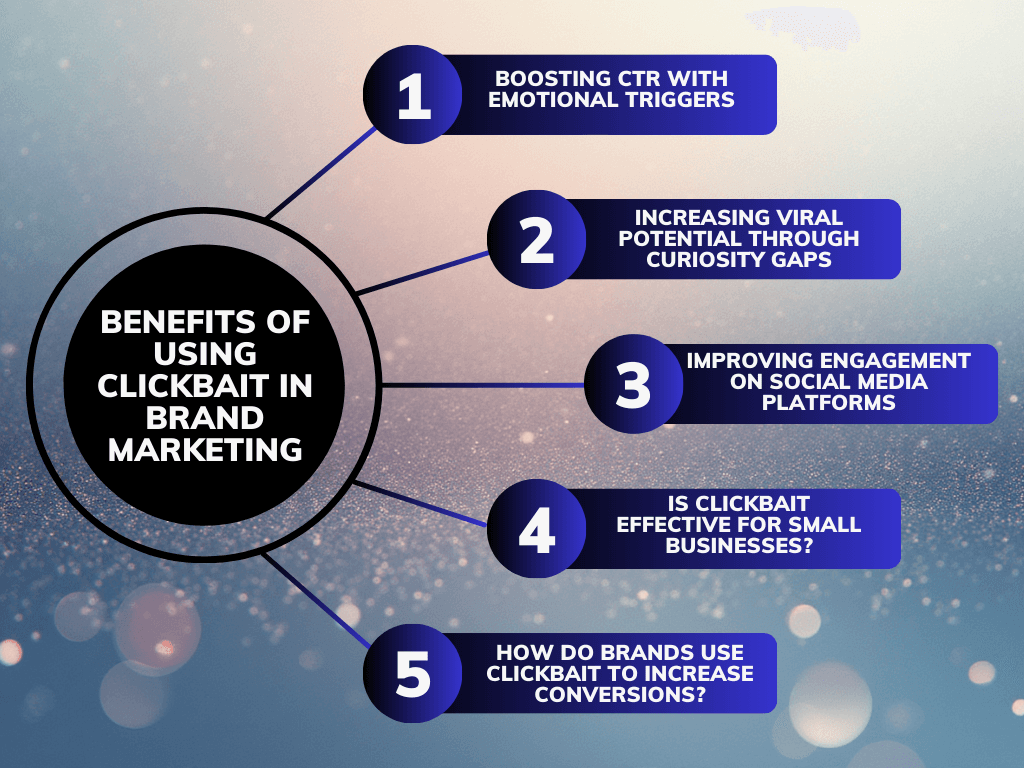
Improving Engagement on Social Media Platforms
Platforms reward posts that keep people engaged longer. That’s why creators use hooks like:
- “Watch till the end”
- “This part surprised me too…”
- “Here’s the moment everything changed”
These statements boost retention, which boosts reach.
Is Clickbait Effective for Small Businesses?
Yes—sometimes even more than for big brands. Smaller businesses need faster ways to get attention without huge ad budgets. A punchy headline can pull traffic to a new product, blog post, or video far quicker than a traditional title.
How Do Brands Use Clickbait to Increase Conversions?
Clickbait is the ignition, not the whole engine. A powerful hook gets people inside the funnel. Once they’re in, strong messaging and valuable content can convert them into buyers.
Types of Clickbait Marketing Used by Brands
Emotion-Based Clickbait
This relies on messages that evoke awe, anger, joy, or surprise.
Curiosity-Driven Clickbait
This type leaves questions unanswered long enough for your audience to feel the itch to click.
Controversial or Shock-Based Clickbait
Some brands thrive on stirring debate, but it must be done carefully or it can backfire.
Listicles and Number-Based Headlines
Numbers help the brain process information faster, making these titles extremely clickable.
How to Use Clickbait Ethically
Transparency and Value Delivery
Say what needs to be said—but don’t promise the moon if you’re only delivering a flashlight.
Keeping Content Relevant to the Headline
If you tease something, follow through. People hate feeling tricked.
Avoiding Misleading Promises
The safest form of clickbait is curiosity, not exaggeration.
Tips to Write High-Converting Clickbait Headlines
Use Numbers, Power Words & Statements
Words like “secret,” “hidden,” “unexpected,” and “revealed” add punch without lying.
Create an Emotional Hook
People act based on how something makes them feel, not how it’s logically explained.
Add Curiosity Without Deception
Tease. Don’t trick.
FAQs
1. Is clickbait still effective nowadays?
Yes, especially with shorter attention spans and crowded feeds.
2. Does Google punish clickbait content?
Not unless it’s misleading or spammy.
3. Which industries rely on clickbait the most?
Media outlets, influencers, tech brands, and e-commerce businesses.
4. How can I make clickbait work for YouTube?
Use expressive thumbnails, strong emotion in your title, and a curiosity gap.
5. Can clickbait help new brands grow faster?
Definitely. It’s one of the quickest ways to increase reach without large budgets.
6. Is Clickbait Bad for Branding?
Only if you're dishonest. Ethical clickbait is completely fine. Misleading clickbait, however, destroys trust quickly.
7. Can Clickbait Increase Sales?
Yes. If the promise matches the content, clickbait can increase both traffic and conversions.
8. How Do I Write Clickbait That’s Not Misleading?
The rule is simple: say less than the content reveals, not more. That’s how you maintain trust while still attracting clicks.
Clickbait isn’t going away anytime soon, and honestly, it shouldn’t. When brands use it responsibly, it becomes a useful storytelling tool—one that grabs attention without compromising trust. The secret is to create curiosity, deliver value, and keep your message genuine. Do that, and clickbait becomes a powerful asset instead of a cheap trick.

Author
Debutify
Debutify is the easiest way to launch and scale your eCommerce brand.