What Agentic AI on AWS Means for the Future of Store Automation
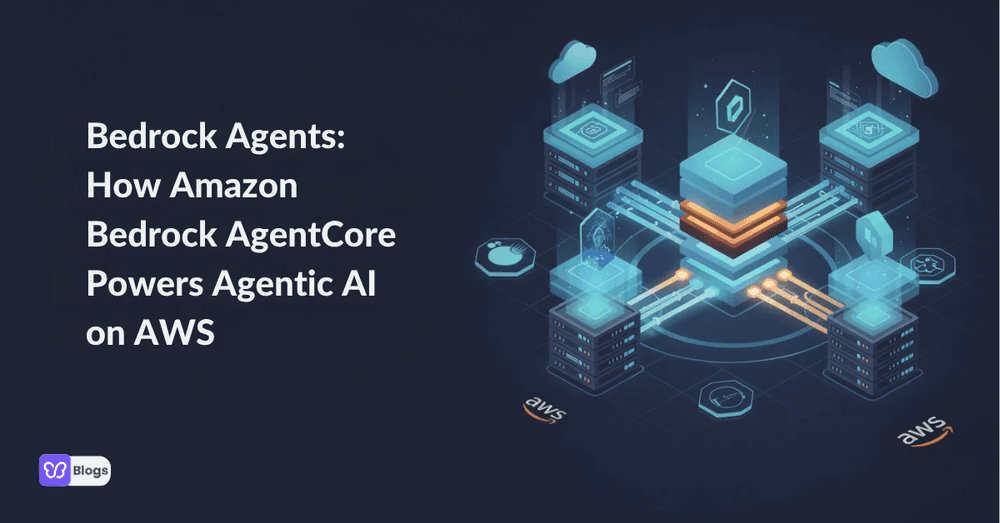
Bedrock agents are AI systems built on Amazon Bedrock that use foundation models to complete tasks, not just answer questions. They understand natural language, plan steps, make a tool call, and use external tools such as APIs, databases, and business systems. If you sell where amazon lives, the company behind this stack, it is worth understanding what these agents can actually do.
The reason a store owner should care is that this is where automation is heading. Not scripts that repeat one action, but systems that take a goal, break it into steps, and act across your tools to reach it. The implications for how stores are run are large, and they are arriving quickly.
Introduction to Bedrock Agents and Agentic AI
The defining trait is agency. Where a chatbot responds, an agent acts. It receives an objective, decides the sequence, calls the tools it needs, and reports the outcome. The shift from answering to doing is what makes the category different, and consequential.
For commerce the stakes are easy to see. The tasks that consume a team's week, checking inventory, updating listings, triaging messages, are precisely the kind of multi-step work an agent can take on. The question is no longer whether this is possible, but how well it is governed.
From Using AI to Orchestrating Agents on AWS
The move up the stack is from using a single model to orchestrating a system. An agent connects the model to your CRMs, your data, and your workflows, and coordinates them toward an outcome. Orchestration is the word that captures it: many parts, directed toward one goal.
That is the same shape as running a store, which is why the analogy lands. An owner orchestrates suppliers, marketing, and fulfillment toward sales. Agents are the software version of that coordination, and they inherit both the power and the need for oversight that comes with it.
The AWS Gen AI and Agentic Landscape
AWS has built the surrounding landscape deliberately: foundation models to choose from, the infrastructure to run them, and the services to connect them to real systems. The strategy is to own the full path from idea to deployed agent, which is attractive to enterprises and increasingly to smaller teams.
The pattern matters to any business watching this space. When one platform owns the whole stack, adoption gets easier and lock-in becomes a real consideration. Understanding both sides of that trade is part of making a good decision, for a store as much as for an enterprise.
Amazon Bedrock: The Multi-Model Foundation
The multi-model foundation is the layer underneath. Teams that need specialized help often turn to custom aws development services to wire Bedrock into their systems, because the value is in the integration, not the model alone.
Being able to choose among models is quieter than a headline but strategically important. It means a business is not tied to one provider's roadmap or pricing. Optionality at the foundation is a form of leverage, and it is worth knowing it is there.
Deep Dive: Amazon Bedrock AgentCore Architecture
AgentCore is the runtime that gives an ai agent the things it needs to act safely: memory, tool access, and oversight. Identity and access management decides what the agent can touch, and experienced teams lean on a DevOps consultancy to build the pipelines that keep it reliable.
The architecture is a lesson in itself. The interesting part of an agent is not the intelligence, it is the guardrails. Memory, permissions, and observability are what let a system act without becoming a liability. That ordering matters for anyone adopting these tools.
Design Patterns for Multi-Agent Systems on Amazon Bedrock
Real systems rarely use one agent. The patterns that work divide labor: one agent plans, others execute, a supervisor checks the result. A familiar example is customer support, where one agent understands the request, another pulls order data, and a third composes the reply.
Dividing labor among agents is how reliability scales, and it mirrors how good human teams work. No single point tries to do everything. Each piece has a clear job and a clear handoff. The stores that automate well will think in these terms, not in single magic bots.
Key Use Cases for Bedrock Agents Across Industries
The use cases cluster around multi-step work with clear rules. Processing requests that touch several systems. Gathering and summarizing information from many sources. Handling the routine cases that are individually small and collectively exhausting.
For a store, the highest-value targets are usually unglamorous. Order exceptions. Inventory updates across channels. Follow-ups that currently depend on someone remembering. The wins come from automating the boring middle, not from anything that sounds futuristic.
Security, Governance, and Responsible Agentic AI
An agent that can act must be governed like anything else with permissions. Least privilege, so it touches only what it needs. Audit trails, so every action is traceable. Human checkpoints on the decisions that matter. These are not optional refinements. They are the difference between automation and risk.
The governance lesson transfers to any automation a store adopts, however simple. The question is never just what the automation can do. It is what it can touch, what it can break, and who notices if it does. Answer those before you switch it on.
Cost, Performance, and Optimization Strategies
Agent costs come from the models they call and the steps they take, so optimization is about both. Choose the smallest model that works for each step. Cut unnecessary steps. Cache what can be reused. The discipline is the same as any performance work: measure, then trim.
Cost control is where agentic AI will prove or fail itself for smaller businesses. The capability is real, but an automation that costs more than the labor it replaces is not a win. The arithmetic has to work, and the discipline to keep checking it is part of the adoption.
Getting Started: Building Your First Bedrock Agent
Start with one narrow task that has clear inputs, clear rules, and a way to know it worked. Give the agent the minimum tools it needs, keep a human in the loop at first, and measure the real business value against the cost of doing it by hand.
The narrow start is the whole trick. Every successful automation began as a small, boring, well-defined task that someone could verify. The ambition can come later, once the foundation has proven itself. Skip that step and you are building on a hope.
Agentic AI is moving from experiment to infrastructure, and the agent platforms behind it are maturing fast. Before you bring an agent into your operation, run this checklist:
- Start with one narrow, well-defined task.
- Grant the minimum permissions the agent needs.
- Keep a human checkpoint on decisions that matter.
- Make every action traceable.
- Measure the real value against the manual cost.
- Choose the smallest model that works for each step.
The stores that win with automation will not be the ones with the cleverest agents. They will be the ones that governed them well enough to trust them, and that starts small.

Author
Debutify
Debutify is the easiest way to launch and scale your eCommerce brand.