How Shopify Brands Can Use LinkedIn to Find B2B Buyers in Southeast Asia
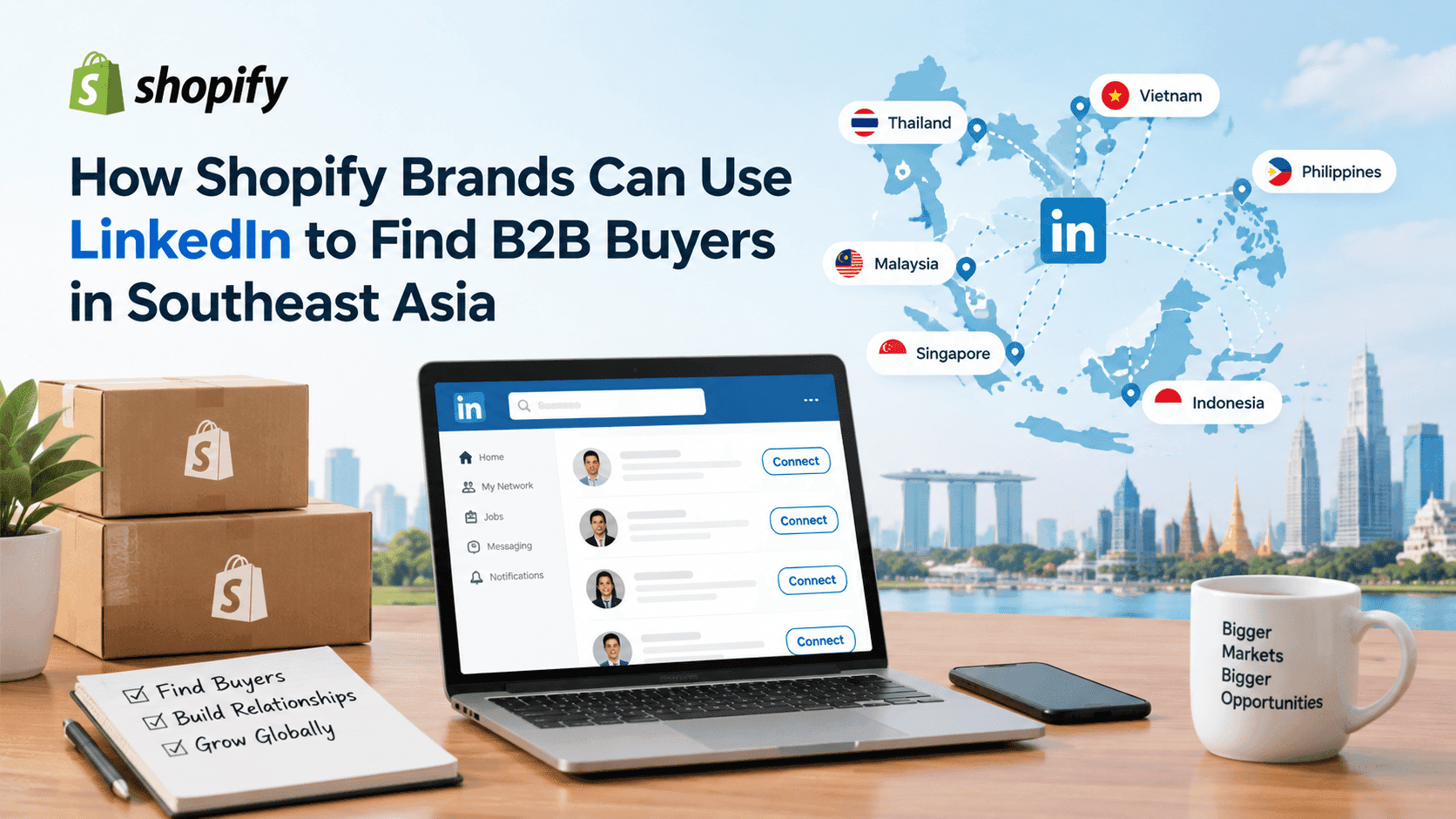
Southeast Asia is becoming one of the fastest-growing regions for cross-border B2B commerce, and Shopify brands that want wholesale buyers, distributors, or retail partners in the region are increasingly turning to LinkedIn to find them. The challenge is that Southeast Asia isn’t one market. What works to land a distributor meeting in Singapore can fall flat in Jakarta, not because the product is wrong, but because of differences in trust-building, timing, and communication style. For store owners who want to grow beyond ads and marketplaces, LinkedIn for outreach has become a practical way to reach decision-makers directly, and tools like Linked Helper make that outreach manageable without hiring a dedicated sales team.
What B2B Lead Generation on LinkedIn Looks Like for E-commerce Brands
For a Shopify brand, LinkedIn lead generation in Southeast Asia means identifying procurement managers, buyers, and business owners at retailers, distributors, or wholesale partners across countries like Singapore, Malaysia, Indonesia, Thailand, Vietnam, and the Philippines, then building a relationship that eventually leads to a stocking or partnership deal. It sounds simple on paper: connect, follow up, build credibility. In practice, each of these six markets runs on a different sales cycle, a different tolerance for directness, and a different idea of how fast a conversation should move from “nice to meet you” to “let’s talk numbers.”
Where This Works Best for Online Store Owners
LinkedIn outreach tends to work best when targeting founders, heads of procurement, and senior buyers at companies in retail, logistics, and distribution, where LinkedIn use is already common. In smaller or more traditional retail segments, LinkedIn presence can be thin, which means a prospect list built purely from LinkedIn searches may miss buyers who simply aren’t active on the platform. Enterprise retailers in Singapore tend to follow a formal procurement process, while relationship-driven markets like Indonesia and Vietnam often need more groundwork before a buyer will commit to anything.
Building an Ideal Buyer Profile Across Different Countries
A useful ideal customer profile for this region needs a country layer, not just a role and industry layer. The same job title can mean very different levels of buying power depending on where the person sits. A “Head of Procurement” at one company might sign off on a deal directly, while the same title somewhere else is just one voice in a longer approval chain. This is where AI-based profile scoring inside Linked Helper helps, since it weighs not just the individual’s profile but how active and established their company is within that specific market, which matters given how inconsistent LinkedIn adoption is across the region.
Setting Up Your Outreach Tool for Multiple Countries
It’s worth configuring outreach at the account level rather than the campaign level. Each target country should ideally run through its own proxy, since consistent geographic signals keep session behavior aligned with the market being targeted. From there, build lead sources using Sales Navigator search filters for country, industry, and seniority, and route each country’s leads into its own campaign instead of combining everything into one broad sequence.
Building Country-Specific Buyer Lists
Sales Navigator’s geography and industry filters let a brand separate, for example, retail buyers in Ho Chi Minh City from distribution decision-makers in Manila, and each group should get its own sequence rather than being treated as one region. When searches don’t turn up enough relevant buyers, which is common in retail segments with a weaker LinkedIn footprint, supplementing the list with CSV uploads from local directories or trade associations and running them through the same country-specific workflow keeps the approach consistent.
Personalizing Outreach for Southeast Asian Buyers
Generic outreach rarely performs well anywhere, but it stands out even more in Southeast Asia, where a buyer is far more likely to respond to a message that references their market, their business, or a challenge specific to their industry before any pitch for a call. Message variables and AI-assisted message drafting based on a buyer’s profile and company make it realistic to reference something timely, a market expansion, a competitor move, a new regulation, without writing every message from scratch.
Matching Tone to Local Business Culture
Buyers in Singapore generally respond well to direct, efficient messaging. Buyers in Indonesia and Malaysia tend to prefer a slower approach that builds context and credibility before asking for time. This usually means running separate message sequences per country rather than one message for the whole region, and making sure the sending profile’s tone matches what that market expects.
Combining LinkedIn With Other Channels
LinkedIn works best as one channel in a sequence rather than the only one. In several Southeast Asian markets, email, WhatsApp, local social platforms, and trade events can carry as much weight as a LinkedIn message, especially for buyers who aren’t very active on the platform. Connecting outreach data to a CRM, or routing it through Zapier or Make via webhooks, keeps the LinkedIn channel linked to whichever channel actually closes the deal.
Measuring What Actually Matters
Connection acceptance and message volume are weak signals of success here. They show activity, not quality. Better indicators are qualified leads by country, reply rates, meetings booked, engagement from actual decision-makers, and pipeline value tracked through the CRM. Measuring by country matters too, since a strong result in one market can mask a weak one if the numbers are lumped together.
Conclusion
For Shopify brands looking to grow wholesale and distribution relationships in Southeast Asia, precision beats volume. The brands that see results aren’t the ones sending the most messages, they’re the ones running distinct, well-targeted campaigns per market using tools built for this kind of outreach, from building the right buyer profile to personalizing follow-ups at scale.

Author
Debutify
Debutify is the easiest way to launch and scale your eCommerce brand.