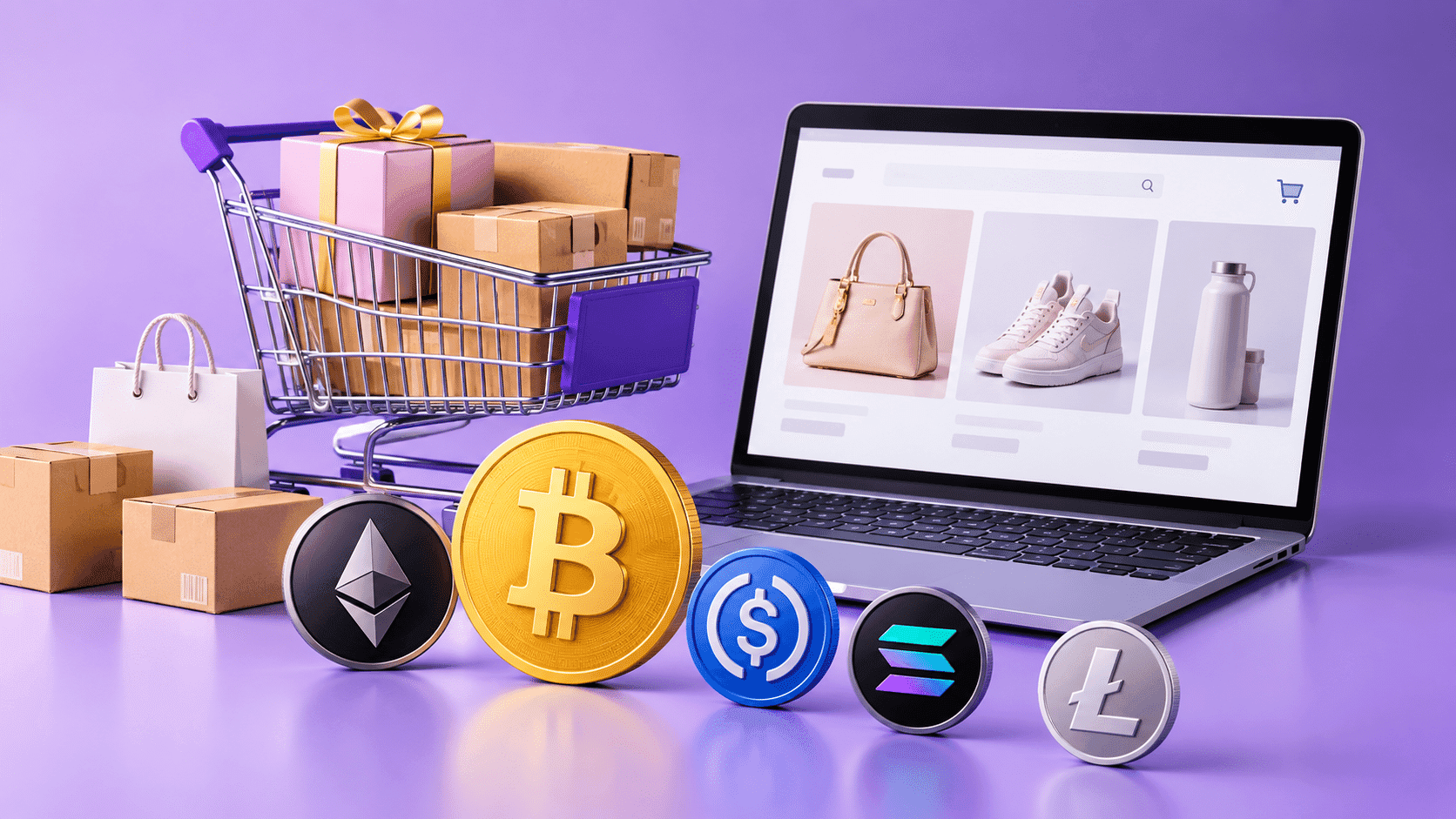
Rethinking e-commerce payments: Can crypto help or hinder?

A few years ago, not many would have thought that using crypto to purchase goods and services would become a thing. But then again, even digital wallets and contactless payments were considered quite futuristic concepts until not so long ago, and here we are today, treating them as default mechanisms and acting like we’ve been tapping our phones and smartwatches at terminals since forever.
The same thing might happen with digital currencies one day. Many predict, or rather expect, crypto to soon become as commonplace as fiat for everyday shopping, given that a growing number of merchants have already made the necessary changes to accept crypto at checkout, with online retailers leading the charge. Most people already know how to buy crypto and use it for trading and investing, so it would only be a matter of time until they adapt and become comfortable using it as a means of exchange.
But is the adoption and normalization of crypto payments a good thing or a bad thing for e-commerce?
The positives
The whole purpose of embracing innovations like crypto is to make everyday processes and operations easier (and cheaper) to manage and increase their efficiency. To some extent, integrating digital currencies, like Bitcoin and Ethereum, into online purchases can help sellers do just that.
It all comes down to their technical architecture, which differs greatly from that of fiat. Instead of being issued and managed by financial institutions, crypto uses a decentralized public ledger known as blockchain for issuance and distribution, which creates a direct payment channel between buyers and sellers. This means merchants don’t have to rely on middlemen like banks and payment processors to intermediate transactions, and can avoid the fees associated with them. Considering that the average processing fees in traditional finance frequently exceed 1.5% and can go as high as 3.5%, crypto payments could help e-commerce companies save a lot of money.
The lower fees benefit both merchants and consumers. While the first get to improve cash flow, save on operational costs and keep more of their profits, the latter get to enjoy discounts or cheaper products/services.
Crypto adoption can also serve companies that want to sell their products in more than one country. Since crypto isn’t tied to a specific geographic location and transactions move peer-to-peer across a decentralized ledger, international payments in digital currencies can bypass the typical barriers associated with fiat transfers, such as the expensive currency conversion process and the long settlement times caused by the complex banking chain that oversees them. Without the constraints of conventional systems, it becomes easier for online retailers to attract an international audience.
Security is another advantage that makes crypto acceptance rather appealing to online retailers. It’s no secret that cybersecurity is a major concern for businesses that run their operations online, which is most companies these days, as the strategies that cybercriminals employ to steal data and funds or disrupt normal operations are growing increasingly complex. The fact that crypto transactions are processed by a network of nodes and secured by cryptography rules out the possibility of third parties gaining access to transactions or altering them in any way.
Besides, when transacting in crypto, users don’t have to share sensitive information like name and address, given that funds are transferred between pseudonymous wallet addresses. Since companies don’t have to store as much personal data from customers that hackers can steal and use, the risk of data breaches drops significantly.
The immutability of crypto transactions also protects against fraudulent chargebacks, which are known to be a widespread issue in e-commerce. Then the transparency that blockchain guarantees, with everyone being able to see and verify transactions on a public ledger, fosters a sense of trust between companies and their customers.
The downsides
Given the previously mentioned advantages, it’s no surprise that so many online retailers have either integrated or are at least considering introducing crypto as a payment option. However, even though the benefits mentioned above sound great in theory, in practice, things are a bit more complicated.
Volatility is the main challenge that e-commerce companies must factor in, as digital currencies continue to experience massive and rapid price swings. The value of the cryptocurrencies they accept can change considerably from the moment the customer pays to the time they cash out, and the price slippage can seriously impact pricing strategies and profit margins.
A lot of retailers choose to use stablecoins instead of standard crypto, as they are less likely to fluctuate as much, or resort to dedicated payment gateways to address the instability, but that introduces additional costs as well, so managing cash flow and maintaining profitability becomes more complicated.
Adding crypto as a payment mechanism is also challenging because of the tax policies and crypto regulations, which vary from one jurisdiction to another, and are still a work in progress in many parts of the world. A lot of companies find the technical setup for crypto payments difficult and time-consuming, even though new solutions are emerging to simplify the process.
The learning curve is also uncomfortable for customers, especially for those who aren’t familiar with crypto, digital wallet technology and concepts like private and public keys. Many don’t understand how paying with crypto could benefit them and aren’t interested in learning about it either. Others worry that the volatility of digital currencies can cause them to lose money, and the lack of regulatory clarity makes them reluctant to engage with a novel technology that they perceive as extremely complex.
It’s not easy for people to adapt to and embrace a new payment method as long as there are still so many uncertainties looming. For the average consumer, traditional banking continues to be the safest and most convenient choice.
Bottom line
With digital currencies becoming increasingly relevant instruments in global finance, the merger of crypto and e-commerce seems inevitable. But even if the crypto adoption trend is hard to ignore, retailers should keep in mind that the benefits are as real as the challenges, and prepare thoroughly if they decide to join in.

Author
Debutify
Debutify is the easiest way to launch and scale your eCommerce brand.