I Stopped Editing Videos by Hand. What Happened Next Changed My Whole Content Math
I didn't decide to stop editing manually. The math did it for me. I tallied one month of hand-cut videos: the hours, the revisions, the abandoned drafts — and the number was bigger than my ad budget. So I ran the experiment I'd been avoiding: what if the machine made the video?
If you've been wrestling the same problem, you know the landscape: AI image workflows are mature, but video is where the pain compounds — especially once TikTok and short-form cadence turn 'one great video' into 'three videos a week.' That was my reality. Here's what broke it.
Why Video Production Still Feels Heavy (The Cost Nobody Prices In)
Manual video has visible costs — editing hours, software seats — and invisible ones. Context-switching tax. Revision loops. The draft that dies at 80 percent because nobody had the energy for the last mile. When I finally priced in the invisible costs, every 'quick video' was actually expensive.
Heavy isn't the timeline. Heavy is the dread before opening the editor. That dread is a data point: the process is misallocated.
First-Hand: What Happened When I Let AI Generate the Video
The first test used a Free AI Music Video Generator — track in, video out, minutes not evenings. The first output wasn't perfect. It was alive: synced visuals, real movement, finished enough to react to.
That's the shift nobody describes accurately. AI video doesn't hand you the final cut. It hands you a draft in ninety seconds instead of nine hours — and suddenly your job becomes direction, not labor.
Where AI Tools Actually Deliver Value
Three zones stand out. Volume: turning one track or one product into many visual variants for testing. Speed: same-day visuals for trends that die by Friday. And the underrated one — unblocking: a bad AI draft is still a better starting point than a blank timeline.
Where they don't deliver: bespoke storytelling that demands frame-perfect human judgment. Knowing the boundary is the entire skill.
Trade-Offs: Control Versus Efficiency
Be honest about the exchange. Manual editing gives total control and costs total time. Generation flips it: near-total speed, partial control. The professionals I watched don't pick a side — they route each project to the right pole.
Hero brand film? Human hands. Weekly social variants? Machine first, human polish. The trade-off stops being a dilemma once it becomes a routing decision.
A Shift in Creative Process
The deepest change wasn't the tool — it was my role. I stopped being the person who moves pixels and became the person who sets intentions: what feeling, what pace, what's the single idea this video serves?
Intention-first creation changes output quality in a strange way: fewer perfect frames, but clearer messages. Audiences respond to the message. The frames just carry it.
A Tool That Fit Into the Workflow Naturally
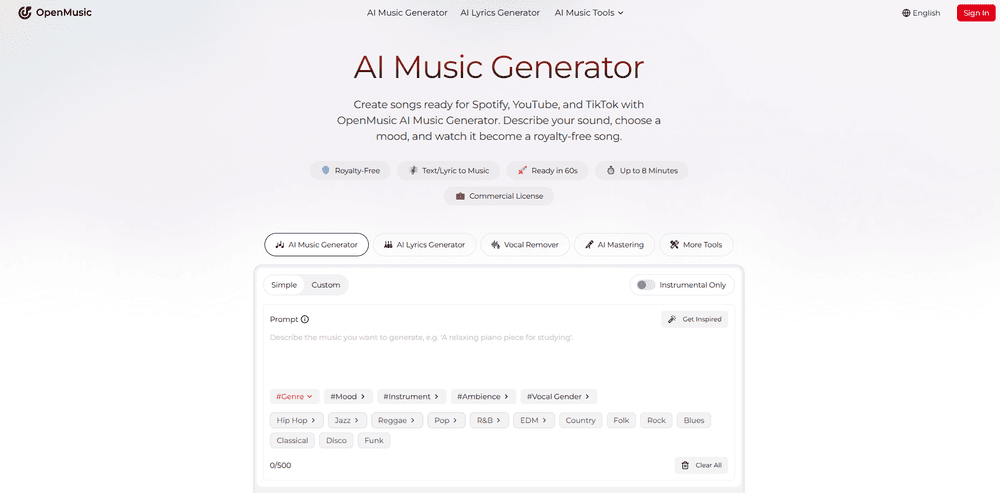
Not every generator earned a place in the rotation. The one that stuck was OpenMusic AI — not because it was the flashiest, but because it respected the pipeline: inputs I already had, exports I could use, iteration without punishment.
That's the adoption test for any creative tool: does it meet your workflow where it lives, or demand you move to it? Demands get uninstalled.
Practical Use Cases From Real Projects
Where did this actually pay? Release-day visuals without a production week. Teasers that matched the track's energy. And — the surprise — content marketing: video variants tuned to the same engagement rhythms that make email sequences work. Test ten thumbnails and hooks as cheaply as you'd test subject lines.
The lesson generalizes far beyond music: anything you publish in sequence benefits from generation-grade speed with human-grade judgment.
Limitations That Become Clear Over Time
Months in, the limits are clear and stable. Hands and fine motion still glitch. Brand-exact shots need manual touch-ups. And without discipline, generation tempts you into volume for its own sake — noise that needs the same filtering automation brings to any content pipeline.
None of these are dealbreakers. They're job descriptions: the machine proposes, you dispose.
Practical Observations for Better Results
What reliably improved output: precise briefs beat long ones — mood, pace, and one idea. Generating three variants beats generating one and praying. Feeding the tool your own reference frames anchors the style. And cutting generated footage against real shots hides almost every artifact.
The ceiling keeps rising. The floor keeps rising faster. Which means the best time to learn this workflow was last year — and the second best time is the next project.
If you're still hand-editing every video out of habit, here's the switch-over checklist — because done right, content creation becomes an asset instead of a tax:
- Price the invisible costs: hours, revisions, and abandoned drafts — total them honestly.
- Route by project: hero work stays manual; cadence work goes to generation.
- Always generate three variants: selection beats prayer.
- Keep a human pass: the last ten percent is where brands live.
- Test like a marketer: hooks and thumbnails before full productions.
- Re-check the math monthly: the savings should be visible in your calendar.
I didn't stop editing because I fell in love with AI video. I stopped because the calendar finally told the truth — and the truth was that my time belonged somewhere better.

Author
Tina Kas
Seo specialist and content writer