Third Party Logistics Provider (3PL): Complete Guide for 2026

In 2026, a third party logistics provider is a specialized company that handles warehousing, transportation, order fulfillment, and returns management on behalf of businesses across North America, Europe, and Asia. These providers operate extensive networks of fulfillment centers equipped with advanced warehouse management systems and transportation technology, allowing companies to focus on their core business rather than building costly in-house logistics operations.
The shift toward outsourcing logistics has accelerated dramatically. Industry research from 2025 indicates that over 86% of U.S. Fortune 500 companies now rely on 3PL partners to run critical parts of their supply chain. This adoption surge followed the 2020-2023 disruptions that exposed vulnerabilities in traditional logistics models and pushed companies toward more resilient, flexible solutions.
Why should this matter to your business? Third party logistics providers deliver same-day and next-day fulfillment in major markets, reduce logistics costs by 20-30% through economies of scale, and provide supply chain resilience through diversified networks. Whether you’re a startup scaling past 1,000 monthly orders or an enterprise managing global omnichannel distribution, the right 3PL partnership can transform your operational efficiency.
This guide will help you understand how third party logistics 3pl services work, evaluate whether outsourcing makes sense for your situation, and select a provider that matches your size, industry, and growth stage.
What Is a Third Party Logistics Provider (3PL)?
A third party logistics provider is a specialist company that manages logistics functions such as receiving, storage, order fulfillment, transportation, and returns on behalf of another business. Unlike hiring an in-house team or leasing your own warehouse, working with a 3PL means contracting with an external party logistics provider that brings existing infrastructure, technology, and expertise to your supply chain.
These providers typically work under contracts ranging from one to five years, integrating their warehouse management systems and transportation management systems with your ERP and e-commerce platforms. If you sell through Shopify, Magento, Amazon, or Walmart Marketplace, a 3PL’s systems sync directly with these sales channels, automating order processing and inventory updates in real time.
Consider a direct-to-consumer apparel brand as an example. Instead of operating their own warehouse, they contract with a 3PL that receives bulk shipments from overseas manufacturers, stores seasonal inventory across regional fulfillment centers, picks and packs individual orders triggered by online sales, and ships via UPS or FedEx with branded inserts. The result: 99.5% order accuracy and two-day delivery to 95% of U.S. customers—without the brand owning a single forklift.
Third party logistics providers can be asset-heavy, owning trucks and warehouses that offer predictable pricing and reliability, or asset-light, acting as freight brokerage specialists that source capacity dynamically across carrier networks. Freight forwarders and parcel carriers sometimes operate as 3PLs when they bundle transport with warehousing and customs brokerage, though many offer only point-to-point delivery without storage or fulfillment services.
Evolution of 1PL, 2PL, 3PL, and 4PL Providers
Understanding where 3PLs fit in the logistics industry requires tracing the evolution of logistics management models. A 1PL (first party logistics) refers to a shipper managing logistics with their own assets—think a manufacturer running its own fleet in the 1970s. A 2PL emerged when carriers and warehouse owners began selling spare capacity to others on a transactional basis.
The 3PL model took shape in the 2000s as companies sought integrated logistics partners offering end-to-end logistics services with technology connectivity. By the 2020s, a fourth party logistics provider (4PL) emerged as an orchestrator managing multiple 3PLs for global logistics optimization.
The differences come down to contract length, IT integration depth, and strategic involvement. A 2PL relationship involves spot deals and minimal system integration. A 3PL partnership typically spans two to three years with moderate technology ties. A fourth party logistics arrangement often extends five to seven years with deep strategic involvement, including network redesign and quarterly optimizations.
Here’s a 2024-2026 example: a U.S. manufacturer uses a 4PL to coordinate regional 3PLs across continents—one handling North American full truckload via asset-light brokerage, another managing European warehousing with multi-client distribution centers, and a third handling APAC air freight forwarding. This unified approach achieves 15% cost reductions through consolidated visibility despite varying regional regulations.
On-Demand Transportation and Flexible Capacity
On-demand transportation within logistics services refers to spot-market moves like ad-hoc truckloads, same-day couriers, or expedited LTL pallets booked when needed rather than through standing contracts. Pricing is driven by market capacity, lane imbalances, time-of-day factors, and seasonal peaks—expect 20-50% premiums during Q4 holiday surges in the U.S. and EU.
Modern logistics providers leverage digital freight platforms that emerged between 2023 and 2026, accessing 100,000+ carriers instantly through apps like Uber Freight or Convoy integrations. This capability extends their reach beyond contracted carrier bases when demand spikes unexpectedly.
Strategic contract freight works best for steady, predictable volumes where annual or multi-year agreements secure 10-20% discounts. On-demand excels for peaks, product launches, or emergencies. Consider a June 2025 product drop where a 3PL needed to source same-day LTL from California to New York amid capacity shortages—flexible access to spot capacity avoided $10,000 in delay costs and cut transit time by 1-2 days.
Horizontal Alliances Between Logistics Providers
Horizontal alliances occur when competing logistics companies share trucks, cross-docks, or warehouse space on specific lanes or regions. These collaborations proliferated between 2022 and 2025 among mid-sized U.S. and European logistics providers seeking to combat capacity crunches without massive capital investment.
A notable example: European 3PLs including DHL and DB Schenker formed alliances for denser Benelux evening networks, boosting departure frequency threefold and load factors to 90%, reducing emissions 25% through consolidated runs. Similar arrangements emerged in the U.S. Midwest, where mid-tier providers pooled cross-dock facilities to enable next-day delivery to 80% of population centers at 10-15% lower rates.
For shippers, these alliances mean access to more frequent departures, expanded geographic coverage, and often lower per-shipment costs due to better load optimization. Some alliances extend to shared IT platforms, co-developed warehouse automation projects, and common sustainability initiatives—benefits that would be difficult for individual providers to achieve alone.
Core Services Offered by Third Party Logistics Providers
When evaluating logistics service providers in 2026, you’ll encounter a range of supply chain services that vary by provider specialization. Some 3PLs focus exclusively on e commerce fulfillment, while others specialize in B2B distribution, temperature-controlled logistics, or heavy industrial sectors.
The main service categories to evaluate include receiving and warehousing, inventory management, order fulfillment, transportation, returns and reverse logistics, value added services, and data analytics. The following subsections break down what each involves and why it matters for your supply chain efficiency.
Receiving, Warehousing, and Storage
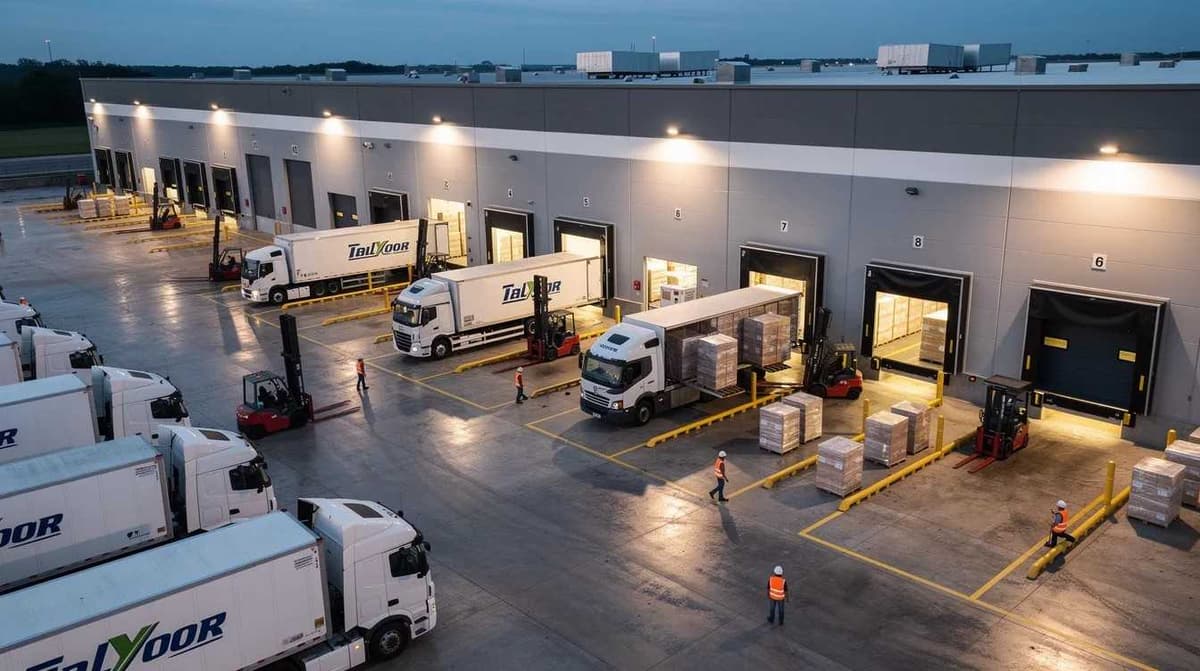
Inbound logistics begins with appointment scheduling through yard management systems, followed by unloading with forklifts and RF scanners for damage inspection and count verification. Target accuracy rates typically exceed 99% at this stage. Goods are then assigned to storage locations—pallet racking, shelving, bin positions, or automated storage and retrieval systems (AS/RS)—based on velocity and handling requirements.
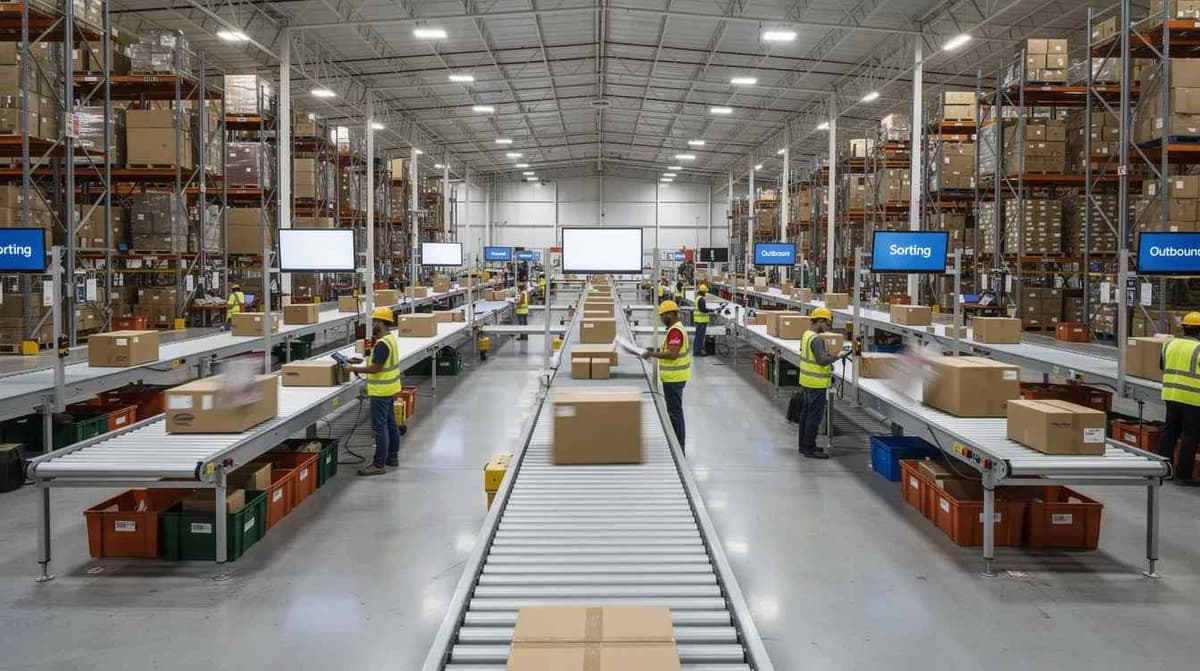
Location strategy matters significantly in 2026. Placing inventory across multiple regional fulfillment centers supports next-day delivery promises by positioning stock within 150 miles of 70% of your customer base. Technologies like conveyor systems boost throughput 2-3x compared to manual operations, while warehouse automation through AS/RS reduces labor dependency.
Compliance requirements add complexity for specific industries. Food logistics require lot and batch tracking under FSMA standards. Electronics need serial number control. Pharmaceutical distribution demands GMP compliance. A well-equipped 3PL provider handles these requirements through specialized expertise, reducing recall risk by up to 50% compared to non-compliant operations.
Inventory Management and Visibility
Real time visibility into stock levels across multiple facilities is foundational to effective distribution management. 3PLs use WMS and inventory optimization tools to maintain safety stock levels, reorder points, and automatic replenishment triggers synced with your ERP or sales platforms like Shopify, Amazon Seller Central, and SAP S/4HANA.
Common KPIs include inventory accuracy (target: 99.8%), days of supply (30-60 days typical), inventory turnover (8-12 times annually), and fill rates (95%+ for mature operations). These metrics directly impact customer satisfaction and working capital efficiency.
The 2024-2026 trend is demand forecasting using machine learning. During Black Friday 2025, brands using ML-enabled 3PLs cut stockouts 30% compared to previous years by dynamically rebalancing stock via inter-DC transfers. One retailer shifted 20% of inventory pre-peak based on predictive signals, avoiding an estimated $500,000 in lost sales.
Order Fulfillment: Picking, Packing, and Shipping
Different picking methods suit different business processes. Single-order picking works for low-volume DTC operations requiring high accuracy. Batch, zone, and wave picking handle high-volume ecommerce fulfillment 2-3x faster. Pick-to-light systems achieve 500+ picks per hour for complex operations.
Packing includes protective dunnage, branded packaging options for customer experience differentiation, and carrier-compliant labeling for UPS, FedEx, DHL, USPS, and regional carriers. Orders flow from shopping carts or ERP systems into the WMS, get prioritized against same-day cut-off times, and dispatch on standard, expedited, or economy shipping methods.
Fulfillment speed and accuracy directly impact your customer base. Top 3PLs target 99.5%+ order accuracy and less than 1% damage rates. A typical high-volume DC processes 10,000 daily orders with 98% on-time dispatch through TMS-optimized routing—the kind of seamless fulfillment that drives repeat purchases.
The location strategy point deserves a sharper mechanic. ShipBob, an ecommerce fulfillment platform operating 60+ fulfillment centers, has seen brands using its Inventory Placement Program cut transit times by roughly a third after distributing stock across regions. When an order ships from a nearby node instead of a single central warehouse, it crosses fewer zones, which shortens the last mile and pulls cost out of the carrier invoice at the same time
Transportation Management and Carrier Network
Transportation services within 3PL offerings span parcel, LTL, full truckload, ocean freight, air freight, and intermodal options. A TMS automates carrier selection through rate shopping, optimizes load consolidation for 85% load factors, and provides track-and-trace visibility throughout the entire supply chain.
Cross-border services add complexity: customs documentation, duties and taxes handling, and Incoterms management for US-EU or US-Canada trade. Customs brokerage capabilities vary by provider, so verify coverage for your specific trade lanes.
The cost advantage is significant. By aggregating shipment volumes across multiple clients, 3PLs negotiate 20-30% better rates than individual shippers could secure alone. A 2025 shipper working with a major 3PL cut FTL costs 18% on key lanes through these aggregated relationships—savings that flow directly to your bottom line.
Returns and Reverse Logistics
Reverse logistics flows typically follow this pattern: customer initiates return through an RMA portal, carrier pickup or drop-off occurs, the item arrives at the 3PL facility for inspection and grading (A for restock, B for refurbishment, C for disposal), and final disposition happens based on condition and value recovery potential.
Returns management is financially significant—fashion sees 20-30% return rates, contributing to $800 billion in annual reverse logistics costs across industries. Efficient handling protects margins while maintaining customer satisfaction through quick refunds and exchanges.
Specialized programs launched since 2023 include recommerce and refurbishment initiatives. Electronics 3PLs now recover 60% of product value through certified pre-owned channels, turning what was once a pure cost center into a value recovery operation. Self-service return portals integrated with your storefront provide real-time status updates that improve the customer experience.
Value-Added Services: Kitting, Assembly, and Customization
Kitting involves bundling multiple SKUs into a single sellable unit—think subscription boxes, pre-assembled gift sets, or device configuration before shipping. These customized logistics services reduce your SKU count by up to 40% while enabling faster product launches.
Labeling and relabeling services handle compliance requirements like adding language-specific labels for EU or UK markets, or UDI labeling for medical devices. Postponement strategies defer final customization to the 3PL facility closest to the customer, reducing inventory risk and speeding time-to-market for limited-edition or seasonal products.
A 2025 holiday campaign illustrates the value: a consumer goods brand assembled 50,000 gift bundles at their 3PL rather than in-house, enabling a product announcement just four weeks before peak season. The tailored solutions approach reduced internal labor requirements and eliminated the need for dedicated assembly space.
Data, Analytics, and Supply Chain Insights
Modern logistics companies provide comprehensive data: order status, transit times, inventory aging, warehouse productivity metrics, and carrier performance scorecards. Dashboards and portals upgraded between 2023 and 2026 offer near real-time visibility and exportable reports for finance, operations, and executive teams.
This data drives concrete decisions. After analyzing six months of performance data, one shipper redesigned their distribution network by relocating stock to different facilities, cutting average delivery time by 1.5 days while reducing transportation costs 12%. Another used carrier OTIF (on-time in-full) data to shift volume away from underperforming carriers.
The analytics capability transforms your 3PL from a service provider into a strategic partner that actively improves your logistics operations through data-driven recommendations.
Benefits of Working With a Third Party Logistics Provider
Companies in 2026 choose to outsource logistics for measurable improvements in cost efficiency, service quality, and competitive edge. The following subsections detail the specific advantages that drive 3PL adoption across various industries.
Cost and Time Savings
Economies of scale drive significant cost efficiencies. Multi-client facilities spread fixed costs across many shippers, while consolidated carrier relationships secure volume discounts unavailable to individual companies. A mid-sized e-commerce brand lowered fulfillment cost per order from $7.80 to $5.40 after transitioning to a 3PL in 2024—a 31% reduction that improved unit economics substantially.
Beyond direct costs, consider the management time savings. Your internal team no longer manages dozens of carrier relationships, staffs warehouse shifts, or troubleshoots equipment failures. Pre-existing 3PL processes, SOPs, and certifications eliminate months of development work you’d otherwise need to build from scratch.
Lower Capital Commitment and Reduced Risk
Outsourcing logistics avoids large capital expenditures on warehouses, racking, warehouse automation equipment, and transport assets. In the 2024-2026 high-interest environment, this matters significantly for cash flow and business growth flexibility.
Contracts convert fixed costs into variable costs tied to order volume or pallet positions. A startup avoids signing a five-year warehouse lease in a market they’re testing, instead using 3PL warehouse space that scales quarterly. Risk sharing extends to operational concerns—3PLs manage labor, safety compliance, and contingency planning for disruptions, reducing your exposure.
Improved Service Levels and Customer Satisfaction
Logistics providers support same-day, next-day, and two-day delivery across large parts of the U.S. and EU by placing stock closer to end customers through their global network. Fulfillment SLAs like “99% of orders picked and shipped within 24 hours of cut-off” become achievable through infrastructure you couldn’t economically build alone.
The impact on customer metrics is measurable. Brands improving delivery promises from 5-7 days to 2-3 days nationwide after moving to multi-node 3PL networks see NPS improvements of 15-20 points and higher repeat purchase rates. Faster, reliable delivery directly supports business needs around customer retention.
Scalability and Flexibility During Peaks
Seasonal peaks—Q4 holidays, back-to-school, Prime-style events, Singles’ Day—create 3-5x volume spikes that would require massive over-building to handle internally. Logistics providers manage these through temporary labor pools, extended shifts, and flexible carrier capacity, absorbing variability without passing infrastructure costs to you year-round.
A 2025 seasonal campaign illustrates this: a home goods brand needed to triple fulfillment capacity from October through December, then scale back to normal volumes in January. Their 3PL handled the ramp using historical data and forecasts, adjusting headcount and space allocation without requiring the brand to lease additional facilities.
Access to Logistics Expertise and Technology
Leading logistics providers invest heavily in robotics, automation, AI-based forecasting, and IoT tracking—investments most individual shippers cannot justify alone. Access to specialized teams including customs experts, network planners, inventory analysts, and continuous improvement engineers brings global logistics expertise without full-time hiring.
Technology rollouts since 2023 have changed productivity standards significantly. Automated packing lines, robotic sortation, and digital yard management deliver operational efficiency gains of 30-40%. One client worked with their 3PL’s engineering team to redesign packaging, improving throughput without adding warehouse space while reducing shipping costs through dimensional weight optimization.
Who Uses 3PL Providers—and When Does It Make Sense?
Logistics providers serve businesses from fast-growing e-commerce startups to established manufacturers, retailers, and healthcare providers. The trigger for outsourcing isn’t just company size—it’s operational complexity: channel count, SKU proliferation, service level requirements, and geographic reach.
E-Commerce and Direct-to-Consumer Brands
Online-first brands typically turn to 3PLs once they reach 1,000-2,000 monthly orders, the point where logistics operations consume disproportionate founder or team time. Multi-channel fulfillment across your own website, Amazon, marketplaces, and retail dropship relationships requires routing and processing logic that becomes unwieldy in a self-run operation.
Typical needs include branded packaging that reinforces customer experience, efficient returns management for acceptable return rates, subscription box kitting for recurring revenue models, and international shipping to Canada, the EU, or the UK. A DTC skincare brand that started in a garage moved to a 3PL as growth accelerated past 3,000 monthly orders, gaining access to core competencies in fulfillment that allowed founders to focus on product development and marketing.
Retailers, Wholesalers, and Omnichannel Operations
Brick-and-mortar retailers and wholesalers use logistics providers to support store replenishment, B2B shipping of full pallets, and e-commerce fulfillment from shared or dedicated distribution centers. Ship-to-store, click-and-collect, and ship-from-store models require integration with point-of-sale and inventory systems that sophisticated 3PLs provide.
Shipping to major retail chains demands strict routing guide compliance, appointment scheduling precision, and chargeback avoidance—specialized expertise that saves significant penalty costs. A regional retailer consolidated multiple owned DCs into a 3PL network, reducing facilities management overhead while improving service to stores through better network coverage.
Manufacturers and Industrial Companies
Manufacturers use party logistics providers for inbound materials logistics, just-in-time deliveries to production lines, line-side feeding, and spare parts distribution. Automotive, heavy equipment, and electronics sectors have specific requirements like sequenced deliveries to assembly plants and same-day service for maintenance teams.
Regional parts depots managed by 3PLs support dedicated transportation models for field service operations. This differs substantially from e-commerce logistics—the focus is availability and uptime rather than consumer-facing speed metrics. A medical device manufacturer uses 3PL-managed depots across three regions to guarantee same-day parts availability for technicians.
Signals It’s Time to Outsource Logistics to a 3PL
Specific operational signs indicate readiness for outsourcing: consistently missed shipping cut-offs, rising error rates above 1-2%, storage overflow requiring expensive overflow facilities, inability to meet new customer SLAs, or international expansion plans that exceed current capabilities.
Quantitative thresholds help: warehouse utilization consistently above 85%, order volumes doubling year-over-year, or 20%+ of staff time consumed by logistics firefighting rather than core competencies. Outsourcing doesn’t have to be all-or-nothing—some companies start by outsourcing specific regions, channels, or bulky SKUs to test the model before full commitment.
Key Types of Third Party Logistics Providers
The term “3PL” covers several business models, and matching the right provider type to your needs improves outcomes significantly.
Warehousing, Fulfillment, and Distribution 3PLs
These providers operate distribution centers, picking orders, and shipping parcels or pallets for multiple clients. Shared (multi-client) facilities suit mid-volume shippers seeking cost efficiency, while dedicated (single-client) warehouses serve high-volume operations needing customization and control.
A typical 2025 multi-tenant e-commerce fulfillment center handles 50,000+ daily orders across dozens of clients, serving consumer goods, retail, and light industrial distribution. The shared model spreads infrastructure costs while providing access to advanced technology that individual tenants couldn’t justify alone.
Transportation-Managed and Brokerage-Focused 3PLs
These logistics solutions focus primarily on freight movements: truckload brokerage, LTL consolidation, intermodal, and sometimes last mile delivery. Non asset based providers use TMS platforms and carrier networks to optimize cost and capacity without owning trucks.
A freight brokerage 3PL consolidates freight from multiple manufacturers into optimized linehaul shipments, filling trucks that would otherwise move partially empty. This model suits shippers with significant transportation spend but limited warehousing needs.
Freight Forwarders as 3PLs
Freight forwarders manage international ocean freight and air freight shipments, customs clearance, and origin/destination services. Many have expanded into full 3PL offerings by adding warehouses near major ports, cross-dock facilities, and value-added services.
A typical scenario: an importer sourcing from Asia uses a forwarder-3PL to manage port-to-door flows into North America or Europe, with integrated customs, drayage, warehousing, and domestic distribution. This simplifies vendor management across the Asia-US West Coast or Asia-EU trade lanes.
Integrated Contract Logistics and Lead Logistics Providers
Integrated 3PLs run long-term, deeply embedded operations for large clients with dedicated facilities and staff. Lead logistics providers design and manage logistics networks, sometimes coordinating other 3PLs—a step toward the 4PL model.
Contract lengths typically span 3-7 years with gain-share models that align provider and client incentives around continuous improvement. These partnerships suit high-volume, complex multi-country networks where deep integration delivers cumulative benefits over time.
3PL vs. Other Logistics Models (2PL, 4PL, Freight Forwarders)
Understanding where 3PLs fit among other partners clarifies which level of partnership matches your supply chain functions.
3PL vs. 4PL (Fourth Party Logistics)
Third party logistics providers mostly execute physical operations—they run warehouses, move freight, process orders. Fourth party logistics providers design, coordinate, and optimize end-to-end supply chains using multiple 3PLs and carriers as their logistics arm.
A multinational might use a 4PL to manage regional 3PLs across North America, Europe, and Asia with quarterly network optimization reviews. The 4PL provides a single point of contact, unified reporting, and strategic planning across the global reach of operations. This model suits companies with complex multi-regional supply chains needing orchestration beyond any single 3PL’s capabilities.
3PL vs. Freight Forwarding Specialists
Freight forwarders focus primarily on moving goods internationally and handling customs, while 3PLs typically manage warehousing and domestic distribution as well. Many shippers combine both: a forwarder handles port-to-port ocean freight while a 3PL manages inland warehousing and last mile delivery.
Some modern providers blur the lines, offering both forwarding and contract logistics under one brand. This integration simplifies vendor management but requires verifying that each capability meets your standards rather than assuming competence transfers across service options.
How to Choose the Right Third Party Logistics Provider
Selecting a 3PL is a strategic decision with a 3-5 year horizon. Approach it systematically rather than purely optimizing for short-term cost.
Clarify Your Logistics Requirements and Objectives
Before approaching providers, define order volumes (current and projected 24 months out), SKU counts, storage requirements in cubic feet or pallet positions, service level expectations, and channel mix (B2B, B2C, marketplaces). Specify geographic priorities—US East Coast, Western Europe, Canada—and any regulated or temperature-controlled requirements.
Identify 3-5 measurable objectives: two-day shipping to 95% of US households, fulfillment cost under $5.50 per order, error rates below 0.5%. These concrete targets guide provider evaluation and contract negotiation.
Evaluate Service Portfolio and Network Footprint
Review each 3PL’s service offering against your requirements: warehousing, transport, returns, value-added services, and industry-specific capabilities like hazmat or cold chain. Network design matters—number and location of facilities, proximity to key markets, access to ports or intermodal hubs.
Request examples of current clients with similar size and industry profiles. Ask for typical lead times and coverage maps showing delivery timeframes by zone. A provider strong in e-commerce fulfillment may lack capabilities for B2B pallet distribution, and vice versa.
Assess Technology, Integration, and Visibility
Ask specifically about WMS capabilities, TMS functionality, API availability, and pre-built integrations with your platforms—Shopify, BigCommerce, NetSuite, SAP, Oracle. Real-time tracking, inventory visibility, alerting rules, and self-service portals matter for operations and finance teams.
Cybersecurity, data privacy practices, and system resilience (backups, redundancy, disaster recovery) deserve due diligence attention in 2025-2026. Request documentation on security certifications and recent audit results.
Understand Pricing Structures and Total Cost
Typical pricing components include inbound handling per unit or pallet, storage charges per pallet position or cubic foot or bin, pick and pack fees per order and per line, packaging materials, shipping pass-through costs, and account management fees. Compare not only unit rates but minimum charges, implementation fees, and peak season surcharges.
Run scenarios using actual 3-month order and inventory data to estimate realistic monthly bills and cost per order across volume levels. This prevents surprises when volumes fluctuate or peak season arrives.
Check Operational Performance, Culture, and Fit
Review SLAs and historical performance data: on-time ship rates, inventory accuracy percentages, damage rates, and issue response times. Request a facility visit or virtual tour to observe processes, cleanliness, automation level, and safety culture firsthand.
Communication style, escalation paths, and governance structure (monthly or quarterly business reviews, dedicated account management) determine whether a partnership works day-to-day. Cultural fit matters for a multi-year relationship where problems will inevitably arise and require collaborative resolution.
Implementing and Managing a 3PL Partnership
Success depends on careful planning, data quality, and regular joint reviews—not just selecting a capable provider.
Project Planning and Implementation Timeline
Standard implementations follow phases: discovery and requirements gathering, solution design, contract signing, system integration development, testing cycles, pilot operations with limited volume, and full go-live. A single-site e-commerce implementation typically takes 8-16 weeks; multi-site or complex B2B networks require longer.
Assign a cross-functional project team—operations, IT, customer service, finance—to work with the 3PL’s implementation team. Clear ownership and communication cadence prevent delays and misalignment.
Systems Integration, Data Migration, and Testing
Clean product master data is foundational: accurate barcodes, dimensions, weights, and hazard classifications must exist before migration. Garbage in means errors out, regardless of how sophisticated the WMS.
Set up and test integrations for orders, inventory updates, shipping confirmations, and billing data. Run end-to-end test scenarios including edge cases: split shipments, partial backorders, returns, damaged items, and inventory adjustments. Invest time here to reduce go-live risk.
Ramp-Up, Stabilization, and Performance Management
Initial weeks after go-live require controlled volume ramp-up, heightened monitoring, and rapid issue resolution. Don’t migrate 100% of volume on day one—phase in over 2-4 weeks while validating accuracy and process stability.
Establish KPI dashboards tracking order accuracy, ship-on-time rates, returns processing speed, and inventory accuracy. Set up recurring business reviews—monthly initially, then quarterly once stabilized—to review performance, discuss improvement projects, and plan for upcoming volume changes.
Continuous Improvement and Network Optimization
Mature partnerships evolve into joint improvement programs: lean projects reducing warehouse touches, packaging redesign cutting shipping costs, routing changes improving transit times, or facility expansion to support business grows scenarios.
Data accumulated over 6-12 months reveals optimization patterns. One company added a second fulfillment center after data showed 40% of orders shipping to a region poorly served by their single DC—reducing costs by reducing zone-based shipping charges while improving delivery speed. Treat your 3PL as a strategic partner, sharing product roadmaps and marketing calendars for proactive planning.
Future Trends in Third Party Logistics (2026 and Beyond)
Based on developments from 2020-2026, several trends will shape supply chain solutions in the coming years.
Automation, Robotics, and AI in Logistics
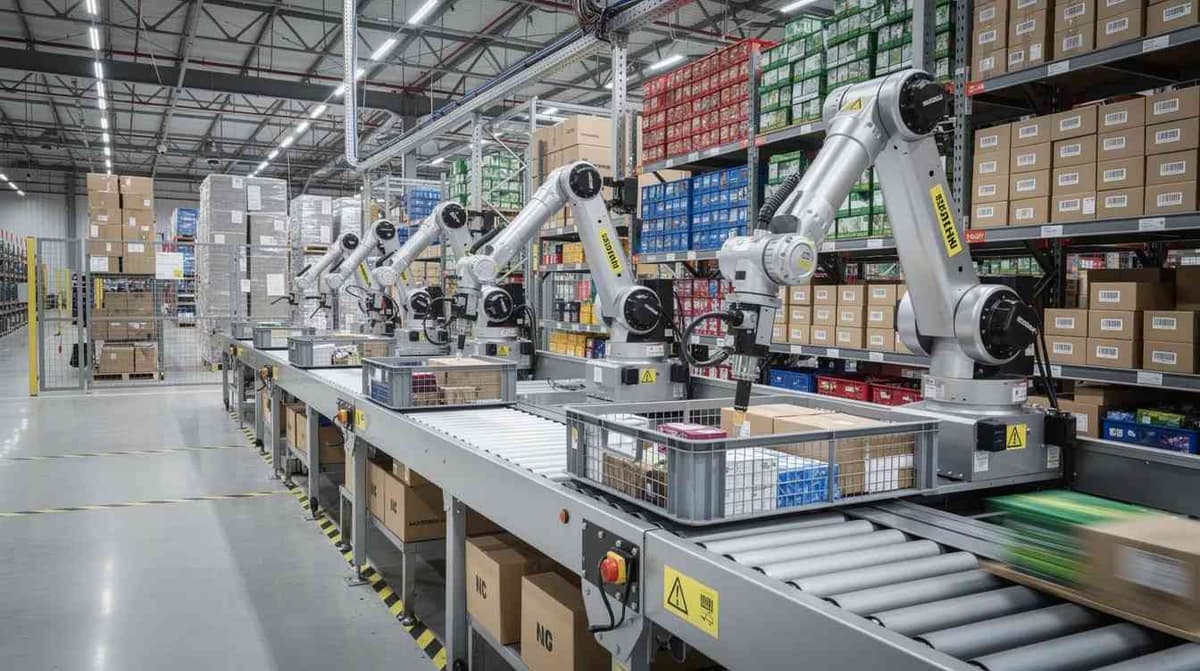
AMRs (autonomous mobile robots), robotic picking arms, and automated sortation are increasingly standard in 3PL warehouses. Major providers deployed thousands of robots across US and EU facilities between 2022 and 2025, fundamentally changing productivity benchmarks.
The impact: more consistent throughput regardless of labor availability, later cut-off times for same-day shipping, and improved reliability. Gross logistics revenue increasingly flows to providers with advanced technology—automation is becoming table stakes rather than differentiator.
Nearshoring, Resilience, and Network Redesign
Post-2020 disruptions and geopolitical shifts drive companies to rebalance supply chains, adding facilities in Mexico, Eastern Europe, or domestic markets to shorten lead times and reduce risk. 3PLs respond by opening regional hubs closer to consumption.
2024-2026 saw significant network shifts: moving some production from East Asia to Mexico for the US market, establishing EU buffer stock to manage cross-border complexity. These macro trends affect 3PL selection—verify that prospective providers have infrastructure where your supply chain is heading, not just where it is today.
Sustainability and Regulatory Pressures
Carbon reporting requirements (EU regulations, corporate ESG commitments) are creating new expectations for logistics providers. Mode shifting from road to rail, route optimization, shared networks, and greener packaging are becoming standard 3PL capabilities.
Some 3PLs now offer emissions dashboards and service options for low-carbon transport or carbon offsets. These capabilities may influence provider choice, particularly for world’s biggest brands facing stakeholder pressure on Scope 3 emissions.
Conclusion: Deciding Whether a 3PL Provider Is Right for Your Business
Third party logistics providers offer a proven model for improving service levels, reducing costs, and building competitive advantage without massive capital investment. The key services—warehousing, inventory management, fulfillment, transportation, and returns—can be assembled into logistics solutions matching your specific industry and growth trajectory.
The decision to partner with a 3PL isn’t purely about cutting costs. It’s about positioning your business for sustainable growth through supply chain management capabilities you couldn’t build alone. The operational efficiency gains, technology access, and scalability benefits compound over multi-year partnerships.
Start by auditing your current logistics performance against the benchmarks outlined above. If you’re missing cut-offs, struggling with accuracy, or consuming disproportionate resources on logistics operations, outsourcing deserves serious consideration. Define your requirements document, shortlist 3-5 providers matching your profile, and schedule facility tours or virtual demonstrations.
The companies thriving in 2026 treat their 3PL relationships as strategic partnerships, not vendor transactions. Approach provider selection with that mindset, invest in proper implementation, and commit to continuous improvement—the supply chain efficiency gains will follow.

Author
Debutify
Debutify is the easiest way to launch and scale your eCommerce brand.