Why AI-Generated UGC Ads Are Crushing Traditional Creative in PPC (And How to Test Them)
The Creative Bottleneck That's Killing Your ROI
It is worth trying to turn Google reviews into a source of all the great reviews throughout all the social media platforms. Recently I have come across an amazing tactic to reward people for leaving positive feedback on google (it is especially great for movie rental shops, telephone operators and similar businesses where customers are tightly connected to one operator/cashier): Try to imagine the customer service area of a business. Next to every attendant is a computer with a running mix of all the recent reviews on the Facebook page of that business. Natural competitive spirit and desire for positive reinforcement kicks in - the person who gets the most positive feedback after a certain period of time gets rewarded with a nice little gift, and everyone knows about it (ala "I won the pizza party which is just behind the wall"). And that gets reflected in the quality of the service rendered. Isn't it great that a couple of positive lines on social media can be so motivating? This might not work that well for massive operations (since the reviews are not specific to the individual persons/service), but could very well work for smaller setups (where the employees are constantly dealing with the customers).
The issue? Producing sufficient UGC-like materials for your campaign's freshness is pretty much a daunting task. You definitely need continuous variety to get the edge over ad fatigue, but relying on actual user content or personally filming many different versions isn't an option if you want to grow. This is exactly the point where AI-made UGC presents a terrific opportunity for PPC managers.
Why Your Expensive Creative Is Underperforming
Back in 2018, traditional ad creative was a formula that really worked well. High production value, clear branding, professional voiceover, polished editing. But user behavior has changed dramatically on social media.
Feeds on Facebook and Instagram are primarily filled with content from friends and creators, not brands. So when your shiny, well-produced ad pops up between two very informal videos, it almost shouts "advertisement, " and people simply scroll past it. The psychological term for this is "banner blindness"; users have conditioned themselves to disregard anything that looks too polished.
The Data Doesn't Lie
Meta's own research in 2024 revealed that ads viewed as "authentic" generated engagement of 2.3 times more than traditional branded content ads. Similarly, Google found that video ads with a "homemade" style produced 41% less costly clicks (CPCs) on their Display Network, as compared to professional ones. The dilemma for PPC managers is crystal clear: finding a way to create authentic-looking content on a large scale without using all of the budget for creative production.
What Makes AI-Generated UGC Different
AI-generated UGC isn't about creating fake testimonials or misleading content. It's about producing ads that match the visual language and pacing of organic social content—the stuff that actually stops the scroll.
An AI UGC Video Generator analyzes thousands of high-performing organic videos to understand what works: the pacing, the hook structure, the visual elements, even the imperfections that make content feel real. Then it applies those patterns to your product or service.
The practical difference for PPC campaigns is massive. Instead of producing three ad variations per month, you can test thirty. Instead of waiting two weeks for your creative team to turn around new assets, you can generate variations in hours.
Real Campaign Results
Last month I collaborated with a DTC skincare brand that was allocating 15,000 per month to Meta ads. Their conventional creative method was basically hiring UGC creators via platforms like Billo200-400 for each video, two weeks for turnaround, quality that can be a hit-or-miss. We played AI-generated UGC into their testing mix. Two AI-generated ads turned out to be their top performers after only three weeks. Combined CPA plummeted from 42 to 31. AI content didn't replace their creator partnerships completely, but it allowed them to test aggressively and find winners faster due to the volume they were given.
How to Actually Test AI-Generated UGC in Your Campaigns
Testing AI creativity isn't complicated, but there's a right way and a wrong way to do it. Here's the framework I use across client accounts.
Start With Your Best Performing Creative
Don't test AI content in isolation. Take your current best-performing ad and create AI variations that match its core message and structure. This gives you a fair comparison and reduces risk.
Create Multiple Variations
The advantage of AI is volume. Generate at least 5-7 variations with different hooks, pacing, and visual styles. You're looking for patterns in what works, not betting everything on a single asset.
Set Up Proper Testing Structure
In Meta Ads, use Campaign Budget Optimization with each AI creative in its own ad set. This lets Facebook's algorithm allocate budget to winners without you manually monitoring every hour. In Google Ads, use Video Action Campaigns and let the system optimize toward your conversion goal.
Platform-Specific Considerations
Google and Meta handle AI-generated content differently, and understanding these nuances matters for your campaign performance.
Meta Ads (Facebook/Instagram)
Meta only requires disclosure in cases where a certain type of AI content is used, especially deepfakes or synthetic media that show real people. Usually, AI-generated product demos or animated content don't lead to these requirements. The main factor is truthfulness if your AI content is disguised as a real person giving a testimonial, you could have serious problems both from an ethical perspective and in terms of the rules. Meta's algorithm doesn't treat AI content as something negative by itself, but it does target low-quality content. If your AI-generated ads feature low engagement during the first few hours, the algorithm will limit the delivery, and your CPMs will go up. Start small to test your ads with minimum budgets.
Google Ads
Google's policies are simpler. They focus on whether the claims are accurate and the overall user experience, not on the method of the content creation. AI-driven video ads have a great performance on YouTube Shorts as the video format is very close to the look of organic content.
One drawback: Google's automation can mistakenly mark AI-generated content as "low quality" if it is visually very similar to other ads in the network. So, to prevent this, add some distinct elements for example, create your own music, use very targeted product shots, or deliver brand-oriented messages.
The Tools That Actually Work
Having considered the above stipulations, below is the text rewritten in human style: Only very few AI video generators are actually dedicated to PPC. For example, some are meant for social media users while other ones for making long videos. So, the thing you want is an AI that knows about ads layout and also how to convert. A number of companies that have launched products for this area only have appeared during the last year and I have used those main ones with clients to find out how they differ in reality.
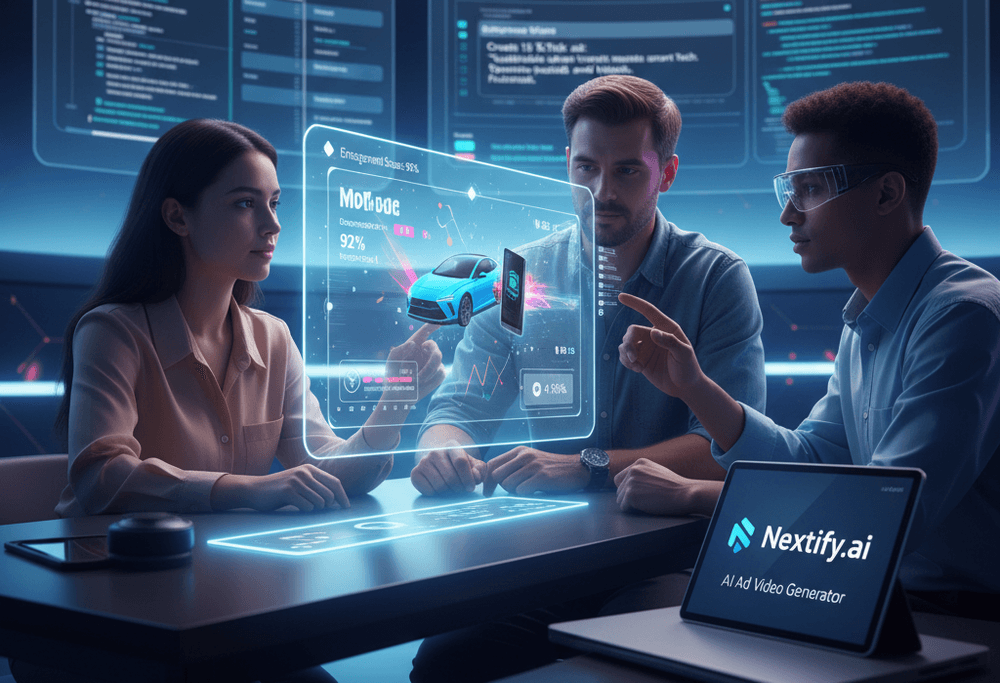
Nextify.ai is built specifically for e-commerce and performance marketing. You input a product URL, and the system generates multiple UGC-style video ads optimized for social platforms. The output is designed for 9:16 mobile format, kept under 30 seconds, and includes text overlays that work with sound off — critical since 85% of Facebook video is watched without audio. Where it falls short: the AI-generated voiceovers can sometimes sound slightly unnatural, and you'll want to review every output before launching.
MakeUGC really takes it further by focusing quite a bit on making the content creator the focal point. It makes videos with AI avatars that look like real UGC creators, which could be a good option for companies that want human-facing commercials without the cost or time of hiring real creators. The avatar quality has gotten a lot better, even though the results are still more suitable for certain types of products than others lifestyle and beauty usually do well, whereas technical or B2B products might sound strange if you use this format.
Bandy AI is all about quick test-and-learn process and batch ideas generation. Its main advantage is speed; you can quickly produce a large number of ad variants, so it is very handy when you have heavy testing phases. The downside is that the individual results will probably need more manual tweaking compared to the platforms that give priority to the finished product over the quantity.
InVideo AI has a broader range of features besides just UGC style ads. For example, it supports a wider variety of video types from explainer videos to social clips. So it is very flexible, but not very specialized in pure PPC performance. If you also want to go beyond paid ads for content marketing or organic social exposure, you can think about it as a more all-round tool.
No single platform is perfect for every use case. The right choice depends on your primary channel, your product type, and whether you prioritize output polish, production speed, or format flexibility.
The Hybrid Approach
The best examples I have come across are when AI-generated content was mixed with genuine creator collaborations platform choice didn't really matter here. The process is like this:
First, generate 10-15 test samples with AI quickly. Then, facilitate their promotion as small-budget tests on your desired platforms. After that, choose the top 2 or 3 based on campaign data such as click-through rates, retention rates, and conversion metrics.
Finally, engage real UGC creators to create similar content using the winning hooks and structures as a creative brief. This method enables you to enjoy the quickness of AI together with the genuine nature of real creators, plus you are basing your creative choices on data rather than making guesses.
Two of the platforms already mentioned Nextify.ai and MakeUGC in particular are excellent for that first phase of rapid testing, while the final creator-produced content brings in the natural feel that still manages to outperform fully synthetic ads in most head-to-head comparisons.
The Click Fraud Problem Nobody Mentions
One thing that surprised me is that advertising with AI-generated content can drive even more fraudulent clicks compared to traditional creativity in some placements.
How come? Bot networks as well as click farms are set up to engage with the kind of content that appears to be doing well. So, when your AI-generated UGC ads start achieving high engagement rates, they become their targets. I've heard of programs using AI that 20-30% of clicks on their best AI ads were from fraudulent sources.
The answer is not to stop using AI creative but rather to have good fraud detection in place. Keep a very close watch on your conversions. If an ad is getting 5% CTR but only a 0.2% conversion, then there is a problem. Use Google Analytics to see where your traffic is coming from. Watch out for cases of very high traffic coming from certain countries or ISPs.
Protecting Your Budget
For any campaign using AI-generated creative (or any creative, really), implement these safeguards:
Set Up Conversion Tracking Properly
Don't rely on platform-reported conversions alone. Use Google Analytics 4 or your own tracking to verify that clicks are turning into actual customer actions. The discrepancy between platform data and actual conversions often reveals fraud.
Monitor Engagement Quality
High CTR with low time-on-site or immediate bounces is a red flag. Real users who click an engaging ad will spend at least a few seconds on your landing page.
Use Geographic and Demographic Filters
If you're targeting UK customers, exclude countries where you don't ship. This seems obvious, but many campaigns leave targeting too broad, and fraudulent clicks often come from unexpected locations.
What Can Go Wrong (And How to Avoid It)
I've made every mistake possible with AI-generated ads, so you don't have to. Here are the biggest pitfalls.
The Uncanny Valley Effect
If your AI-generated content tries too hard to look like a real person and falls just short, it triggers discomfort. Users can't quite put their finger on why, but something feels "off." This kills engagement.
The fix: lean into the fact that it's generated. Use animation, text-heavy formats, or obvious AI voices rather than trying to fake human presence. Or use AI for the editing and structure while keeping real human elements for the on-screen presence.
Platform Rejection
Both Google and Meta will reject ads that violate their policies, and AI-generated content sometimes triggers false positives. I've had perfectly legitimate product demo videos rejected for "misleading content" simply because the AI-generated voiceover made claims the reviewer found suspicious.
Always have 2-3x more creativity in your pipeline than you plan to launch. Some will get rejected for reasons that make no sense, and you need backups ready.
Ad Fatigue Happens Faster
This surprised me initially, but AI-generated ads seem to hit fatigue faster than creator-made content. My theory is that they're so optimized for immediate engagement that they burn through your audience quickly.
Combat this by refreshing creative every 7-10 days rather than letting ads run for weeks. The good news is that generating new variations is fast and cheap.
The Quality Control Checklist
Next time you plan to publish AI-generated advertising content, make sure you use this checklist first. It is a great itch to keep one's self from getting embarrassed by making a wrong move. When editing an AI- generated ad, one should check if the audio is properly aligned with the visuals. AI tools often create some random mismatch between the voiceover and what is happening in the visuals. To be on the safe side, one should watch the whole video once instead of just scrubbing through it.
Are the Product claims made in the ad correct? AI has the potential to come up with very impressive and interesting marketing messages. Unfortunately, they may be quite far from the truth. That is why it is a must to cross-check any statement of the product against the product specs that you have. Is the brand voice reflected? Since it is a machine, AI will revert to the standard marketing language. Therefore, it is necessary to give the text a little twist so that the output is in harmony with your brand voice and not sounding like a robot. Would you wish to keep scrolling past it? Answer me truthfully.
When you stumble upon this ad in your feed, would you stop and look at it? If you are unable to convince yourself to do so then dear friend, your audience will probably leave the scene to search for something more engaging.
Measuring What Actually Matters
Vanity metrics will lie to you with AI-generated content. High CTR means nothing if those clicks don't convert. Here's what to actually track.
Cost Per Acquisition (CPA)
This is the only metric that matters. If your AI ads have a lower CPA than traditional creative, they're working. Everything else is noise.
View-Through Rate
For video ads, what percentage of viewers watch past the 3-second mark? Past 10 seconds? AI-generated content should hook viewers immediately. If 80% of people scroll away in the first three seconds, the creative isn't working regardless of production method.
Conversion Rate by Creative Type
Segment your conversion data by creative type. Compare AI-generated vs. creator-made vs. professional production. You might find that AI works brilliantly for certain products or audiences but falls flat for others.
What's Coming Next
AI video generation is evolving fast. The tools available today will look primitive in six months. Here's what I'm watching.
Personalization at Scale
We're moving toward AI that can generate unique ad variations for individual users based on their browsing history, demographics, and behavior. Imagine showing 10,000 different versions of your ad, each optimized for a specific viewer. The technology exists; the platform policies are catching up.
Real-Time Optimization
AI systems that generate, test, and iterate on creative automatically without human input. You'd set parameters (brand guidelines, budget, target CPA) and the system would continuously produce and test new variations, killing underperformers and scaling winners.
Cross-Platform Adaptation
Upload one piece of content and have AI automatically reformat it for every platform—YouTube Shorts, Instagram Reels, TikTok, Facebook Feed, Google Display—with platform-specific optimizations. This already exists in basic forms but will become far more sophisticated.
Your Action Plan for This Week
If you're managing PPC campaigns and haven't tested AI-generated UGC, here's what to do in the next seven days.
Day 1-2: Audit Your Current Creative
Look at your top-performing ads from the last 90 days. What do they have in common? What hooks work? What visual styles? This becomes your brief for AI generation.
Day 3-4: Generate Test Creative
Use an AI UGC Video Generator to create 5-7 variations based on your top performers. Don't overthink it—you're testing, not launching your Super Bowl campaign.
Day 5: Set Up Test Campaigns
Create new ad sets in Meta or new campaigns in Google specifically for testing AI creative. Start with 10-20% of your total budget. Use your standard targeting—you're testing creative, not audiences.
Day 6-7: Monitor Early Signals
Watch the first 48 hours closely. Check CTR, early conversion data, and engagement quality. If something's clearly not working, kill it fast. If something's promising, let it run.
The Bottom Line
Artificial intelligence-generated user-generated content is not completely replacing traditional creative. It won't be the one that wins you a Cannes Lion. However, for pay-per-click managers who want to scale their performance without scaling their budgets in proportion, it has become a must-have tool.
Currently, the brands that are winning in paid social are the ones that are testing aggressively. They are making 10 times more creative variations than their competitors, finding winners faster, and scaling them more efficiently. AI enables that high output without the need for a creative team of 20 people. Start conservative testing. Test, measure, and then test some more.
Currently, the tools are good enough that if you test enough variations, you will almost certainly find winning combinations. Also in pay-per-click, finding winners 10% faster than your competitors results in significant advantages that accumulate over time. Data shows that AI-generated content works.
The only question is whether you are willing to test it before your competitors do.
Do you want to start testing AI-generated creative in your campaigns? The sooner you start, the more data you'll have when this becomes a standard practice across the industry. And believe me, it will.

Author
Sohaib Khan
Senior SEO Manager & Content Writer with expertise in SEO, link building, and digital growth strategies.