Why Barcodes Are Used Almost Everywhere Today
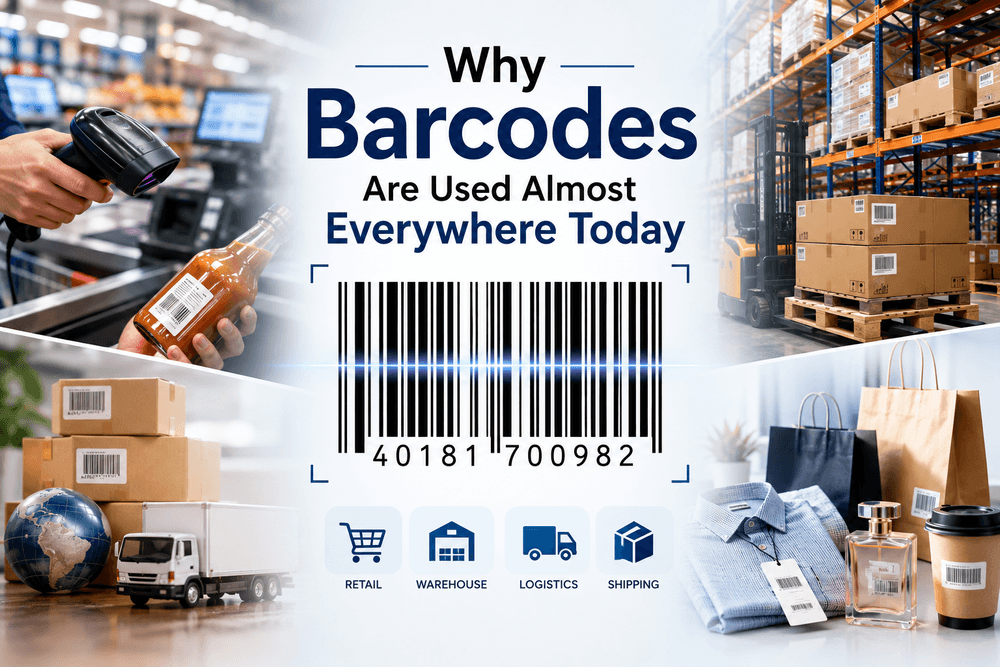
Imagine you are standing in a long line at the mall for checkout, where each product's data has to be entered manually. In such a situation, chaos, delays, and human errors become unavoidable… right? But don’t worry, this is exactly the kind of inefficiency barcodes are designed to eliminate.
Barcodes are basically simple visual patterns that store useful information in a machine-readable format. They act as a bridge between physical items and digital information systems.
Now, here is the thing – Over the past few years, the use of barcodes has moved far beyond supermarkets. Currently, they are used in e-commerce, logistics, and many other fields.
Wondering what the reasons behind their widespread usage are? Well, there are many. To learn about them, you will have to read this blog till the very end.
What are Barcodes and How Do They Work?
A barcode is a machine-readable code that consists of numbers, spacing, and parallel lines to store a product’s information, such as:
Unique ID
Product manufacturer
Pricing
Tracking number
There are two types of barcodes available: 1D (one-dimensional) and 2D (two-dimensional).
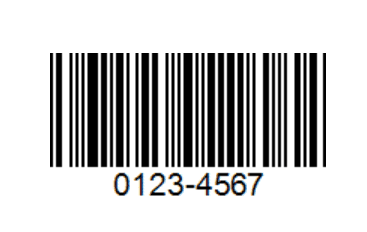
One-dimensional barcodes are commonly referred to as “Linear barcodes.” They consist of parallel black and white lines of different widths and are widely used for retail products. This is what linear barcodes look like:
On the other hand, two-dimensional barcodes store information both vertically and horizontally using a pattern of squares, dots, and hexagons. Thanks to this design, they can hold significantly more information.
A pictorial demonstration of 2D barcodes is shown below:

Working:
When it comes to the working mechanism, there are multiple stages involved.
Data Encoding: When the product information (i.e., ID, price, etc.) is converted into a barcode. Each letter/number is translated into a specific pattern or bar, just like in the image attached above.
Barcode scanning: A dedicated barcode scanner reads the code by emitting light, which immediately reflects back in a way that corresponds to the patterns of lines and shapes.
Signal conversion: The reflection is then converted into electrical signals based on the varying intensities of the light.
Decoding: Here, the electrical signals are matched with barcode standards. And the encoded data is transferred back into its original form.
Database lookup: The data is automatically sent and saved into the connected system for further processing.
Now, let’s understand why these codes are so popular.
Primary Reasons Why Barcodes are Being Used in Almost Every Field
There are a number of reasons behind the wide usage of barcodes; some of the major ones are discussed in the section below.
1. Improved Accuracy
For businesses, accuracy is one of the most critical elements in routine operation. This can be especially true in logistics and inventory management, where sensitive data is handled.
So, when employees are processing such data manually, there is a strong chance of human error. A single mistake (entering the wrong product code/price) can lead to financial losses and operational disruptions.
Barcodes solve this problem by automating the data-capturing process. When a code is scanned either through a physical device or an online barcode scanner from imagetotext.info, the user will immediately get the decoded information without any manual intervention. This will significantly reduce the chances of human errors, ultimately increasing the overall accuracy in business operations.
2. Speed and Efficiency
We all know that reviewing the product information and then entering it manually definitely requires time as well as effort. This not only affects the overall workflow but also the productivity of the employee.
This is where barcodes again come in handy. They can be quickly scanned with a scanner (whether physical or online), ensuring the decoded data is processed without any delay, saving valuable time and effort.
Remember, the time-saving advantage becomes really beneficial when the employees are dealing with a large volume of products. In retail stores, quick barcode scanning significantly reduces checkout times and improves customer satisfaction. For warehouses, these codes speed up tasks like stock counting, order picking, and shipping.
3. Cost Effectiveness
One of the primary reasons behind the widespread use of barcodes is that they are cost-effective. Unlike advanced management and scanning systems, barcodes require minimal investment.
On the internet, you can easily find a wide range of specialized tools that quickly generate 1D and 2D barcodes for free. Additionally, the overall printing is also quite affordable.
When it comes to scanning, there is a range of physical scanners available with varying pricing. If you want a more affordable solution, go for web-based scanners like the one we used for the pictorial demonstration above.
In simple words, the cost-effectiveness of barcodes is making them widely used by businesses of all sizes.
4. Easy to Implement and Integrate
There is no doubt that implementing and integrating new technologies is a really hectic and time-consuming process.
Fortunately, this isn’t the case with barcodes. You do not need complex setups and technical expertise to implement them. This is because a basic barcode scanning system can be set up with minimal effort.
Additionally, you can also easily integrate barcode technology into existing inventory or product management systems. That’s why it is being used almost everywhere.
5. Seamless Scalability
Last but not least, barcodes offer excellent scalability. We all know that, as the business grows, operations start becoming more complex. This happens because more data needs to be processed and managed.
Luckily, barcodes have a solution for this as well. It does not matter if your company is handling a small stock or a global supply chain; these codes can easily handle a large volume of data without losing efficiency.
You can add new product data, locations, and other information to the barcode system without requiring significant changes. This capability makes them an ideal solution, allowing businesses to scale their routine operations confidently.
After going through all these reasons, we now think you will have a clear understanding of why barcodes are widely used everywhere.
Frequently Asked Questions (FAQs)
1. Why are barcodes so popular in businesses?
There are multiple reasons for their popularity. Barcodes offer excellent accuracy, scalability, reduce overall cost, and are easy to implement/integrate. Their ability to simplify routine processes or tasks makes them a valuable option for industries.
2. Can small businesses benefit from barcodes?
Yes, small companies can benefit from barcodes, as they are cost-effective and easier to implement.
3. Do barcodes have any limitations?
They have multiple limitations that you should keep in mind:
Limited data storage capacity (especially for 1D barcodes)
Damage to printed barcodes can affect the readability as well as scanning
4. Do barcodes require an active internet connection to work?
Only if you are using web-based scanners. However, if you are using a physical scanner, then no internet is required, because these usually process and store data locally.
Final Words
The use of barcodes has gone far beyond retail. These are now being used in almost every field of business, all because of their affordability, scalability, accuracy, and convenience. At first glance, they appear quite simple, but their impact on modern business operations is huge.
In this detailed blog post, we have discussed what barcodes are, how they work, and the key reasons behind their widespread usage.
Hopefully, you will find this blog valuable.

Author
Atif Shahzad
Atif Shahzad is an SEO content strategist specializing in SaaS, AI-driven platforms, and digital growth ecosystems. He develops high-performance content strategies that align search intent with business outcomes that help brands scale organic visibility and drive measurable revenue impact. His work spans SEO, PPC, and full-funnel content strategy. Atif regularly explores the evolving role of AI in search and content optimization to keep track of algorithm shifts and industry trends.