From Prompt to Production: What Building Real Apps With AI Teaches About Adoption
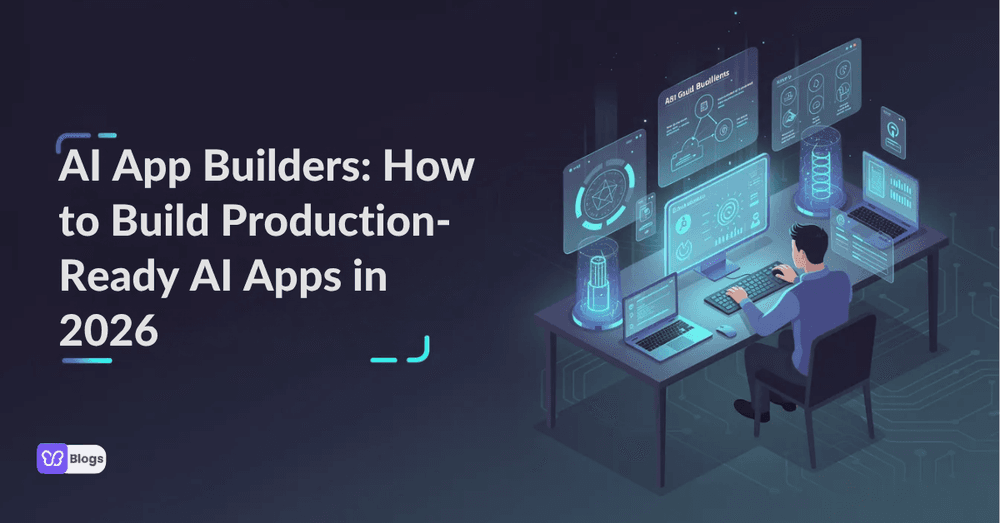
In 2026, ai app builders have moved far beyond simple wireframe generators. These platforms generate applications from text prompts, turning plain descriptions into working software.
The shift changes the onboarding of every internal project, because the first version now arrives in hours. The market reflects the change, and roundups of ai app builders now read like a new software category forming in real time.
This guide covers the journey from first prompt to production, because the journey is where the lessons live. Every stage has a failure mode and a fix, and the store owner who knows both adopts well while everyone else adopts expensively.
What is an AI app builder? (and how it differs from classic app builders)
The difference is intent. Classic builders give you components to assemble. AI builders give you an application from a description, components and all. The first is a toolbox. The second is a carpenter who listens, and the distinction decides how you work with it.
The distinction matters to any business evaluating the category. With a toolbox you pay in assembly time. With a carpenter you pay in clarity of description, and the businesses that have clarity to spare get more from the second kind than the first ever gave them. Knowing which one you are hiring is the first decision, and it shapes all the rest.
What kinds of apps can you build with AI app builders?
The range is wider than most expect. Marketing landing pages with social proof built in. Support chatbots trained on your policies. The connective tissue around CRMs and the systems that feed them.
The deeper builds reach into operations: the tools that track a supply chain or coordinate a team. The ceiling keeps rising, and the honest answer to what can you build is: more this year than last, and more next year than this one.
For a store the practical list is shorter and more valuable. The order exception tool. The wholesale intake form. The supplier dashboard. The returns triage. Each one sits at the intersection of high frequency and clear rules, which is exactly where generated apps shine, and exactly where an owner's time currently goes.
Core features to look for in the best AI app builder
The features separate the serious platforms from the demos. Generation quality is the entry fee. The differentiators are downstream: clean navigation in the generated interface, real connections to your data, and a path from the first version to the maintained one.
The downstream emphasis is the buying lesson. Every platform demos well, because the demo is scripted. The difference appears in week four, when the app needs a change, a fix, and a connection nobody mentioned in the sales call. Buy for week four, not the demo, and the choice becomes clear.
How AI app builders work: from idea to deployed app
The pipeline has a shape that never varies. The description becomes a plan. The plan becomes an interface and a data model. The model connects to systems. And the result deploys to the place your team will use it. Every stage can be inspected, and inspecting them is the difference between trusting and hoping.
The inspection habit is worth building early. The businesses that look at each stage catch the misunderstandings while they are cheap, because an error in the plan costs minutes and an error in the deployed app costs trust. The pipeline reward the attentive, and attention is the cheapest input it has.
Benefits of building apps with AI vs traditional development
The benefits are specific and measurable. Speed, obviously: days instead of months. Cost, at the first-version stage. And iteration, which is the quiet giant, because changing a generated app is a conversation while changing a built one is a project.
The iteration point deserves the emphasis, because it changes behavior. When change is cheap, improvement becomes a habit instead of an event, and the apps get better the way good products always have: in small steps, taken often. The businesses that internalize cheap iteration outbuild the ones still saving up for the big release.
AI app builders vs AI app development companies
The comparison is not winner-take-all. The builders serve the many small apps. The companies serve the few big ones, bringing a development partner to the work where getting it wrong costs more than getting it built.
The split is the strategy. Build the small internally and often. Hire for the big rarely and deliberately. The businesses that blur the line overpay on one side or underserve on the other, and both mistakes are visible in the budget by the second quarter. Knowing which side of the line each app sits on is the whole discipline.
Using AI app builders for internal tools and operations
The internal-tool story is where the category earns its keep. The tracker for warehouse inventory that used to live in a spreadsheet. The approval flow that used to live in email. Each one is small, and together they are the difference between a business that runs and one that wrestles.
The store version of the argument is personal. Every internal tool the owner builds is an hour returned from administration, and the hours are the only resource that does not restock. The businesses that treat internal tooling as a habit, not a project, quietly accumulate a working advantage no competitor can see, because the advantage lives in the hours.
Building full-stack AI apps: frontends, workflows, and agents
The full-stack capability is the new frontier: generated interfaces on top of generated workflows, with agents handling the reasoning. The no-code tier makes the frontier accessible, which is what every frontier becomes once the tools arrive.
The frontier metaphor is worth taking seriously, because frontiers reward the early and punish the late. The businesses exploring full-stack generation now are building the experience that will be expensive to buy later, and the experience is compounding quietly while the skeptics wait for it to mature. The waiting has a cost, and the cost is the head start.
Connecting AI apps to real data and third-party tools
The connections are where generated apps prove themselves. An app that cannot read your data is a mockup. One that can read it and write back is a system, and the distance between the two is the entire value of the category.
The connection question is therefore the first question of any evaluation. What can it reach, how securely, and what happens when the source changes? The answers predict the app's future more reliably than any feature list, because an app is only as alive as its data, and the data is where the work lives.
Design and iteration: editing AI-generated apps
The editing story separates the platforms most. The good ones treat every generated element as editable, by conversation or by hand, and the difference shows in week two, when the first change request arrives and either takes minutes or becomes a rebuild.
The rebuild test is the honest evaluation. Ask any vendor how a change happens, and watch whether they describe an edit or a regeneration. The platforms that answer with an edit keep your improvements. The ones that answer with a regeneration reset them, and the reset is the hidden cost that never appears in the pricing page.
Security, governance, and scaling AI-built applications
The grown-up layer is non-negotiable. The checklist includes the ability to Enforce SSO for enterprise environments, data handling that respects obligations like GDPR, and scaling behavior that survives the day the tool becomes popular inside your own team.
The internal popularity point is the one everyone forgets. The tool that works gets adopted, and adoption multiplies the load, the permissions, and the data touching it. The platforms that survive their own success planned for it. The businesses that pick them get a tool that grows. The others get a ceiling.
How to choose the best AI app builder for your team
Choosing runs on the team's reality, not the vendor's ranking. The developers will want the control of ai agents and frameworks, and the comparison of Replit alternatives is where they shop. The operators will want the speed of a good no-code surface, and both groups are right, for their respective apps.
The split-by-role answer is the honest one. There is no single best builder, only the best builder for the person who will run it. The businesses that match the tool to the operator get adoption. The ones that standardize on prestige get shelf software, and the shelf is where good intentions go to wait.
Future of building applications with AI
The direction is toward apps that maintain themselves: systems that watch their own behavior, suggest their own improvements, and absorb the new AI tools as they arrive. The maintenance burden that used to follow every build is the next thing to be automated, and the automation is already visible in the leading platforms.
The forecast for buyers is simple. The apps of the next three years will demand less and deliver more, which means the decisions made now age well. The businesses that choose platforms with self-improvement on the roadmap are buying a slope, not a step, and the slope is what compounds.
Getting started: from first prompt to your first shipped AI app
The start is deliberately small. Pick one workflow. Describe it in a paragraph. Generate, test, and fix until it does what you meant. Teams without coding experience complete the loop routinely now, which is the sentence that would have sounded like science fiction five years ago.
The loop is the whole onboarding, and it takes an afternoon. The businesses that spend the afternoon join the category. The ones that keep reading about it stay in the audience, and the distance between the two groups widens every quarter. The afternoon is the cheapest ticket in the building economy, and it is available to everyone.
Code Generation and Agent Mode in AI App Builders
The advanced modes deserve a word. Code generation exposes the output for inspection and ownership, which is the graduation path for apps that outgrow the builder. Agent mode turns the builder itself into a collaborator that works alongside you, and both modes point at the same destination: software that is co-authored instead of commissioned.
The co-authoring frame is the right one for the whole category. The builder is not a vendor and not an employee. It is a collaborator with infinite patience and no judgment, which is a description of every good collaboration: the human brings the judgment, the machine brings the patience, and the work benefits from both.
The Role of Lovable Cloud in AI App Development
The managed-cloud layer completes the picture. The platforms that bundle hosting, data, and deployment remove the last barrier between a generated app and a running one, which is how the category keeps shrinking the distance from idea to product.
The shrinking distance is the trend underneath all the trends. Every year removes one more step between the description and the running app, and the businesses that track the distance and use it are the ones whose tools keep getting better while everyone else's stay ordered. The distance is falling. The only question is whether you are moving with it.
The journey from prompt to production is a discipline more than a technology, and the discipline gathers into one checklist. Before you ship your first AI-built app, run it:
- Start with one workflow and shrink the first version hard.
- Buy for week four, not the demo.
- Ask the rebuild question: edit or regenerate.
- Connect the data early, because disconnected apps are mockups.
- Plan permissions and logging before internal popularity arrives.
- Match the tool to the operator who will run it.
The platforms will keep closing the distance between idea and app. The businesses that arrive early, describe clearly, and govern honestly will own the advantage the distance creates.

Author
Debutify
Debutify is the easiest way to launch and scale your eCommerce brand.