How to Sell Through AI Shopping Agents in 2026: Agentic Storefronts, Feeds, and Protocols
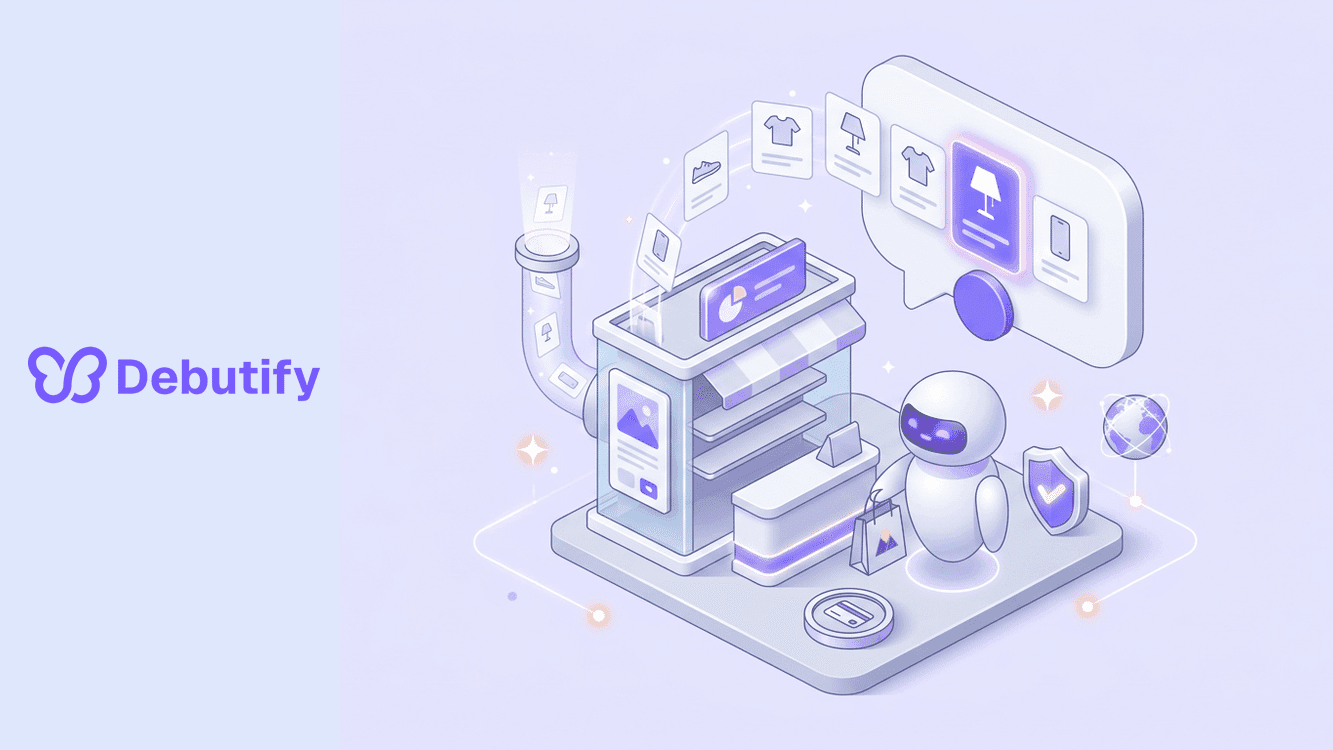
Sometime between your last product launch and this sentence, your catalog was probably enrolled in AI shopping whether you clicked anything or not: in March 2026 Shopify auto-enrolled merchant catalogs into its agentic commerce network, syndicating products to ChatGPT, Google AI Mode and Gemini, Microsoft Copilot, Perplexity, and the Shop app, and for eligible US stores the direct-checkout channels switched on by default. The buying side moved just as fast: ChatGPT retired its in-chat Instant Checkout in March 2026 after low merchant adoption and pivoted to discovery-plus-redirect, Google launched Universal Cart in October 2026 on top of its new Universal Commerce Protocol, Perplexity runs in-chat Instant Buy through PayPal with the retailer as merchant of record, and Copilot has checked out inside the chat since January. Roughly 60% of US shoppers now use AI tools somewhere in the purchase journey, AI-referred visitors convert about 31% higher than standard organic in ecommerce measurements, and the traffic, while still near 1% of sessions, is growing above 500% year over year. This is the merchant's playbook: what is actually live per platform, the two protocols underneath (ACP versus UCP), the Shopify setup path, and the product-data work that decides whether the agents find you, trust you, and complete the sale.
Our existing coverage handles the visibility side: ranking your store on ChatGPT, checking whether you show up, structuring content for mentions, and the AI visibility tools roundup. This guide covers the transaction side: getting found is half the loop, and 2026 is the year the checkout half went live.
What is actually live, platform by platform (late 2026)
| Platform | What shoppers can do | Where checkout happens | How merchants get in |
|---|---|---|---|
| ChatGPT | Find, compare, and view products; shopping rolled out across Free, Go, Plus, and Pro tiers since March 2026 | On your own site (in-app browser or new tab); in-chat Instant Checkout was retired March 5, 2026 | Automatic via Shopify Catalog; or ACP product feed at the OpenAI merchant program (US); Etsy sellers integrated natively |
| Google AI Mode + Gemini | "Buy for Me" agentic checkout via Google Pay; Universal Cart across Search and Gemini (US, since October 15, 2026) | Google Pay with many stores, UCP native checkout for select merchants (US, Canada, Australia), or transfer to your cart | Google Merchant Center feeds with conversational-commerce attributes; UCP checkout via early-access interest form; Shopify's Google AI Mode channel is on by default for eligible US stores |
| Microsoft Copilot | Browse and check out inside Copilot | In chat via PayPal, Shopify, or Stripe; you remain merchant of record | Shopify channel, Stripe, or PayPal; Microsoft Merchant Center wants a UCP-compliant feed; US only |
| Perplexity | Instant Buy inside answers | In chat via PayPal; retailer is merchant of record | PayPal's agentic commerce tools (5,000+ merchants live since November 2025, including big-name retailers); Shopify merchants selling and shipping to the US included |
| Meta surfaces | Buy on Meta surfaces including Muse where available | Shopify-powered direct checkout, or your store if you turn it off | Shopify's agentic Meta channel, on by default for eligible stores (US, Canada, Mexico) |
| Amazon Rufus | "Buy for Me" when Amazon lacks the item | The agent purchases from your own site | No enrollment; Rufus acts as a buyer on third-party brand sites |
The pattern across all six: discovery is universal and growing; in-chat checkout is real but narrower than the headlines, and the platforms that forced native checkout learned the lesson publicly (Walmart walked away from OpenAI's checkout after a reported conversion drop and now reroutes shoppers to its own flow). The durable architecture is the one Shopify bet on: let AI handle discovery, keep checkout on trusted infrastructure where your fraud rules, taxes, and customer relationship live.
The protocol layer: ACP versus UCP
Two open standards sit under the surfaces, and they are not mutually exclusive; a Shopify merchant can serve both simultaneously.
ACP (Agentic Commerce Protocol): co-developed by OpenAI and Stripe, launched September 29, 2025, open-sourced, currently in beta with an April 2026 stable spec. It defines how an agent completes a purchase through four checkout API endpoints (create, update, complete, cancel) using Shared Payment Tokens, and it powers structured product feeds for discovery. The coalition includes Salesforce, and the protocol is supported by BigCommerce, Wix, Squarespace, and WooCommerce. ChatGPT's Instant Checkout was built on it; after the checkout pivot, ACP lives on as the feed and integration layer.
UCP (Universal Commerce Protocol): launched January 11, 2026 by Google with Shopify, endorsed by Mastercard, Visa, and 20-plus retailers. It reaches beyond checkout into the full commerce journey: discount codes, loyalty credentials, subscriptions, pre-orders, and selling terms an agent can handle alongside Google Pay. Discovery runs through Merchant Center feeds; the technical hallmark is a /.well-known/ucp manifest on your domain. Google unveiled the surrounding strategy at NRF 2026 in four pillars: UCP, native checkout in AI Mode and Gemini, a Business Agent (an AI sales associate for your brand inside Search), and Direct Offers for high-intent shoppers.
Below both, the payment networks finished their rails: Mastercard's Agent Pay rolled out to all US cardholders in November 2025 with scoped Agentic Tokens, and Visa's Intelligent Commerce entered production in early 2026, which is what makes agent-initiated payments authorizable and settleable at scale rather than experimental.
The Shopify setup path
If you are on Shopify, most of the plumbing is already installed; your job is verification and data quality.
- Check the toggle. Admin → Settings → Apps and sales channels → Agentic Storefronts. Confirm each AI channel (ChatGPT, Copilot, Google AI Mode and Gemini, Perplexity, Meta) and decide deliberately whether direct checkout stays on or shoppers finish on your store; eligible US stores default to on.
- Clean the catalog, because the catalog is the interface. Shopify's product data system structures titles, descriptions, variants, images, pricing, and stock for machine consumption; agents answer "waterproof hiking jacket under $200" from that data, not from your brand story. Complete attributes, honest variant naming, real stock levels, and descriptive alt text are now conversion assets. The same discipline feeds Merchant Center, which is why our technical SEO checklist treats structured product data as infrastructure.
- Set up the Knowledge Base. Policies, FAQs, shipping and return answers, and brand-voice guidelines that agents use to answer customer questions accurately. Wrong agent answers about your return window become your support tickets; this is the CX benchmark work from our customer experience guide applied to a channel where you do not staff the counter.
- Wire feeds and updates. Register in the OpenAI merchant program if you want the direct ACP path, keep Google Merchant Center current with conversational-commerce attributes, and set daily or real-time feed updates so pricing and inventory never contradict your site. A stale price in an AI answer is a cancellation and a dispute waiting to happen.
- Track attribution from day one. Agentic channels report per-channel order attribution in the admin; treat AI like any paid or organic channel inside your ecommerce metrics dashboard (sessions, conversion rate, AOV, refund rate per channel), because the early data says AI-referred visitors convert higher and view nearly twice as many pages, and you cannot defend budget for what you do not measure.
- Prepare for international. Most agentic features are US-first (Google has announced expansion; Perplexity includes global merchants that ship to the US), so put international shipping information into your feeds now and your holiday and regional cutoff logic is already agent-readable when the surfaces expand.
Not on Shopify? The platform-level paths exist (OpenAI merchant program, Microsoft Merchant Center, PayPal's agentic tools, Google's UCP early access), and Shopify sells an Agentic Plan that grants the AI-channel infrastructure without migrating your store. Payments-side readiness matters either way: agent-initiated purchases ride card-network tokens and wallets, so review how your payment stack handles wallet and tokenized flows.
What actually converts in an AI channel
Early operator data suggests the merchants winning agentic orders do four things. Answer the query completely in the feed: attribute-rich titles and descriptions let the agent match "under $200 waterproof" without visiting your site. Keep price and inventory truthful in real time: agents punish contradictions by dropping you from recommendations. Make the post-click path frictionless: when ChatGPT or Buy for Me hands you a pre-qualified shopper (worth up to 4.4x a standard organic visit in conversion value), a slow page or a dead-end search wastes the highest-intent traffic you will ever receive; the site search playbook and CRO program are the same disciplines, now with harsher economics. Earn the citation: agents ground answers in sources they trust, which loops back to the answer-shaped content and authority work in our organic search guide; discovery in AI is the new shelf, and the ranking factors rhyme with the old one.
Frequently asked questions
Do I need to do anything for my products to appear in AI shopping?
On Shopify, your catalog is likely already syndicated: agentic enrollment went out by default in March 2026 across ChatGPT, Copilot, Google AI Mode, Perplexity, and the Shop app. Your work is verification (channel toggles in admin), data quality (attributes, images, real-time price and stock), and the Knowledge Base for agent-answered questions. Off Shopify, register per platform: OpenAI's merchant program, Microsoft Merchant Center, PayPal's agentic tools, Google Merchant Center.
What happened to ChatGPT Instant Checkout?
It launched September 29, 2025 on the Agentic Commerce Protocol with Etsy sellers and about 30 Shopify merchants, then was retired March 5, 2026 after low adoption. ChatGPT shopping now works as discovery with checkout completed on the merchant's own site (in-app browser or new tab), rolling out across all ChatGPT tiers since March 24, 2026. ACP survives as the feed and integration standard underneath.
What is the difference between ACP and UCP?
ACP (OpenAI + Stripe, September 2025) standardizes agent checkout via four API endpoints and Shared Payment Tokens, plus structured discovery feeds. UCP (Google + Shopify, January 2026) covers the fuller journey: discounts, loyalty, subscriptions, and terms alongside Google Pay, discovered via Merchant Center feeds and a /.well-known/ucp manifest. Shopify merchants can serve both at once.
Does in-chat checkout convert as well as my own site?
Not yet, and the market proved it publicly: Walmart exited OpenAI's in-chat checkout after a reported conversion drop and reroutes to its own flow, while Shopify's default architecture keeps checkout on its own rails for Google AI Mode, Copilot, and Meta channels (toggleable). Discovery in chat plus checkout on trusted infrastructure is the pattern that is winning; revisit native in-chat checkout as the protocols mature.
How do I track sales from AI shopping agents?
Shopify's agentic channels report per-channel order attribution in the admin, so AI sales appear like any other channel. Report them inside your core metrics (conversion rate, AOV, refund rate by channel) and benchmark against the early findings: AI-referred visitors convert roughly 31% higher than non-branded organic and view nearly twice as many pages per session.
Discovery is the new shelf
Every platform shift in commerce has moved the shelf before it moved the register: search did it in the 2000s, social and marketplaces in the 2010s, and in 2026 the shelf is an answer inside a chat window, stocked by feeds and guarded by protocols with three-letter names. The register moved more slowly and more honestly, Instant Checkout's retirement proved that shoppers still trust a checkout they recognize, and the winning architecture keeps discovery in the AI and completion on rails you control. Your to-do list is therefore unglamorous and urgent in equal measure: verify the toggles, clean the catalog until an agent can answer a $200 waterproof jacket question from your data alone, teach the Knowledge Base your real policies, keep prices and stock honest in real time, and instrument attribution before the traffic curve bends upward. The merchants who treat AI shopping as a novelty will read about it next year in a case study about someone else; the ones who treat it as a channel, with feeds, metrics, and a promise they can keep, will already be on the shelf when their customers ask.

Author
Debutify
Debutify is the easiest way to launch and scale your eCommerce brand.