Debutify vs PageFly: Which Is Better for Shopify in 2026?

Introduction: Why Compare Debutify and PageFly in 2026?
The Shopify ecosystem in 2026 looks different than it did just two years ago. Online Store 2.0 has fully matured, checkout extensibility has expanded, and AI features are now standard across many tools. Merchants launching or optimizing stores face a critical decision: invest in a premium conversion-optimized theme like Debutify, add a page builder app like PageFly, or combine both approaches.
Debutify operates as an AI-powered Shopify theme designed for speed and conversion. PageFly, by contrast, is a visual page builder that installs as an app alongside whatever theme you already use. They solve different problems—but their use cases overlap enough that merchants often hesitate between them.
This comparison focuses on the real-world decision factors that matter: speed to launch, design control, store performance, conversion features, support quality, pricing, and long-term scalability. The analysis draws from observed behavior in active Shopify stores through 2025 and early 2026, not just spec sheets.
Quick Overview: Debutify vs PageFly at a Glance
Before diving into details, here’s a snapshot comparison that captures the core identity of each tool.
Debutify is a high-converting Shopify theme with AI personalization and built-in sales widgets. It controls your entire storefront—homepage, collection pages, product pages, blog, cart, and checkout styling—within Shopify’s native theme architecture.
PageFly is a dedicated page builder app for creating custom landing pages, product pages, and sales funnels. It doesn’t replace your theme; it layers on top to give you pixel-level control over specific pages.
Both tools support Shopify’s latest theme architecture and work with one-page checkout. The question isn’t which is “better” in absolute terms—it’s which fits your specific situation.
What Is Debutify in 2026?
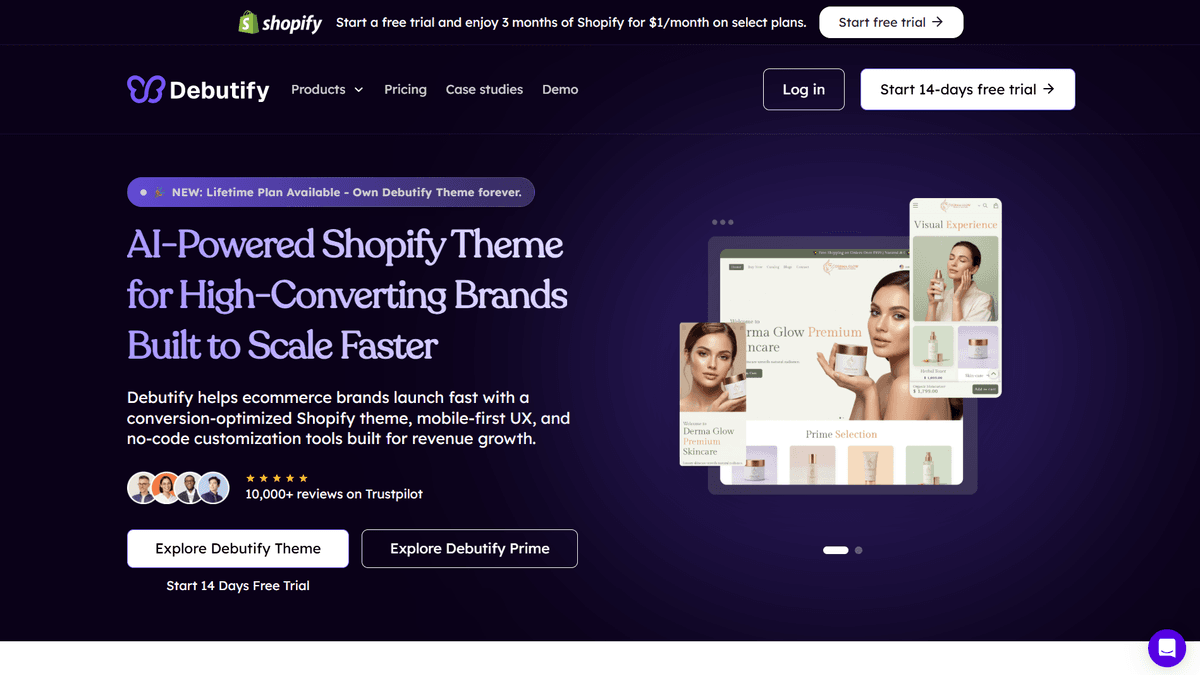
Debutify has evolved significantly, reaching version 8.12 by 2026 with support for 20+ languages and multi-currency functionality. Unlike themes in the official Shopify Theme Store, Debutify is sold directly through its own platform, complete with a dedicated dashboard, regular updates, and a responsive support team.
The theme targets merchants who want to launch or relaunch a Shopify store fast. Its mobile-first layouts, pre-built conversion elements (upsells, urgency, trust badges), and no-code customization options make it accessible to non-technical users. The Debutify AI Store Builder extends this further with AI-powered recommendations and personalization.
Social proof backs up the positioning. Over 10,000 reviews exist on Trustpilot for Debutify AI, with feedback described as overwhelmingly positive for support quality. Case studies reference results like Laughing Pug Australia’s reported 80% lead growth, 30% more mobile traffic, and 100%+ sales increase after switching—though independent verification of these specific numbers is limited.
Core Features and Advantages of Debutify
The Debutify theme packs considerable functionality into what would otherwise require multiple standalone apps. Here’s what stands out:
Speed Optimization Debutify emphasizes clean code, lazy loading, and image optimization aligned with Google Core Web Vitals requirements. The theme targets sub-2-second load times on modern devices and stable performance during high-traffic events like Black Friday or 11.11 sales.
Mobile-First Design Responsive layouts cater to 2026 mobile shopping patterns: short attention spans, thumb-friendly CTAs, and one-hand navigation. Product grids, sticky headers, and mobile-specific elements are built into the core theme rather than bolted on.
- Built-In Conversion Add-Ons The theme includes over 50+ widgets that would typically require separate apps but Debutify gives this in built with theme:
- Urgency timers and countdown clocks
- Sticky add-to-cart buttons
- Post-purchase upsells
- Trust badges and security seals
- Social proof elements
- Color swatches and infinite scroll
- Cart timers and discount reminders
- Extensive Customization Options The theme editor provides sections everywhere, advanced header/footer controls, product page templates, and localization features. You can manage colors, fonts, and layouts without touching code.
- Educational Ecosystem Beginner-friendly Shopify courses, tutorials, and live chat support help non-technical merchants get their store live in days rather than weeks. The support team receives frequent praise in Debutify reviews for patient, helpful assistance.
What Is PageFly in 2026?
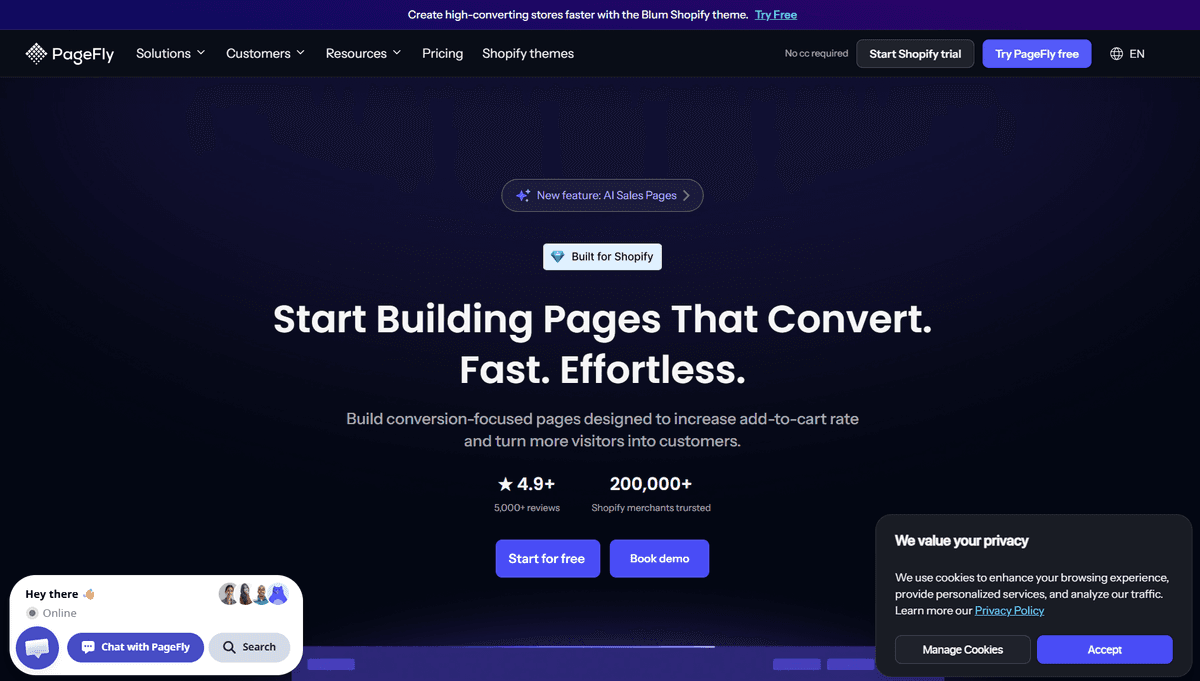
PageFly ranks among Shopify’s most popular drag-and-drop page builder apps. By late 2025, it accumulated tens of thousands of active stores.
PageFly is not a theme. It installs as an app and enables merchants to design custom pages that sit on top of whatever theme they already use—whether that’s Debutify, Dawn, or any other option.
Typical use cases include high-control landing pages for paid ads, custom product pages for hero SKUs, collection pages with editorial layouts, and long-form sales pages for product launches. PageFly works within Shopify’s Online Store 2.0 framework but adds its own drag-and-drop canvas, element library, and per-page design settings.
Core Features and Advantages of PageFly
PageFly’s strength lies in granular control over individual pages. Here’s what the builder offers:
- Page-Level Drag-and-Drop Editor Columns, rows, spacing controls, animation, and fine-grained styling go beyond what most themes offer out of the box. You can create layouts that would be impossible or extremely time-consuming in a standard theme editor.
- Extensive Template Library Ready-made layouts cover product launches, seasonal promotions, Black Friday campaigns, and lead-capture pages. Templates can be duplicated and customized, reducing design time for common scenarios.
- Integration Capability PageFly works with most major review, upsell, subscription, and translation apps via app blocks and embedded elements. This flexibility allows marketers to position elements exactly where they want them.
- A/B Testing Support The builder enables A/B style experimentation at the page level. You can duplicate a winning landing page, alter only hero sections or guarantees, and use external tools to split-test performance.
- Agency-Friendly Workflow Designers and developers often favor PageFly when they need absolute control over a handful of critical pages while leaving the rest of the site on a standard theme. This selective approach balances customization with maintainability.
Head-to-Head Comparison: Debutify vs PageFly
This section breaks down the direct comparison across six dimensions: performance, design control, conversion features, pricing, and support. Each area reveals meaningful differences in how these tools serve merchants.
Performance and Speed
Debutify, as a theme, controls core layout and assets. This architecture allows optimization for fast loads when used without heavy third-party app bloat. The theme’s built-in widgets often replace separate apps.
PageFly introduces additional scripts and CSS on the pages it powers. If overused—across every product and collection page, for example—this can slow down performance, particularly on older devices or slower connections. The impact shows up in Lighthouse scores and mobile responsiveness metrics.
The practical recommendation: use PageFly selectively on strategic pages rather than site-wide. A Debutify-only setup typically delivers more consistent speed, while a Debutify + limited PageFly combination can work well if the builder is restricted to a handful of campaign pages.
Design Flexibility and Control
Debutify provides deep theme-level control: multiple section types for home, product, and collection pages, customizable headers and footers, and style presets suitable for most ecommerce brands. For 80-90% of typical Shopify stores, the theme editor plus its widget library creates a professional, on-brand storefront without extra builders.
PageFly offers pixel-level control useful for brands needing unique landing pages with complex layouts. Think Kickstarter-style long-form pages, story-driven product narratives, or elaborate comparison tables. This granular capability goes beyond what theme editors typically handle.
The trade-off: Debutify offers consistency and global styling that automatically applies across all pages. PageFly offers granular variation on individual pages but requires more design discipline to maintain brand consistency. Without careful attention, PageFly pages can drift visually from the rest of the site.
Conversion and Marketing Features
Debutify ships with many conversion-ready elements optimized for mobile: urgency timers, announcement bars, sticky add-to-cart buttons, in-cart upsells, social proof blocks, and AI-powered recommendations. These features drive action without requiring additional app subscriptions.
Case studies like Laughing Pug’s reported 400% daily sales increase over two months suggest that a theme-level approach can materially impact revenue. The built-in conversion tools reduce friction for shoppers and help convert more visitors into customers.
PageFly itself doesn’t replace core conversion apps. Instead, it provides placement flexibility—marketers can position reviews, guarantees, bundles, and cross-sells exactly where they want on strategic pages. This precision matters when optimizing landing pages tied to specific ad campaigns.
A common 2026 setup: Debutify powers the store with its built-in conversion features, while PageFly enhances a limited set of high-traffic landing pages where additional customization can lift performance by 10-30%.
Pricing and ROI
Debutify Pricing (2026-2027 ranges)
In addition to its subscription plans, Debutify also offers a lifetime access option with a one-time purchase at $399. This provides full access to the theme along with its extensive built-in features, making it a cost-effective solution for merchants seeking long-term value without recurring fees.
A free trial (3 days) and occasional lifetime deals provide entry points. Creating a free account lets you explore the basics before committing.
PageFly Pricing PageFly operates on a subscription model with a limited free tier (capped pages) and paid plans scaling with page count and features. It’s an ongoing cost layered on top of your theme subscription.
12-Month Cost Comparison Scenarios
ROI matters more than raw cost. Debutify’s impact on conversion rate and average order value can offset subscription fees many times over. PageFly’s ability to optimize high-value campaign pages—even a 15% lift on a landing page driving $50k/month in revenue-justifies its cost quickly.
Support, Reviews, and Reliability
Debutify’s support landscape includes live chat support, email, and scheduled calls. The support team receives frequent praise, with video reviews and written testimonials highlighting fast response times and patient problem-solving.
The Debutify Shopify theme and Debutify AI maintain a 4.5/5 Trustpilot score. Most reviews describe excellent theme quality with outstanding support. A small number of negative reviews cite billing confusion or difficulty with cancellation, suggesting merchants should manage their subscription carefully.
PageFly’s 4.5-4.6 rating across thousands of reviews in the Shopify App Store reflects strong satisfaction. Merchants highlight fast support and regular feature updates through 2024-2025.
Both tools are actively maintained, compatible with Shopify’s latest changes, and unlikely to be abandoned. This reduces long-term vendor lock-in risk for merchants planning their 2026 strategy.
Use-Case Scenarios: When to Choose Debutify, PageFly, or Both
Abstract comparisons only go so far. Here are concrete scenarios to help you identify the right approach for your situation.
Scenario 1: New Dropshipping or POD Store Launching in 2026
A merchant starting a dropshipping or print-on-demand store in mid-2026 faces typical constraints: limited budget, no design experience, and a marketing strategy focused on TikTok and Meta ads.
Recommendation: Debutify alone
Debutify covers the dropshipping-friendly features this merchant needs: fast loading, urgency elements, currency converters, and trust signals that enhance credibility with first-time visitors. The theme enables a full store launch quickly—potentially over a single weekend.
PageFly may not be necessary at launch. The priority is speed-to-market and conversion basics, which Debutify handles within the theme. Hope for the best but plan to scale: once a few winning products emerge, the merchant might add PageFly to create one or two high-performing product pages without rebuilding the entire storefront.
Scenario 2: Established Brand Optimizing Campaign Funnels
A brand already generating $50k-$100k/month by early 2026 has an existing Shopify theme (possibly Debutify or another premium option) and stable organic traffic. The team wants to optimize landing pages for specific campaigns.
Recommendation: Debutify as base theme + PageFly for campaign pages
Use Debutify as the foundation (or keep the existing theme if already optimized). Layer PageFly on top for specific campaign pages tied to high-spend ad sets—product launches, bundles, or seasonal offers.
PageFly excels in building bespoke funnels where granular control over layouts, guarantees, and social proof placement can make a measurable difference. Meanwhile, Debutify keeps the rest of the site structurally sound and fast.
Even a small conversion lift on a few high-traffic landing pages can justify PageFly’s subscription many times over. A 10% improvement on a page driving $20k/month in revenue adds $24k annually—far exceeding any app cost.
Scenario 3: Content-Driven Brand or Niche DTC Store
A brand relying heavily on storytelling, education, and SEO (skincare, supplements, coaching products) heads into 2026 with content as a core differentiator.
Recommendation: Hybrid setup
Debutify handles core product and category pages with a professional look and built-in conversion tools. The theme ensures reliable performance for organic visitors arriving from search.
PageFly builds long-form content pages, comparison pages, and storytelling funnels with custom layouts that a standard theme editor cannot easily create. These pages serve as cornerstone content for SEO and engagement.
The combination balances speed, branding, and narrative depth. Debutify provides the conversion-oriented backbone; PageFly handles a limited number of pages where elaborate layouts matter most.
Which Is Better for Your Shopify Store in 2026?
Debutify is generally the better foundation for merchants who want a fast, conversion-focused store with minimal technical overhead. The built-in widgets, mobile-first design, and theme-level optimization deliver results without app proliferation. For new stores, rebuilding from a slow theme, or merchants prioritizing simplicity, Debutify alone handles most needs.
PageFly shines as a complementary tool for advanced landing pages and funnels. Brands running serious paid traffic, launching complex campaigns, or requiring layouts impossible in standard theme editors benefit from its granular control. It’s not an either/or decision for many stores in 2026—the optimal setup often combines Debutify as the core theme plus PageFly on a strategic handful of pages.
Quick rules of thumb:
- Choose Debutify alone if launching your first store or rebuilding a slow theme
- Add PageFly if you run significant paid traffic and need bespoke campaign pages
- Consider PageFly with another theme only if you already have a highly customized design you don’t want to change
Test both tools via their free options in the same week. Use Debutify’s free trial and PageFly’s free tier simultaneously. Measure differences in speed, build time, and conversion metrics before committing to either paid plan. Sign up, experiment, and let your data guide the decision
FAQs
1. Is Debutify better than PageFly for Shopify beginners?
Yes. Debutify is generally better for beginners because it includes built-in conversion tools and optimized store layouts, reducing the need for additional apps.
2. Can you use PageFly with Debutify?
Yes. Some merchants use PageFly with the Debutify theme to create custom landing pages while keeping Debutify’s conversion features.
3. Does PageFly slow down Shopify stores?
It can. If pages include too many design elements or scripts, PageFly pages may load slower, which can affect conversions.
4. Is Debutify free?
Debutify offers trial options, but most features require paid plans starting around $15.60/month.
5. Which tool is better for dropshipping stores?
For most dropshipping stores, Debutify is better because it includes upsells, trust badges, and sales-boosting features that help increase conversions.

Author
Debutify
Debutify is the easiest way to launch and scale your eCommerce brand.