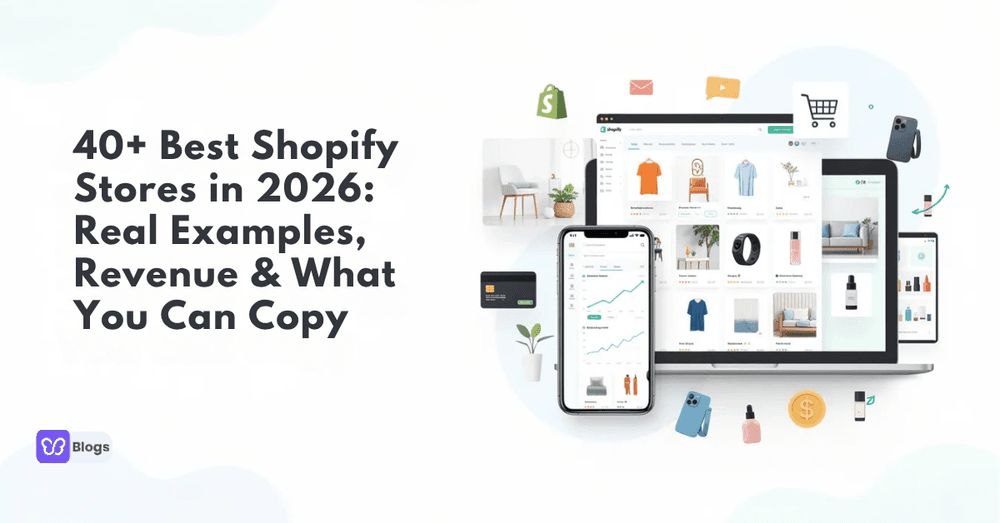
40+ Best Shopify Stores in 2026: Real Examples, Revenue & What You Can Copy
The gap between shopify stores that thrive and those that quietly disappear usually comes down to three things: a clear brand identity, a friction-free user experience, and smart marketing that turns browsers into buyers. This guide breaks down 40+ successful shopify store examples with real revenue ranges from 2024–2026, so you can see exactly what works and why.
We'll walk through beauty, fashion, food, lifestyle, and niche brands-including names like Fashion Nova and jeffree star cosmetics-focusing on design, product presentation, and conversion optimization. Every example here runs on the shopify ecommerce platform, proving that you can turn inspiration into a real online business faster than most people think.
Three core factors the best stores share: (1) Distinct brand identity that resonates emotionally, (2) Mobile-first UX with fast load times, and (3) Retention-driven marketing that maximizes customer lifetime value.
What is a Shopify store and why is it so popular?
A shopify store (also referred to as a shopify shop, shopify website, or site shopify) is an online shop built on Shopify's hosted ecommerce platform. Shopify handles hosting, security, checkout, and payment processing-so the merchant focuses on products, brand, and growth instead of server maintenance or web development from scratch. Whether you call it a shopify site or an ecommerce store, the concept is the same: a turnkey system for selling online.
What makes shopify ecommerce especially powerful is its range. The platform powers both tiny side hustles with five products and billion-dollar global brands. Ecommerce shopify websites like Gymshark and Allbirds started on basic plans and scaled to hundreds of millions in revenue without switching platforms. That kind of flexibility is rare in the ecommerce platform space.
Creating a shopify account and using the shopify sign in dashboard gives you immediate access to themes, apps, analytics, and the hosted checkout. From there, you customize your ecommerce shopify store using drag-and-drop tools or a custom theme, add products, connect a payment gateway, and launch. Many of the shopify best sites and shopify stores best performers began exactly this way-simple setups that evolved over time through iteration and data.
How many Shopify stores are there and what do they sell?
Over 5.9 million shopify stores were live as of September 2025, spread across more than 150 countries. Over 50% of Shopify stores are based in the US, but the platform's reach is genuinely global. Of these millions, roughly 71,000 are Shopify Plus stores-enterprise-level setups that often drive the highest revenues. Shopify's full-year 2025 GMV hit $378 billion, underscoring the sheer transaction volume flowing through the platform.
The product categories break down roughly like this:
Clothing & fashion: ~30% of top Shopify stores
Beauty & personal care: ~15% of successful Shopify stores
Home & living products: ~15% of popular Shopify categories
Accessories & jewelry: ~12.5% of top Shopify categories
Footwear: ~7.5% of the most successful Shopify stores
The remainder spans food & beverage, digital products, services, and more
Niche products often perform better than generic products on the platform. Top shopify website owners typically start with a narrow niche-say, inclusive swimwear or sustainable skincare-build brand loyalty, then expand once they see traction. This guide zeroes in on successful shopify store examples with clear positioning and strong brand identity across these product categories.
What makes a Shopify store successful in 2026?
Successful shopify stores share a common DNA. Whether they're generating $500K or $500M, these pillars appear consistently across the best shopify store examples:
- Brand narrative: Successful stores tell a story about their existence rooted in personal experiences. A brand story that resonates emotionally creates trust before a single product photo loads.
- UX and mobile speed: Mobile-first shopping is essential for successful ecommerce stores. A slow or confusing shopify website loses more revenue than a modest-but-fast one gains. Mobile optimized theme choices matter enormously.
- Product presentation: High quality product photos, video, zoom, lifestyle images, and comparison charts reduce decision anxiety for potential buyers. Successful Shopify stores utilize engaging visuals and clear value propositions.
- Conversion optimization: Integrating fast-checkout options reduces cart abandonment rates. Cross-sells, trust badges, simplified forms, and reviews apps turn visitors into customers.
- Retention: Email flows, SMS, subscriptions, and loyalty programs drive repeat purchase. Customer loyalty dropped from ~34% to ~29% industry-wide between 2024 and 2025, making retention investment non-negotiable.
- Operations: Efficient inventory, omnichannel setup (connecting physical store and online stores), and disciplined app usage keep margins healthy as volume grows.
- Niche focus: Successful Shopify stores often focus on strong, specialized product niches rather than trying to be everything to everyone. Deep alignment with target customers' values enhances store success.
The majority of the best shopify stores invest early in photography, copywriting, email, and CRO-not just more traffic. Successful Shopify stores combine unique branding and excellent user experience. That combination is what separates a great shopify store from a forgettable one.

Top beauty & cosmetics Shopify store examples
Beauty ecommerce continues to surge toward an estimated $580B global market by 2030. Subscriptions, refills, visual branding, and strong social proof make beauty products a perfect fit for shopify ecommerce. Successful Shopify stores often cater to specific gaps in the beauty industry by promoting inclusivity-whether that's shade ranges, clean ingredients, or gender-neutral positioning.
Here are standout beauty shopify store examples:
Jeffree Star Cosmetics is one of the most recognizable shopify stores in beauty. The company sells bold, provocative cosmetics with a vibrant color palette and heavy user generated content integration. Estimated at ~$20M GMV in 2025, the site handles massive traffic spikes during exclusive drops by leveraging Shopify's scalable checkout infrastructure. Product pages feature shade finders, ingredient transparency, and bundle offers that boost AOV.
Kylie Cosmetics generated $330 million in revenue in 2024, making it one of the most successful shopify stores in any category. The brand uses clean product pages, editorial photography, and seamless cross-sell blocks on every product page. Its business model blends influencer marketing with scarcity-driven launches.
ColourPop stands out as a popular shopify store offering affordable luxury in beauty. With frequent collaborations and seasonal palettes, the brand keeps new customers cycling back. Their shopify website uses quiz-based shade matching and bundles as core conversion tools.
Beauty Bakerie built a unique shopify store around long-wear, cruelty-free cosmetics with playful dessert-themed branding. Their brand storytelling-rooted in the founder's personal journey-creates community-level connection that generic beauty brands can't replicate.
Range Beauty focuses specifically on beauty products for melanin-rich skin tones, carving a niche that larger brands historically underserved. Clean ingredient lists and founder-forward storytelling make every product page feel personal.
Across these examples, the patterns repeat: clean product pages, shade finders, ingredient transparency, and bundles improve conversion optimization. Installing review apps builds social proof directly on product pages-ColourPop and Kylie Cosmetics both display thousands of reviews per SKU. Incorporating reviews and user generated content builds credibility and increases engagement by 28% on Shopify sites.
Best fashion & apparel Shopify stores (including Fashion Nova)
Clothing & fashion accounts for 30% of top Shopify stores, making it the single largest category on the platform. Global fashion ecommerce revenue is projected to exceed $1.2 trillion by 2027, and many of the most successful shopify stores are DTC fashion labels built entirely on Shopify.
Fashion Nova launched over 1,000 products weekly in 2024-a pace that defines fast fashion on Shopify. The brand's endless-scroll layout, influencer-driven growth engine, and strong social media presence have made it one of the best shopify stores for trend-chasing apparel. fashion nova built its empire by meeting shoppers search intent with sheer volume and speed-to-trend. Influencer marketing remains the brand's primary acquisition lever.
Gymshark generated $550+ million in revenue in 2024. As the definitive athletic apparel brand on Shopify, Gymshark's approach centers on community identity. Product imagery positions the customer as the athlete, not just a mannequin wearer. Their shopify website uses high quality product photos, size-inclusive filters, and frequent product drops to create urgency. It's a benchmark for how a strong brand scales on the ecommerce platform.
Oh Polly built a mobile app contributing 40% of total revenue, with app AOV running 18.5% higher than web. They turned returns into revenue by using Loop Returns to convert refunds into exchanges-boosting average return order spend from £242 to over £500 in key markets.
BYLT Basics scaled from one to seven profitable retail locations within a year, demonstrating how a shopify shop bridges online and physical store experiences. More than half of their DTC conversions flow through Shopify Payments, and their women's line grew 400% YoY.
Kith and GANNI represent the premium end-Kith blends streetwear drops with editorial content, while GANNI uses sustainability messaging and Scandinavian design to justify premium pricing. Both are considered cool shopify stores for their visual identity and community engagement.
Alo Yoga dominates athleisure with lifestyle images that blur the line between product catalog and wellness magazine, allowing shoppers to envision the brand as part of a healthier lifestyle.
Repeatable tactics you can copy:
- Create a drops calendar and communicate upcoming launches via email and push notifications
- Invest in lookbooks and on-site style guides-they increase time on site and AOV
- Use size-inclusive filters and detailed fit guides to reduce returns and build trust

Food & beverage Shopify store examples
DTC food brands fit perfectly into the ecommerce shopify store model thanks to subscriptions, bundles, and membership tiers. The subscription model drives predictable revenue-and the best food shopify stores lean heavily into it.
Death Wish Coffee built its brand around "the world's strongest coffee," turning a bold positioning statement into a multi-million-dollar online retailer. The company sells directly through its shopify website using subscription-first flows, bundled packs, and seasonal limited flavors that create urgency.
Magic Spoon reimagined cereal for adults with high-protein, low-carb formulas and retro-inspired packaging that's instantly recognizable. Their product presentation is best-in-class-every product page features nutrition callouts, recipe content, and serving suggestions that reduce purchase friction. The brand feels visually appealing at every touchpoint.
Partake Foods caters to allergy-friendly tasty snacks, carving a niche where mainstream brands fall short. Founder-forward storytelling and transparent ingredient pages build trust with parents buying for children with dietary restrictions.
Fly By Jing elevated chili crisp from a commodity to a cult product through bold packaging, recipe-driven content, and a brand identity that celebrates Sichuan cuisine. Limited-batch flavors and exclusive drops keep the email list engaged.
Liquid Death turned canned water into an energy drink-adjacent lifestyle brand worth over $1.4B. Their irreverent brand story and merch-heavy approach prove that positioning matters more than the product category itself.
Across these food shopify websites, build-a-box flows, subscription options, and transparent ingredients pages drive conversion optimization and retention. Urgency tactics-limited flavors, seasonal drops-combined with email flows keep these brands top of mind. Email marketing powers 68% of successful Shopify stores, and food brands are among the most aggressive users of segmented email campaigns.
Accessories & lifestyle: best Shopify store examples
Niche accessory brands-wallets, jewelry, bags, home décor-have quietly become some of the highest-performing shopify stores on the platform.
Ridge Wallet built a category-defining brand around its patented two piece system for minimalist wallets. High-contrast product photography, over 80,000 five-star reviews, and a clear value proposition ("slim your wallet, not your style") make it a benchmark for successful shopify store examples. The store stands as proof that one hero product can anchor an entire ecommerce business.
MVMT disrupted the watch industry by offering affordable luxury timepieces with clean web design and influencer-driven acquisition. Their shopify site uses lifestyle images and comparison charts to justify pricing.
Ana Luisa positions itself as a sustainable, affordable fine jewelry brand. Material breakdowns, carbon-neutral shipping callouts, and impact stats on every product page turn potential customers into loyal buyers. The brand proves that high quality products don't require luxury-level pricing.
Pura Vida uses vibrant branding, a subscription-based bracelet club, and charity partnerships to drive brand loyalty. Their own website combines community storytelling with smart merchandising-free gift thresholds and limited seasonal runs increase AOV consistently.
Pela makes sustainable phone cases from compostable materials. Their mission-driven approach and transparent impact reporting attract younger shoppers who increasingly value sustainability.
WP Standard is an under-the-radar leather goods brand with editorial-grade product photos and a minimal shopify site that lets craftsmanship speak. High resolution product images and detailed material callouts build trust for premium-priced goods.
Across these ecommerce shopify websites, clever merchandising patterns repeat: bundles, free gift thresholds, limited runs, and material breakdowns. Investing in high-quality design and photography is essential for premium positioning-especially when justifying prices above commodity alternatives.
Mission-driven & niche Shopify stores
Many cool shopify stores win not by being the biggest, but by being the most meaningful to a specific audience. A narrow, underserved community plus a clear mission creates a moat that generic competitors can't easily cross.
Allbirds earned $254+ million in revenue in 2024 as the leading sustainable footwear brand on Shopify. Every product page discloses CO₂ footprint and sustainable materials sourcing-transparency as a competitive advantage.
Bombas donated over 160 million items by early 2026, building its entire business model around the "buy one, give one" ethos. This mission isn't a marketing afterthought; it's the reason the brand exists.
Jolie Noire centers Black joy and cultural celebration in its fashion and accessories line. Founder-forward photography and editorial content make the shopify site feel like a community hub, not just a checkout page.
The Philosopher's Shirt serves a hyper-niche audience-philosophy enthusiasts-with clever designs and obscure references that create instant recognition among its tribe. It's proof that a unique shopify store serving a tiny audience can build a loyal following.
Pot Gang turns home gardening into a subscription experience, complete with grow guides, seasonal seed kits, and community content. Their brand story about making gardening accessible resonates with urban millennials.
ND Renegade focuses on neurodiversity awareness through apparel and accessories, demonstrating how a mission creates a powerful brand identity even when the product category (clothing) is saturated.
Sustainability is a growing trend among younger shoppers, and these brands capitalize on it authentically. Brand storytelling rooted in founder photos, transparent impact stats, and mission-first messaging can turn a simple shopify site into something people genuinely care about.
Questions to sharpen your own brand identity before launching:
- What specific gap or injustice does your brand address?
- Who is your "tribe," and where do they already gather online?
- Can you name your impact in a single, concrete number?
- Does your founder story naturally connect to the product?
Shopify CRO playbook: turning visitors into buyers
Conversion optimization is where revenue actually happens. You can drive a million visitors to your shopify stores, but if checkout completion rates are low, you're burning money. The top 10% of Shopify stores have a 66% average checkout completion rate-meaning they've systematically removed friction from the buying process.
Here are high-impact CRO tactics specifically tailored to shopify merchants:
- Simplify navigation: Reduce top-level categories to 5–7 items. If shoppers search for a product and can't find it in two clicks, they leave.
- Sticky add-to-cart buttons: On mobile devices, a floating ATC button keeps the purchase action visible during scroll. This alone can lift mobile conversion by 8–12%.
- Trust badges and policies: Clear store policies must be easily accessible for customers. Shipping timelines, return guarantees, and secure checkout badges reduce anxiety.
- Social proof integration: Social proof, like customer reviews, boosts conversion rates. User-generated content increases engagement by 28% on Shopify sites. Install a reviews app (Okendo, Judge.me) and display real customer photos on every product page.
- Upsells and bundles: Post-ATC upsells, "frequently bought together" blocks, and free-shipping thresholds raise AOV without increasing traffic cost.
- Urgency and scarcity: Limited inventory callouts, countdown timers for seasonal drops, and back-in-stock notifications push fence-sitters to act.
- Fast checkout options: Shop Pay and accelerated checkout reduce form fields and save payment details. Princess Polly saw a 4.1% conversion lift just by enabling authenticated Shop Pay checkout.
- Interactive features: Using interactive features for consumer engagement can lead to high lead capture rates. Quizzes, shade finders, and "build your bundle" tools keep visitors engaged and guide them toward the right product.
Over 70% of Shopify stores offer discounts to attract new customers, but the successful shopify operators focus beyond discounting-they test layout changes, CTA copy, image placement, and checkout flow using A/B testing apps available in the shopify account dashboard.
Contests can achieve average conversion rates of 30% for Shopify stores, making them a surprisingly effective acquisition tool when paired with email capture.
AI-powered shopping is transforming customer experiences in ecommerce, and voice shopping is increasingly popular among online consumers-both trends that forward-thinking shopify merchants are starting to incorporate into their CRO strategies.
Design, UX and product presentation on Shopify
The best ecommerce shopify websites win or lose based on first impressions and clarity, not just traffic volume. A visitor decides within 3–5 seconds whether your store looks trustworthy enough to browse further.
Great product presentation includes:
- High quality images: Studio shots for detail, lifestyle images for context. High-quality product images increase customer trust and sales.
- Video: Short clips showing the product in use, unboxing, or scale comparison
- Zoom and detail views: Texture, stitching, ingredients-whatever matters for your category
- Comparison charts: Especially effective for accessories and tech products
- FAQs directly on the product page: Answering objections before they form
- Reviews with photos: Incorporating reviews and user-generated content builds credibility
Brands like Brightland (olive oil), Uprise Art (original artwork), and Magic Spoon use visuals, copy, and layout strategically to create a seamless shopping experience. Every element serves a purpose-nothing decorative without function.
Mobile-optimized themes improve user experience and sales, and every top shopify websites in this guide pairs good web design with fast load times. A visually appealing site that takes 6 seconds to load on mobile will lose to a simpler site that loads in 2.
Quick UX audit checklist for any shopify store:
- [ ] Does the homepage communicate what you sell within 3 seconds?
- [ ] Can a visitor reach any product in ≤ 3 clicks?
- [ ] Are product photos consistent in style and quality?
- [ ] Does the mobile version load in under 3 seconds?
- [ ] Is the checkout flow 3 steps or fewer?
Using Shopify features, apps and sign-in flows correctly
Out-of-the-box Shopify features-themes, discount codes, basic email, and analytics-are enough to launch a solid shopify store. Many of the best shopify website examples started with nothing more than a free theme, a handful of products, and a clear brand identity.
Merchants manage everything from their shopify account after shopify sign in, including products, orders, analytics, and app integrations. Shopify's own blog and help center provide tutorials for every feature, making the platform accessible even without a web development background. You can build and manage your own website without writing a single line of code.
Third party apps turn standard ecommerce shopify store setups into some of the best shopify site experiences. Reviews apps (Judge.me, Okendo), subscription tools (Recharge), quiz builders, and loyalty programs extend functionality dramatically. Klaviyo is the most popular email marketing app for Shopify, used by 68% of stores-it powers the segmented email flows that drive retention for top shopify stores.
But a critical warning: over-installing apps can slow a shopify website significantly. CRO and UX priorities should guide app selection, not the impulse to add every shiny tool. The shopify best sites typically run 8–12 carefully chosen apps, not 30+. SEO optimization helps customers find products organically on search engines, and a bloated, slow site undermines that effort.
How to start and grow your own Shopify online business
The journey from idea to revenue follows a predictable path:
- Validate your idea: Research demand, study competitors, identify your niche. Find shopify stores in your category and note what's missing.
- Open a Shopify account: Pick a plan, choose a theme (free themes work fine initially), and customize branding.
- Upload products: Start with 5–10 SKUs. Write clear descriptions, shoot high quality product photos, and set competitive pricing.
- Launch and share: Push traffic via social media, email your personal network, and run small paid tests.
- Refine relentlessly: Study analytics, test product pages, adjust pricing, and expand your catalog based on what sells.
Many of the best shopify store examples in this guide began as simple shopify shop setups with a handful of products and a founder willing to iterate. You can start your own business on Shopify's basic plan for under $40/month.
Study the online stores in your niche and reverse-engineer their layout, messaging, and offers. But remember: differentiation comes from your brand identity, customer experience, and consistent marketing-not copying designs pixel-for-pixel. Your brand story, your product presentation, and your own perspective are what turn a commodity shopify site into a real ecommerce business.
The gap between browsing shopify stores for inspiration and building your own is smaller than you think. Every store on this list started with someone deciding to stop researching and start launching.

FAQ: Shopify stores, revenue and finding inspiration
What can a Shopify store sell?
Virtually anything-physical goods, digital products, services, subscriptions, memberships, and even appointments. The platform supports every major business model, from one-time purchases to recurring subscription model flows.
How big can a shopify ecommerce brand get?
There's no ceiling. Gymshark is approaching $1 billion in annual revenue. Shopify's total platform GMV was $378 billion in 2025. Whether you're an online retailer doing $10K/month or a global brand, the infrastructure scales with you.
What are some of the shopify stores best known worldwide?
Gymshark, Fashion Nova, Allbirds, jeffree star cosmetics, Kylie Cosmetics, MVMT, Ridge Wallet, and Bombas are among the most recognized. Each represents a different category but shares the common thread of strong brand identity and excellent UX.
How can I find cool shopify stores in my niche?
Use Google searches like "[your niche] + Shopify store," explore directories like StoreCensus and Trendtrack, check Shopify's own case study library, and use browser extensions like BuiltWith to detect which sites run on Shopify. Social media is also useful-many brands openly share their platform on their shopify blog or about page.
Do I need coding skills to build a Shopify store?
No. The platform is designed for non-developers. A custom theme or advanced modifications may require a developer, but most ecommerce shopify websites launch successfully using drag-and-drop theme editors and pre-built app integrations.
How do the best stores drive traffic?
Email marketing powers 68% of successful Shopify stores. Beyond email, the top performers combine organic social media (especially short-form video), influencer marketing, SEO, and selective paid advertising. A strong social media presence paired with an owned email list creates a resilient acquisition engine.
What's the most important thing for a new store?
Get the fundamentals right first: high quality images, a clear value proposition, fast mobile load times, and a frictionless checkout. Over 70% of stores offer discounts to attract new customers, but the real differentiator is whether those potential customers come back. Focus on customer lifetime value from day one.
Even beginners can launch a professional-looking shopify website quickly and then iterate. The platform is built for speed-to-market-you can be live within a weekend and refining from real data within a week.
Conclusion: Turn the best Shopify store examples into your own success story
The 40+ shopify stores in this guide span beauty, fashion, food, accessories, and mission-driven niches-but they all share the same playbook. A distinctive brand story. Sharp product presentation with high quality images and lifestyle context. Relentless conversion optimization that turns browsers into buyers and buyers into repeat customers.
The real edge of the most successful shopify stores isn't a secret theme or a magic app. It's the willingness to study what works, test relentlessly, and build something that genuinely resonates with a specific audience. Every popular shopify store on this list started with a founder who saw a gap and decided to fill it.
Bookmark a few favorites from this guide and create a simple action list: product photos to reshoot, pages to rewrite, CRO tests to run, email flows to build. The opportunity for anyone willing to build a differentiated online business on Shopify in 2026 and beyond has never been larger-and the tools have never been more accessible. Stop browsing. Start building.

Author
Debutify
Debutify is the easiest way to launch and scale your eCommerce brand.