Zendesk AI Agents: Complete Guide to Smarter Customer Support in 2026
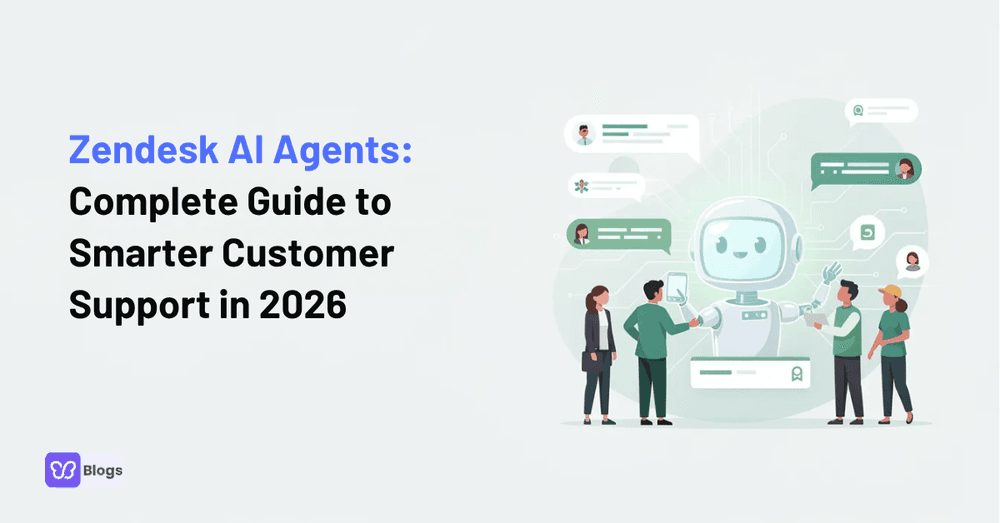
Support teams are under pressure to answer faster, personalize every conversation, and keep costs under control. That is why Zendesk is moving from traditional ticketing into AI-first service, where automation, human agents, and customer context work together.
What is Zendesk? (Quick Answer Up Front)
What is Zendesk? Zendesk is a cloud-based, AI-first customer service and CRM platform launched in 2007, now serving more than 100,000 businesses worldwide. In one sentence: Zendesk is a multichannel ticketing, messaging, voice, CRM, and self-service workspace for customer support. Since 2023, Zendesk AI has become central to the platform, not just an add on.
Key takeaways:
- The software manages customer inquiries across channels like email, chat, phone, and social media
- A ticketing system keeps every request tracked from open to resolved
- AI now handles triage, suggestions, and full conversations across the platform
How Zendesk Works: Core Products and Customer Experience
Zendesk includes Support, Suite, Messaging, Talk for voice, Guide, Explore, and workforce management. Omnichannel support unifies customer conversations into a single workspace, while centralized customer context displays past interactions and purchases for personalized service.
The concrete flows worth understanding:
- A user sends an email, chat, social message, or web form request, and the support team sees it in one queue
- Guide powers the help center so customers can self-serve before a ticket exists
- Explore provides pre-built metrics to monitor ticket response times and customer satisfaction
- Workforce management schedules and forecasts agent capacity
What is Zendesk AI? From Simple Bots to Advanced Agents
Zendesk AI is the platform's native generative AI and automation layer across tickets, messaging, email, voice, and help center content. It can read help center articles, classify requests, suggest answers, and help agents solve tickets faster.
The evolution in three steps:
- Before AI: triggers, macros, and rules matched known intents
- Early AI: Zendesk bots answered common customer questions from articles
- 2023 to 2026: Zendesk AI agents reason over context, call APIs, and resolve requests end to end
Native Zendesk AI Features Inside the Agent Workspace
Zendesk's advanced AI appears directly inside the agent workspace, so agents do not need to switch systems. The native features that matter most:
- Intelligent triage categorizes tickets based on intent and sentiment
- Macro suggestions help agents respond with fewer clicks
- Similar and past tickets surface extra context automatically
- Generative summaries shorten long conversation histories
- agent ai helps with drafting, tone, and next-best actions inside every ticket
Zendesk AI Agents: From Agent Assist to Fully Autonomous Bot Agents
Zendesk AI agents are autonomous agents that can lead conversations, ask follow-up questions, call APIs, and complete workflows. The terminology is worth untangling because vendors use it loosely.
- AI agents: software that can reason, plan, and act across steps
- Bot agents: simpler automated responders limited to known intents
- Advanced AI agents: multi-step workflows with tool access and human handoff
- Agent assist: AI working beside a human rather than replacing the conversation
Zendesk AI Agents Pricing and Plan Considerations
Core AI features may be included in Zendesk Suite plans, while more advanced capabilities can involve extra pricing. As of 2026, Zendesk has been expanding access to AI agent capabilities across plans. Pricing varies with the level of automation you need: basic bots and agent assist are often bundled, while fully autonomous resolutions are typically metered. Model your expected ticket volume before committing to a tier.
Integrations and Extensibility: Connecting Zendesk AI to Your Ecosystem
Zendesk's AI agents connect with the business tools and data sources around them, which is where much of their real value comes from. Integration with platforms like Google Drive lets agents pull documents and training materials directly, enriching the knowledge the AI uses to deliver accurate answers. Strategic integrations like Parloa extend the platform with enterprise-grade conversational AI for voice and messaging, and marketplace apps cover everything from surveys to shipping lookups.
Training and Continuous Improvement: The Future of AI in Zendesk
The effectiveness of Zendesk AI agents depends heavily on the quality and breadth of their training data. Zendesk encourages organizations to maintain comprehensive, up-to-date knowledge bases and to incorporate feedback from agents and customers to train and refine AI models continuously.
Advanced analytics and monitoring let teams test AI performance, analyze conversation complexity, and catch drift early. Done well, this loop raises resolution rates while keeping customer engagement high, because customers get fast answers that are actually correct.
Best Practices for Implementing Zendesk AI Agents
To maximize the benefits of Zendesk AI, adopt a strategic approach:
- Build a robust knowledge base with clear, organized content as the foundation for AI training
- Customize AI agent personas and tones to match your brand voice for a consistent customer experience
- Use analytics and feedback to monitor AI interactions and identify areas to improve
- Start with narrow use cases, prove resolution rates, then expand autonomy
Conclusion: Elevate Customer Support with Zendesk AI Agents
In 2026, Zendesk continues to lead the customer service industry by combining powerful AI technology with human expertise. Its agent-suite approach helps support teams interact more efficiently, search knowledge faster, and predict customer needs with greater accuracy.
Whether you are a small business or a global enterprise, Zendesk AI agents offer scalable, intelligent solutions. For teams exploring AI-driven automation, understanding the pricing options, integration paths, and training requirements is the practical way to enhance customer support without surprises. The implementation checklist:
- Audit your knowledge base before turning on AI
- Pick a narrow first use case and measure resolution rate
- Set brand voice and handoff rules for every AI agent
- Review analytics weekly and retrain on real feedback
- Model pricing against ticket volume before scaling up

Author
Debutify
Debutify is the easiest way to launch and scale your eCommerce brand.