Cloud Computing Explained: What Every Store Owner Already Uses Without Knowing
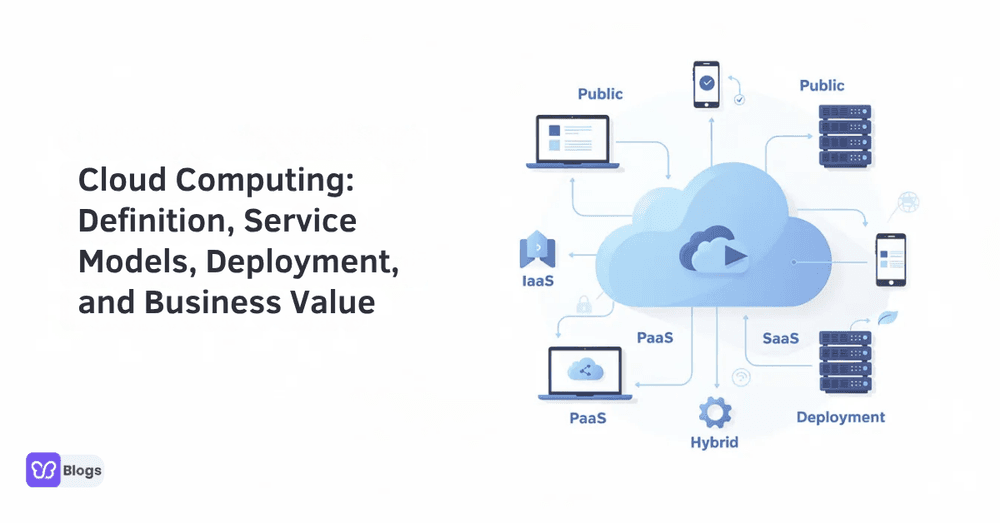
Cloud computing is a computing paradigm that delivers on-demand access to a shared pool of resources: servers, storage, databases, networking, software, and artificial intelligence. It is the reason a business can run global infrastructure without owning a single machine.
The Cloud computing story is worth following because it explains how the modern store actually works. Every app in the stack, every future trends report about retail technology, and most of the tools a store will adopt this year are cloud-native, and understanding the layer underneath makes every tool decision clearer.
This guide walks the definition, the history, the models, and the business value. The goal is not to make you an engineer. It is to make you an informed owner, which is what every technology decision in your business actually depends on.
Basics of Cloud Computing
The basics are a short list. Resources live in data centers owned by someone else. You access them over the internet. You pay for what you use. And you can scale up or down without buying anything. Those four facts explain most of what follows.
The store translation is simple. The theme renders on infrastructure you do not manage. The apps run on servers you never see. The payments clear through systems you could not build. The cloud is not a technology your business uses. It is the medium your business exists in.
History and Evolution of Cloud Computing
The history runs from time-shared mainframes to the utilities we know now. Amazon changed the industry when it turned its own spare capacity into AWS, and the decade that followed turned computing from a purchase into a subscription.
The lesson in that history is about leverage. Each generation of cloud made the previous generation's bottlenecks disappear, and small businesses inherited the capabilities of large ones for a monthly fee. The owners who understand that arc stop thinking of technology as a cost and start seeing it as borrowed scale.
Key Characteristics and Benefits of Cloud Computing
The characteristics that matter are elasticity, self-service, and shared cost. You get what you need when you need it, without a phone call, and you share the infrastructure cost with everyone else using it. The benefits flow from those three facts: speed, resilience, and a cost curve that follows revenue.
The benefit most stores undervalue is the last one. The stack that costs more only when you sell more is a financial structure, not just a technical one. Growth stops being a capital crisis and becomes an operating expense, which changes what a small team can attempt.
Cloud Service Models (IaaS, PaaS, SaaS, Serverless)
The service models form a ladder of delegation. Providers like Cherry Servers rent the raw machines at one end. Platforms sit in the middle. And finished applications, from a CRM to the tools running your business model's fulfillment, occupy the top, with automation tools increasingly blurring the rungs.
The ladder is really a map of decisions. Every rung you rent is a rung you no longer control, and the art is knowing which rungs deserve your control. Most stores should rent nearly everything and guard a few things fiercely: customer data, the brand, and the relationship. The rest is plumbing, and rented plumbing is a bargain.
Cloud Deployment Models
Deployment models decide where the resources live. Public cloud shares them at commodity prices. Private cloud dedicates them. Hybrid mixes both, and it is what most real operations run, including the businesses that outsource their back office while keeping their customer data close.
The practical store version is a data map. Where does each category of information live, who can touch it, and what happens if that service disappears? The map does not need to be complex. It needs to exist, because the day you need it is not the day to draw it.
Cloud Computing and Data Analytics, AI, and Modern Workloads
The modern workloads are where the story gets interesting. A GPU VPS for AI can now rent for what a coffee machine costs a month, and the analytics that used to require a team run on demand.
Commerce feels this directly. The customer support assistant, the recommendation engine, the forecasting: all of them are cloud workloads that a small store can now afford to run. The capability gap between a store and a corporation has never been smaller.
The implication is worth stating plainly. The tools that used to define enterprise scale are becoming line items, which means the competitive field is leveling. The stores that adopt early get the experience advantage, and experience is the one thing a latecomer cannot buy.
Cloud Migration: Strategy, Challenges, and Best Practices
Migration is where the discipline shows. The pattern that works is incremental: move the low-risk workloads first, prove the process, then move the load-bearing ones. The pattern that fails is the big-bang migration announced with confidence and completed with apologies.
Stores migrate more often than they realize. Every platform change, every app swap, every data export is a migration in miniature, and the same rules apply. Move in low-traffic windows, verify before you trust, and keep the old path alive until the new one has earned its place. Careful moves are fast moves, because they only happen once.
Security, Compliance, and Governance in Cloud Computing
Security in the cloud is a shared responsibility. The provider guards the infrastructure. The customer guards the data, the access, and the compliance obligations, including regulations like GDPR that follow the customer's data wherever it lives.
The division of labor is the part everyone misunderstands, and the misunderstandings are expensive. The store is responsible for what it collects, what it promises, and who it shares with, regardless of where the servers sit. The cloud does not move that responsibility. It just changes the address.
Cost Management and Optimization in the Cloud
The cloud bill rewards attention. Unused resources accumulate quietly. Instances run longer than they should. And the pricing tiers change in ways that only the careful notice. The businesses that control their costs review them the way they review inventory, on a schedule.
The habit transfers to every subscription in the stack. The quarterly pass through the app list, the honest question about what each one returned last quarter, and the willingness to cancel what cannot answer. Cloud costs and app costs are the same animal, and the discipline that tames one tames both.
Cloud Computing SaaS and Cloud SaaS Applications
SaaS deserves its own section because it is where most owners actually live. The finished application, delivered by subscription, is the form in which the cloud touches daily work, and the SaaS market is now the default answer to nearly every business need.
The owner's job is not to evaluate the technology. It is to evaluate the dependency. What does the app hold, what happens if it disappears, and how hard is leaving? Those three questions, asked of every subscription, are the entire art of buying SaaS well.
Future of Cloud Computing
The direction is toward capability as a utility. Compute, intelligence, and now agents, all rentable by the hour, with data management becoming the strategic layer that everything else serves.
For stores, the future is a stack that keeps getting more capable for less, which is the best possible trend for small operators. The advantage will not belong to the businesses with the biggest infrastructure. It will belong to the ones with the cleanest data and the clearest judgment about what to build on it.
The cloud is the medium modern commerce runs in, and understanding it is not optional for an owner, it is operational. Before your next infrastructure or app decision, run this checklist:
- Know which rungs you rent and which you control.
- Map where each category of data lives and who can touch it.
- Migrate incrementally and keep the old path alive.
- Own your compliance regardless of where the servers sit.
- Review the cloud and app bills quarterly.
- Ask the exit question of every service that holds your data.
The businesses that thrive on rented infrastructure are the ones that know exactly what they rent, what it costs, and what they would do without it. That clarity is the real business value of understanding the cloud.

Author
Debutify
Debutify is the easiest way to launch and scale your eCommerce brand.