Software as a Service ERP: Complete Guide to SaaS Enterprise Resource Planning
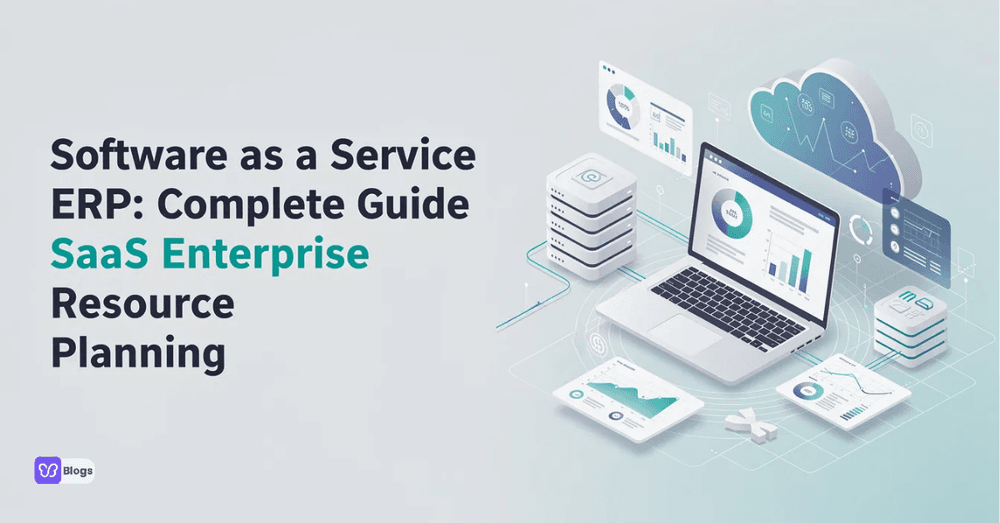
Software as a service ERP is enterprise resource planning delivered through the cloud on a subscription. Instead of installing heavy applications on local servers, teams access finance, operations, and analytics through a browser, while the vendor runs the infrastructure and ships the upgrades.
This guide covers the full picture for evaluators: what SaaS ERP is, how it differs from hosted and on-premises alternatives, what modern suites can do, what the benefits cost, and how to choose and implement without the classic stumbles.
The stakes are simple. An ERP sits at the center of the business, touching cloud computing strategy, the ERP landscape you already know, the supply chain, and the customer relationship management layer. Choosing well compounds for a decade; choosing poorly taxes every department. Getting the CRM and ERP relationship right is half the battle.
What Is SaaS ERP (Enterprise Resource Planning)?
A SaaS ERP system is enterprise resource planning software that lives in the vendor's data center and reaches you over the internet. You pay a subscription, open a browser, and start working: no server room, no patching cycles, no upgrade projects.
The suite typically unifies finance, procurement, inventory, manufacturing, and reporting in one data model. Because every module reads the same records, a sale updates inventory, accounting, and forecasting simultaneously instead of triggering three reconciliations.
The delivery model is what changes the economics. Updates arrive continuously, capacity scales with the business, and the IT burden shifts from maintaining software to configuring it well.
Cloud ERP vs SaaS ERP vs On-Premises ERP
Cloud ERP and SaaS ERP get used interchangeably, but they are not identical. All SaaS ERP is cloud-based; not every cloud ERP deployment is true multi-tenant SaaS. A hosted ERP, for example, runs your own instance in someone else's data center.
The comparison that matters for buyers:
- Deployment speed: SaaS is fastest, typically 3 to 6 months; hosted is moderate; on-premises runs 12 to 18 months or more.
- Upfront cost: SaaS is low, subscription-based; hosted is moderate; on-premises is high, licenses plus hardware.
- Customization depth: SaaS is configuration-focused; hosted is moderate; on-premises goes deep, including source-level changes.
- Upgrades: SaaS upgrades automatically by vendor; hosted upgrades are vendor-assisted; on-premises upgrades are manual and costly.
- Ongoing costs: SaaS is a predictable subscription; hosted is mixed; on-premises carries maintenance, staff, and hardware.
- Security responsibility: SaaS is vendor-managed; hosted is shared; on-premises is fully internal.
None of the three is universally right. The decision follows your constraints: regulatory demands, customization needs, and how much internal engineering you can commit for the life of the system.
Core Capabilities of Modern SaaS ERP
Modern suites stretch far beyond accounting. A complete SaaS ERP unifies finance, supply chain, projects, services, and analytics in a single data model, giving leaders real-time visibility across the business.
The commerce-facing capabilities deserve attention. Order management keeps promises to customers, protecting customer satisfaction at the moments that shape it. Warehouse and order fulfillment modules coordinate the physical flow, and embedded artificial intelligence now forecasts demand, flags anomalies, and drafts the exception handling that used to eat analyst hours.
The common thread: capabilities that used to require separate systems now live in one place, sharing data by default. That is the argument for the suite, and the reason switching costs run deep once it is in.
Key Business Benefits of SaaS ERP
Companies replace legacy on-premises ERP for a straightforward reason: the benefits outweigh the switching costs. Operational efficiency leads, as automated processes remove manual reconciliation and duplicate entry.
The benefits stack outward from there. A cleaner internal user experience raises adoption, which makes the data trustworthy, which makes the analytics worth trusting. Ecosystems of vetted add-ons extend the suite without custom code, and real-time financials sharpen decisions that drive business growth.
For e-commerce brands, the payoff is immediate: inventory accuracy, faster close, and order data that flows straight into forecasting. The suite becomes less a back-office system and more the operating rhythm of the company.
SaaS ERP vs On-Premises ERP: Making the Right Choice
The classic debate centers on control versus speed. On-premises gives deep customization and total data control. SaaS gives faster deployment, lower ongoing cost, and upgrades you never have to manage.
Choose on-premises when regulation or source-level customization truly demands it, and you can staff the maintenance for a decade. Choose SaaS when velocity, predictable cost, and continuous innovation matter more than owning the stack.
Most organizations in 2026 land on SaaS with disciplined configuration. The question to settle early is not which is better in theory but which your team can operate well for ten years.
How SaaS ERP Supports Different Types of Businesses
SaaS ERP is no longer only for large enterprises. SMBs, startups, and mid-market firms are among the fastest adopters, drawn by low upfront costs, modular pricing, and implementation cycles measured in months.
Manufacturers get production planning and quality modules. Distributors get warehouse and route optimization. Professional services firms get project accounting and utilization tracking. Retail and commerce get inventory accuracy across channels.
IT services and professional services firms can optimize margins by improving project visibility and resource utilization. Using project planning templates can also help teams organize tasks, timelines, and responsibilities more consistently across different projects.
The selection insight: match the vendor's industry depth to your operations. A suite that has already solved your sector's edge cases will outbuild one learning them on your invoice.
Evaluating SaaS ERP Vendors and Solutions
Choosing the right solution takes more than comparing feature checklists. Evaluate each vendor on long-term roadmap, financial stability, partner ecosystem, and support infrastructure, because an ERP is a decade-long relationship.
Structure the process like the purchase it is: requirements ranked by business impact, scripted demos against your real workflows, and tools like AI RFP software to keep responses comparable. Reference calls should ask what broke and how the vendor responded, not whether everyone is happy.
Model the ROI honestly: efficiency gains and avoided costs against subscription, implementation, and internal hours. Vendors who help you build that model are telling you how they will behave after the signature.
Implementation Best Practices for SaaS ERP
SaaS removes technical complexity, no servers to rack, no operating systems to patch, but change management remains the make-or-break factor. Successful implementations run with the same discipline as any major business transformation.
- Name an executive sponsor and a single accountable project owner.
- Clean and map data before migration, not during.
- Configure before customizing; every extension becomes a maintenance debt.
- Train by role, with real workflows, before go-live.
- Phase the rollout by module or business unit, with success gates between phases.
- Plan hypercare: dedicated support for the first weeks after each go-live.

The pattern behind every failed ERP project is scope and schedule pressure winning over readiness. The pattern behind every success is the reverse.
Future of Software as a Service ERP
The category is being reshaped by embedded AI, composable architectures, and industry-specific cloud suites. Through 2026 and beyond, SaaS ERP systems move from transaction processing toward proactive guidance: forecasting exceptions, suggesting actions, and drafting the follow-through.
The interface layer is changing too. Natural language queries replace report building, and service experiences borrow from the world of chatbots, so employees ask the ERP the way they would ask a colleague.
For evaluators the implication is durability: buy platforms whose architecture lets AI, integrations, and industry modules evolve independently, because all three will. Run the checklist before you sign:
- Define your ten-year operating model before comparing vendors.
- Rank requirements by business impact, not feature novelty.
- Demand references in your industry and ask what broke.
- Model TCO across subscription, implementation, and internal hours.
- Clean data before migration, and migrate in verified batches.
- Phase the rollout with success gates and funded hypercare.

Author
Debutify
Debutify is the easiest way to launch and scale your eCommerce brand.