SaaS Platforms: The Complete Guide to Software as a Service Platforms in 2026
The way organizations buy and use software has fundamentally changed. This guide is designed for business leaders, IT professionals, and decision-makers seeking to understand, evaluate, or implement SaaS platforms in their organizations. Instead of installing software on local servers and managing upgrades manually, companies now subscribe to cloud based solutions that handle everything behind the scenes. This guide breaks down everything you need to know about SaaS platforms in 2026-from architecture and pricing to security, trends, and how to choose the right one for your organization.
What is a SaaS Platform?
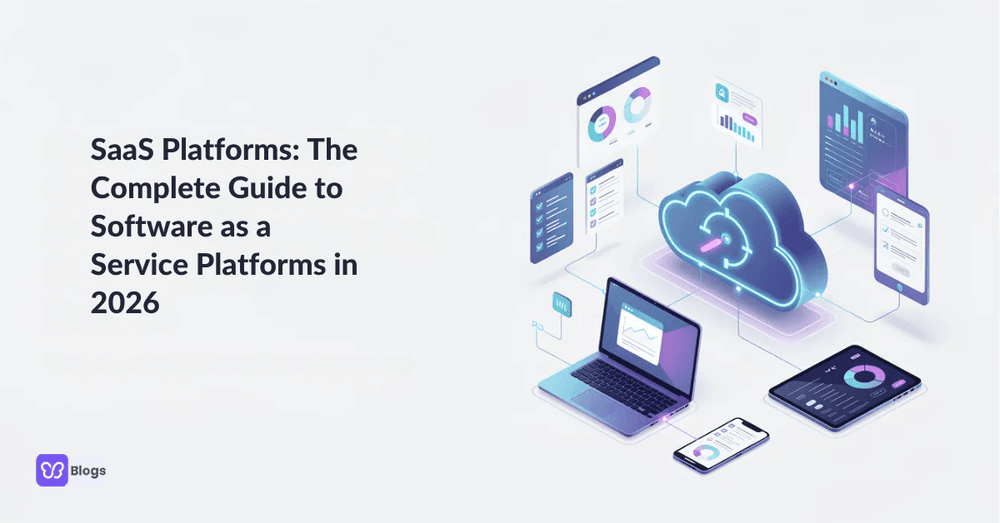
So, what is a SaaS platform? A software as a service platform is cloud based software hosted by a third-party provider and accessed by users through a browser or mobile app on a subscription basis. Instead of installing software on your own machines, you log in over the internet and start working. If you've ever wondered what are SaaS platforms, they are the ecosystems-complete with APIs, integrations, user management, and extensibility-that deliver software as a service to organizations of all sizes. SaaS platforms differ in their target audience and core functions, offering solutions tailored to various business needs.
SaaS platforms differ from standalone saas applications in an important way. While a saas app might be a single tool (like a cloud email client), a platform is the broader foundation: it supports multiple users, offers an ecosystem of connectors and add-ons, and often serves as the backbone for entire workflows. SaaS runs on cloud computing with providers like AWS, Azure, and Google Cloud, and is delivered as cloud services over the internet.
Here's how does SaaS work at a high level:
- SaaS uses multitenant architecture to optimize resources and reduce costs, meaning many customers share the same application instance while their data stays isolated.
- SaaS applications are accessed via the internet and not installed locally-all you need is a browser and an internet connection.
- SaaS applications use subscription-based pricing models, where users pay recurring fees monthly or annually.
- The saas vendor manages the underlying infrastructure, security patches, automatic updates, and software maintenance so you don't have to.
- SaaS eliminates the need for local software installation and maintenance, shifting the operational burden from your IT team to the service provider.
How Does SaaS Work? Core Architecture and Cloud Models
Understanding the architecture behind saas software helps you evaluate platforms more critically. Here's what powers the saas model under the hood.
- Multi-tenant architecture is the dominant pattern. Roughly 70% of modern saas products use a shared database and application stack, distinguished by tenant IDs or row-level security. This lets saas providers serve multiple customers efficiently without duplicating infrastructure.
- Single-tenant setups give each customer a dedicated instance and database. This is common when compliance, data security, or enterprise requirements demand full isolation.
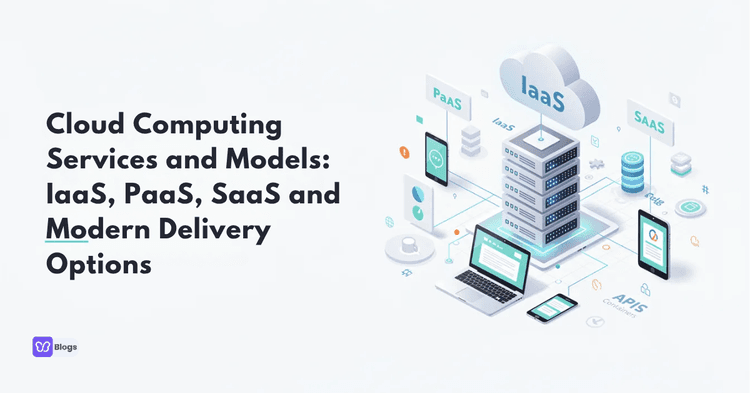
- SaaS, PaaS, and IaaS are distinct cloud service models. Think of it this way: infrastructure as a service (IaaS) is renting land and building your own house. PaaS offers a platform for developers to build and manage applications-like renting a shell and finishing the interior yourself. SaaS is moving into a fully furnished apartment. IaaS provides virtualized computing resources over the internet; paas solutions provide runtime and middleware; saas offers the finished product.
- Cloud computing services from a cloud service provider like AWS or Azure distribute SaaS deployments across global data centers, reducing latency and enabling disaster recovery. Cloud infrastructure supports automatic scaling so platforms grow with demand.
- Automatic updates are delivered through continuous deployment pipelines. Security patches, feature releases, and bug fixes are rolled out centrally-everyone is always on the latest version, with zero or minimal downtime.
- In the post-remote-work era, multi-region hosting has matured. Cloud based services now support rolling updates across geographies, keeping saas users productive regardless of location.
Key Characteristics and Benefits of SaaS Platforms
Here's why companies in 2026 are choosing saas platforms over on premises software and traditional software models.
- Fast deployment and lower upfront costs. SaaS platforms support rapid deployment across businesses. There's no need to purchase software licenses, set up hardware, or manage infrastructure. SaaS reduces upfront costs with subscription-based pricing, shifting spend from capital expenditure to predictable operating costs.
- Scalability. SaaS enables on-demand scalability for growing businesses. SaaS allows on-demand scalability for adding services or storage, so you pay only for what you use. SaaS applications are highly scalable for user needs.
- Global accessibility. SaaS allows access from any device with internet connection-laptop, tablet, phone. All you need is internet access and a browser, making it ideal for hybrid and remote teams.
- Automatic updates. Automatic updates ensure software is always current and secure. Feature releases and security patches happen behind the scenes, with no manual intervention required.
- Reliability. SaaS vendors promise 99% or higher uptime reliability, backed by SLAs, redundant backups, and disaster recovery plans that most on-premise setups can't match.
- Built-in data analytics. Many saas businesses embed dashboards and reporting tools, giving admins visibility into feature adoption, user activity, and ROI-no separate BI license required.
- Integrations. APIs, webhooks, and native connectors let SaaS platforms link to tools like google workspace, Salesforce, and hundreds of others, creating a connected workflow across your stack.
Types of SaaS Platforms and Use Cases
SaaS platforms span broad horizontal categories and deep vertical niches. They differ in target audience and core functions, but all share the same cloud based delivery model.
- Horizontal SaaS platforms serve all industries. Examples include customer relationship management (CRM) tools that automate marketing and track customer interactions, enterprise resource planning (ERP) systems, human resources suites, and project management tools that help teams organize tasks and track progress. Collaboration suites like google workspace centralize communication and document sharing across distributed teams. Communication tools centralize team communication and document sharing.
- Vertical SaaS targets specific industry workflows. Healthcare patient portals, legal practice management platforms, edtech learning management systems, and real-estate CRMs are built for narrow, regulated workflows where generic horizontal tools fall short. Vertical saas is growing faster than its horizontal counterpart.
- Micro SaaS focuses on one specific pain point-like automated compliance reminders for manufacturing or specialized analytics add-ons for Shopify. These are often built and maintained by very small teams.
- Internal platform SaaS. Some saas applications act as organizational hubs: integration platforms (iPaaS), workflow automation tools, and identity or access management platforms that unify systems behind the scenes.
- Ecosystem platforms. Several software as a service platforms function as marketplaces for third-party add-ons-think Salesforce's AppExchange or Atlassian's Marketplace. This lets smaller saas companies build software tools that plug into established ecosystems.
- Accounting software automates invoicing and expense tracking in the cloud, while marketing automation tools handle campaigns, lead scoring, and analytics.
SaaS Platforms vs. Traditional Software and Other Cloud Models
If you're weighing options, understanding the tradeoffs between saas software and traditional software is essential.
- Traditional software requires you to purchase software licenses (often perpetual), install them on local servers, manage data storage, apply patches manually, and handle your own backups. Unlike traditional software, saas platforms offload all of that to the cloud provider.
- Responsibility split. With IaaS, you manage infrastructure down to the OS. With PaaS, the provider handles runtime and middleware while you focus on application development and data management. With SaaS, the provider handles everything including the application, runtime, and cloud infrastructure-you simply consume the software and manage your customer data and user access.
- Why SaaS builds on IaaS. Most saas providers build their platforms on top of cloud computing services like AWS EC2 or Google Compute Engine, using managed databases and object storage instead of running their own data centers. This lets them scale globally without massive capital investment.
- Cost structure. Traditional software models demand large upfront spend and ongoing software maintenance costs. The saas business model replaces that with subscription fees-seat-based, usage-based, or tiered. Over time, saas costs include onboarding, integration, training, and admin overhead, but the initial barrier is far lower.
- Vendor lock-in. Because a saas vendor manages the data layer, portability can be limited. Look for platforms with robust export tools, open APIs, and standardized data formats so you're not trapped if you need to switch. Many saas vendors address this with documented migration paths.
Essential Features to Look For in Modern SaaS Platforms
Use this as a practical checklist when evaluating any saas product in 2026.
- Access control and audit. Role-based access management, audit logs for tracking administrative actions, single sign-on (SSO), and integration with identity providers.
- Integration capabilities. Many saas solutions offer extensive integration capabilities with other tools. SaaS applications can integrate using APIs for seamless connectivity. SaaS platforms often provide pre-integrated applications for quick deployment. SaaS integration can enhance functionality through third-party applications. However, integration options for SaaS applications can be limited compared to IaaS or PaaS, so verify connector availability for your stack.
- Software maintenance. SaaS vendors manage all aspects of software maintenance and updates-you should never need to worry about manual patching or version conflicts.
- Performance and reliability. Multi-region hosting for low latency and failover. SaaS vendors promise 99% or 99.9% uptime for reliability, with clearly defined RPO/RTO targets for outages.
- Analytics and reporting. Built-in data analytics dashboards, usage tracking, license utilization views, and the ability to export data to BI tools or data warehouses.
- Security and compliance. Encryption at rest and in transit, SOC 2 Type II, ISO 27001, GDPR tooling, data loss prevention, and data residency controls. Zero trust security models are increasingly expected for enterprise-grade platforms.
- Extensibility. APIs, webhooks, marketplace apps, low-code or no-code customization options, and sandbox environments for testing.
The SaaS Market in 2026: Trends, Growth, and Opportunities
The global saas market continues its rapid growth trajectory. The saas industry is projected to generate over $300 billion in revenue in 2026, representing roughly 17–18% year-over-year growth. Nearly 99% of organizations now use at least one saas product, and the average company runs more than 130 distinct software applications.
- AI powered SaaS. Around 78% of saas products now embed AI features-from predictive analytics and intelligent automation to generative content tools. Emerging technologies like agentic AI are introducing new pricing models tied to outcomes rather than seats.
- Collaboration suites. Platforms like google workspace and Microsoft 365 remain central to enterprise productivity, with competition intensifying as both add deeper AI capabilities.
- Security and FinOps SaaS. As saas sprawl grows (shadow IT now accounts for 30–35% of total SaaS spend), tools focused on compliance, cost visibility, and spend optimization are seeing strong demand.
- Vertical and micro SaaS. Industry-specific platforms are growing faster than horizontal ones. Micro saas tools that solve narrow pain points are proliferating, often acquired by larger platforms to fill gaps.
- Consolidation. The saas market is seeing more acquisitions, deeper marketplace ecosystems, and partnerships as platforms work to internalize complementary capabilities.
Examples of Leading SaaS Platforms and Everyday SaaS Applications
You're probably already using multiple cloud based applications every day without thinking of them as saas platforms.
Productivity and collaboration. Google Workspace (Docs, Sheets, Gmail), Slack, Zoom, Asana, monday.com, and ProofHub are all SaaS applications you access through a browser with a subscription.
CRM and sales. Salesforce-style CRM platforms manage sales pipelines, lead tracking, and customer satisfaction workflows. These are among the most mature software as a service platform categories.
Specialization. HR suites like Workday and BambooHR, accounting platforms like QuickBooks Online and Xero, marketing automation tools like Mailchimp, and customer support platforms like Zendesk each address a specific workflow.
Infrastructure-adjacent. Cloud based solutions for data storage (Dropbox, Box), observability (Datadog, New Relic), and identity (Okta) are consumed through saas-style subscription models even though they sit closer to the infrastructure layer.
Common traits. All of these demonstrate the core saas characteristics: browser access, subscription billing, deep integrations, automatic updates, and provider-managed software resources.
Building and Scaling a SaaS Business on Cloud Services
For founders and technical leaders planning saas development, the path from idea to scale follows a familiar arc.
The saas journey typically starts with an MVP to validate product-market fit, then expands through beta, scaling, and enterprise readiness. Each stage demands different technical and operational investments.
Leverage managed services. Founders rely on managed databases, object storage, and serverless compute from a cloud provider to reduce ops overhead and focus on application development rather than managing infrastructure.
Architecture decisions. Choosing between multi-tenant and single-tenant design on day one shapes your cost structure, compliance posture, and ability to serve multiple customers at scale. Billing system choice and integration strategy are equally critical.
Key metrics. MRR/ARR, churn rate, LTV, and CAC are the north-star metrics for any saas business. Data analytics informs pricing, product roadmap, and customer satisfaction strategies.
Key metrics. MRR/ARR, churn rate, LTV and CAC are the north-star metrics for any SaaS business. Data analytics informs pricing, product roadmap, and customer satisfaction strategies. Read together, these numbers tell you whether growth is being earned or bought.
A healthy LTV to CAC ratio sits at or above 3:1, and anything below that means acquisition is compounding slower than the capital funding it. CAC in particular is where most early SaaS teams either build paid acquisition in-house or bring in SaaS PPC agencies that already know the channel economics.
Hey Digital is one of the agencies in that second camp, working exclusively with B2B SaaS companies and reporting on pipeline contribution rather than click volume. Whichever route you take, track cost per qualified opportunity rather than cost per lead, since cheap traffic will flatter the top of the funnel without moving revenue.
Plan for global reach early. Multi-region deployment, data residency compliance, and internationalization should factor into architecture from the start-not as an afterthought.
Data, Analytics, and Integrations in SaaS Platforms
Integrated data analytics is now a non-negotiable feature of serious saas platforms. Without visibility into usage, performance, and customer behavior, you're flying blind.
- SaaS collects both operational data (latency, errors, uptime) and usage data (feature adoption, session duration, engagement). This feeds dashboards, KPIs, and customer health scores.
- Integration patterns. REST APIs are the standard. Webhooks enable event-driven push notifications. iPaaS tools connect systems, and native connectors to suites like google workspace streamline workflows. Saas customers expect plug-and-play integrations out of the box.
- Data export. Organizations frequently export raw data to warehouses and BI tools (Looker, Power BI, Tableau) for cross-system analytics and deeper data management.
- Privacy and compliance. Handling personally identifiable information (PII) requires clear consent, retention policies, and anonymization. Most saas providers offer tooling to help with GDPR, CCPA, and HIPAA compliance around analytics data. How you store data and manage customer data must align with your regulatory environment.
Security, Compliance, and Risk Management in SaaS
Data security is non-negotiable when adopting saas software. Centralized customer data, internet access from anywhere, and shared infrastructure all introduce risk that must be actively managed.
- Encryption. Data should be encrypted at rest and in transit (TLS). Field-level encryption and secrets management add further protection.
- Authentication. SSO, SAML/OAuth, multi-factor authentication (MFA), IP allowlisting, and comprehensive audit logging of administrative activity.
- Shared responsibility. The service saas provider handles infrastructure and platform security. You're responsible for configuration, user access controls, and how you govern your data.
- Compliance standards. Common certifications to verify: SOC 2 Type II, ISO 27001, GDPR (EU data), HIPAA (healthcare). Some platforms pursue FedRAMP for government use.
- Vendor due diligence. Request security questionnaires, penetration test summaries, bug bounty program details, and documentation on backup policies, data residency, and disaster recovery planning.
Pricing Models and Total Cost of Ownership for SaaS Platforms
Pricing is one of the most influential factors in saas platform economics, and the sticker price rarely tells the full story.
- User-based pricing charges per user accessing the application-simple to understand but costs can climb as teams grow.
- Usage-based pricing charges customers based on resource consumption (API calls, storage, transactions).
- Tiered pricing provides different plans based on features or usage, letting buyers pick what fits.
- Flat-rate pricing offers all features for a single price, with no per-user or usage variables.
- Freemium models offer limited features for free with paid upgrades, common for saas companies targeting individual users or small teams.
- Hybrid models combine elements-e.g., a base seat fee plus usage charges for compute or storage.
- Billing operations. These revenue models differ in more than economics. Per-seat plans are simple to invoice, while usage-based and hybrid plans have to meter consumption, prorate mid-cycle tier changes, and reconcile what was delivered against what was billed. That last part carries real cost, because usage-based pricing means you have already supplied the compute or API calls before invoicing, so a failed payment leaves the expense sunk. Selling across borders adds VAT and GST on every renewal rather than only the first sale, which is why some teams hand the tax layer to a merchant of record rather than build it.
- Total cost of ownership goes beyond the subscription fee. Factor in onboarding, training, integration, change management, admin time, and potential migration costs. Annual contracts and multi-year deals often bring lower per-unit pricing.
- Monitor adoption with data analytics. Unused seats and over-provisioned tiers inflate saas costs quietly.
Choosing the Right SaaS Platform for Your Organization
The right saas platform depends on your goals, organizational size, industry, and existing technology stack. There is no universal best choice-only the best fit.
- Business fit. Evaluate feature coverage, workflow alignment, and whether the platform addresses your core pain points before anything else.
- Integrations. Confirm compatibility with your current cloud based services and software tools. Verify the depth of API access and the availability of connectors.
- Security posture. Assess compliance certifications, encryption practices, and the platform's approach to data security and access management.
- Roadmap alignment. Understand the vendor's development trajectory. Does their product vision match your long-term needs?
- Vendor stability. Examine financial health, support quality, documentation, training resources, and community ecosystem. Saas defined software by a well-funded, stable provider is a safer long-term bet.
- Pilot first. Run a proof-of-concept to validate performance, usability, and integration before committing to a full rollout.
- Involve stakeholders. IT, security, finance, operations, and end saas users should all participate in evaluation and testing.
- Map theory to practice. Revisit what you've learned about what are SaaS platforms and how does SaaS work, then map multi-tenancy tradeoffs, data locality, and update cadence to your specific environment.
Future of SaaS Platforms: AI, Automation, and Micro SaaS
The next chapter of SaaS platforms is being written by AI, composability, and specialization.
- AI and automation. AI powered features are moving beyond basic suggestions into agentic workflows-autonomous agents that handle lead qualification, customer service, reporting, and user provisioning. Organizations are investing 20–50% of digital transformation budgets into AI-automation capabilities.
- Micro SaaS growth. Plug-in style saas solutions that extend larger platforms with specialized functionality continue to gain traction. Low overhead and high workflow fit make micro saas attractive for both builders and buyers.
- Composable architectures. API-first, modular platforms are replacing monolithic stacks. Saas customers expect interoperability, open APIs, and the ability to compose their own workflows from best-of-breed cloud based applications.
- Cross-cloud and hybrid. Multi-cloud deployments and hybrid architectures are becoming standard, driven by cost optimization, data residency requirements, and the need for software resources distributed across geographies.
- Staying informed. Keeping a pulse on the saas market-tracking emerging technologies, pricing shifts, and consolidation-helps organizations plan their long-term saas journey and avoid costly missteps. Whether you're evaluating your first saas product or optimizing a portfolio of 130+ tools, the fundamentals remain: match the platform to your goals, verify security and compliance, and build for what comes next.

Author
Debutify
Debutify is the easiest way to launch and scale your eCommerce brand.