Business and Ecommerce: How to Grow Your E-commerce Business in 2026 and Beyond
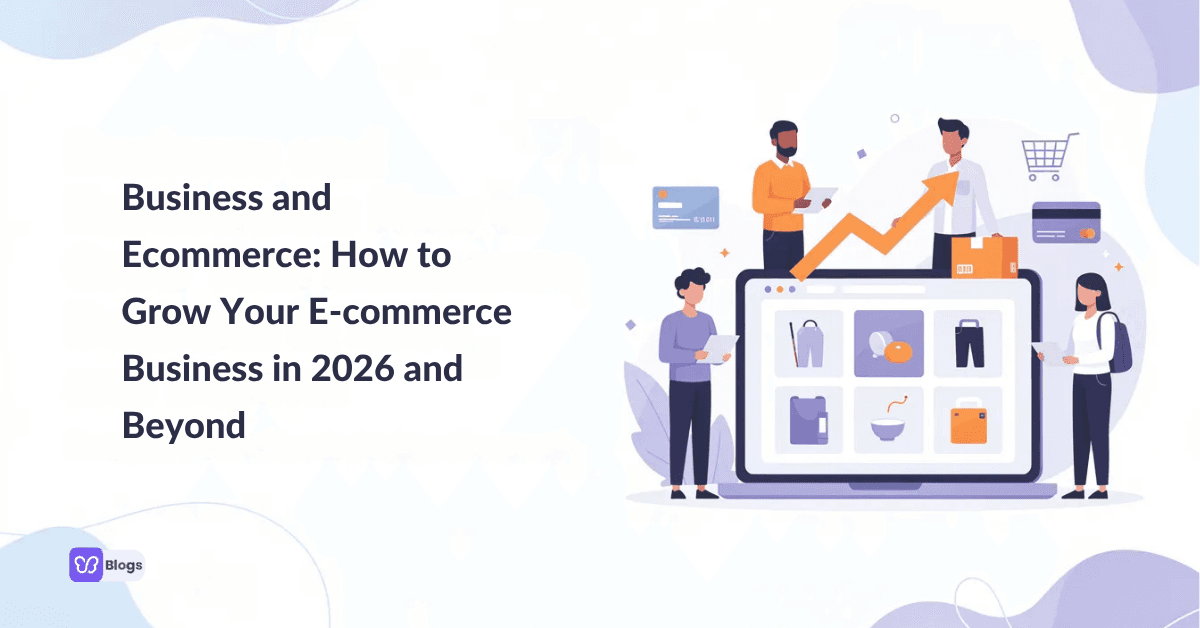
Business and ecommerce are no longer separate strategies. An ecommerce business is any company that sells products or services online-through a website, app, online marketplace, or social media platform. Whether you run a direct to consumer brand shipping skincare or a business to business distributor managing bulk orders, the model is the same: reach customers digitally, fulfill orders efficiently, and build loyalty over time.
This guide is for entrepreneurs, business owners, and marketers looking to grow their ecommerce business in the coming years.
Retailers increasingly combine traditional business and ecommerce to enhance their strategy, blending physical stores with digital channels. While traditional business relies on physical stores and face-to-face sales, the online side now accounts for over 21% of total global retail-with global ecommerce sales projected to hit $6.88 trillion in 2026 and exceed $7.89 trillion by 2028. More than 80% of new ecommerce ventures fail within 120 days, usually because they lack a clear strategy.
This guide breaks down how to grow e-commerce business revenue in 2026, from choosing the right model and platform to mastering customer experience, marketing, and retention. Every section is built around practical steps you can act on immediately.
Fundamentals: What Is an Ecommerce Business and How Does It Work?
An e commerce business sells goods or services over the internet. The category spans several models:
Business to consumer (B2C): A D2C athleisure brand selling via its own ecommerce website.
Business to business (B2B): An industrial supplier offering self-service ordering portals.
Customer to customer (C2C): Peer-to-peer platforms like Etsy or Poshmark.
Direct to consumer (D2C): Brands bypassing traditional retail entirely.
Unlike traditional businesses, which are limited by local reach and set hours, ecommerce reaches global buyers without geographic constraints. Traditional businesses incur high rent and utility costs, while an online business can operate from anywhere with far lower overhead. Traditional businesses offer customers the ability to interact with products physically, but ecommerce utilizes photos, videos, and reviews instead of physical interaction. Traditional businesses provide immediate product pickup after purchase, whereas ecommerce requires shipping, introducing wait times for delivery.
Here is how a typical online order flows:
A visitor lands on your ecommerce store or e commerce store via search, ads, or social media.
They browse product pages, read descriptions, and check reviews.
They add items to cart and proceed to checkout.
Payment is processed via integrated gateways (Stripe, PayPal, local methods).
Fulfillment kicks in-warehousing, picking, packing, shipping.
Post-purchase emails go out: tracking, review requests, loyalty rewards.
Modern ecommerce operations rely on customer data, inventory systems, payment gateways, and marketing automation to function at scale. The ecommerce platform-Shopify, WooCommerce, BigCommerce, or a custom build-serves as the engine. Traditional businesses rely on manual feedback and loyalty programs for customer insights, while ecommerce brands can track every click and purchase automatically. Even small business owners can sell online globally by combining digital storefronts with third-party logistics and localized marketing.
Choosing the Right Ecommerce Business Model and Validating Your Business Idea
Your e commerce business models define everything-margins, operations, growth ceiling. Here are the primary options:
B2C / D2C: Sell directly to end consumers. Higher margins, full brand control.
B2B: Longer sales cycles, larger order sizes, often subscription or contract-based.
Marketplace: Sell on Amazon, Etsy, or similar. Instant reach, but less brand control.
Subscription: Recurring revenue and predictable demand (e.g., meal kits, grooming products).
Dropshipping** / Print-on-demand:** Low upfront cost, lower margins, limited quality control.
Choosing the right business model is foundational for ecommerce growth and long-term profitability. Align your model with your target audience and margin goals before building anything.
To validate a business idea before investing heavily:
Conduct keyword research to quantify demand for your product category.
Run competitor analysis-it reveals market gaps for targeting opportunities.
Build a simple landing page or pre-order campaign and drive a small paid test.
Test subscription or bundle options early to see if recurring revenue is viable.
Market research identifies customer pain points and preferences, giving you a real picture of demand. Target audience research helps create detailed buyer personas, and understanding your target audience improves marketing efficiency from day one.
When figuring out how to grow an online business, start by proving demand before scaling supply.
From Idea to Storefront: Platforms, Tech Stack, and Store Setup
Selecting the right ecommerce platform depends on your budget, technical skills, catalog size, and international ambitions. Hosted platforms (Shopify, BigCommerce) reduce complexity and scale well. Self-hosted solutions (WooCommerce, Magento) offer maximum control but demand more development resources.
Must-have features for a modern e commerce platform:
Mobile-first design (mobile-first indexing requires responsive layouts and fast loading times)
Secure checkout with SSL and PCI compliance
Flexible shipping options and transparent returns
Content management for blogs and guides
Multi-channel integrations (marketplaces, social commerce)
Your broader tech stack matters too. A starter setup might include your ecommerce platform, Stripe or PayPal for payments, Klaviyo or Mailchimp for email marketing, and Google Analytics for website analytics. An advanced stack adds headless architecture, AI-driven product recommendations, loyalty platforms, and automated workflows.
Compliance cannot be ignored. Over 80% of countries have laws related to electronic transactions, and 66% of countries have explicit privacy laws affecting ecommerce. GDPR and CCPA require responsible consent management and secure handling of customer data.
Automated inventory management systems improve stock level visibility, preventing stockouts and overstock situations that erode margins and trust.
Designing for Customer Experience: Turning Visitors Into Loyal Customers
Customer experience in ecommerce spans every touchpoint-from the first ad impression to unboxing and post-purchase support. Great CX directly fuels customer loyalty, repeat sales, and overall ecommerce growth.
Here is what matters most on your product pages:
Storytelling copy that addresses pain points and benefits
Rich visuals: multi-angle photos, video demos, sizing guides
FAQs that handle common objections before they stall a purchase
Positive customer reviews and social proof displayed prominently
Personalized experiences drive repeat purchases and customer loyalty. Using customer data-browsing behavior, purchase history, preference surveys-enables recommendations and email flows that feel relevant, not generic. Zero-party data enables personalized content and product recommendations, letting customers interact with your brand on their own terms.
70% of visitors abandon their carts before completing a purchase. Every friction point you remove directly impacts revenue.
Excellent customer service can convert hesitant visitors into loyal buyers. Fast page speed, intuitive navigation, strong search with filters, and accessibility for all users are non-negotiable. Trust signals-security badges, money-back guarantees, transparent policies-reduce friction across the e commerce store.
Omnichannel shopping provides customers the option to buy online and pick up in-store. Flexible returns allow online shoppers to return items at physical stores, bridging the gap between digital and physical. Customer engagement in physical stores enhances the shopping experience, but online brands can replicate that connection through communities around brands, which enhance customer loyalty and connection.
How to Grow Your Ecommerce Business: Core Growth Levers
To grow e-commerce sustainably, focus on three primary levers: traffic, conversion rate, and customer lifetime value. Every ecommerce strategy should map back to these.
Diagnosing funnel leaks is step one. Here is how to grow your ecommerce business systematically:
Traffic: Are enough potential customers finding your ecommerce site? If not, invest in acquisition.
Conversion: Are visitors becoming paying customers? If not, optimize product pages, checkout, and trust signals.
Retention: Are existing customers coming back? If not, build loyalty programs and re-engagement campaigns.
Effective marketing targets specific audience segments for better results rather than blasting generic messages. Key acquisition channels include:
Organic: Search engine optimization, content marketing, social media platforms
Paid: Google Ads, social ads, influencer marketing
Owned: Email marketing (a cost-effective tool for ecommerce growth), SMS, push notifications
Social media marketing boosts brand awareness and engagement, while social media marketing helps drive traffic to online stores when paired with compelling content. CRO experiments-testing headlines, images, pricing, calls-to-action-can boost revenue without increasing traffic spend.
Retention tactics like loyalty programs, subscriptions, and win-back campaigns compound over time. Acquiring new customers costs significantly more than keeping existing customers, making retention the most efficient way to grow e-commerce business revenue.
E Commerce Growth Strategies: Traffic, SEO, and Digital Marketing
E commerce growth strategies are structured plans combining acquisition, conversion, and retention-powered by data and experimentation. Here is how to separate organic from paid for maximum impact.
Organic Strategies
SEO: Search engine optimization is a long-term engine. SEO helps your ecommerce site rank higher in search results. Keyword optimization is essential for effective SEO strategies-target product-specific and intent-rich queries.
Content marketing: Blogs, buying guides, and how-to videos capture search traffic. Unique product descriptions improve crawling and indexing of pages across your ecommerce website.
Schema markup: Implement schema markup to enhance search results with rich snippets, increasing click-through rates on search engine rankings.
Social commerce: Social media platforms like Instagram support native social selling, and live stream shopping is popular among Gen Z and Millennials.
Paid Strategies
Search ads: Google Ads targeting high-purchase-intent keywords.
Social ads: Campaigns on Instagram, TikTok, Facebook with precise audience targeting through social media campaigns.
Influencer marketing: Can expand your reach significantly, especially for D2C brands launching in crowded categories.
Remarketing: Re-engage visitors who browsed but did not buy.
Digital marketing can also drive foot traffic to physical store locations when brands run omnichannel campaigns. The key e commerce business strategies blend always-on brand awareness with campaign-driven bursts around launches and sales events.
Build topic clusters around your core category (like "business and ecommerce"), invest in on-page and technical SEO, and track search engine rankings alongside revenue to measure true ROI.
Data, Measurement, and Customer Insights: The Engine Behind Growing E-commerce
You cannot improve what you do not measure. Here are the key metrics for growing your ecommerce business:
Metric | What It Tells You |
|---|---|
Traffic (by channel) | Where visitors come from |
Conversion rate | % of visitors who buy |
Average order value | Revenue per transaction |
Customer lifetime value | Total revenue per customer over time |
Customer acquisition cost | Cost to win each new customer |
Repeat purchase rate | % of customers who buy again |
Churn rate | % of subscribers or customers lost |
Set up an analytics stack using tools like Google Analytics (GA4) and server-side tracking to collect accurate customer data across all sales channels. Key performance indicators should feed into dashboards that leadership reviews weekly or monthly. |
Segmenting audiences by behavior, value, and churn risk allows targeted marketing tactics. Megababe, a personal care brand, used full-funnel analytics to shift ad budgets and achieved 81% year-over-year sales growth plus a 25% boost in new-to-brand purchases.
Zero-party data enhances personalization in ecommerce marketing-collecting information customers willingly share (quizzes, preferences, surveys) rather than relying solely on tracking. Zero-party data collection enhances ecommerce personalization while respecting privacy. A privacy-first approach with consent management and transparent policies is now essential for growing e-commerce responsibly.
Customer Loyalty, Retention, and Post-Purchase Experience
Retention and customer loyalty are often the most profitable way to grow e-commerce business. Here is how to build a repeatable system:
Loyalty programs and rewards:
Tiered programs where customers earn rewards based on purchase volume
Points systems redeemable for exclusive discounts or free products
Referral programs that turn happy customers into acquisition channels
Subscriptions:
64% of businesses now offer product subscriptions, creating stable recurring revenue
Subscription models improve cart conversion and increase customer lifetime value
Post-purchase experience:
Proactive shipping updates and tracking notifications
Helpful how-to content related to the purchased product
Easy, transparent returns and responsive customer support
Customer feedback loops to identify advocates and at-risk buyers
Ecommerce gift cards can boost sales and brand awareness, and digital gift card usage has skyrocketed during the pandemic-making them a low-friction acquisition and retention tool.
Remember, 70% of visitors abandon their carts before completing a purchase. Cart recovery emails, exit-intent offers, and abandoned cart SMS sequences are critical for recovering lost revenue. Use customer data from order history and support tickets to personalize win-back campaigns for existing customers.
Magic Spoon, the cereal brand, improved subscription opt-ins by 29% and lifted conversion by 9% simply by optimizing its product page and checkout flows-proving that small UX changes can drive outsized retention gains.
Operations, Logistics, and Scaling Your E Commerce Business
Operational foundations determine whether ecommerce growth helps or breaks your business. Here are the essentials:
Inventory management and fulfillment:
Choose between in-house fulfillment, third-party logistics (3PL), or marketplace-provided fulfillment based on cost, speed, and control
Ecommerce businesses that automate tasks can scale more efficiently, especially in order routing, stock alerts, and returns management
Plan capacity upstream for demand spikes (Q4 holidays, flash sales, viral moments)
Cross-border expansion:
Ecommerce businesses that sell internationally average 700% more in sales. Wix store owners selling internationally average 700% more in sales as well, and Wix online store owners selling internationally see the same dramatic uplift.
Expanding into global markets can unlock significant growth, but requires navigating duties, localization, and customs paperwork
Over 80% of countries have laws related to electronic transactions, so compliance is a moving target
Localizing your website-language, currency, payment methods-can open new revenue streams
Automation:
Automate order routing to fulfill from the nearest warehouse
Use automated stock alerts to prevent overselling
Streamline returns with self-service portals
As your business grows, every minute saved in operations compounds. Invest in systems early so that scaling does not degrade customer satisfaction.
Advanced Growth: Personalization, Automation, and AI in Business and Ecommerce
Once foundational systems are solid, advanced techniques unlock the next phase of growing e-commerce:
AI-driven recommendations: Machine learning models analyze customer data to suggest products, optimize pricing, and personalize email and SMS content. This directly increases average order value and conversion rates across your ecommerce brand.
Marketing automation: Build automated lifecycle journeys-welcome flows, cart recovery sequences, post-purchase upsells, and win-back campaigns-to continuously grow e-commerce business with minimal manual effort. Magic Spoon runs multiple A/B tests daily, using Shopify Checkout 2.0 for faster checkout and conversion-friendly UI tweaks.
AI assistants** and chatbots:** These improve customer experience with 24/7 support, guided shopping, and self-service FAQs-reducing support costs while increasing customer engagement.
Social commerce and live shopping: Live stream shopping is popular among Gen Z and Millennials, making it a fast-growing channel for ecommerce companies. Many ecommerce businesses are experimenting with live commerce on TikTok and Instagram to drive real-time sales. Live stream shopping continues gaining traction among Gen Z and Millennials as a discovery and purchase channel.
Start with simple triggers-a welcome email, a cart abandonment reminder-and gradually evolve to sophisticated personalization. Balancing automation with human oversight maintains brand voice and trust in your e commerce store.
Real-World Examples: How Brands Grow E-commerce Business Strategically
bareMinerals integrated Amazon's "Buy with Prime" checkout option on its own ecommerce site. The result: a 60% increase in conversion and 40% increase in revenue per visitor. By reducing checkout friction and adding a trusted payment option, they turned a single strategic initiative into a measurable revenue driver-proving that customer experience improvements can outperform even aggressive ad spend.
Megababe had a limited budget but used a full-funnel digital marketing strategy. They invested in upper-funnel awareness campaigns and bottom-funnel conversion ads, optimized their Amazon presence, and achieved 80.9% year-over-year sales growth with a 25% boost in new customers. Their marketing efforts focused on data-driven budget allocation rather than blanket spending.
H&M invested in AI-powered search engine optimization over multiple years, using machine learning to generate optimized landing pages across markets. This long-term ecommerce strategy generated an estimated £644 million in incremental revenue, delivering £16 in profit for every £1 invested. It demonstrates how strategic initiatives in SEO compound over time when backed by data and technology. Each brand leveraged clear e commerce growth strategies: validated business models, deep understanding of their audience, and smart use of technology to sustain growing your ecommerce business over multiple years.
Action Plan and Conclusion: Your Next Steps to Grow E-commerce Business
Here is a simple 30-60-90 day roadmap for how to grow your ecommerce business:
Days 1–30:
Validate your business idea with market research and keyword research
Choose the right ecommerce platform and launch your ecommerce store
Set up Google Analytics, basic email marketing, and social media campaigns
Days 31–60:
Optimize product pages for conversion (visuals, copy, reviews, trust signals)
Launch initial paid campaigns (Google Ads, social ads) targeting specific audience segments
Implement cart abandonment recovery flows
Days 61–90:
Build loyalty programs and subscription options
Begin A/B testing across the customer journey
Explore international expansion and digital marketing tools for scaling
Sustainable ecommerce growth comes from compounding improvements across traffic, conversion, and loyalty-not a single tactic. More than 80% of new ecommerce ventures fail within 120 days, often because they chase shortcuts instead of building systems. Treat your ecommerce business as a long-term, profitable venture. Continuously refine your e commerce business strategies as markets shift.
There has never been a better time to build and grow e-commerce business-provided you stay customer-centric and data-driven. Pick your weakest funnel lever today, fix it, measure the result, and move to the next one.

Author
Debutify
Debutify is the easiest way to launch and scale your eCommerce brand.